

Density-Based Plastic Separation
Sink-Float Trenntank
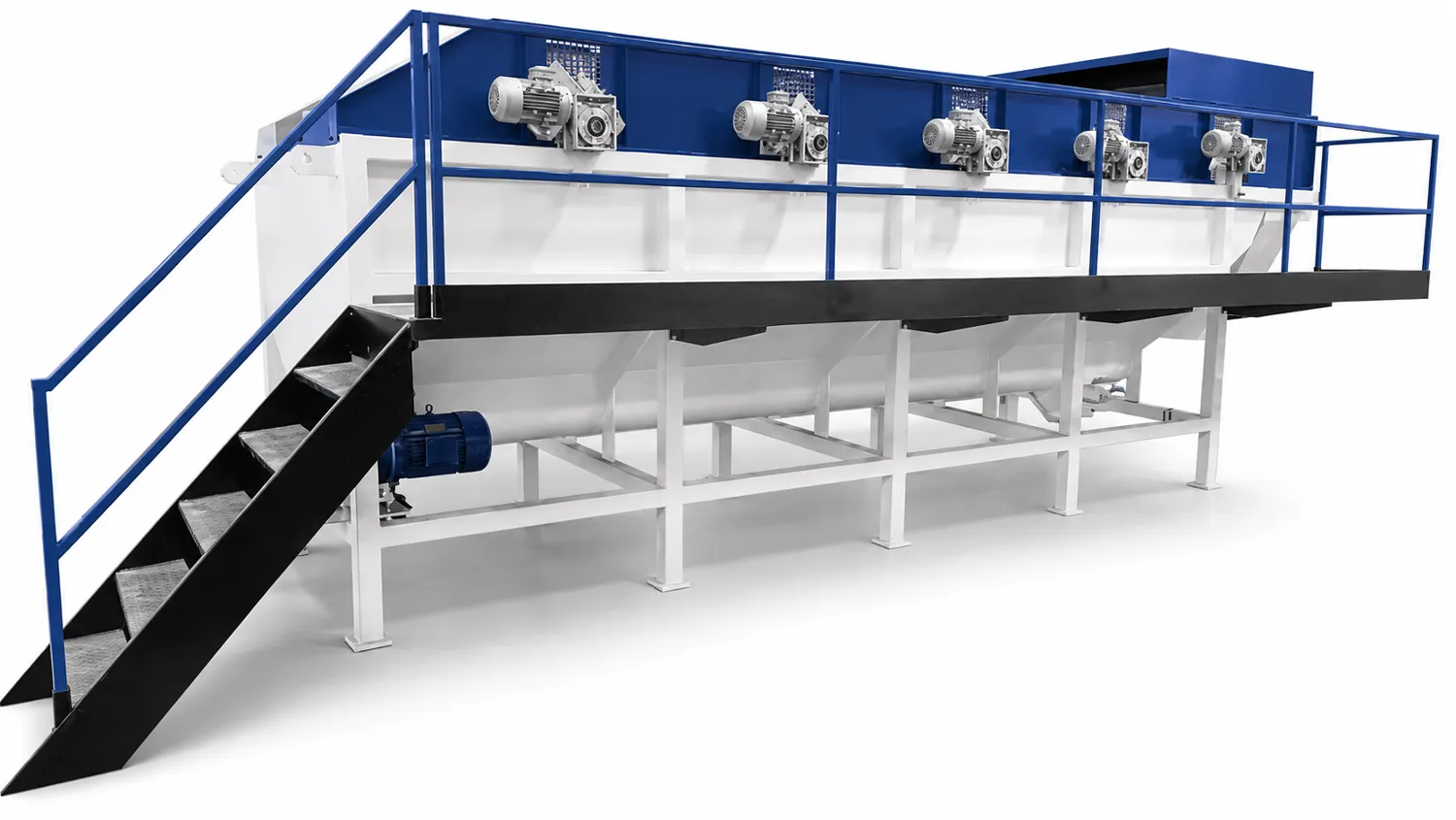
Energycle sink-float separation tanks use water density to separate PET, PP, PE, PVC, ABS, and other polymers with stable purity, continuous discharge, and low water consumption. They are built for PET bottle recycling lines, mixed rigid plastic recovery, and other applications where heavy and light fractions need a reliable split before drying, optical sorting, or pelletizing.
Wichtige Vorteile
Why Recyclers Choose This Sink-Float Tank
Built for industrial-scale density separation with minimal downtime and maximum material purity.
Hochreine Trennung
Natural density differences let PET, PVC, and other heavy plastics sink while PP and PE float, helping produce clean output streams without chemical additives.
Multi-Polymer Versatility
One tank can support PET bottle recycling, PP and PE recovery from mixed streams, PVC sorting, and other rigid plastic separation applications.
Automatisierter kontinuierlicher Ablauf
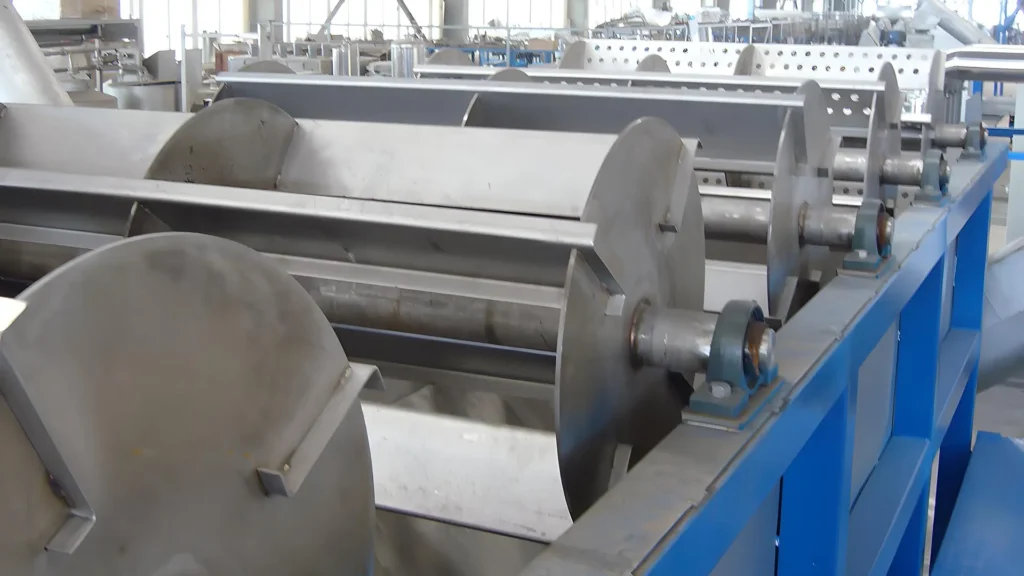
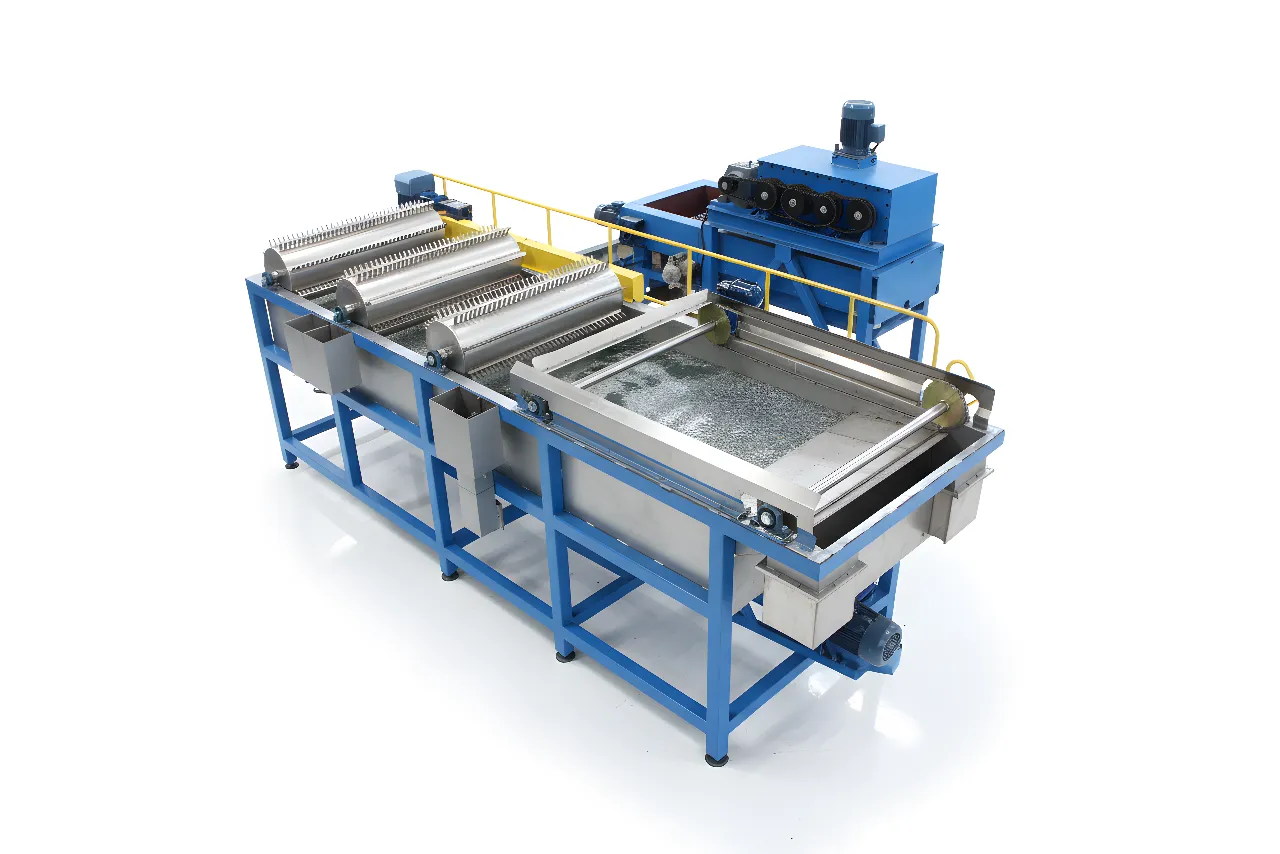
Screw conveyors, paddles, and rotating drum screens feed, separate, and discharge material continuously, reducing manual handling and line interruptions.
Water-Efficient Design
Closed-loop recirculation with settling and screening can reduce freshwater consumption by up to 80 percent compared with once-through systems.
Durable SS304 Construction
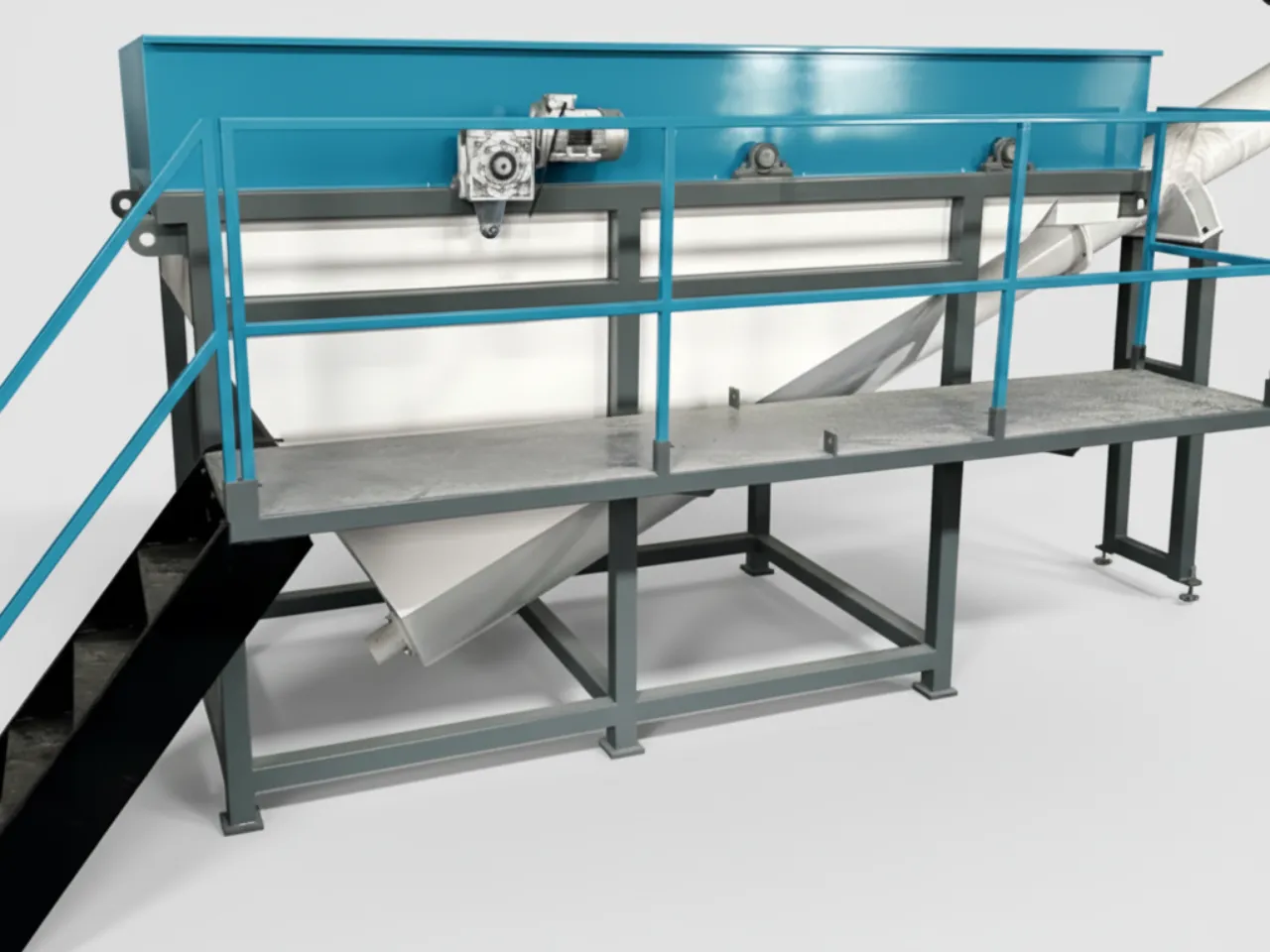
All wetted surfaces use stainless steel for long service life in aggressive wash-water environments, while the frame keeps the machine stable under continuous load.
Einfacher Wartungszugang
Removable screens, accessible conveyors, and replaceable wear parts make service faster and reduce the downtime usually associated with dense-fraction separation equipment.
Wie es funktioniert
How Sink-Float Separation Works
Materials denser than water sink while lighter materials float. Once pre-washed flakes enter the tank, the machine uses that physical principle to split mixed plastic streams into cleaner fractions.
Materialzufuhr
Pre-washed and crushed flakes enter the separation tank through a stable conveyor or feeder.
Dichtetrennung
PET, PVC, and other heavy fractions sink while PP and PE remain near the water surface.
Collection and Discharge
Floating material is skimmed from the top while sinking material is collected through bottom conveyors or scrapers.
Wasserwiederverwendung
Settling chambers and screens remove solids before process water returns to the tank.
Materialzufuhr
Pre-washed and crushed flakes enter the separation tank through a stable conveyor or feeder.
Dichtetrennung
PET, PVC, and other heavy fractions sink while PP and PE remain near the water surface.
Collection and Discharge
Floating material is skimmed from the top while sinking material is collected through bottom conveyors or scrapers.
Wasserwiederverwendung
Settling chambers and screens remove solids before process water returns to the tank.
Anwendungen
Applications by Material Type
These tanks are configured for the main polymer recovery scenarios found in modern plastic recycling plants.
Recycling von PET-Flaschen
PET sinks while PP and PE caps, labels, and film fragments float, helping achieve the high flake purity required for food-grade and fiber-grade rPET production.
PET linesPP and PE Recovery
Polyolefins float in water, making the tank a practical way to recover PP and PE from heavier contaminants in mixed plastic waste streams.
PolyolefinsPVC, PC, and PS Sorting
Dense fractions such as PVC, PC, and some PS grades can be separated from lighter contamination before finer downstream sorting stages.
Heavy fractionMixed Rigid Plastics and E-Waste
Post-consumer rigid plastics, automotive scrap, and WEEE housings often use sink-float separation as a purification step before extrusion or pelletizing.
Mixed rigidMaschinenbau
Engineering and Design Features
Every section of the machine is designed to improve separation efficiency, reliability, and maintenance access.
W-Shaped Sedimentation Bottom
The tank bottom channels sinking material toward central conveyors, reducing dead zones and accelerating heavy-fraction discharge.
Primary and Polishing Zones
A two-zone layout helps capture residual cross-contamination and can improve final purity compared with simpler single-zone designs.
Triple-Row Upgrade Path
For larger plants, a triple-row configuration increases throughput while keeping the same separation principle and footprint efficiency.
Integrated Mesh Screens
Screens at discharge points catch fines and small contaminants while remaining accessible for cleaning and replacement.
Modulare Skalierbarkeit
Tank width, length, discharge systems, and downstream connections can be tailored to material type, line speed, and expansion plans.
Closed-Loop Water System
Settling, screening, and recirculation equipment can be integrated so the separation stage uses less fresh water and creates less wastewater burden.
Technische Daten
Technische Daten
Standard configurations are listed below. Width, length, and power selection can all be adjusted around your target output and facility layout.
| Parameter | Spezifikation |
|---|---|
| Innenbreite | 1000 to 2000 mm |
| Gesamtlänge | 4 to 7 m, customizable |
| Innenmaterial | SS304 stainless steel |
| Außenrahmen | Carbon steel, painted or galvanized |
| Schneckenfördermotoren | 5,5 kW + 3,7 kW |
| Drum Screen Motors | 2,2 kW + 0,37 kW |
| Paddelmotoren | 1.5 kW x 2 |
| Kontrollsystem | Programmierbare Logiksteuerung mit Touchscreen-HMI oder eigenständiges Bedienpanel |
| Zertifizierung | CE |
| Garantie | 1 Jahr, Ersatzteile und Arbeitskraft |
Wischen Sie horizontal, um die gesamte Tabelle auf Mobilgeraten zu sehen.
Auswahlleitfaden
Wie Sie den richtigen Sink-Float-Tank wählen
Drei Faktoren bestimmen in der Regel die richtige Konfiguration für Ihre Recycling-Anlage.
Material- und Kontaminationsprofil
Der Hauptpolymer, der Kontaminationsgrad und die Anwesenheit mehrerer dichter Fraktionen beeinflussen, ob Sie einen Standardtank, eine Polierzone oder eine mehrstufige Anordnung benötigen.
Kapazität und Durchsatz
Tankbreite und -länge skalieren mit der Linien Geschwindigkeit. Kleine Linien können einen kompakten Einzeltank verwenden, während höhere Durchsatzsysteme eine längere Retentionszeit oder eine dreireihige Anordnung benötigen.
Wasser- und Abwasseraufbereitungslayout
Ihr verfügbares Bodengrundfläche, die Wasseraufbereitungsanlage und Ihre Abwasservorlieben bestimmen, ob Schrauben, Schaufeln, Kratzer und zusätzliche Filtrationsstufen hinzugefügt werden sollten.
Video
Betriebszustand des Sink-Float-Trenntanks
Beobachten Sie den Trennprozess des Sink-Float-Trenntanks bei einer realen Recyclinganwendung.
Galerie
Trennbecken-Tank-Galerie
Referenzbilder von Energycle Sink-Float-Tank-Installationen und Testanordnungen.
Warum Energycle
Wie Energycle mit konventionellen Alternativen verglichen wird
Die Hauptunterschiede sind die Trennstabilität, der Wassereffizienz, der Wartungszugang und die zukünftige Erweiterbarkeit.
| Besonderheit | Energycle | Konventionell |
|---|---|---|
| Trennstabilität | Zweizonen-Design mit Polierstufe und über 99 Prozent Reinheitspotential | Einzelzonen-Layout mit niedrigerer durchschnittlicher Reinheitsstabilität |
| Wartungszugang | Entfernbare Filter und wartbare Verschleißteile | Schwierigerer Zugang zu den Filtern und längere Wartungsaussetzungen |
| Wassereffizienz | Geschlossene Kreislauf-Recirculation mit niedrigerem Frischwasserverbrauch | Durchlauf- oder teilweiser Recirculation ist häufiger |
| Erweiterbarkeit | Modulare Design mit Polier- und dreireihiger Upgrade-Optionen | Feste Konfiguration ist häufiger |
| Weltweiter Support | Weltweite Installationsunterstützung und schnellerer Ersatz von Verschleißteilen | Die Unterstützung hängt oft von der Verfügbarkeit lokaler Vertriebspartner ab |
Garantie und Unterstützung
Unterstützung, die nach der Installation fortgesetzt wird
Sink-float Tanks sind in der Regel Teil einer größeren Waschanlage, daher ist die Qualität der Unterstützung so wichtig wie die Maschine selbst.
1 Jahr eingeschränkte Garantie
Strukturteile, Motoren, Förderbänder und Steuerungen fallen unter eine Standardbegrenzte Garantie. Verschleißteile werden aufgrund normaler Betriebsbedingungen gesondert behandelt.
Inbetriebnahme-Anleitung
Remotesupport ist für Installation und Einrichtung sowie für Projekte, die Prozessanpassungen, Bedienertraining und Startunterstützung benötigen, verfügbar. Vor Ort kann eine Inbetriebnahme vereinbart werden.
Häufig gestellte Fragen
Haufig gestellte Fragen
Häufig gestellte Fragen von Käufern, die Sink-Float-Trenntanks für PET und gemischte harte Kunststoffrecyclinganlagen vergleichen.
Anfragen Sie eine Empfehlung für einen Sink-Float-Tank
Erzählen Sie uns von Ihrem Material, dem ZielDurchsatz und dem Kontaminationsgrad. Unser Team wird die richtige Tankgröße, Entladekonfiguration und Wasserkreislauflage für Ihre Recyclinglinie empfehlen.
Kommentare sind geschlossen.