

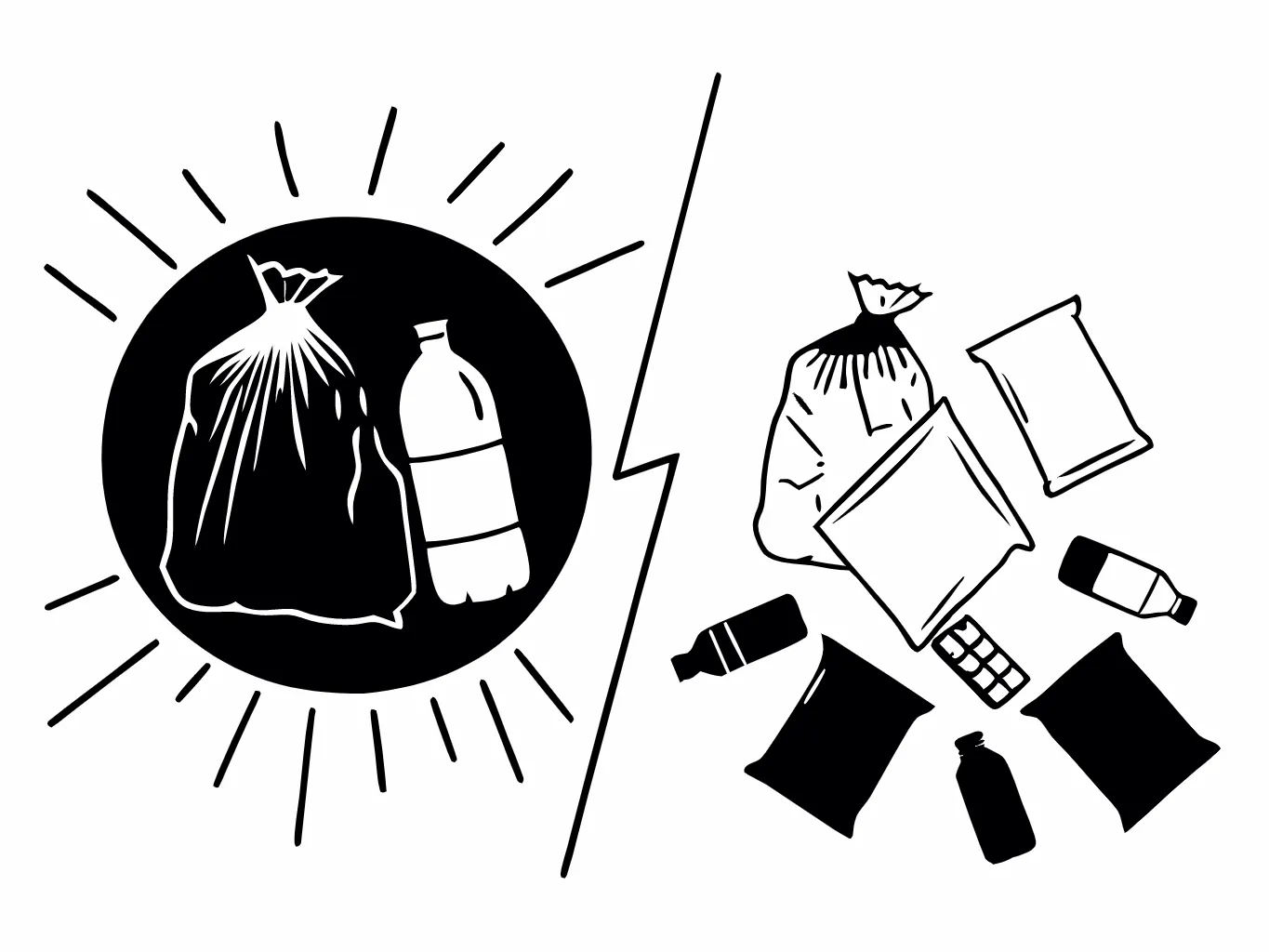
Rigid plastics (containers, crates, pipes) and flexible plastics (film, bags, woven material) are not just “different polymers.” They behave differently in three places that decide whether a recycling line is stable:
- how the material feeds (bulk density, bridging, wrapping)
- how it holds contamination (dirt, paper, adhesives)
- how it releases water after washing
This comparison explains the equipment choices that change between rigid and flexible recycling lines, what those choices mean for throughput stability, and what to put in an RFQ so quotes are comparable.
Quick Takeaways
- Rigid lines focus on controlled sizing into flakes; flexible lines focus on anti-wrapping handling and densification feeding.
- Film carries high surface contamination per kg; washing and water management do more work.
- Rigid flakes dewater well with centrifugal drying; film often needs squeezing/pressing or stronger drying capacity.
- If you have mixed streams, sorting and running separate flows is often cheaper than compromising both.
1) Size Reduction and Feeding Behavior
Rigid plastics: torque and defined flake sizing
Rigid parts resist cutting, but they also feed predictably once sized. A common approach is:
- primary size reduction using a single shaft shredder for bulky parts
- secondary sizing using a plastic granulator to produce stable flakes for washing and extrusion
Design goal: consistent flake size so washing residence time, separation, and drying are stable.
Flexible plastics: wrapping control and densification
Film and woven material can wrap shafts, mat on belts, and bridge hoppers. The front end usually needs:
- cutting and mixing that prevents rope-like wrapping
- controlled feeding that avoids surges
- densification/compaction before extrusion feeding
Many flexible pelletizing systems integrate densification into the pelletizer front end (see Energycle’s plastic pelletizers).
If you are building a film project, Energycle’s PE/PP film recycling guide is a useful reference for common process flows and module names.
2) Contamination: Why Film Often Costs More to Clean
Contamination is where flexible streams usually cost more per tonne to process.
- Film: large surface area per kg means more dirt, paper fibers, and adhesives relative to mass. Household film can bring organics and odor risk.
- Rigid: contamination is often concentrated in labels, caps, residual contents, and occasional metals; it is still serious, but it tends to be more “localized” than film.
Your line design should assume worst-case days, not only the cleanest bales.
3) Washing and Separation Differences
Rigid flakes tumble and separate well in tanks and friction washers. Film tends to float and mat, which reduces contact and can increase carryover of paper and fines.
Common adjustments for flexible streams:
- stronger friction washing stages
- agitation that prevents rafting/matting
- more attention to water filtration because film releases more fines
- clear clean-out access points because glue and paper build up
If you are comparing line configurations, Energycle’s recycling washing system overview can help align terminology for wash loops, separation, and water management.
4) Drying Strategy (Where Many Film Lines Struggle)
Rigid flakes typically release free water easily after washing, so centrifugal dewatering is often effective.
Film traps water in folds and fines. Many film lines use mechanical squeezing/pressing or densification-based dewatering before final thermal drying. The “right” approach depends on:
- film thickness and printing/labels
- fines level and water quality
- whether the downstream process is flake sales or pelletizing
Energycle commonly integrates centrifugal dryers on rigid washing lines and selects dewatering strategy for film based on the stream’s moisture and contamination behavior.
5) Pelletizing and Filtration: Rigid vs Flexible
When you pelletize, flexible lines usually need more attention on feeding stability and filtration because contamination spikes and low bulk density create unstable melt pressure. Rigid flakes often feed more consistently, but they can bring higher hard contamination (caps, rings, metal fragments) depending on upstream sorting.
In both cases, ask suppliers to define filtration behavior in a measurable way:
- screen area and change interval estimate at your contamination window
- pressure alarm setpoints and expected pressure stability
- restart scrap estimate after a screen change
6) Mixed Streams: When One Line Becomes a Compromise
If your inbound stream is mixed rigid + film, the cheapest-looking option is often “one line for everything.” In practice, mixed processing often creates two problems at once: film mats in wash and dewatering steps designed for rigid flakes, while rigid pieces overload cutting and feeding steps designed for film. If you can sort first and run separate rigid and film recipes (or separate lines), you usually gain higher saleable output and fewer quality disputes with buyers. Even partial separation—removing a large film fraction before rigid washing—can improve stability. Ask suppliers to show how they will prevent matting, bridging, and cross-contamination in a mixed design.
Comparison Summary (Line-Design View)
| Stage | Rigid Recycling (Typical) | Flexible Recycling (Typical) | What to Specify in an RFQ |
|---|---|---|---|
| Front end | Shredder + granulator sizing into flakes | Cutting designed to prevent wrapping; controlled feed | Worst-case part size, target flake size, contamination “line killers” |
| Washing | Friction + float/sink separation (as required) | Stronger friction + anti-rafting agitation | Wash intensity expectations and water management plan |
| Dewatering | Centrifugal dewatering works well on flakes | Often needs pressing/squeezing or stronger drying capacity | Moisture targets and where moisture is measured |
| Feeding to extrusion | Flakes feed consistently with standard feeders | Often needs force feeding or compaction feeding | Bulk density range and surge control method |
How to Choose the Right Line Type
If your input is mainly rigid PP/HDPE (containers, crates, bumpers), start from a rigid flake washing concept. If your input is film or woven streams, start from a film-specific concept that addresses wrapping, floating behavior, and dewatering.
For mixed streams, the right answer is often sorting first, then running separate rigid and flexible flows rather than trying to compromise both.
If you want a line layout built around your feedstock and output spec, share your material details with Energycle via its contact page.
FAQ (Real Procurement Questions)
1) Why do flexible film lines often cost more than rigid lines at the same throughput?
Film projects spend more money controlling contamination and moisture. Film has high surface area per kg, so dirt, paper fibers, and adhesives show up as a higher “contamination load” on washers, water filtration, and dewatering. Film also feeds less predictably because of low bulk density and wrapping behavior, so densification and controlled feeding become part of the line, not optional. When you compare quotes, require suppliers to state assumptions about contamination and moisture and to define output as saleable product per hour. Otherwise, you may compare a “clean film” quote to a “real film” quote without realizing it.
2) Can I process rigid and flexible plastics on the same washing line?
Sometimes, but it is usually a compromise. Rigid flakes and film behave differently in separation tanks and dewatering, and they respond differently to agitation and friction washing. Mixed streams can also create inconsistent output size distribution and inconsistent contamination carryover. If your business requires both streams, it is often better to sort upstream and run separate recipes or even separate lines. If you must share equipment, specify the “worst case” stream and confirm changeover time, cleaning access, and how you will prevent cross-contamination of finished products. Ask suppliers to define the operating window, not just the machine list.
3) What moisture targets should I specify for rigid flakes vs film flakes?
Instead of picking a single moisture number, define the measurement point and the downstream process requirement. Rigid flakes usually dewater more easily, so centrifugal drying can often achieve stable moisture at discharge. Film flakes often retain water in folds and fines, so the moisture window can widen unless you add stronger dewatering or thermal drying. If you pelletize, define a moisture target at extruder feed that supports stable extrusion and consistent pellet quality. Ask suppliers to state the assumed inlet moisture to dewatering, the expected outlet moisture, and how performance changes when contamination and fines increase.
4) What front-end equipment matters most for flexible films?
Feeding stability and anti-wrapping handling are usually the biggest issues. A film line that surges will produce inconsistent washing, inconsistent dewatering, and unstable extrusion. Ask suppliers how they prevent bridging and wrapping, how they meter feed into the washer and densification steps, and how they handle fines and label glue. Then verify that cleaning access is designed into the equipment layout, because film contamination builds up over time. If you are new to film processing, start by reviewing a reference flow like Energycle’s PE/PP film recycling guide before you compare suppliers.
5) What documents should I require so rigid vs flexible quotes are comparable?
Require each supplier to respond to the same input and output definitions: polymer mix, form factor, contamination window, moisture at inlet, and target product spec (flake or pellet). Then require a process flow diagram, scope of supply, utilities list, and an acceptance test plan. For pelletizing quotes, ask for filtration behavior: screen area, change interval estimate, and restart scrap. For washing quotes, ask for a water management plan and cleaning access points. When you standardize assumptions, you can compare total cost of ownership rather than comparing two different “stories” about what your material looks like.
