

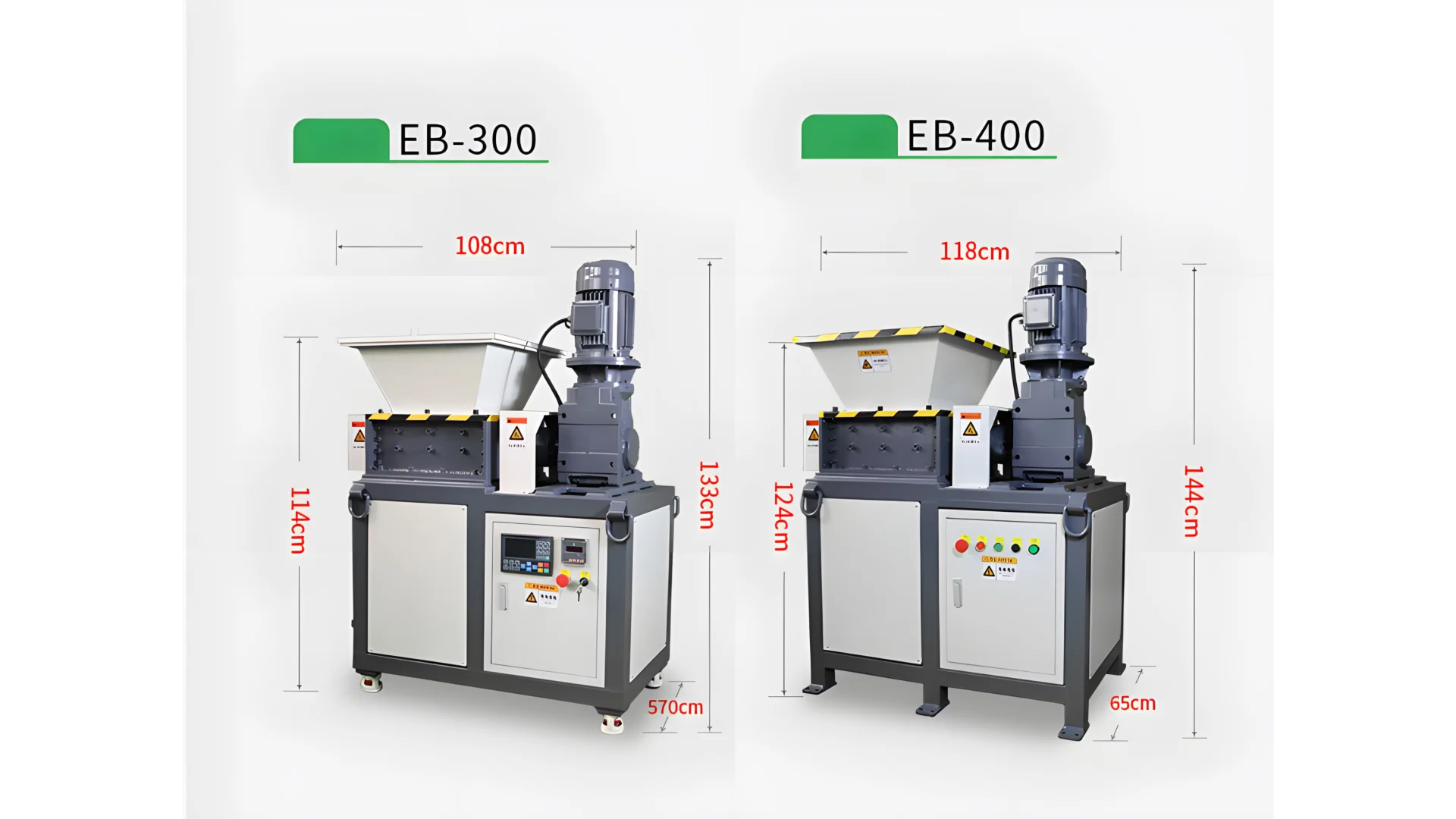
When data breaches can cost millions in fines and reputational damage, software wiping may be insufficient for some threat models. Physical destruction is widely used when organizations need high assurance, with “done” typically defined by a recognized standard (e.g., DIN 66399 or NIST SP 800-88) rather than “100%” language. For IT asset disposition (ITAD) managers and data center operators, choosing the best hard drive shredder means matching the target security level to the required throughput and media types (HDD vs. SSD).
Related equipment: heavy-duty metal shredder, double shaft shredder (plastic & metal).
Understanding Destruction Standards (DIN 66399)
The global benchmark for data destruction is DIN 66399, which categorizes security levels based on particle size. Selecting a machine starts with complying with your organization’s required Protection Class.
H-Levels: Hard Drives (Magnetic Media)
| Security Level | Max Particle Area | Application |
|---|---|---|
| H-3 | 320 mm² deformed | General corporate data (low sensitivity). |
| H-4 | 2,000 mm² | Sensitive commercial information (Standard ITAD). |
| H-5 | 320 mm² | Top-secret data / Government classified. |
E-Levels: Electronic Media (SSDs, USBs)
Solid State Drives (SSDs) store data on NAND flash chips, which are small enough to slip through standard HDD shredder blades (approx. 20-40mm width) intact.
| Security Level | Max Particle Area | Application |
|---|---|---|
| E-3 | 160 mm² | Standard SSD destruction. |
| E-4 | 30 mm² | High-security SSD destruction (Requires disintegration). |
Engineer’s Note: Do not assume an HDD shredder can handle SSDs. The high torque required to shear aluminum HDD casings often lacks the cutting precision to pulverize SSD chips. Hybrid machines with dual chambers or granulators are required for E-4 compliance.
Key Specifications for Industrial Shredders
Beyond compliance, operational efficiency dictates the following technical requirements.
1. Drive System and Topology
- Dual-Shaft Shear: The industry standard for HDDs. Two counter-rotating shafts with hooked blades pierce and tear the aluminum casing and platters.
- Torque Requirement: A minimum of 4 kW (5.5 HP) is recommended for server drives (3.5″). Lighter 1.5 kW units may stall on enterprise-grade helium drives.
- Energycle HDS-300 Example: This industrial unit utilizes a 7.5 kW motor to deliver high low-speed torque, capable of crushing server racks and caddies alongside the drive.
2. Throughput Capacity
Throughput is a function of chamber width and horsepower. * Office/Departmental: ~50-100 drives/hour (Manual feed). * Industrial (Batch): ~500-1,000 drives/hour (Conveyor feed, auto-reverse).
3. Cutter Geometry and Material
Blades are typically manufactured from hardened tool steel (e.g., AISI D2) to better withstand the steel chassis of HDDs. * Thickness: 20mm blades produce ~20mm strips (approx. H-4). * Hooks: Large hooks help ensure the drive is grabbed effectively. Flat blades can cause “floating” where the drive sits on top of the cutters without being pulled in.
Maintenance and Operational Risks
Mechanical shredding involves violent metal-on-metal stress. * Jam Protection: Essential. Look for PLCs with “Auto-Reverse” functionality that detects amperage spikes (motor stall) and reverses the shaft to clear the jam automatically. * Dust Control: Shredding circuit boards releases heavy metals and fiberglass dust. For indoor operation, negative-pressure enclosure and appropriately specified filtration are strongly recommended; confirm the exact requirements based on your hazard assessment and local regulations. * Lubrication: Automatic oilers inject oil onto the cutting shafts at set intervals, flushing out dust and reducing friction heat.
Comparison: Energycle HDS-300 vs Standard Office Shredders
| Feature | Standard Office HDD Shredder | Energycle HDS-300 (Industrial) |
|---|---|---|
| Motor Power | 1.5 kW – 2.2 kW | 7.5 kW (High Torque) |
| Mechanism | Single Stage Shear | Dual-Shaft Shear + Auto-Reverse |
| Throughput | 60 drives/hour | 200+ drives/hour |
| Drive Types | 3.5″ HDD (Clean) | 3.5″, 2.5″, Server Caddies, Tapes |
| Particle Size | 30mm Strips | 20mm x 40mm (H-3/H-4) |
| Weight | ~300 kg | ~800 kg (Vibration dampening) |
FAQ
Can I shred SSDs in a standard HDD shredder?
Generally, no. A standard HDD shredder produces 20-40mm strips. An SSD memory chip can survive this process intact. You need a disintegrator or a shredder specifically rated for E-3/E-4 security levels to ensure the chips are destroyed.
What is the difference between degaussing and shredding?
Degaussing uses strong magnetic fields to erase magnetic media (HDDs/Tapes). It does not work on SSDs. Shredding is physical destruction. For H-5 security, the NSA recommends degaussing followed by shredding.
Do I need 3-phase power?
For any industrial shredder over 3 kW (like the HDS-300), 3-phase power (400V/480V) is standard to provide sufficient torque and starting current. Single-phase industrial shredders are prone to stalling on enterprise drives.
References
[1] ISO/IEC 21964-2:2018 Information technology — Destruction of data carriers — Part 2: Equipment for destruction of data carriers, ISO. ISO [2] “Guidelines for Media Sanitization (SP 800-88 Rev. 1)”, NIST. Guidelines for Media Sanitization (SP 800-88 Rev. 1)
