

Vertical Baling for Bottles, Cans, and Recyclables
Plastic Bottle Baler Machine for PET Bottles and Cans
A vertical hydraulic baler designed for PET bottles, aluminum cans, cardboard, paper, and similar recyclable materials. It helps recycling stations and waste consolidation points reduce volume, improve handling safety, and produce denser bales for storage, transport, and resale.
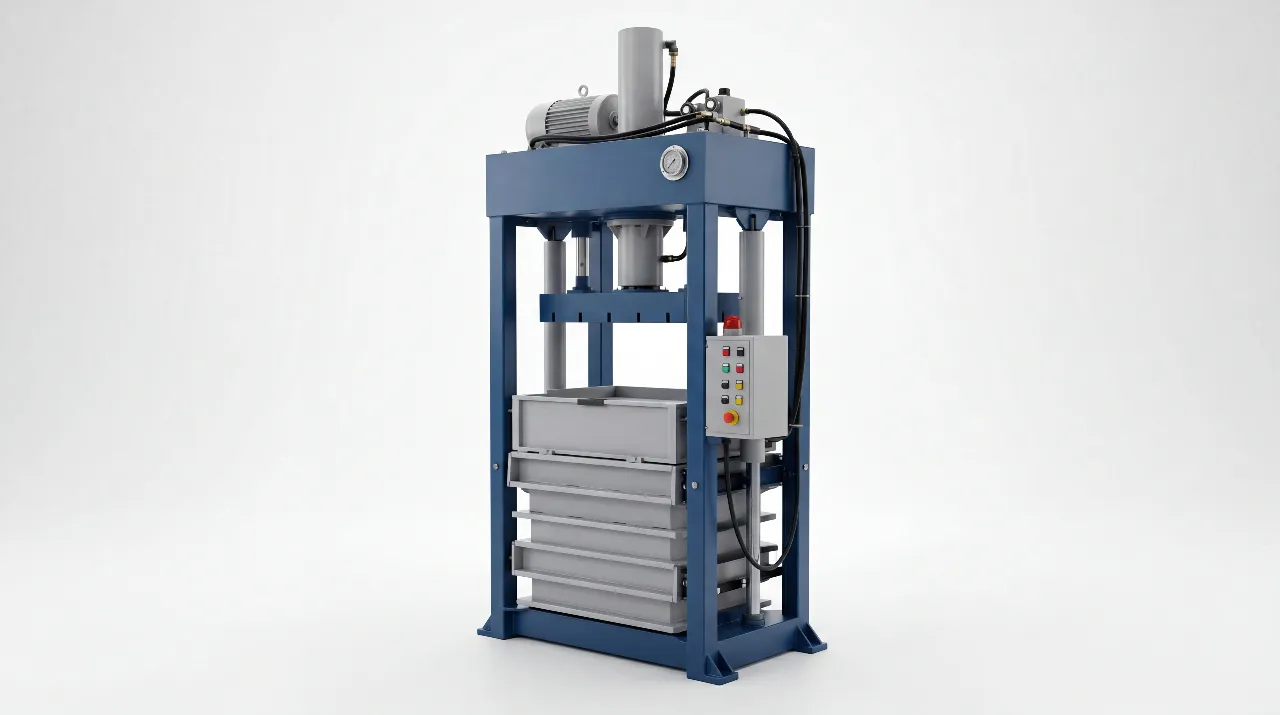
Why This Vertical Baler Works for PET Bottles and Cans
For small to medium recycling stations, storage yards, and collection points, the right baler needs to reduce volume reliably while staying safe and easy to run every day.
Safety-Focused Vertical Baling Design
The feed gate interlock, emergency stop logic, and anti-rebound structure help reduce operator risk during daily loading and compaction work.
Higher Bale Density
By compressing loose PET bottles and cans into denser bales, the machine helps reduce storage footprint and lowers transport cost per ton.
Automatic Chain Bale Ejection
The bale ejector reduces manual unloading effort and shortens the time between finished bale discharge and the next compaction cycle.
Stable Ram Guidance for Uneven Material Loading
The guide structure helps prevent platen tilt and supports more even compression even when bottles or cans are not distributed perfectly inside the chamber.
Premium Hydraulic Components for Longer Service Life
NOK seals, quality pipe joints, and the direct motor-pump connection help reduce leakage, wear, and alignment-related maintenance issues.
Good Fit for Compact Sites
Vertical balers remain a practical choice when available floor space is limited and throughput does not justify a continuous horizontal baler.
Typical Materials and Use Cases
This baler is best suited to facilities that need dense recyclable bales without moving to a larger conveyor-fed baling system.
PET Bottles
Compacts loose PET bottles into transport-ready bales for storage yards, collection centers, and PET recycling plants.
Aluminum Cans
Produces denser can bales that are easier to stack, load, and sell into downstream recycling channels.
Cardboard and Paper
Useful for mixed recycling yards and waste consolidation sites handling OCC, cartons, and paper streams alongside containers.
Soft Plastics and Packaging
Can also handle selected soft packaging waste where volume reduction and cleaner storage are the primary objectives.
Collection and Buyback Centers
A strong fit for facilities that aggregate recyclable bottles and cans before shipment to larger downstream recyclers.
Small to Mid-Scale Recycling Stations
Works well where batch baling is sufficient and the site does not need a high-throughput fully automatic horizontal line.
How the Vertical Baling Process Works
The machine is built around a simple batch workflow that compresses loose recyclable material into strapped, transportable bales.
Load the Chamber
Loose PET bottles, cans, paper, or similar recyclable material are loaded into the baling chamber through the front feed opening.
Hydraulic Compression
The ram compresses the material vertically to reduce volume and build bale density for easier downstream handling.
Reach the Target Bale Size
Compression continues until the bale reaches the target density and chamber height set by the operator and material type.
Tie the Bale
The finished compressed bale is strapped so it holds shape during storage, internal handling, and transport.
Eject and Remove the Bale
The automatic chain ejector helps push the finished bale out so the machine can be reloaded for the next compaction cycle.
Vertical PET Baler vs Horizontal Baler Options
The right baler depends mainly on throughput, automation requirement, and available site space.
| Decision Factor | Vertical PET Bottle and Cans Baler | Semi-Automatic Horizontal Baler | Fully Automatic Horizontal Baler |
|---|---|---|---|
| Best Fit | Small to mid-scale sites with batch baling demand | Higher throughput with operator-assisted horizontal baling | Large-scale continuous baling operations |
| Loading Method | Manual or simple site loading | Often conveyor or organized feed arrangement | Continuous conveyor-fed operation |
| Space Requirement | More compact footprint | More floor space required | Largest footprint |
| Automation Level | Batch operation with bale eject support | Partial automation | Highest automation and throughput |
| Investment Logic | Practical when volume is moderate and site flexibility matters | Step-up option for growing throughput | Best when labor reduction and tonnage justify full automation |
Swipe horizontally to view the full table.
Technical Specifications
These reference models cover common PET bottle and can baling needs. Final bale weight varies with material type, feed density, and moisture condition.
| Model | RTM-300KL | RTM-400KL | RTM-500KL | RTM-800KL |
|---|---|---|---|---|
| Pressure | 30 Tons | 40 Tons | 50 Tons | 80 Tons |
| Feed Opening | 800 x 500 mm | 1000 x 500 mm | 1100 x 500 mm | 1200 x 500 mm |
| Bale Size | 800 x 600 x adjustable | 1000 x 600 x adjustable | 1100 x 700 x adjustable | 1200 x 800 x adjustable |
| Bale Weight for PET | 30 – 120 kg | 60 – 180 kg | 90 – 270 kg | 200 – 380 kg |
| Power | 5.5 kW | 7.5 kW | 7.5 kW | 15 kW |
| Machine Weight | Approx. 1400 kg | Approx. 1700 kg | Approx. 1900 kg | Approx. 2500 kg |
Swipe horizontally to view the full table.
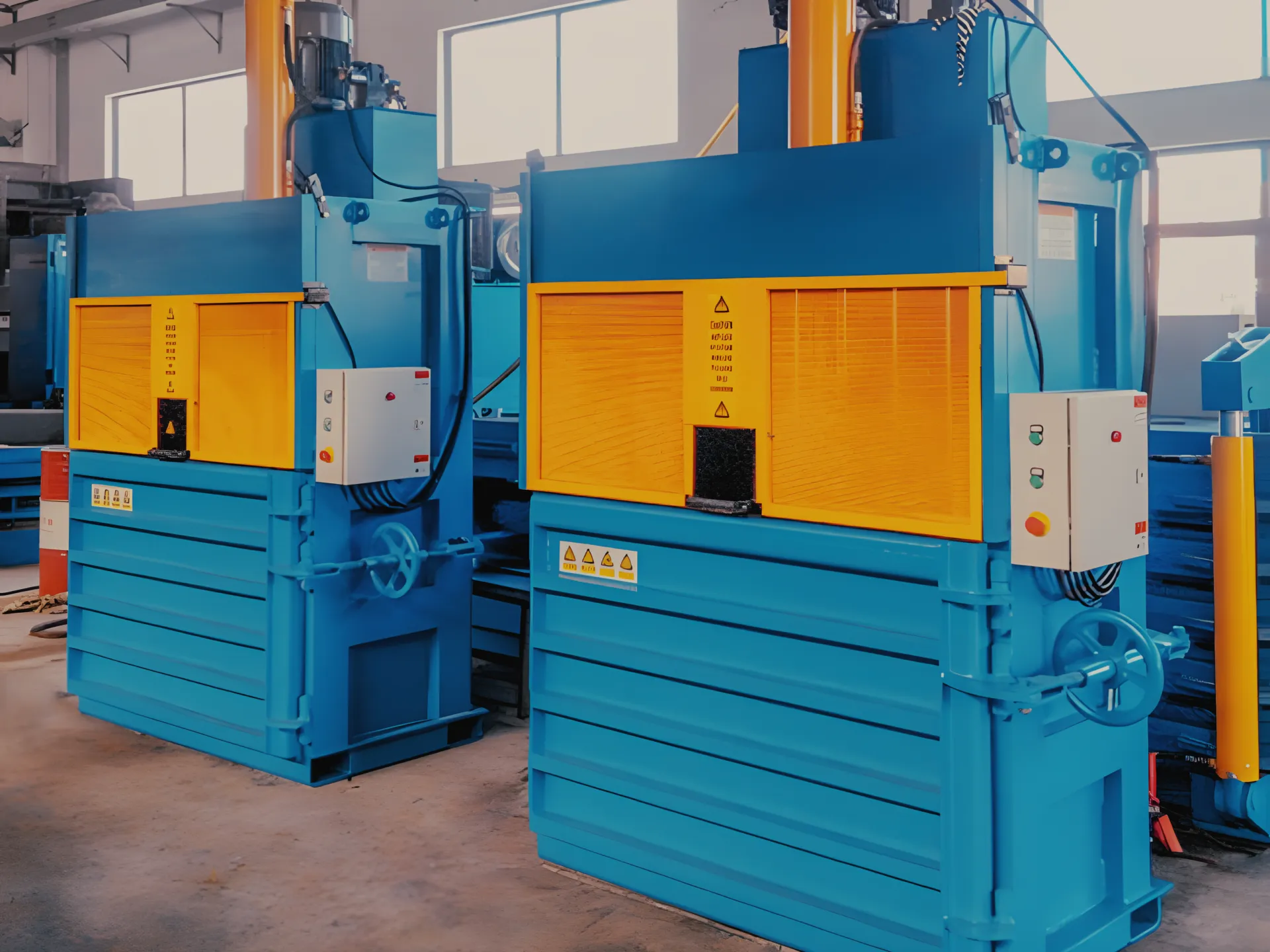
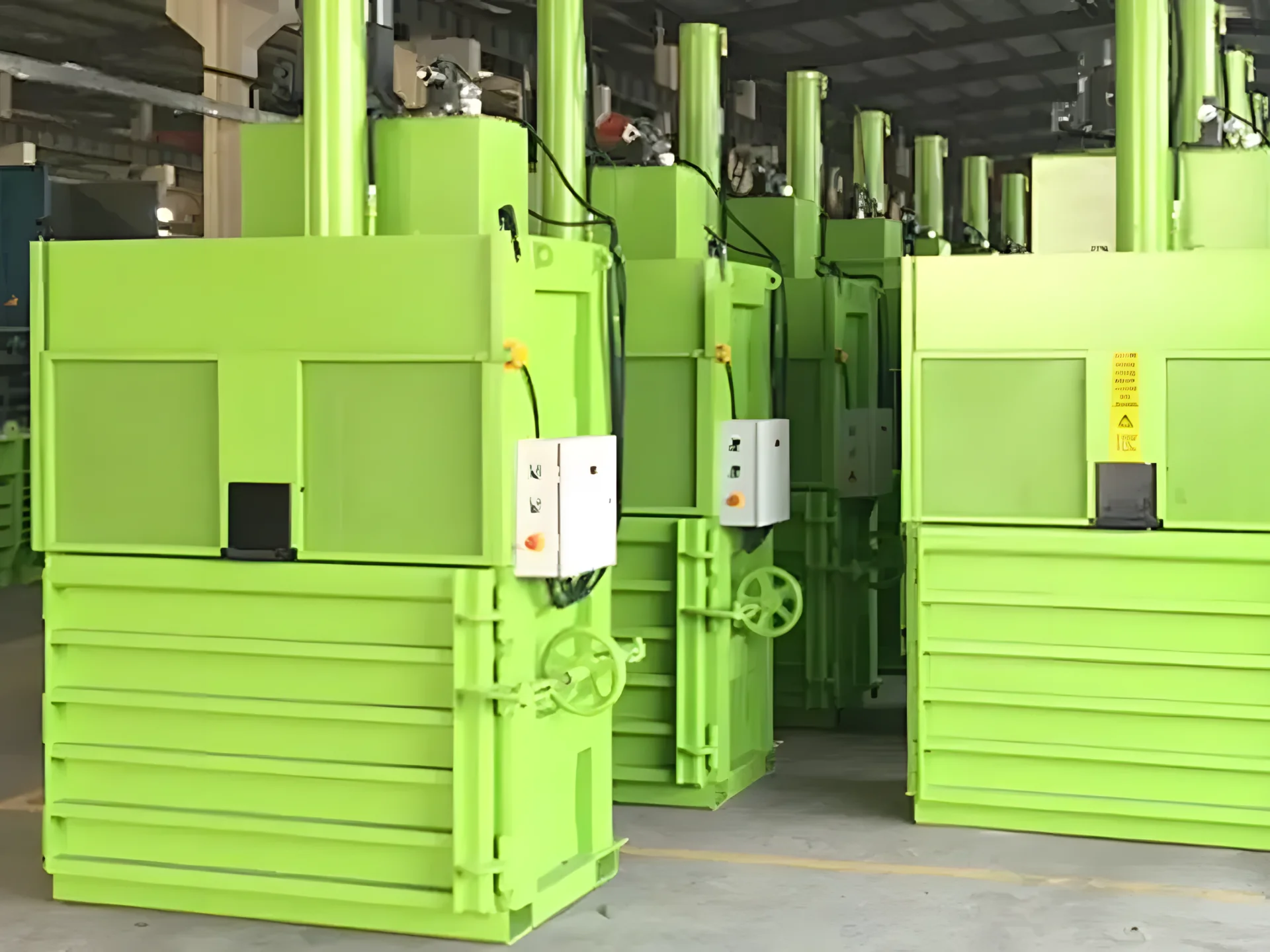
Machine Gallery
Reference views of the vertical baler, finished bale output, and hydraulic system layout.
Frequently Asked Questions
Common questions from recycling stations and waste consolidation operators comparing baler options.
This vertical baler is suitable for PET bottles, aluminum cans, cardboard, paper, and selected soft plastic packaging materials commonly handled in recycling and waste consolidation sites.
After the bale is tied, the automatic chain mechanism helps discharge it from the chamber, reducing manual handling effort and speeding up the next loading cycle.
If your site has much higher daily volume, needs conveyor-fed loading, or wants lower labor intensity at larger scale, a semi-automatic or fully automatic horizontal baler is usually the better fit.
Bottles and mixed recyclables often load unevenly. Better ram guidance helps maintain platen alignment, which supports more uniform bale formation and reduces wear on the machine.
Please share material type, daily or hourly volume, desired bale size or bale weight, available site space, and whether loading will stay manual or move toward conveyor-fed automation.
Need the Right Baler for Bottles and Cans?
Tell us your material mix, target bale weight, daily throughput, and site space. We will help match the right vertical or horizontal baling route to your operation.