


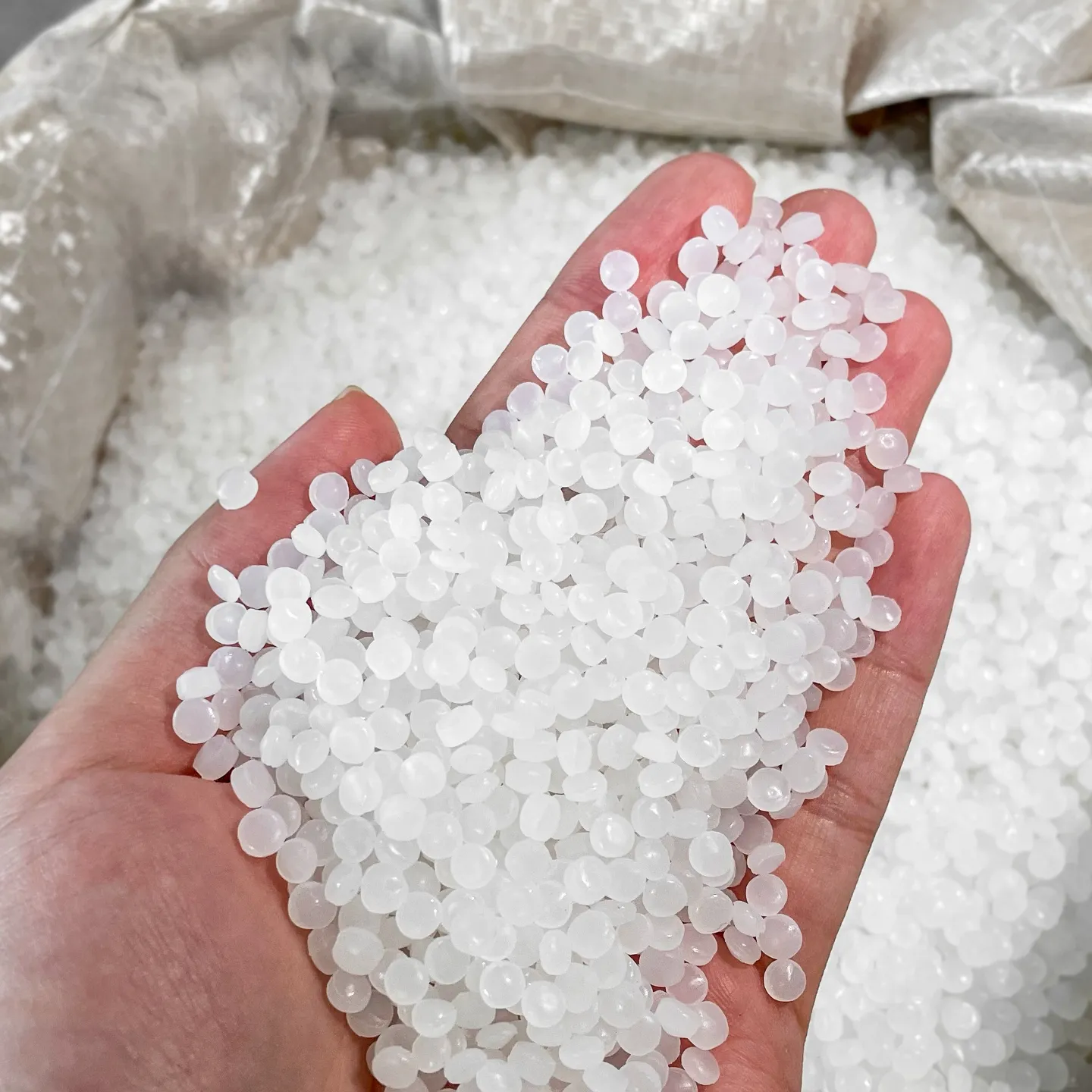
Pelletizing plastic turns mixed scrap, film, fiber, or post-consumer flake into uniform pellets that injection molders, extruders, and compounders will actually pay for. The method you choose — strand, water-ring, underwater, or hot-die-face — decides your throughput ceiling, pellet quality, power bill, and resale price per ton. This guide compares the four core methods, maps each one to PET, HDPE, PP, and PE film, and gives realistic 2026 equipment cost ranges so you can size the right line on the first try. If you want to see the hardware first, browse our plastic pelletizing machines lineup.
Table of Contents
- What pelletizing plastic actually means
- The four pelletizing methods compared
- Pelletizing line layout: every stage explained
- Material-specific guides: PET, HDPE, PP, PE film
- Choosing a plastic granulator vs a pelletizer
- Throughput sizing and 2026 cost ranges
- Common mistakes that kill pellet quality
- Frequently asked questions
What pelletizing plastic actually means
Pelletizing plastic is the conversion of shredded, washed, or molten plastic waste into small, uniform granules — typically 2–5 mm — that can be remelted in standard processing equipment. The pellet is the trading unit of the recycling industry: brokers quote per ton of pellet, not per ton of scrap, because pellet shape and bulk density determine how a downstream machine feeds.
A plastic recycling pelletizing machine sits at the end of a recycling line. Upstream you shred, wash, and dry; the pelletizer melts the clean flake, filters it, extrudes it, and cuts it. The cut method is what separates the four pelletizing technologies covered below.
Key takeaway: “Pelletizing” is the cutting step, not the whole line. Pick the cutting method first, then size the extruder and feed system around it.
The four pelletizing methods compared
Every commercial plastic pelletizer uses one of four cutting principles. Each suits a different material and pellet spec.
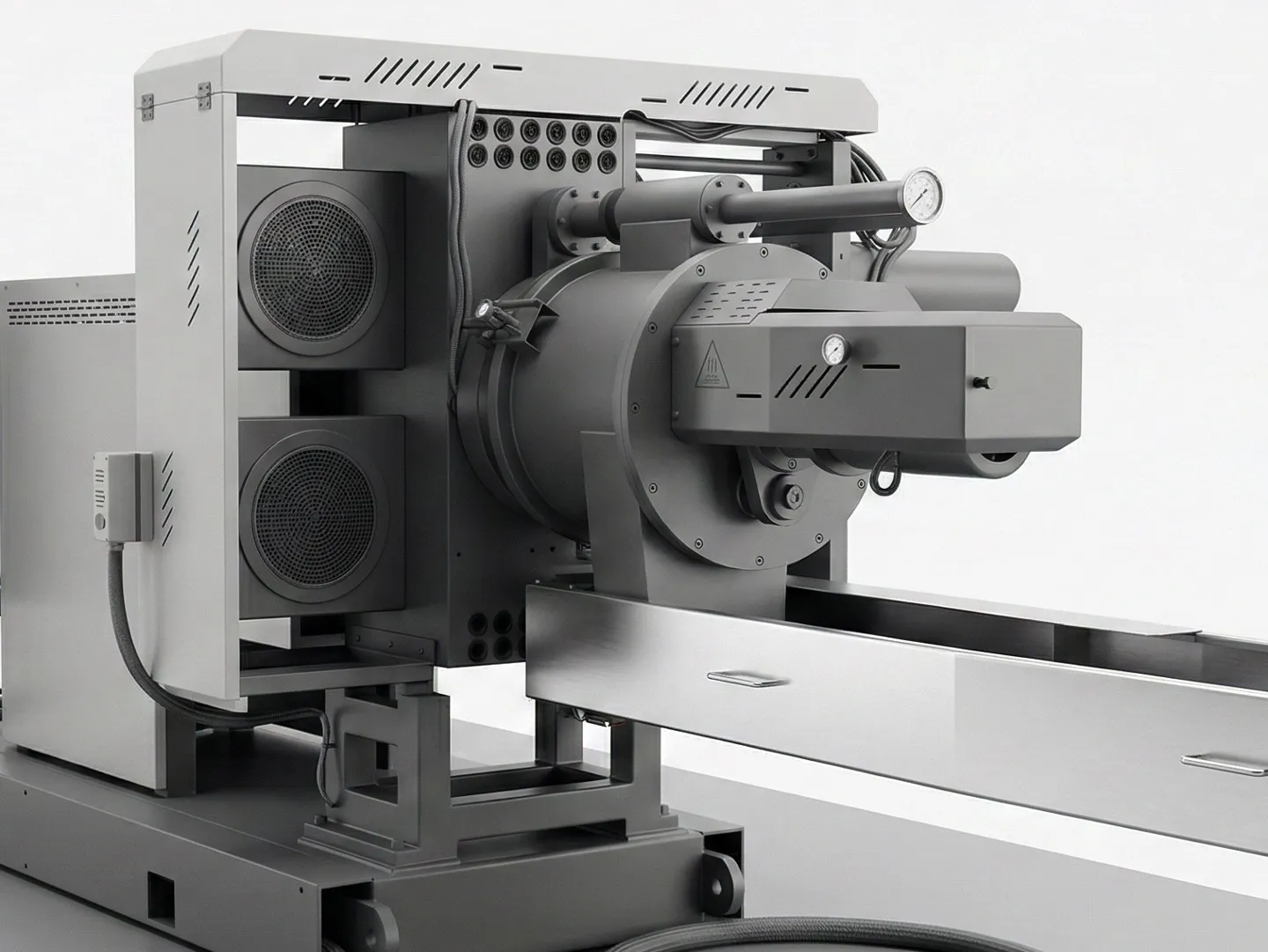
The four split into two families. Cold cutting solidifies the polymer before the blade touches it — that is strand pelletizing, sometimes sold as a gantry cutting machine, where cooled strands are fed through a gantry-mounted blade set. Hot cutting cuts the melt at the die face and quenches afterwards, which covers water-ring, underwater, and hot-die-face air-cooled. Cold cutting gives the most uniform cylindrical pellet on rigid material; hot cutting handles soft, sticky, and high-output streams that would never survive a water bath as strands.
| Method | How it cuts | Best for | Typical throughput | Pellet shape | Energy (kWh/ton) |
|---|---|---|---|---|---|
| Strand pelletizing | Strands run through a water bath, then dry-cut by a rotating blade | Rigid HDPE, PP, ABS, PS | 100–2,000 kg/h | Cylindrical | 280–380 |
| Water-ring pelletizing | Blade cuts molten strands at the die face; water ring quenches | PE, PP, masterbatch | 150–1,500 kg/h | Lens / disc | 250–340 |
| Underwater pelletizing | Die face is submerged; pellets cut and cooled simultaneously | PET, engineering resin, high-output PE | 300–6,000 kg/h | Near-spherical | 220–310 |
| Hot-die-face / air-cooled | Blade cuts at die face; pellets fall, cooled by air | Soft PE film, foam, low-melt material | 80–800 kg/h | Lens / teardrop | 200–280 |
When strand pelletizing wins
Strand pelletizing is the workhorse for clean rigid scrap — bottle flake, industrial regrind, fiber waste. Tooling is cheap, blade changes take minutes, and pellet length is easy to tune. The weak point is wet material: strands break in the water bath if moisture is above ~1%, causing stop-starts that wreck throughput.
When water-ring pelletizing wins
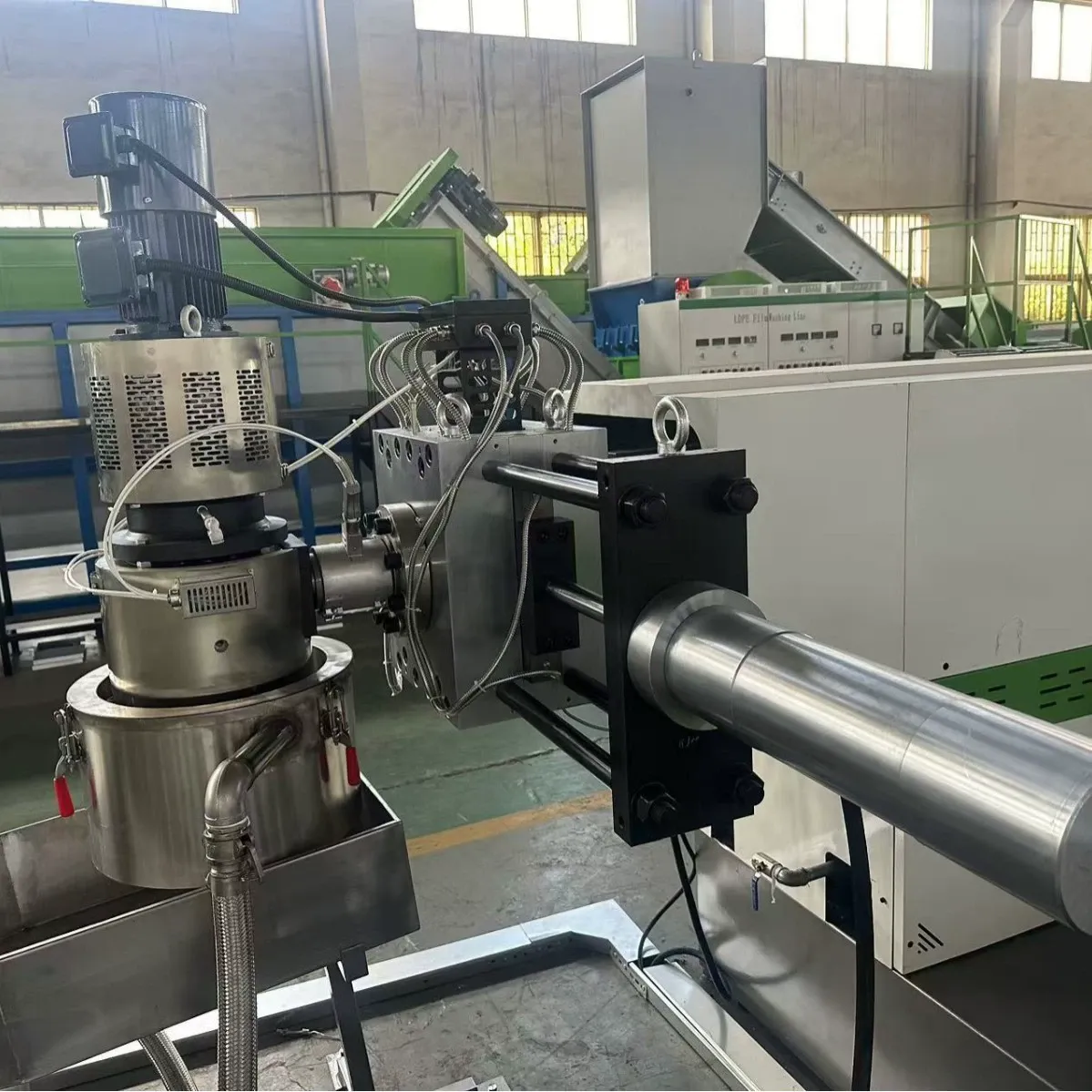
Water-ring sits between strand and underwater. The die face is in the open air but a high-velocity water ring quenches the pellet the instant it is cut. Operators get underwater-style pellet shape without the operating complexity of a pressurized water chamber. It is the default for PE/PP masterbatch lines under 1,500 kg/h.
When underwater pelletizing wins
Underwater is the only sensible choice for PET pelletizing above 500 kg/h and for any line that has to crystallize pellets inline (most PET bottle-to-bottle plants). The submerged cut gives a perfectly spherical pellet, which improves dryer airflow and downstream feeding consistency. The trade-off: tighter process control, higher capex, and dies that cost 3–5× a strand die.
When hot-die-face air-cooled wins
Air-cooled pelletizing is the rescue method for materials that hate water. Soft LDPE film with high MFI, EVA, hot-melt adhesives, and some TPEs all stick or clump in water. Air cooling gives a forgiving process at the cost of lower output and a slightly irregular pellet.
Pelletizing line layout: every stage explained
A pelletizing machine for plastic recycling is one node in a longer chain. A typical post-consumer film line looks like this:
- Infeed and metering — belt conveyor with metal detector; weight-loss feeders for masterbatch or additives
- Pre-compaction (for film/fiber) — single-shaft compactor or agglomerator densifies low-bulk-density material to 300–450 kg/m³ so the extruder can feed it
- Extrusion — single-screw for clean scrap, twin-screw for contaminated or multi-material feed; degassing zones remove moisture and volatiles
- Melt filtration — screen changer (continuous or backflush) holds 80–250 µm screens to catch paper, aluminum, gels
- Die and pelletizing head — strand die, water-ring die, or underwater die plate; pellet size set by hole diameter and blade speed
- Cooling and drying — water bath + centrifugal dryer (strand), or pellet/water separator + dewatering screen (underwater)
- Classification and storage — vibrating sieve removes fines and oversize; pellets go to silo or big-bag station
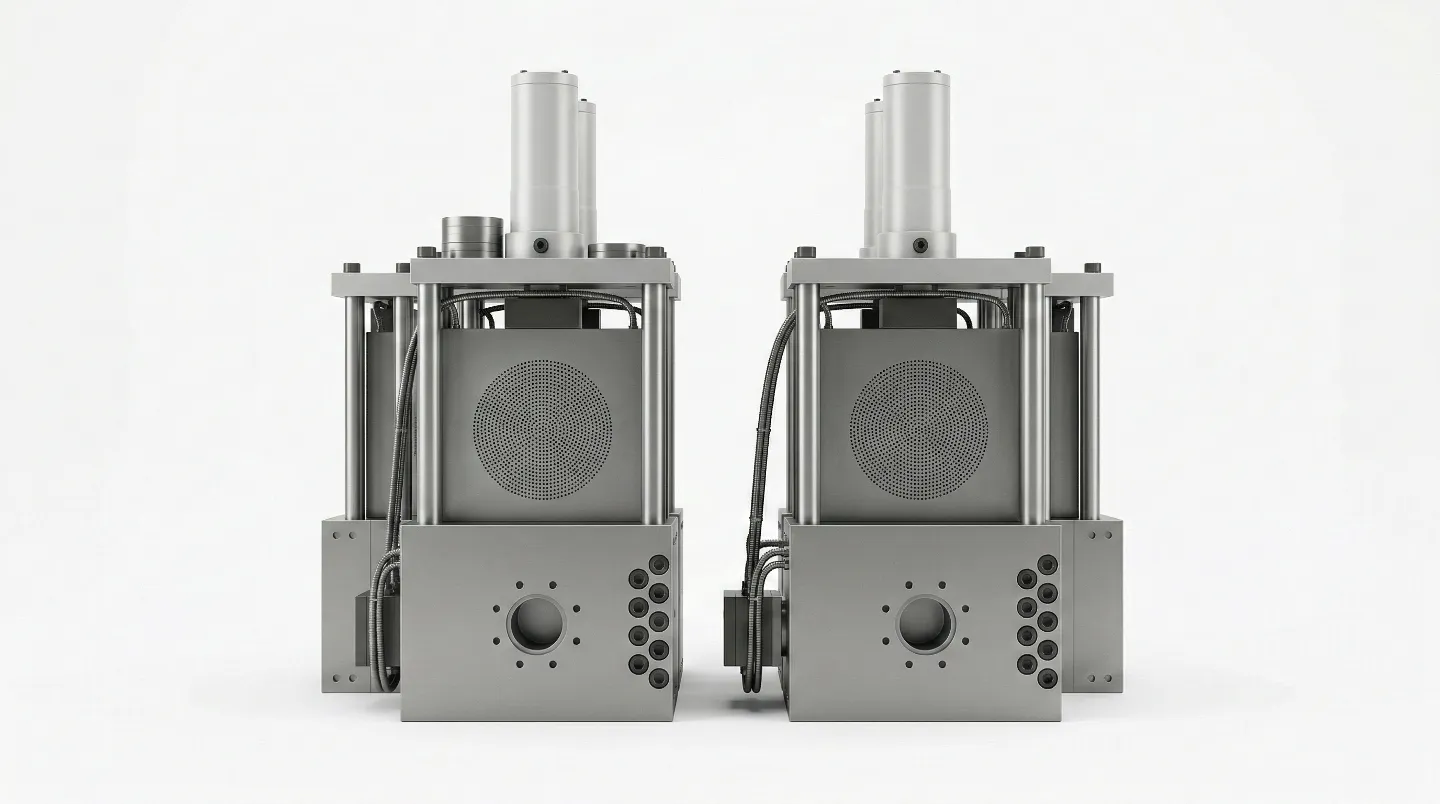
The single most-skipped stage is melt filtration. Buyers spec pellet contamination in ppm; a backflush filter at 80 µm is the difference between a $900/ton resale price and a $400/ton one.
Watch a Pelletizing Line in Operation
A complete film pelletizing line running the stages described above — feeding, extrusion, filtration, and cutting.
Material-specific guides: PET, HDPE, PP, PE film
PET pelletizing
PET hydrolyzes when melted wet. Every PET recycling pelletizing machine needs: For bottle-to-bottle projects, the European PET Bottle Platform design guidelines set out what makes a bottle stream recyclable in the first place.
- Crystallizer + dryer ahead of the extruder (drop moisture below 50 ppm)
- Twin-screw extruder with two vacuum vents, or single-screw with high-vacuum degassing
- Underwater pelletizer with inline pellet crystallizer (otherwise pellets stick in storage)
Skip any of these and intrinsic viscosity (IV) drops from ~0.80 to ~0.65 dl/g, which kills bottle-grade resale. PET pelletizing lines are the highest capex per ton/hour of any common plastic — budget 2–3× a comparable PP line. For washed PET bottle flake at 300–1,500 kg/h, a dedicated PET bottle flake single-screw pelletizer gives the best cost-per-ton — single-screw simplicity with PET-specific screw geometry and a vacuum vent sized for bottle-grade moisture.
HDPE pelletizing
A HDPE pelletizing machine is the most forgiving of the bunch. HDPE bottle flake, blow-molded scrap, and pipe regrind all run cleanly on a single-screw extruder with a water-ring or strand pelletizer. Typical line: shredder → wash → dryer → 120–160 mm single-screw extruder → backflush filter → water-ring pelletizer. Energy use lands at 280–320 kWh/ton; pellet resale tracks virgin HDPE at a 20–35% discount.
PP pelletizing
A PP pelletizing machine uses the same building blocks as HDPE, with two adjustments: a longer L/D screw (33:1 or 36:1) to handle PP’s narrower melt window, and a slightly cooler die. PP fiber and raffia waste — common at woven-bag plants — needs an agglomerator first because shredded fiber has a bulk density under 100 kg/m³.
PE film pelletizing
PE film pelletizing is where most beginner lines fail. Film cannot be fed directly to an extruder; the screw will just push air. The fix is a side-feed compactor that densifies film to ~400 kg/m³ before it reaches the screw, plus heavy degassing because printed film carries inks and adhesives. Twin-screw extruders dominate this segment because they tolerate the 8–12% contamination that survives washing.
Choosing a plastic granulator vs a pelletizer
The terms get mixed up daily. The distinction matters when you write a purchase order. Resin identification follows ASTM D7611, the coding standard behind the familiar 1–7 resin symbols.
| Plastic granulator | Plastic pelletizer | |
|---|---|---|
| What it produces | Irregular flake, 6–20 mm | Uniform pellet, 2–5 mm |
| Heat involved | None — mechanical cutting only | Yes — material is melted |
| Position in line | Upstream (size reduction) | Downstream (final product) |
| Typical anchor part | Rotor with fixed knives | Extruder + die + cutter |
| Resale value of output | Low (intermediate) | High (drop-in replacement for virgin) |
A plastic granulator machine reduces bulky scrap to a size your washer and extruder can handle. Plastic granulators do not melt anything — if your supplier calls a melting machine a “granulator,” they are using the term loosely. For a complete recycling line you need both: a granulator to prepare feed and a pelletizer to finish it.
Energycle builds both stages — see the plastic granulator range for size-reduction equipment and the plastic pelletizer range for finished-pellet lines.
Throughput sizing and 2026 cost ranges
The single biggest capex mistake is buying a pelletizer matched to your peak feedstock instead of your average. Aim for 70–80% utilization at average feed; the headroom absorbs feedstock swings and screen-change downtime.
| Line size | Throughput | Typical extruder | Indicative 2026 capex (USD, line only) | Power install |
|---|---|---|---|---|
| Small / pilot | 150–300 kg/h | 75 mm single-screw | $55,000 – $110,000 | 75–110 kW |
| Mid | 500–800 kg/h | 120 mm single-screw or 65 mm twin-screw | $140,000 – $260,000 | 180–260 kW |
| Industrial | 1,000–1,500 kg/h | 160 mm single-screw or 75 mm twin-screw | $280,000 – $480,000 | 320–450 kW |
| Large | 2,000–3,000 kg/h | 180 mm single-screw or 92 mm twin-screw | $520,000 – $850,000 | 550–780 kW |
| PET bottle-to-bottle | 1,500–4,000 kg/h | Twin-screw + crystallizer + SSP | $1.2M – $3.5M | 700–1,400 kW |
Ranges are line-only (extruder, filter, pelletizer, dryer, control). Add 15–25% for installation, building modifications, and spares. Wash lines, shredders, and warehousing are separate.
For an honest payback estimate, plug your numbers into this back-of-envelope:
Payback (years) = Capex ÷ ((Pellet price − Scrap price − Power cost − Labor) × Annual tons)
A mid-size HDPE line in a region with $0.08/kWh power and a $250/ton scrap-to-pellet spread typically pays back in 18–28 months.
Common mistakes that kill pellet quality
These five mistakes account for most pellet-quality complaints we see in commissioning:
- Skipping the metal detector. One stainless bolt destroys a screen pack, scores the screw, and produces 200 kg of black-specked off-spec pellet before anyone notices.
- Undersized melt filter. A 200-mesh screen on a 1,000 kg/h line backflushes every 4 minutes. Spec the filter for your dirtiest expected feed, not your cleanest.
- Water bath too warm. Above 60 °C, HDPE strands stay rubbery and the pelletizer blade chews instead of cuts. Keep bath inlet at 30–40 °C with a chiller.
- Wrong screw L/D for the material. A 25:1 screw built for PE will not properly melt and degas PP — you get unmelts and visible gel in pellets.
- No pellet sieve. Fines (<1 mm) and tails (>5 mm) jam downstream feeders. A 2-deck vibrating sieve costs under $4,000 and removes the complaint.
Maintenance Essentials
- Daily: Inspect die plate for blocked holes; clean screen changer; check water temperature in cooling system
- Weekly: Verify screw torque and motor amperage (rising amps indicates barrel wear); inspect pellet cutter blades
- Monthly: Lubricate gearbox; check heater band function on each zone; inspect screen changer seals
- Every 2,000–4,000 hours: Measure screw and barrel wear (replace when clearance exceeds 0.5 mm per side)
- Annually: Full inspection of screw, barrel, die plate, gearbox, and electrical systems
For complete maintenance programs, see our pelletizer maintenance checklist and the four pelletizing methods compared above.
Frequently asked questions
What is the difference between extrusion pelletizing and compression pelletizing?
Extrusion pelletizing melts the plastic in a screw extruder and cuts it after the die — this is what every plastic recycling pelletizing machine in this guide does. Compression pelletizing (used for biomass and some powders) presses material through a ring die without fully melting it. Compression equipment cannot process thermoplastic waste into resale-grade pellets.
Can one pelletizing machine handle PET, HDPE, and PP?
Mechanically yes, commercially no. The screw geometry, die temperature, and downstream drying for PET are different enough from HDPE/PP that switching materials means a full shutdown, screw pull, and 4–8 hours of cleaning. Dedicated lines per polymer almost always pay back faster than a “universal” line that runs 50% of the time.
How small can a plastic recycling pelletizing machine get?
The smallest commercially viable line runs about 80–100 kg/h on a 65 mm single-screw extruder, priced around $35,000–$55,000 in 2026. Anything below that is a hobby unit — fine for R&D or 3D-printing filament prep, not for production resale.
What pellet contamination level do buyers accept?
For commodity HDPE and PP regrind, buyers typically accept 200–500 ppm of foreign particles. Food-grade and fiber-grade specs drop to under 50 ppm, which requires a continuous backflush filter and often a second melt-filtration stage. Buyer specifications generally follow the APR Design® Guide, the reference most North American reclaimers write their acceptance criteria against.
How long do pelletizing blades last?
On clean PE/PP scrap, strand-cutter blades run 800–2,000 hours between regrinds. On glass-filled or mineral-loaded compound, blade life drops below 100 hours — budget for tungsten carbide or coated blades on abrasive feed.
Is air-cooled pelletizing cheaper than underwater?
Capex yes — an air-cooled head is 30–50% cheaper than underwater. Opex depends on material. For soft LDPE and EVA, air-cooled wins on both axes. For high-output PE or any PET, underwater wins on opex per ton even though the machine costs more.
How much floor space does a pelletizing line need?
A 500 kg/h line fits in roughly 25 × 8 m (200 m²) including the cooling section and pellet silo. A 2,000 kg/h PET line with crystallizer and SSP needs 60 × 15 m (900 m²) plus the wash plant.
Next step
The right pelletizing line is whichever one matches your feedstock, your power tariff, and your target buyer spec — in that order. If you know the material and approximate tonnage, Energycle’s engineering team will spec the extruder, pelletizer, and filtration in a one-page proposal.
Ready to specify a line? Browse the plastic pelletizer machine range and send us your material and tonnage from there, or contact our engineering team directly.
Related reading:
- How to make plastic pellets: 7-step process — process tutorial that pairs with this selection guide
- Plastic pelletizer machines — the full Energycle plastic pelletizing machine range
- PET bottle flake single-screw pelletizer — dedicated PET bottle-flake line
- Film pelletizing machine — dedicated PE film line
- Twin-screw extruder system — for contaminated or multi-material feed
- Plastic granulators — size-reduction equipment that feeds the pelletizer
- Single-shaft shredder — first stage for bulky scrap
