

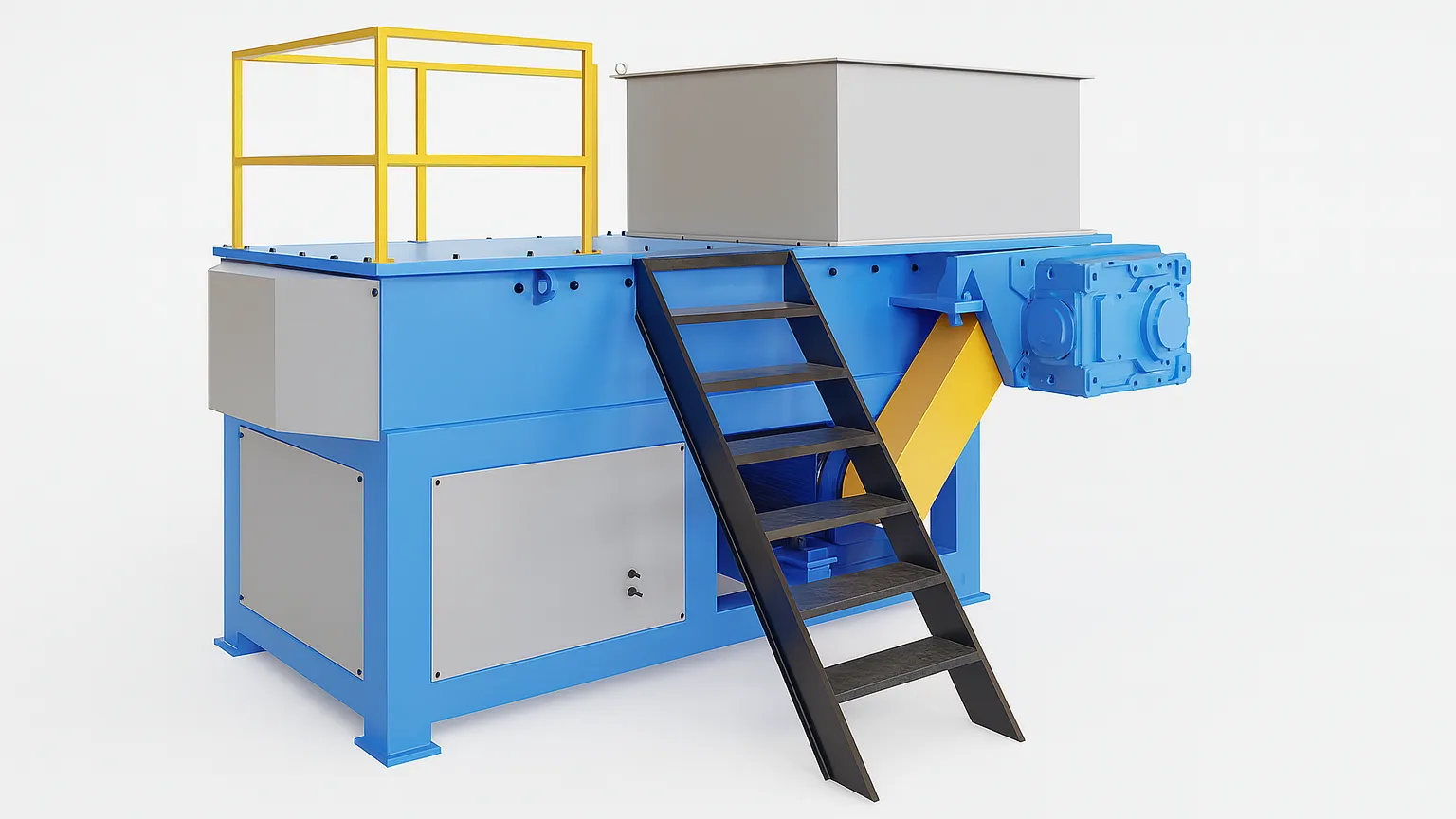
Single-Shaft Shredder for Dense Rigid Plastic Scrap
Fixed Hopper Single Shaft Shredder for Plastic Lumps, Purges, and Thick-Wall Scrap
A heavy-duty fixed hopper single shaft shredder built for large plastic purges, rigid lumps, pipe rejects, molded parts, and other dense industrial scrap that need controlled low-speed size reduction before granulation, washing, or reuse.
Why a Fixed Hopper Single Shaft Shredder Fits Dense In-House Scrap
This configuration is built for plants that want a stable primary reducer for bulky rigid plastic waste without moving up to a more complex multi-stage system.
Large Fixed Hopper for Direct Loading of Bulky Scrap
The fixed hopper accepts awkward plastic purges, start-up lumps, and thick rejects directly, reducing the need for pre-cutting or extra manual handling before shredding.
High Torque for Tough Rigid Material
A slow-speed rotor and reducer-driven torque give the machine the cutting force needed for dense plastic parts and thick-wall scrap.
Solid Rotor and Heavy-Duty Chamber
The cutting chamber is designed for continuous industrial use, helping the machine hold alignment and resist wear in demanding recycling duty.
SKD11 Knives with Multi-Edge Maintenance Logic
Wear-resistant alloy steel knives support repeatable cutting performance and can be rotated through multiple usable edges before replacement.
Screen-Controlled Output Size for Downstream Equipment
Material remains in the chamber until it reaches the chosen screen size, making the output easier to feed into a granulator, washing line, or pelletizing stage.
PLC Protection Against Jams and Overload
Automatic overload detection and reverse logic help protect the drive train and keep operation more stable when feed conditions vary.
Applications for Fixed Hopper Single Shaft Shredding
This machine is best used as the first size-reduction stage for bulky, dense, or rigid scrap that is too large for direct granulation.
Plastic Purges and Start-Up Lumps
Breaks down large extruder purges, injection molding lumps, and heavy start-up scrap into manageable pieces for reuse.
Thick Pipes, Profiles, and Sheets
Suitable for rigid PVC, HDPE, and PP pipe sections, profile rejects, and thick sheet offcuts from extrusion lines.
Molded Parts and Factory Rejects
Handles defective blow-molded and injection-molded parts that are too bulky or too thick for direct high-speed crushing.
Pallets, Crates, and Rigid Containers
Useful for durable plastic transport packaging that needs slower controlled cutting before washing or secondary reduction.
In-House Regrind Preparation
Works as the front end of an internal recycling cell where scrap is shredded first, then granulated, washed, or pelletized.
Bulky Mixed Rigid Scrap
Reduces dense production residues into a more uniform feed size for conveying, storage, and downstream processing stability.
How the Fixed Hopper Shredding Cycle Works
The machine is designed to convert oversized rigid scrap into screen-controlled chips through a slow, high-torque, protected shredding sequence.
Load the Fixed Hopper
Bulky scrap is placed directly into the hopper, ready for controlled engagement with the rotor.
Engage the Rotor
The low-speed high-torque rotor pulls the material into the cutting zone and shears it against the fixed knife.
Cut with SKD11 Knives
Rotating and fixed knives continue to shear the material while PLC overload logic protects the machine from jams.
Discharge Sized Chips
Once the pieces reach the selected screen opening, they fall through as a more uniform feed for the next process stage.
Fixed Hopper vs Drawer Single Shaft Shredder
Both are single shaft shredders, but the preferred layout depends on how difficult the feed is and how much active hydraulic feeding your line needs.
| Decision Factor | Fixed Hopper Single Shaft | Drawer Single Shaft |
|---|---|---|
| Machine Layout | Simpler fixed hopper structure for direct loading and standard primary size reduction | Hydraulic drawer design adds active pushing of material into the rotor |
| Best Feed Condition | Dense rigid scrap, purges, lumps, and thick rejects with relatively stable feeding behavior | More irregular, bridging-prone, or awkward bulky material that benefits from controlled ram pressure |
| Mechanical Complexity | Lower system complexity with fewer hydraulic feed components | More feeding control but a more complex hydraulic structure |
| Output Control | Screened discharge for predictable chip size | Screened discharge plus stronger feed control |
| Best Line Position | First-stage reducer before granulation, washing, or regrind recovery | Preferred when the infeed behavior itself is the main production bottleneck |
Technical Specifications
This reference configuration is suitable for medium-duty dense rigid plastic recycling where stable output size matters more than aggressive coarse tearing.
| Parameter | Value |
|---|---|
| Model | RTM-SD2360 |
| Effective Cutter Length | 600 mm |
| Shredding Chamber | 550 mm x 580 mm |
| Output Capacity | 200 - 300 kg/h |
| Blade Material | SKD-11 high-alloy steel |
| Blade Configuration | 30 moving blades, 1 fixed blade |
| Main Motor Power | 22 kW |
| Hydraulic Power | 3 kW |
| Control System | Delta PLC with Siemens electrical components |
Watch the Shredder Process Bulky Plastic Scrap
See how the fixed hopper and low-speed rotor work together to reduce large rigid plastic waste into manageable chips.
Frequently Asked Questions
Common questions from processors comparing fixed hopper single shaft shredders for rigid plastic recycling.
It is best suited for dense rigid plastic scrap such as purges, lumps, thick-wall pipe rejects, profiles, molded parts, pallets, crates, and other bulky industrial plastics that are too large for direct granulation.
A single shaft shredder is a low-speed high-torque primary reducer for bulky scrap. A granulator is a high-speed machine that processes smaller pre-sized material into finer regrind.
The perforated screen below the rotor determines the final chip size. Material remains in the chamber until it is small enough to pass through the selected opening.
Choose a drawer design when the feed is especially irregular, bridging-prone, or difficult to keep engaged with the rotor, and hydraulic pushing is needed to stabilize intake.
Yes. This shredder is commonly used as the first stage before wet granulation, washing, or final granulation because it turns oversized scrap into a more uniform and manageable feed.
Match the Right Shredder to Your Rigid Plastic Scrap
Send us your material type, maximum feed size, target kg/h, and required output size. We will recommend the right fixed hopper configuration and the best downstream equipment for your line.
