


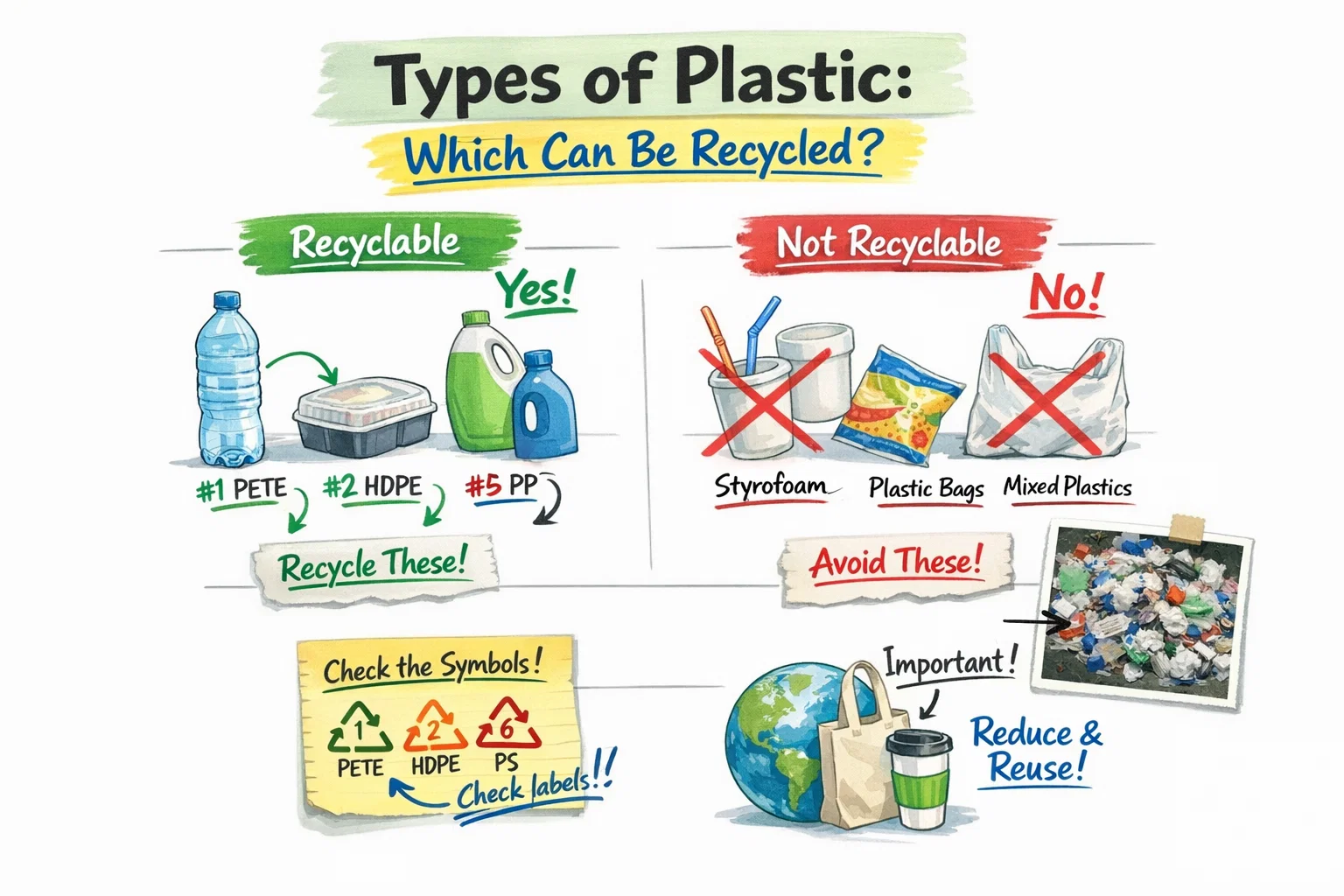
Types de plastique : lesquels sont recyclables et lesquels ne le sont pas ?
Plastics differ significantly in structure, performance, and recyclability. Understanding these differences is essential for building efficient, realistic recycling systems.
1. Main Plastic Types and Recycling Reality
| Code | Type de plastique | Common Products | Recycling Reality |
|---|---|---|---|
| #1 PET | Polyéthylène téréphtalate | Beverage bottles, food trays, thermoformed packaging, polyester fibers | Widely recycled |
| #2 HDPE | Polyéthylène haute densité | Detergent bottles, drums, pipes, crates, industrial containers | Widely recycled |
| #3 PVC | Chlorure de polyvinyle | Pipes, window profiles, cables, flooring, medical tubing | Limited & risky |
| #4 LDPE | Polyéthylène basse densité | Plastic films, shopping bags, shrink wrap, agricultural films | Partially recycled |
| #5 PP | Polypropylène | Caps, food containers, automotive parts, household products | Recycling growing |
| #6 PS | Polystyrène | Foam packaging, disposable trays, insulation boards | Rarely recycled |
| #7 Other | Multi-layer / Composite | Food pouches, laminated packaging, mixed-material products | Mostly unrecyclable |
What Can Recycled Plastics Be Used For?
Different plastics require different recycling processes and result in very different end products. Below is a practical, material-by-material overview of what recycled plastics are commonly used for and the typical equipment required to process them.
#1 PET (Polyethylene Terephthalate)
Typical recycled applications:
- Polyester fibers for textiles, carpets, and nonwovens
- Thermoformed sheets for food and non-food packaging
- PET strapping and industrial packaging
- Food-grade bottles (with approved decontamination processes)
Typical recycling equipment required: bottle sorting systems, crushers or granulators, hot washing units, sink-float separation tanks, and high-efficiency drying systems.
#2 HDPE (High-Density Polyethylene)
Typical recycled applications:
- Pipes, drainage products, and cable conduits
- Industrial containers, crates, and pallets
- Blow-molded bottles for detergents and chemicals
- Outdoor products such as bins and decking components
Typical recycling equipment required: shredders or crushers, cold or hot washing lines, sink-float separation systems, and centrifugal or thermal dryers.
#3 PVC (Polyvinyl Chloride)
Typical recycled applications:
- Window profiles and construction profiles
- Pipes, fittings, and technical extruded products
- Cable insulation and flooring materials
Typical recycling equipment required: dedicated shredding and grinding equipment, strict material separation systems, controlled washing processes, and chlorine-safe handling solutions.
#4 LDPE (Low-Density Polyethylene)
Typical recycled applications:
- Garbage bags and carrier bags
- Agricultural films and mulch films
- Construction and protective films
- Flexible packaging applications (non-food)
Typical recycling equipment required: film shredders or cutters, friction washing systems, dewatering machines, and squeeze or thermal drying units.
#5 PP (Polypropylene)
Typical recycled applications:
- Injection-molded household products
- Automotive interior and technical components
- Reusable packaging and transport boxes
- Non-food consumer products
Typical recycling equipment required: shredders or granulators, washing and separation systems, followed by extrusion and pelletizing lines.
#6 PS (Polystyrene)
Typical recycled applications:
- Insulation materials and lightweight construction fillers
- Low-grade molded products
- Specialty applications with limited volume
Typical recycling equipment required: densifiers or compactors for volume reduction, combined with shredding and washing equipment where economically viable.
#7 Other / Mixed Plastics
Typical recycled applications:
- Downcycled construction products
- Low-performance molded items
- Alternative recovery or energy recovery routes
Typical recycling equipment required: advanced sorting technologies, size reduction equipment, and systems designed for downcycling or alternative recovery processes.
3. Key Takeaway
Plastics are recyclable only when material type, processing technology, and end-market demand align. Understanding real downstream applications is essential for building profitable recycling operations.
