

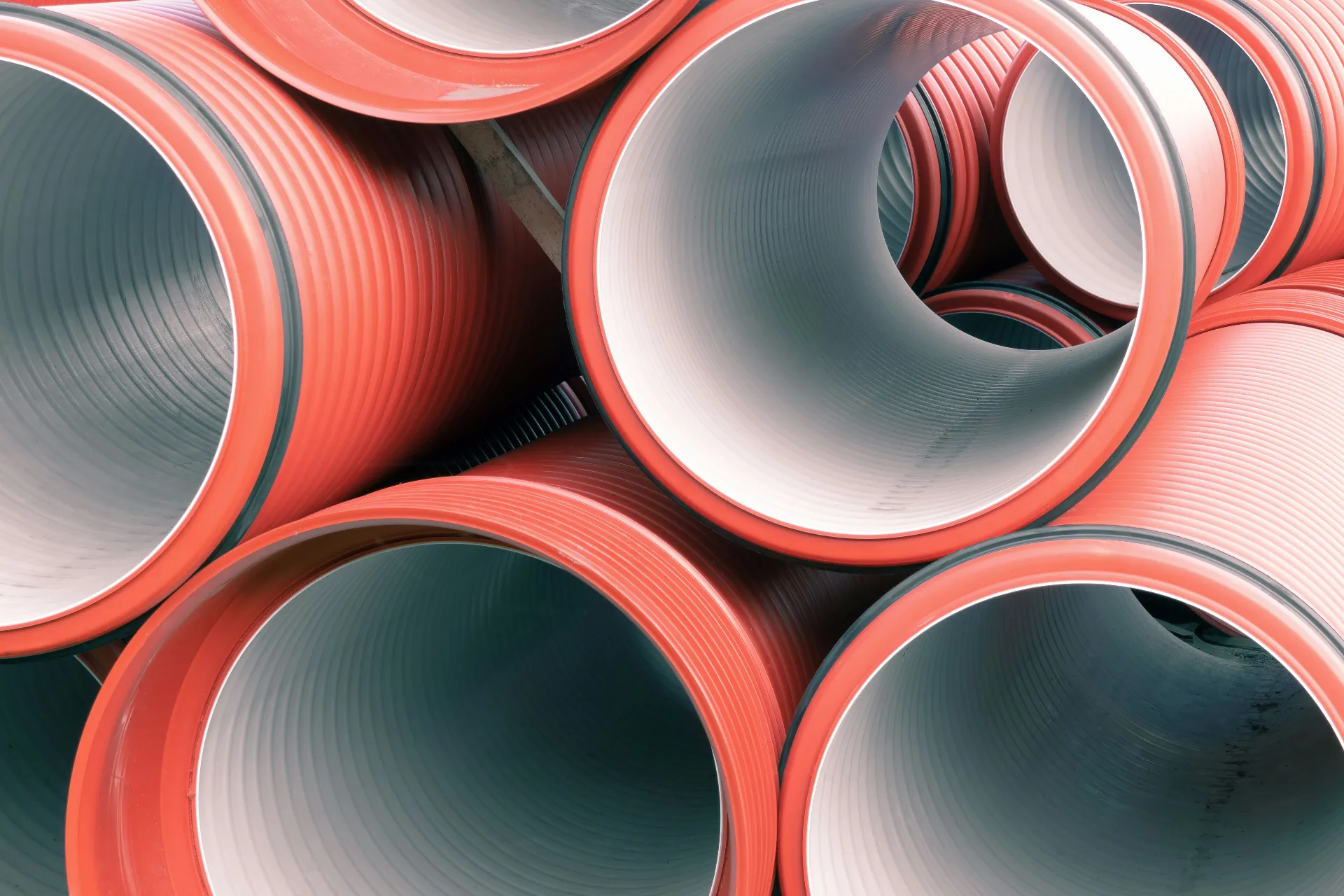
Transporting waste pipe is often a highly inefficient logistics problem: large-diameter pipe is volume-limited, so trucks can haul a lot of air and relatively little plastic by mass. In many cases, recycling economics improve significantly when size reduction happens close to the source. This guide walks through a practical way to evaluate mobile shredding.
Related equipment: mobile pipe shredder.
1. The Economics of “Shipping Air”
Scenario: You have 100 tons of decommissioned HDPE gas pipe on a job site 200 miles from the nearest recycler.
Cost note: The numbers below are illustrative. Real costs depend on pipe geometry, loading method, local haul rates, fuel, mobilization, uptime, and permits.
Option A: Haul Whole Pipes
- Truck Capacity: ~800 kg per load (volume limited).
- Trips Required: 100,000 kg / 800 kg = 125 Truckloads.
- Cost: 125 trips x \$500/trip = \$62,500 in freight.
- Result: The freight cost exceeds the scrap value (~\$400/ton). You lose money.
Option B: Mobile On-Site Shredding
- Shredded Density: ~350 kg/m³.
- Truck Capacity: ~20,000 kg per load (weight limited).
- Trips Required: 100,000 kg / 20,000 kg = 5 Truckloads.
- Cost: 5 trips x \$500/trip = \$2,500 in freight.
- Mobile Shredder Rental/OpEx (illustrative): ~\$5,000 per week.
- Result: Total Cost \$7,500. Savings: \$55,000.
2. Machine Specification: The Mobile Unit
A mobile shredder is not just a standard machine on wheels. It requires:
1. Diesel Power Unit: A 300HP+ Diesel Engine (e.g., CAT or Cummins) directly driving the hydraulics or a generator.
2. Hook-Lift / Track Chassis: Typically needs to be movable by a standard roll-off truck (hook-lift) or self-propelled on site, depending on local logistics.
3. High-Torque Drive: Pipes are tough. The rotor needs 50,000+ Nm of torque to shear thick walls (SDR 11) without stalling.
3. Operational Challenges
Contamination Control
- Mud/Dirt: Pipes dug up from the ground are dirty.
- Solution: Shaking/vibrating the pipe with the excavator grapple before feeding. When sand abrasion is expected, shredder blades are often hardfaced to extend wear life.
Feeding Length
- Constraint: Most mobile shredder hoppers are 2m – 4m long. Pipes are 12m long.
- Protocol: An excavator with a Shear Attachment cuts the pipe into 3m sections before feeding. Do not rely on the shredder to “eat” a 12m pipe hanging out of the hopper (safety risk).
4. When to Use Mobile? (The Threshold)
The Rule of Thumb:
* < 20 Tons: Cut with a chainsaw and ship loose. (Mobilization cost is too high).
* > 50 Tons: Mobile Shredding becomes cheaper than freight.
* > 500 Tons: Consider setting up a semi-permanent electric shredder (cheaper energy than diesel).
Conclusion
Mobile pipe shredding can convert a logistical bottleneck into a higher-margin project by increasing bulk density and reducing truck trips. The real-world density multiplier depends on pipe diameter, shred size, and handling method.
References
[1] “Logistics of Waste Management,” Journal of Cleaner Production. Logistics of Waste Management
[2] “HDPE Pipe Recycling Best Practices,” Plastic Pipe Institute. HDPE Pipe Recycling Best Practices
