

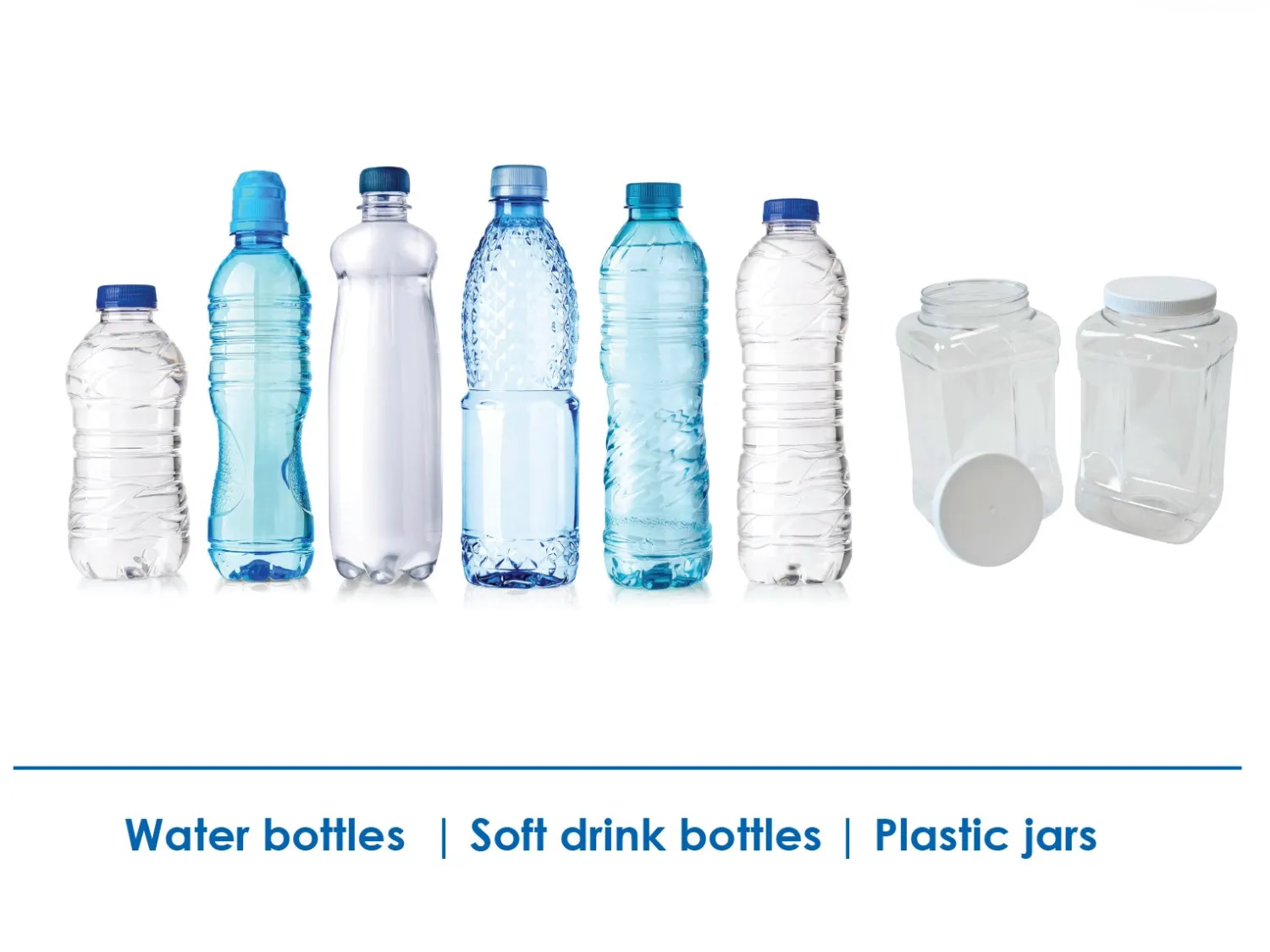
“Efficiency” in PET recycling is not only about running faster. It’s about producing sellable rPET flake or pellets consistently with minimal downtime and minimal yield loss from fines, contamination, and moisture issues.
Below are practical levers that plant managers and engineers use to improve output, quality, and uptime on a PET line.
Quick Takeaways
- Treat bale quality and pre-sorting as a productivity tool, not just a quality tool.
- Stabilize feeding into size reduction; surges cause stops and inconsistent flake geometry.
- Control wash chemistry and water quality; dirty water turns into dirty flakes.
- Keep moisture control disciplined; PET is sensitive to moisture during melt processing.
- Track a small KPI set daily (moisture, fines, PVC risk, water quality, downtime drivers).
Efficiency Levers: What to Fix First
| Line Bottleneck | What to Measure | What Usually Fixes It | What Improves |
|---|---|---|---|
| Unstable bale input | Hours of unplanned stops at bale opener / manual sort | Clear bale spec, inbound QC, buffer storage | Uptime and labor predictability |
| Crusher overload and fines | Motor load trend, fines %, knife change interval | Stable feed rate, correct screen, disciplined knife maintenance | Yield and washing consistency |
| Hot wash inconsistency | Residence time, temperature, chemistry control, water clarity | Control loops + filtration + sludge removal sized for reality | Flake cleanliness and odor |
| Wet flakes after dewatering | Moisture at dryer discharge | Correct dewatering + hot-air drying sized to worst case | Storage stability and pelletizing stability |
| Quality complaints from buyers | Color, specks, PVC indicators, moisture trend | Better sorting + wash control + QC checkpoints | Sale price and repeat orders |
1) Start With a Material Audit (Before You Tune Any Machine)
Run a short bale audit and document: – PVC presence risk (labels, sleeves, stray bottles) – dirt/sand load and paper/label content – bottle mix (clear vs colored, trays vs bottles if applicable)
If your input quality drifts, your “optimal settings” drift with it. The fastest wins often come from stabilizing what enters the line.
2) Improve Pre-Sorting to Protect the Wash Line
Pre-sorting protects your most expensive wear zones: crushers, friction washers, pumps, and screens.
Common front-end modules include: – trommel or scalping separation for rocks, glass, and oversize – magnetic separation for ferrous metal – manual QC points for obvious non-target items
For higher purity requirements, many plants add optical sorting ahead of washing.
If you are selling rPET flake into higher-grade markets, pre-sorting is also your insurance policy against “one bad bale” that triggers a customer rejection.
2A) PVC Risk: Treat It as a Quality Gate, Not a Footnote
PET lines often treat PVC as a high-risk contaminant because it behaves very differently in heat and can create quality issues if it reaches hot processes. The practical takeaway for efficiency is simple: if you allow PVC into the “PET fraction,” you can lose hours on rework, line cleanup, and rejected lots.
To manage the risk, define:
- what PVC risk looks like in your inbound stream (sleeves, labels, stray bottles)
- where you remove it (manual QC, optical sorting, dedicated checkpoints)
- how you verify control (a sampling plan and clear acceptance rules)
3) Stabilize Feeding Into Size Reduction
Inconsistent feeding causes: – uneven flake size (harder to wash and dry consistently) – overload trips and reverse cycles – accelerated knife wear
Practical fixes: – buffer hoppers to decouple bale opening from crushing – conveyor speed control (VFD) tied to motor load – disciplined knife maintenance to avoid “shattering” behavior that creates fines
4) Control Washing by Measuring, Not Guessing
PET hot wash performance depends on input contamination and operational control. Focus on: – residence time consistency (avoid short-circuiting) – friction washer condition (worn paddles reduce cleaning action) – rinse strategy that prevents redepositing dirt on clean flakes
If you operate a closed-loop water system, keep filtration and sludge removal stable. When water quality drifts, cleaning efficiency drops.
Energycle’s PET line configurations typically integrate washing and water management as one system; see its PET bottle washing line overview.
5) Treat Drying and Moisture Control as a Quality Gate
Even if you sell flakes (not pellets), moisture affects storage, handling, and downstream processing for your buyers. If you pelletize, moisture control becomes critical to protect IV and reduce degradation risk.
Mechanical dewatering is usually the first stage (see Energycle’s centrifugal dryer), followed by thermal drying or crystallization depending on your product and process.
5A) Tighten Your Moisture Plan (Define Where You Measure)
“Moisture control” fails when nobody agrees where moisture is measured. Pick measurement points and make them operational:
- after dewatering (centrifugal dryer discharge)
- after thermal drying (hot-air dryer outlet)
- at the point of sale (flake packaging or pellet storage)
If you pelletize rPET, treat moisture as a process-stability metric, not only a quality metric. Define the target moisture range you will feed to extrusion and have suppliers size drying and conveying for that range.
6) Track the Metrics That Predict Downtime
Instead of waiting for a fault, trend: – crusher motor load under similar feed conditions – screen changer pressure trend (if pelletizing) – moisture at key points (after dewatering, after thermal drying) – fines percentage and label/paper carryover
These signals usually move before quality complaints or major stops.
A Simple RFQ Checklist for PET Line Efficiency Upgrades
If you’re planning an upgrade, ask suppliers to respond to the same questions so proposals are comparable.
| RFQ Item | What to Ask | What It Protects |
|---|---|---|
| Bale quality assumptions | Contamination and moisture window used for sizing | Real uptime and quality stability |
| Washing control | How residence time, temperature, and water quality are controlled | Flake cleanliness and consistency |
| Drying plan | Moisture targets and measurement points across the line | Stable storage and downstream processing |
| QC checkpoints | Where sampling occurs and what triggers corrective action | Lower reject risk and faster troubleshooting |
| Performance definition | Saleable flakes per hour at defined input condition | Comparable quotes and honest ROI |
FAQ (Real Procurement Questions)
1) Should I focus on throughput or purity first when I upgrade a PET line?
Purity usually pays first in PET because contamination controls your selling price and customer acceptance. If you push throughput while purity is unstable, you often create more fines, overload washing, and increase rewash or rework—so “more kg/h” turns into less saleable product per shift. Start by stabilizing bale QC, removing high-risk contaminants (especially PVC and metals), and holding wash and rinse performance steady. Once purity is stable, throughput gains are easier to keep because the line runs with fewer stops and fewer quality alarms. Use a simple KPI: saleable flakes per hour at a defined contamination window.
2) What’s the most common cause of “gray” PET flakes?
Gray flakes are usually a system problem, not a single-machine setting. Common contributors include label/paper carryover, fine dirt re-depositing because wash water quality drifts, and poor separation that allows mixed plastics or colored fractions to sneak into the PET stream. Start by checking separation effectiveness and rinse strategy before changing chemistry. Then audit the water loop: if filtration and sludge removal are undersized, the line can wash “dirty water onto clean flakes.” If your buyers use visual standards and speck counts, add a routine QC check at the flake discharge so operators catch drift early.
3) What upgrades usually deliver the fastest efficiency gain on a PET bottle line?
Most plants see faster gains from upstream stability than from buying a larger machine. A better bale audit and consistent sorting reduce unplanned stops, protect wear parts, and keep wash chemistry stable. Next, improve dewatering and thermal drying control because wet flakes create unstable downstream handling and can limit pelletizing options. If you are already stable on input and washing, then look at capacity upgrades: parallel washers, better separation, or a higher-throughput dryer sized to your real moisture window. Share your target output spec and bale condition with Energycle via its contact page to map upgrades to bottlenecks.
4) How do I define an “efficient” PET line when I request quotations?
Define efficiency as saleable output and uptime, not motor size or headline kg/h. Ask suppliers to state throughput as saleable flake per hour under a defined input condition (PVC risk, paper/labels, dirt, moisture). Then require a scope that includes sorting, washing, dewatering, thermal drying, and water management. Also ask for expected scrap/fines rate and cleaning downtime assumptions. Quotes become comparable only when the test condition is defined. This aligns with how many buyers think about rPET quality and bale contamination risks, as reflected in APR’s model bale specifications.
5) What references should I use when I write bale quality and contamination requirements?
Start with an industry baseline like the Association of Plastic Recyclers (APR) model bale specifications, then tailor it to your end market and your equipment’s tolerance window. The goal is not a perfect bale; it is a bale that your line can process without constant stops and without producing off-spec flakes. Write requirements for PVC risk items (sleeves, labels), paper/label percentage, dirt/sand, and moisture. Then add an inbound QC routine that matches those requirements. A realistic bale spec protects both sides: it makes supplier conversations factual, and it helps you decide whether to invest in sorting, washing capacity, or stricter inbound sourcing.
