

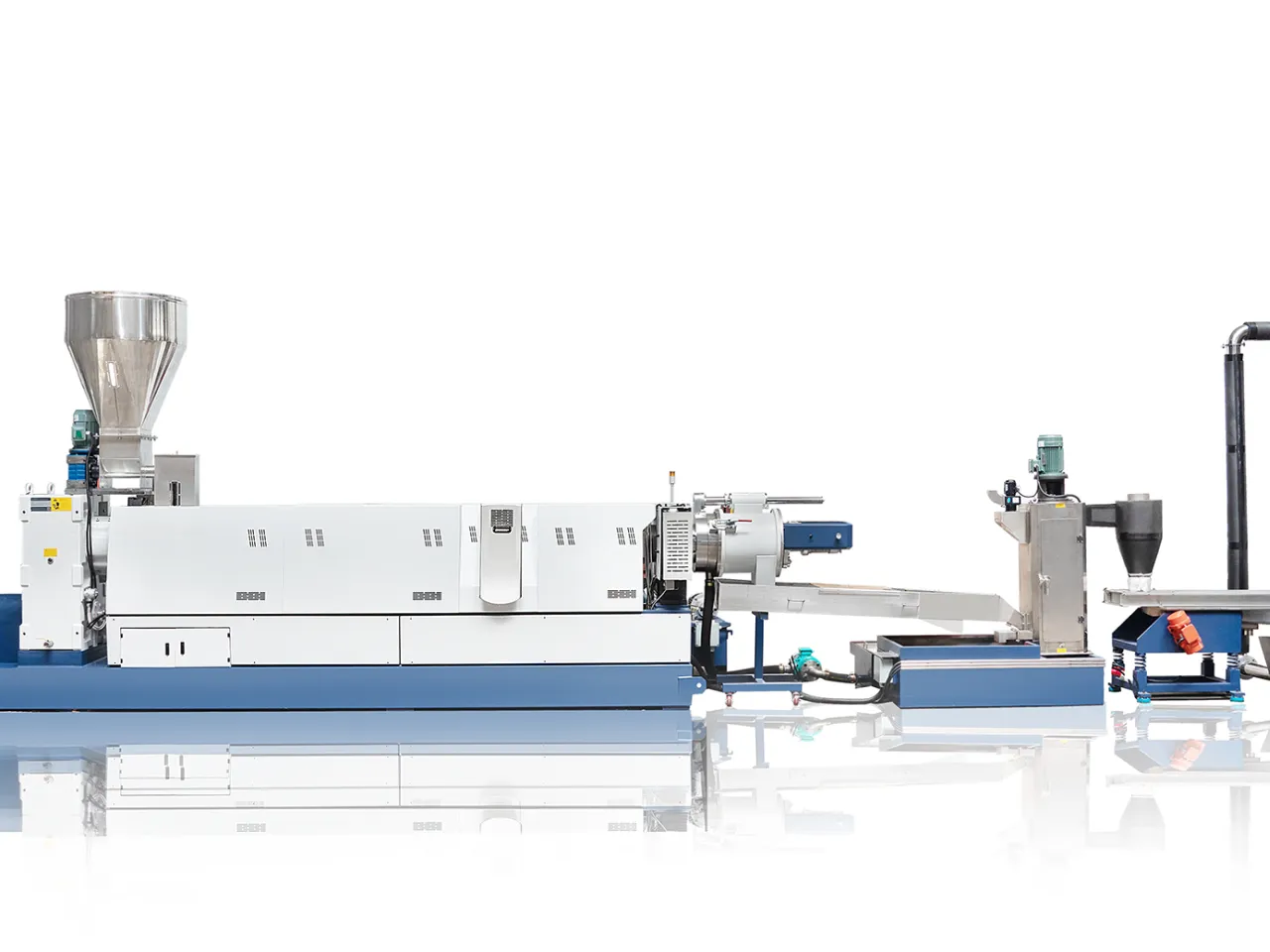
Two-Stage Pelletizing for Rigid Polyolefin Regrind
Rigid PP HDPE Plastic Flake Pelletizing Machine
A rigid plastic flake pelletizing line built for washed and crushed PP and HDPE flakes from bottles, containers, pipes, profiles, pallets, and injection scrap. The two-stage extrusion design improves homogenization, degassing, melt filtration, and final pellet stability for downstream molding and extrusion use.
Why a Two-Stage Rigid Flake Pelletizing Line Matters
Rigid PP and HDPE flakes are denser and easier to meter than film, but pellet quality still depends heavily on melt consistency, degassing, and filtration control.
Two-Stage Extrusion Improves Melt Stability
The first stage handles primary melting and coarse filtering, while the second stage improves homogenization, degassing, and final melt consistency before pelletizing.
Stable Flake Feeding
VFD-controlled screw feeding helps keep flake input steady during long runs so output quality and pellet size remain more consistent.
Dual-Stage Filtration
Segmented filtration helps remove remaining paper, labels, fine dirt, and residual contamination that may remain even after washing.
Dual-Zone Degassing Supports Cleaner Recycled Pellets
Vacuum degassing helps reduce trapped gas, moisture, and residual volatiles, which is important when the flake source or washing consistency varies.
Water-Ring Pelletizing Gives Uniform Output
The die-face water-ring cutting section produces dense, uniform pellets that are easier to store, dose, and feed into injection, profile, or pipe production.
Designed for Continuous Regrind Recovery
The full layout is intended for long-cycle recycling work where rigid flakes are converted back into a reusable pellet stream at steady output.
Materials and Rigid Regrind Applications
This line is intended for cleaned, crushed, and washed rigid PP and HDPE flakes where pellet resale or downstream manufacturing reuse is the target.
HDPE Bottle Flakes
Suitable for washed HDPE bottle regrind after sorting, crushing, label removal, washing, and drying.
Rigid Containers and Crates
Processes flakes from crates, bins, boxes, and transport packaging where pelletized output is easier to reuse than loose regrind.
Pipe and Profile Regrind
Works for rigid PP and HDPE pipe, profile, and extrusion scrap after size reduction and cleaning.
Injection Molding Scrap
Handles washed runners, purgings, molded rejects, and rigid post-industrial flakes prepared for pellet recovery.
Rigid Plastic Washing Line Output
Fits as the pelletizing stage after a rigid PP or HDPE washing line when the goal is saleable or internally reusable pellets.
Compound and Molding Feed Preparation
Converts washed flakes into a more consistent pellet form for compounding, injection molding, extrusion, and blow molding.
How the Rigid Flake Pelletizing Process Runs
The line turns washed rigid flakes into a cleaner and more stable pellet stream through controlled feeding, staged extrusion, filtration, and die-face cutting.
Feed the Washed Flakes
Rigid plastic flakes are metered into the line through controlled screw feeding for stable material flow into the extruder.
Primary Melting and Coarse Filtration
The first extruder stage melts the rigid flakes and removes larger contamination before the material moves forward.
Secondary Extrusion and Degassing
The second stage improves melt uniformity and uses vacuum zones to remove trapped gas, moisture, and residual volatiles.
Fine Melt Filtration
The melt passes through a finer filter stage so the final pellet stream is cleaner and more suitable for demanding downstream uses.
Water-Ring Pelletizing
The filtered melt is cut into uniform pellets, then cooled and dried for immediate storage, packaging, or reuse.
Two-Stage Rigid Flake Pelletizer vs Single-Stage Pelletizing
Rigid PP and HDPE flake often benefit from more process control than a simpler one-stage line can provide, especially when washing consistency and contamination vary.
| Decision Factor | Two-Stage Rigid Flake Pelletizer | Single-Stage Pelletizer |
|---|---|---|
| Melt Stability | Better homogenization through two extrusion stages | Good for cleaner and more uniform feed |
| Degassing Control | Stronger degassing performance for variable moisture and residual volatiles | More limited on difficult material |
| Filtration Strategy | Coarse and fine filtration separated across stages | Simpler melt cleaning path |
| Best Feed Type | Washed rigid PP and HDPE flakes with variable condition | Cleaner, more stable rigid regrind |
| Best Fit | When pellet quality and downstream consistency matter most | When process simplicity is the first priority |
Technical Specifications
The right model depends on flake cleanliness, target output, screen requirement, and the final pellet quality your downstream process needs.
| Model | Screw Diameter | Output Capacity | Application |
|---|---|---|---|
| RPP-90 | 90 / 80 mm | 200 - 300 kg/h | PP/HDPE Crushed Regrind |
| RPP-100 | 100 / 90 mm | 300 - 400 kg/h | PP/HDPE Crushed Regrind |
| RPP-120 | 120 / 110 mm | 400 - 500 kg/h | PP/HDPE Crushed Regrind |
| RPP-150 | 150 / 140 mm | 600 - 800 kg/h | PP/HDPE Crushed Regrind |
| RPP-180 | 180 / 170 mm | 800 - 1000 kg/h | PP/HDPE Crushed Regrind |
Machine Gallery
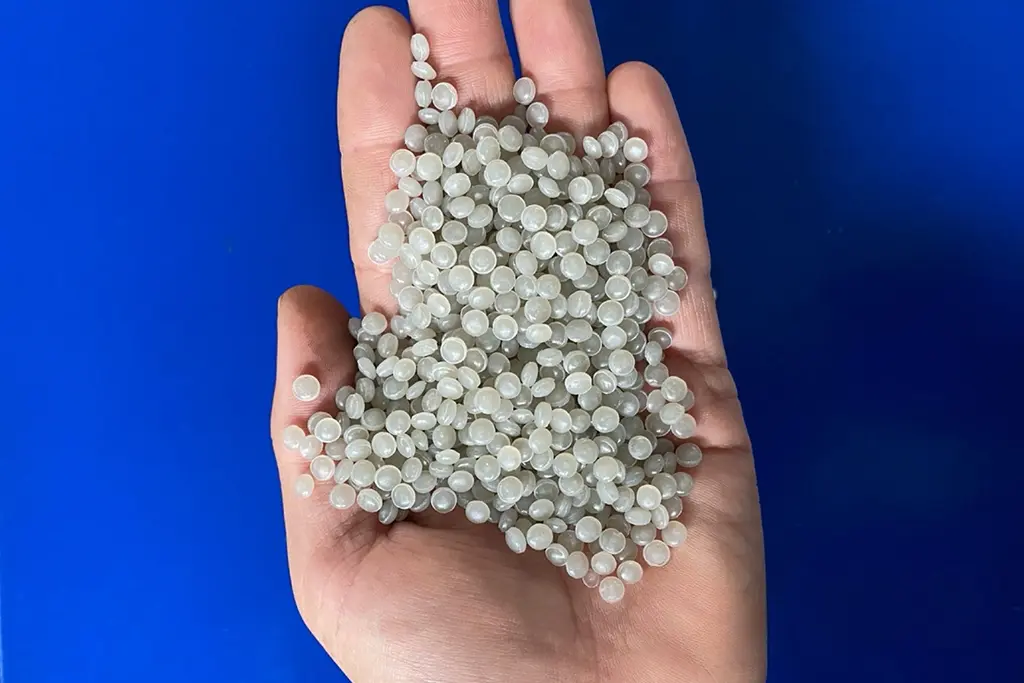
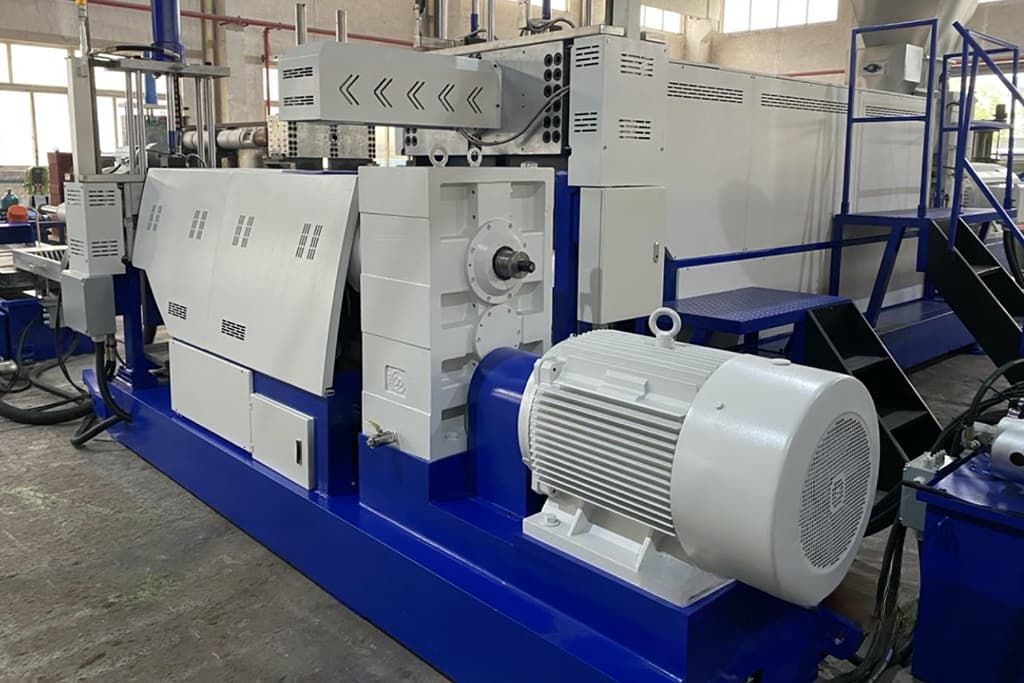
Reference views of the rigid flake pelletizing line, two-stage extrusion detail, and recycled pellet output.
Frequently Asked Questions
Answers to the questions buyers usually ask before choosing a rigid PP or HDPE flake pelletizing line.
A two-stage system separates melting, filtration, homogenization, and degassing more effectively than a simpler one-stage setup. That usually improves pellet purity and melt stability on variable rigid flake feed.
It is mainly designed for pre-crushed PP and HDPE flakes from bottles, containers, crates, pipes, profiles, injection scrap, and other rigid plastic products after washing and size reduction.
The pellets are suitable for injection molding, profile extrusion, pipe extrusion, blow molding, compounding, and other downstream processes that require recycled PP or HDPE pellets.
Even rigid flakes may retain moisture, trapped air, printing residue, or washing-related volatiles. Degassing helps stabilize the melt and improve pellet consistency.
The key inputs are flake type, washing quality, contamination level, moisture content, required output, filtration fineness, and the pellet quality needed by your downstream process.
Turn Washed Rigid Flakes into a Higher-Value Pellet Stream
Our rigid plastic pelletizing lines can be configured around output target, contamination level, filtration requirement, and plant layout. Send your material details and we will size the right model for your project.
