

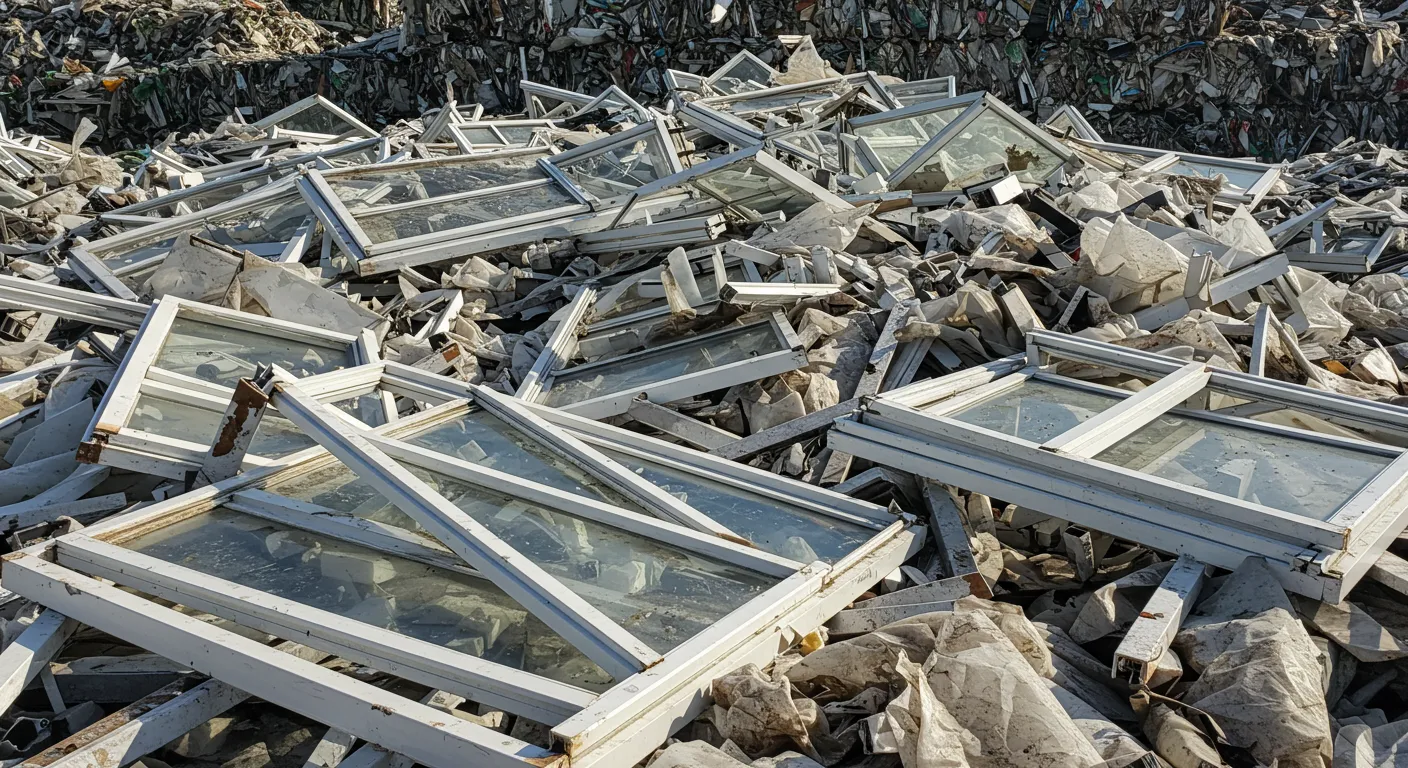
PVC grinding requirements are controlled by formulation and product shape, not by the resin name alone. Rigid pipe, flexible cable, foamed profile, flooring, and filled compounds can behave very differently in a shredder, granulator, or pulverizer. Separate known material families before size reduction and confirm the intended outlet: coarse regrind or fine powder.
PVC Types and Their Size-Reduction Behavior
| PVC material | Typical form | Processing concern | Common first step |
|---|---|---|---|
| Rigid unplasticized PVC | Pipe, fittings, window profiles, siding, and sheet | Long parts, impact loading, dust, and mineral filler | Profile or pipe granulator after metal removal |
| Flexible plasticized PVC | Cable insulation, hose, sheet, flooring, and film | Wrapping, heat buildup, mixed plasticizers, and embedded metal or fiber | Low-speed shredding or controlled cutting before granulation |
| Foamed or cellular PVC | Boards, trim, and lightweight profiles | Low bulk density, high dust volume, and variable skin/core structure | Metered feeding with dust collection |
| Filled or reinforced PVC | Pipe, profiles, tiles, and composite products | Abrasive contamination, brittle fracture, ash, and inconsistent formulation | Feed characterization followed by wear-controlled granulation |
| CPVC and specialty compounds | Hot-water pipe, industrial fittings, and engineered parts | Different formulation and end-use requirements | Keep separate and process under a validated route |
Grinding, Granulation, and Pulverizing Are Different
In recycling conversations, “grinding” can mean several operations. A shredder reduces bulky material and stabilizes feeding. A granulator cuts scrap into controlled regrind suitable for washing, sorting, or direct reprocessing. A pulverizer converts clean, prepared chips into fine powder for selected applications. Choosing equipment before defining the required particle size often creates excess dust, recirculation, and energy use.
Rigid profiles and pipe can often enter a purpose-built granulator without manual pre-cutting when the feed opening and rotor are designed for long parts. Flexible cable and hose may wrap or stretch and can require lower-speed primary reduction. Fine pulverizing should normally use clean, composition-controlled feed because mixed metals, stones, and unknown formulations can damage the mill and contaminate the powder.
Why PVC Formulations Must Be Kept Separate
Plasticizers make flexible PVC behave differently from rigid PVC. Mineral fillers, stabilizers, pigments, impact modifiers, fibers, rubber, and previous heat history also change fracture, dust, wear, and melt behavior. The Vinyl Institute recycling guidance notes that rigid and flexible PVC should be kept separate because their compositions and properties differ.
Do not identify a PVC grade only by color or apparent hardness. Use supplier data when available, inspect for metal and reinforcement, and apply suitable laboratory checks when the formulation is unknown. CPVC and legacy materials with restricted additives may need a separate compliance review before mechanical recycling.
Equipment Selection Checklist
- Define the feed: dimensions, wall thickness, flexibility, bulk density, contamination, filler, metal, moisture, and temperature.
- Define the outlet: target regrind or powder size, fines limit, cleanliness, and downstream process.
- Choose the sequence: direct granulation, shredder plus granulator, or granulation followed by pulverizing.
- Control heat and dust: confirm feed rate, knife condition, screen area, airflow, collection, and safe housekeeping.
- Run a material trial: measure throughput, motor current, temperature, particle distribution, dust, metal carryover, and wear.
Relevant Energycle options include the crusher vertical pentru țevi și profiluri din PVC, Masina de rectificat PVC, and the micronizing and pulverizing system. Their roles should not be treated as interchangeable.
Dust, Heat, and Contamination Controls
PVC fines and additives require contained collection, suitable ventilation, and a site-specific dust-hazard review. OSHA identifies plastic dust and additives among materials that can present combustible-dust hazards in some circumstances. Use the material safety data, local rules, and a qualified hazard assessment rather than assuming every dust behaves the same.
Heat buildup can soften flexible material, smear surfaces, or change particle size. Investigate dull knives, poor clearance, overloaded feeding, blocked screens, and inadequate airflow before increasing motor power or cooling. Never use a single chamber-temperature limit for every PVC formulation without testing.
Întrebări frecvente
Can rigid and flexible PVC be ground together?
They should normally be separated. Their additives, cutting behavior, and downstream formulations differ, so mixed grinding can reduce process stability and recyclate value.
When does PVC need a pulverizer?
Use a pulverizer when a clean, prepared PVC feed must become fine powder for a defined application. Coarse size reduction and washing should be completed first when required.
Is one screen size suitable for every PVC product?
No. Screen selection depends on product shape, rotor design, desired regrind, throughput, heat, fines, and the next process.
Technical Sources
- Vinyl Institute: PVC Recycling Directory and material separation guidance
- Peer-reviewed review of PVC recycling routes
- OSHA Combustible Dust National Emphasis Program
Test the Actual PVC Scrap
Send Energycle representative material, product dimensions, known formulation data, target particle size, and downstream use. A feed trial can determine the correct machine sequence and expose wrapping, dust, heat, or wear risks before purchase.
