

Choosing the wrong washing method costs more than energy—it determines whether your recycled PET can enter food-grade markets at all. Recyclers investing in a PET bottle recycling system face this decision early in process design: cold washing, hot washing, or a staged combination of both. This guide breaks down how each method works, where each performs best, and which operational and regulatory factors should drive your choice.
Why the Washing Stage Defines Flake Value
PET washing lines process post-consumer bottles into clean flakes reused in products ranging from polyester fiber to food-contact beverage bottles. The washing stage is the most consequential step in this chain. Residual contamination—label adhesives, cooking oils, bacteria, or beverage residues—directly degrades flake purity, reduces Intrinsic Viscosity (IV), and limits which downstream markets the material can enter.
Market pressure to get this right is accelerating. The global rPET market was valued at approximately USD 10.26 billion in 2024 and is projected to reach USD 29.65 billion by 2034, growing at a CAGR of roughly 11.2%. At the same time, regulatory requirements are tightening: EU Regulation 2022/1616 mandates EFSA approval of PET recycling processes used to produce food-contact packaging, and EU policy requires 25% recycled content in PET bottles by 2025 and 30% by 2030. Washing quality is no longer a production variable—it is a market access requirement.
How Cold PET Washing Lines Work
Cold washing lines use water at ambient temperature, typically 20–30°C, without external heating. Cleaning relies on mechanical action—friction washing, counter-current rinsing, and high-pressure water flow—to strip surface contamination from shredded PET flakes. No chemical agents are required in most configurations.
Advantages of Cold Washing
- Lower energy consumption: Eliminating water heating significantly cuts operating costs and reduces the carbon footprint of the washing process.
- Reduced thermal risk: PET flakes are not exposed to heat, preserving IV and preventing surface degradation during washing.
- Simpler infrastructure: Fewer system components mean lower capital expenditure, faster commissioning, and reduced maintenance intervals.
- Effective on light contamination: Loose dirt, dust, surface grime, and detached label fragments are removed efficiently at ambient temperature.
Limitations of Cold Washing
Cold water cannot reliably dissolve hot-melt adhesives, polyolefin label films, cooking oils, or biological contamination such as bacteria and mold spores. These contaminants require thermal energy and chemical action to break down. As a result, cold-washed flakes typically do not achieve the purity thresholds required for food-grade rPET approval under FDA or EFSA frameworks.
Cold washing is best suited for non-food-grade applications—polyester staple fiber, strapping tape, agricultural film, and non-contact packaging—where lower purity standards apply and cost efficiency is the primary driver.
How Hot PET Washing Lines Work
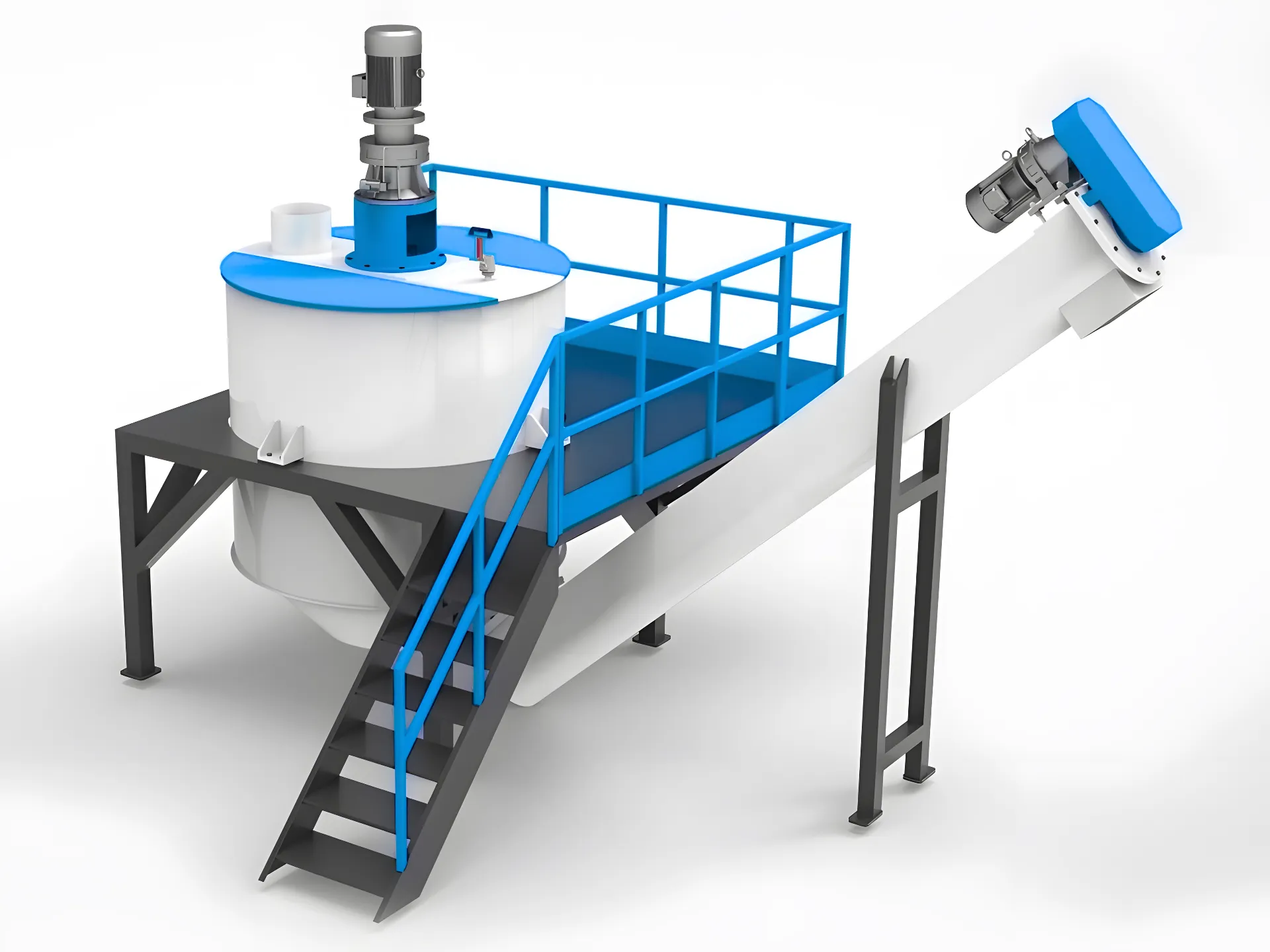
Hot washing lines heat water to 85–95°C, the operating range validated for effective decontamination without triggering significant PET thermal degradation. The process centers on a hot wash reactor—such as a continuous hot washer system for PET and HDPE flakes—where flakes are agitated in a heated caustic solution for a controlled dwell period.
Standard hot washing chemistry includes:
- Caustic soda (NaOH): Added at a concentration of 1–2% to saponify fats and dissolve label adhesives.
- Surfactants or detergents: Improve emulsification of oily residues and rinse-off efficiency.
- Temperature control: Maintained precisely in the 85–95°C window—hot enough for thorough decontamination, but below the threshold for meaningful IV degradation.
- Residence time management: Calculated dwell time ensures uniform treatment across all particle sizes. Agitators keep flakes suspended for consistent exposure.
Advantages of Hot Washing
- Eliminates tough contaminants: Hot caustic chemistry dissolves stubborn adhesives, greases, and food residues that cold water cannot remove.
- Pathogen destruction: Temperatures above 85°C kill bacteria and microorganisms, a baseline requirement for food-contact applications.
- Enables food-grade certification: Hot-washed flakes processed under validated conditions can qualify for FDA No Objection Letter (NOL) or EFSA scientific opinion approval.
- Supports bottle-to-bottle recycling: The highest-value rPET application—closed-loop beverage bottle production—relies on hot washing as a core process step.
Managing Hot Washing Costs and Complexity
Higher energy consumption and caustic wastewater are the primary challenges. Both are addressable with modern system engineering:
- Heat recovery systems recapture thermal energy between wash stages, lowering net energy cost per tonne of output.
- NaOH membrane recovery via ultrafiltration or nanofiltration can reclaim up to 98.6% of caustic soda from process wastewater, substantially reducing chemical costs and alkaline discharge load.
These are not marginal optimizations. At industrial throughput, NaOH recovery and heat integration directly affect total cost of ownership and environmental compliance for wastewater discharge.
Cold vs. Hot PET Washing: Key Differences
| Parameter | Cold Washing | Hot Washing |
|---|---|---|
| Water temperature | 20–30°C | 85–95°C |
| Energy consumption | Low | Higher (reducible with heat recovery) |
| Contaminant removal | Light surface dirt, dust | Adhesives, oils, bacteria, organic residues |
| Sanitization | No | Yes |
| IV impact | Minimal | Low risk when temperature-controlled |
| Regulatory qualification | Non-food grade | FDA NOL / EFSA-approvable |
| Capital cost | Lower | Higher |
| Chemical input | None required | NaOH 1–2% + surfactant |
| Best application | Fiber, strapping, non-food packaging | Beverage bottles, food-contact packaging |
Food-Grade rPET: Why Hot Washing Is Non-Negotiable
Producing food-grade rPET requires regulatory approval, not just visually clean flakes. In the United States, manufacturers must obtain a No Objection Letter (NOL) from the FDA confirming that the recycling process prevents harmful contaminant migration into food. In the European Union, Regulation (EU) 2022/1616 requires a positive scientific opinion from the European Food Safety Authority (EFSA) for each recycling process used in food-contact applications.
Both frameworks assess whether a process reliably removes contaminants to safe migration limits under worst-case input conditions. Hot washing—specifically the combination of 85–95°C process temperature with caustic chemistry—is a standard component of every approved food-grade mechanical PET recycling process. Cold washing alone has not been established as sufficient for food-grade approval under either regulatory framework.
A quality metric that often goes untracked is Intrinsic Viscosity (IV). Target IV for food-grade, bottle-grade PET flakes is 0.78–0.84 dl/g. Overheating or excessive dwell time in the hot wash stage can degrade polymer chains and reduce IV below this range, downgrading the product regardless of its cleanliness. A properly engineered hot washing system maintains temperature precision and residence time control to protect IV while achieving regulatory-grade decontamination.
Four Factors That Should Drive Your Decision
The choice between cold, hot, or a staged combination comes down to these variables:
- Contamination profile of your input stream: Lightly contaminated water bottle bales differ significantly from mixed post-consumer streams containing beverage, food, oil, or chemical containers. The more diverse and contaminated the feedstock, the stronger the case for hot washing or a cold-plus-hot hybrid.
- End-use specification and target market: Polyester fiber and non-food strapping do not require food-grade certification. Beverage bottle or food tray production does, making hot washing a process requirement rather than an option.
- Regulatory jurisdiction: Selling rPET into EU or US food-contact markets sets a clear minimum process standard. Know your target market before designing your line.
- Operational economics and scale: Larger throughput lines recover heat investment more efficiently. At smaller scales, cold washing may offer a better cost-to-output ratio for non-food applications.
Many industrial recyclers use a hybrid approach: cold washing for gross contamination removal upstream, followed by hot washing for deep decontamination. This reduces thermal and chemical load on the hot wash reactor, improves consistency, and extends equipment service intervals.
Energycle’s Industrial PET Washing Systems
Energycle designs and supplies production-scale PET recycling equipment engineered for both cold and hot washing configurations. The continuous hot washer system for PET and HDPE flakes is built for precise temperature control, adjustable NaOH dosing, and high-throughput continuous operation—critical requirements for consistent food-grade output.
Full-line configurations are available through the PET bottle recycling system, which integrates upstream sorting, shredding, and washing with downstream centrifugal drying, friction washing, and optical quality inspection. Systems are configured around each customer’s feedstock profile and target flake specification—not a one-size-fits-all template.
Conclusion: Matching Your Washing Process to Your Market
The cold vs. hot PET washing line decision is fundamentally a market access decision, not just a technical one. Here are five key takeaways:
- Cold washing (20–30°C) delivers cost-effective, low-energy cleaning for non-food-grade applications where light to moderate contamination is the norm.
- Hot washing (85–95°C) with 1–2% NaOH is the industry standard for food-grade rPET and the basis for FDA NOL and EFSA process approval.
- IV retention (0.78–0.84 dl/g) is a critical quality control metric—monitor it regardless of washing method to protect flake market value.
- NaOH recovery systems can reclaim up to 98.6% of caustic soda, significantly reducing the cost and environmental burden of hot washing.
- Hybrid cold + hot configurations offer the best balance of throughput efficiency and decontamination performance for mixed or heavily contaminated feedstocks.
Have a specific feedstock profile or output target in mind? Contact Energycle’s engineering team to discuss equipment configurations, material testing, and line design for your operation.
Related Resources
- PET bottle recycling system
- Plastic washing systems
- How to choose PET washing line
- Centrifugal dryer
- PET Bottle Washing Line: Process, Selection & ROI Guide
