

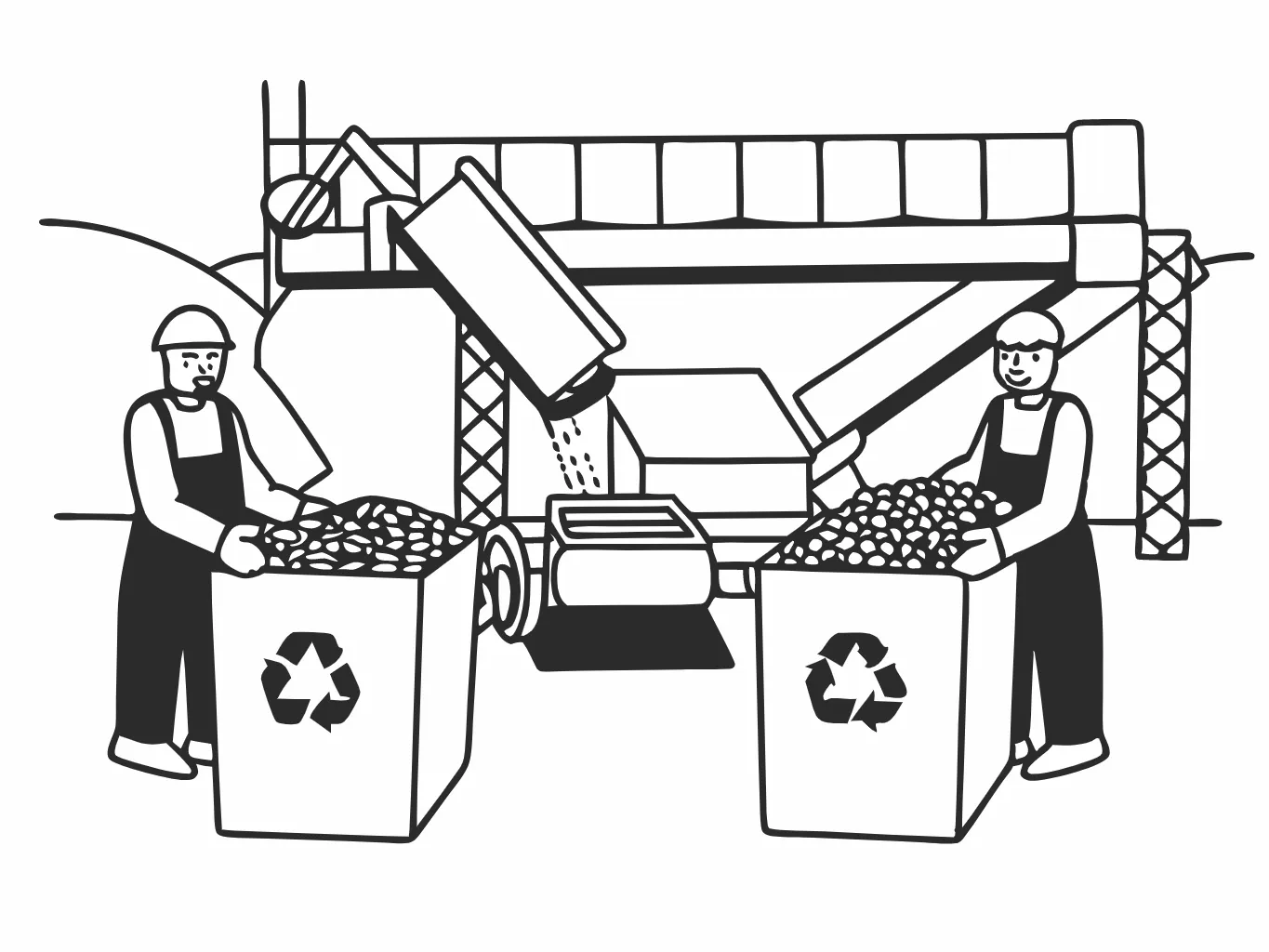
El reciclaje del poliestireno suele describirse como difícil, pero la barrera no suele ser la química, sino... recogida y transporte. La espuma de poliestireno expandido (EPS) ocupa mucho espacio en relación con su peso. Sin densificación, los costos de almacenamiento y transporte pueden ser un factor decisivo para la economía.
Las máquinas de reciclaje de poliestireno resuelven ese problema al convertir la espuma suelta en formatos más densos que son más fáciles de manipular, enviar y reprocesar en pellets u otros productos.
Conclusiones rápidas (para compradores)
- Si su flujo incluye espuma de EPS, la densificación suele ser el primer paso que hace que un programa de reciclaje sea viable.
- La máquina “adecuada” depende del formato de salida (troncos/lingotes/pellets), del nivel de contaminación y de lo centralizado que será su procesamiento.
- Si planea peletizar PS, considere la clasificación, la limpieza y la filtración de la masa fundida como requisitos fundamentales, no como complementos.
PS vs EPS: Sepa lo que está manejando
El poliestireno se presenta en múltiples formas: – PS rígido (a menudo GPPS/HIPS) utilizado en diversos productos y embalajes rígidos. Espuma EPS Se utiliza para amortiguación y aislamiento debido a su baja densidad aparente.
La guía de diseño de PS/EPS de APR señala que la baja densidad aparente del EPS es una de las razones por las que se utiliza para aislamiento y amortiguación, y también destaca que el acceso a la recolección puede ser limitado en muchas regiones, por lo que su caso de negocio necesita una visión realista de la recolección y la logística, no solo del equipo de procesamiento. (Fuente: Guía de diseño de APR PS/EPS)
Los tres formatos de salida que determinan la elección de su equipo
La mayoría de los compradores terminan eligiendo una de estas "rutas de salida". Cada una conlleva diferentes gastos de capital, servicios públicos y riesgos operativos.
| Formato de salida | ¿Qué es | ¿Qué máquinas necesitas habitualmente? | Donde encaja |
|---|---|---|---|
| Troncos de EPS compactados | Espuma comprimida mecánicamente (no completamente derretida) | Compactador de EPS + clasificación y almacenamiento básicos | Flujos de espuma de embalaje limpio; sitios de recolección distribuidos que alimentan un procesador central |
| Lingotes densificados térmicamente | La espuma colapsó por el calor en bloques densos. | Densificador térmico + ventilación + manipulación/recogida segura | Sitios que necesitan mayor densidad para envíos y que pueden soportar ventilación y gestión del calor. |
| Pellets de PS | PS reciclado extruido y peletizado | Densificación (si es EPS) + trituración/molienda + extrusión + filtración de material fundido + peletización | Operaciones de venta de materia prima estandarizada a convertidores; mayores expectativas de control de calidad |
Si desea un recorrido por el proceso, consulte Energycle Descripción general del flujo de trabajo de la máquina de reciclaje de EPS y su Descripción general de las máquinas de reciclaje de poliestireno expandido (EPS).
Módulos centrales de la máquina (lo que realmente importa en la operación diaria)
1) Clasificación y control de la contaminación
El valor del PS y el EPS disminuye rápidamente cuando los flujos se mezclan con otros plásticos, papel, residuos de alimentos o partículas finas. Defina qué aceptará y cómo rechazará.
El comprador verifica: – cómo se inspecciona el material (control de calidad entrante) – cómo se eliminan los plásticos mezclados (manual o automático) – cómo se manipulan los envases en contacto con alimentos (gestión del riesgo de contaminación)
2) Densificación (para corrientes de EPS)
Este es el módulo que cambia la curva de costos logísticos.
Dos enfoques comunes: – Compactación en frío (mecánica): Comprime la espuma en troncos. Es más simple y, a menudo, requiere menos servicios públicos. Densificación térmica: La espuma se colapsa con el calor formando lingotes. Puede alcanzar mayor densidad, pero requiere ventilación y gestión del calor.
3) Reducción de tamaño (cuando se planea peletizar)
El material densificado aún requiere una alimentación estable en una extrusora. Esto generalmente implica triturarlo o molerlo hasta alcanzar un tamaño controlado.
4) Extrusión, filtración y peletización (cuando vendes pellets)
Si su objetivo de producción es un pellet estandarizado, se evaluará su consistencia. Esto generalmente significa: – alimentación estable (evitar picos de presión); – filtración de la masa fundida adaptada a la carga de contaminación; – método de peletización adaptado al polímero y al modelo operativo de la planta.
Para opciones posteriores, Energycle máquinas peletizadoras de plástico La página es una referencia útil para las configuraciones de línea.
Qué incluir en una solicitud de cotización (para que las cotizaciones sean comparables)
| Artículo de RFQ | Por qué es importante | Qué especificar |
|---|---|---|
| Forma material | EPS vs PS rígido cambia toda la línea | Espuma de EPS vs. PS rígido; tamaño típico de pieza; contaminantes |
| Perfil de contaminación | Impulsa las necesidades de clasificación, limpieza y filtración. | Papel/etiquetas, residuos de alimentos, plásticos mixtos, finos |
| Formato de salida | Define el tipo de máquina y las utilidades. | Troncos/lingotes/pellets; requisitos de embalaje y manipulación |
| Rendimiento y ciclo de trabajo | Determina el dimensionamiento y el plan de mantenimiento. | Objetivo de kg/h y turnos/día; cargas pico vs. cargas promedio |
| Servicios públicos y límites del sitio | A menudo bloquea proyectos después de la compra. | Potencia disponible, límites de ventilación, espacio, restricciones de ruido. |
Notas de mercado y cumplimiento (Qué afecta el precio de venta)
Para proyectos de PS y EPS, la selección del equipo es solo la mitad del trabajo. El precio de venta depende de si su producción cumple con los requisitos de la aplicación del comprador:
- Olor y residuos: El EPS para servicios de alimentación puede contener residuos que generan quejas por olores. Si su mercado final es sensible, planifique una limpieza más exhaustiva y un control de calidad de entrada más riguroso.
- Tolerancia a la contaminación: Los compradores de PS suelen centrarse en las manchas visibles y el arrastre de polímeros mixtos. Defina las normas de muestreo y segregación de lotes para que una carga defectuosa no contamine la producción de un día completo.
- Ambición en el contacto con alimentos: Si se centra en aplicaciones en contacto con alimentos, consulte con antelación las directrices regulatorias pertinentes y prevea una documentación y un control de procesos más estrictos. En EE. UU., la FDA publica directrices sobre consideraciones químicas para plásticos reciclados en envases de alimentos. (Fuente: Orientación de la FDA de EE. UU.)
Preguntas frecuentes (Preguntas reales sobre adquisiciones)
¿La espuma de EPS es realmente reciclable o es “técnicamente reciclable pero no recolectable”?
Ambas afirmaciones pueden ser ciertas según la región. El EPS se puede procesar mecánicamente cuando se recolecta de forma limpia y se compacta, lo que permite su envío. El obstáculo práctico suele ser que el EPS es voluminoso, por lo que los costos de recolección y transporte pueden superar el valor del material a menos que la compactado se realice pronto. La guía de diseño de PS/EPS de APR también señala que el acceso para la recolección de PS o EPS puede ser limitado en algunas zonas, por lo que un plan de reciclaje debe comenzar con canales de recolección realistas y control de la contaminación. Considere el equipo como el segundo paso después de validar el suministro y los compradores. (Fuente: Guía de diseño de APR PS/EPS)
¿Debería comprar un compactador en frío o un densificador térmico para EPS?
Elija en función de la limpieza de sus datos, los servicios públicos y el modelo logístico. Las compactadoras en frío suelen ser más sencillas de operar y se adaptan a flujos de espuma de embalaje más limpios. Los densificadores térmicos pueden generar una salida más densa, pero añaden requisitos de gestión del calor y ventilación. La decisión más importante es dónde se realiza la densificación: in situ, en los puntos de recogida (para reducir el volumen de envío) o en un procesador centralizado. Si tiene dudas, comience con el formato de salida que prefiera su comprador final y luego elija el método de densificación más sencillo que cumpla con las especificaciones de manipulación.
¿Puedo pasar directamente de la densificación de EPS a pellets?
Normalmente no sin pasos adicionales. La densificación permite el envío del EPS, pero la producción de pellets depende de una alimentación constante, la filtración de la masa fundida y una extrusión estable. En la mayoría de las plantas, el PS densificado se reduce (se tritura o muele) para una alimentación estable, luego se extruye con un filtro dimensionado para la carga de contaminación y finalmente se peletiza. Si la espuma entrante contiene residuos de alimentos o plásticos mixtos, es de esperar que los requisitos de clasificación y limpieza aumenten rápidamente. Si su objetivo son los pellets, solicite a los proveedores que le coticen el concepto de línea completa, no solo el densificador.
¿Cuáles son los mayores riesgos de calidad al fabricar pellets de PS reciclado?
Contaminación y variabilidad. Los polímeros mixtos, el papel y los residuos pueden manifestarse como defectos gelatinosos, problemas de olor o un procesamiento inestable. Su proceso requiere normas claras de control de calidad de entrada, un plan de clasificación y una estrategia de filtración que se ajuste a la carga real de contaminación. También ayuda a definir qué significa "aprobado" para su cliente: consistencia del flujo de fusión, límites de contaminación visual y expectativas de olor. Considere la calidad del pellet como un resultado del sistema (recolección + clasificación + filtración + peletización), no como una característica exclusiva de la extrusora. Solicite a sus proveedores que propongan un plan de pruebas vinculado a sus pruebas de aceptación.
¿El reciclaje de PS requiere una guía de diseño especial para envases y etiquetas?
Si su flujo incluye embalajes, es útil comprender cómo el diseño de los mismos afecta la reciclabilidad y el riesgo de contaminación. APR mantiene una guía de diseño de PS/EPS que abarca tanto el PS rígido como el EPS y explica cómo componentes como etiquetas, tintas y adhesivos pueden afectar los flujos de reciclaje. Incluso si no es diseñador de embalajes, esta guía es útil porque explica qué tipos de componentes suelen causar problemas en el reciclaje mecánico. Úsela para crear sus reglas de control de calidad de entrada y explicar los motivos de rechazo a los proveedores. (Fuente: Guía de diseño de APR PS/EPS)
¿Dónde puedo consultar el contexto y las definiciones más amplias del reciclaje de plásticos?
En el contexto de las normas, la norma ISO 15270 proporciona orientación sobre residuos plásticos y reciclaje. Para el contexto nacional de materiales en EE. UU., la EPA publica datos específicos sobre materiales plásticos en su marco de informes "Datos y Cifras", lo que puede ayudarle a comprobar con precisión cómo se rastrean y se discuten los plásticos a alto nivel (no sustituye su propia investigación de mercado, pero ayuda a evitar confusiones). Para las iniciativas y hojas de ruta de recolección específicas para el poliestireno, la Alianza para el Reciclaje del Poliestireno (PSRA) publica materiales centrados en ampliar el acceso y la capacidad. (Fuentes: Descripción general de la norma ISO 15270, Datos específicos de materiales plásticos de la EPA de EE. UU., PSRA)
Referencias
- Energycle — Flujo de trabajo de reciclaje de EPS
- Energycle — Descripción general de las máquinas de reciclaje de EPS
- Energycle — Máquinas peletizadoras de plástico
- Asociación de Recicladores de Plástico (APR) — Guía de diseño de PS/EPS
- EPA de EE. UU.: Datos específicos sobre materiales plásticos (datos y cifras)
- Alianza para el Reciclaje de Poliestireno (PSRA)
- ISO — Directriz de reciclaje de plásticos (descripción general de la norma ISO 15270)
- FDA de EE. UU. — Consideraciones químicas para el plástico reciclado en envases de alimentos (guía)
