

Reciclaje integral de plásticos Soluciones
Plan a recycling line around your feedstock, contamination and target output. Connect size reduction, washing, drying and optional pelletizing to produce clean flakes, densified material or recycled pellets, with process design and commissioning support.
Choose a Recycling Line by Material
Start with your waste stream, then compare the required output. These routes are configured for the feedstock and downstream application.
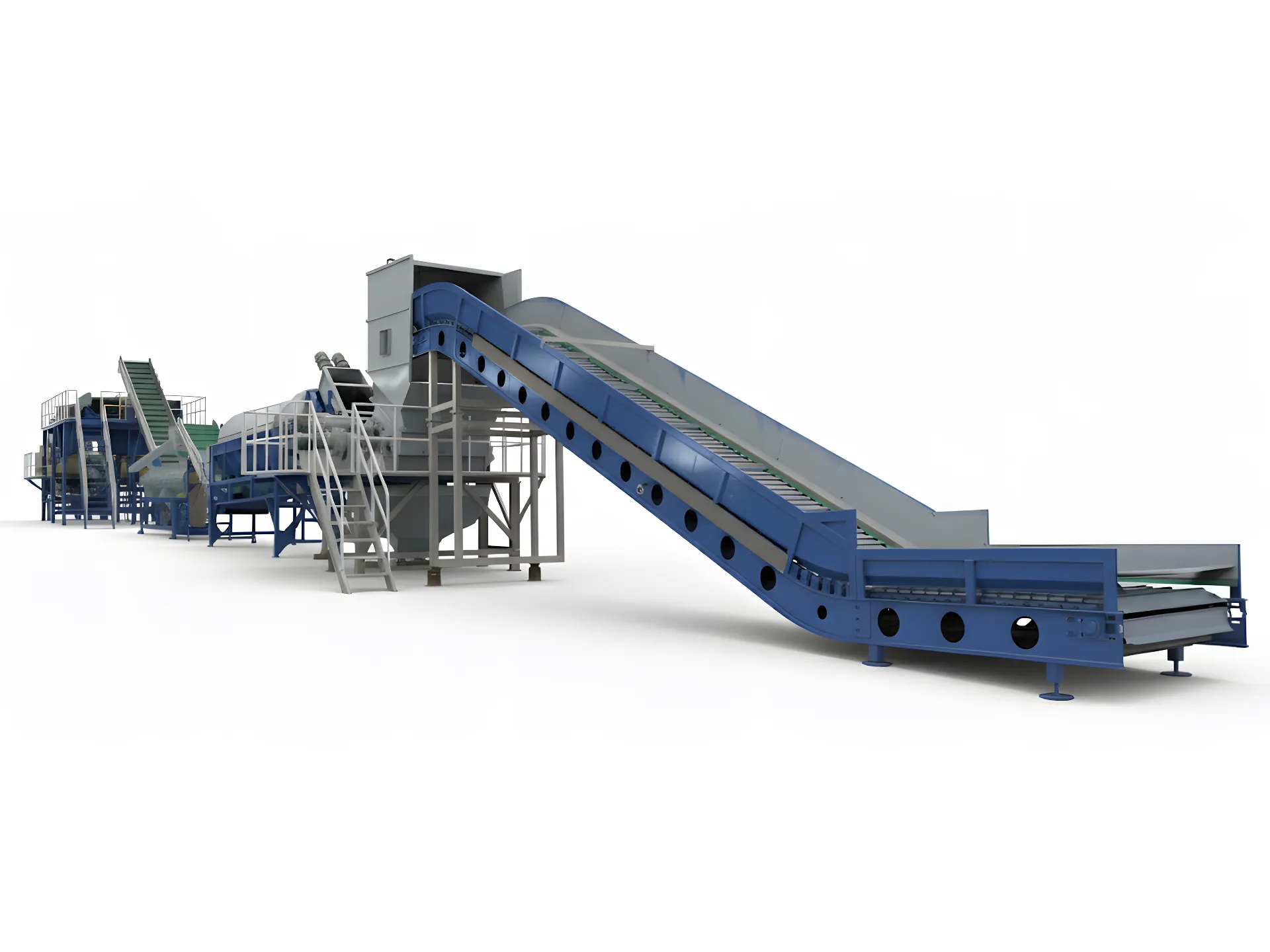
Línea de Reciclaje de Botellas de PET
- Materia prima
- Baled or loose PET bottles
- Salida objetivo
- Copos de PET lavados
Match sorting and washing to labels, adhesives and the intended flake application. Downstream pelletizing is a separate process choice.
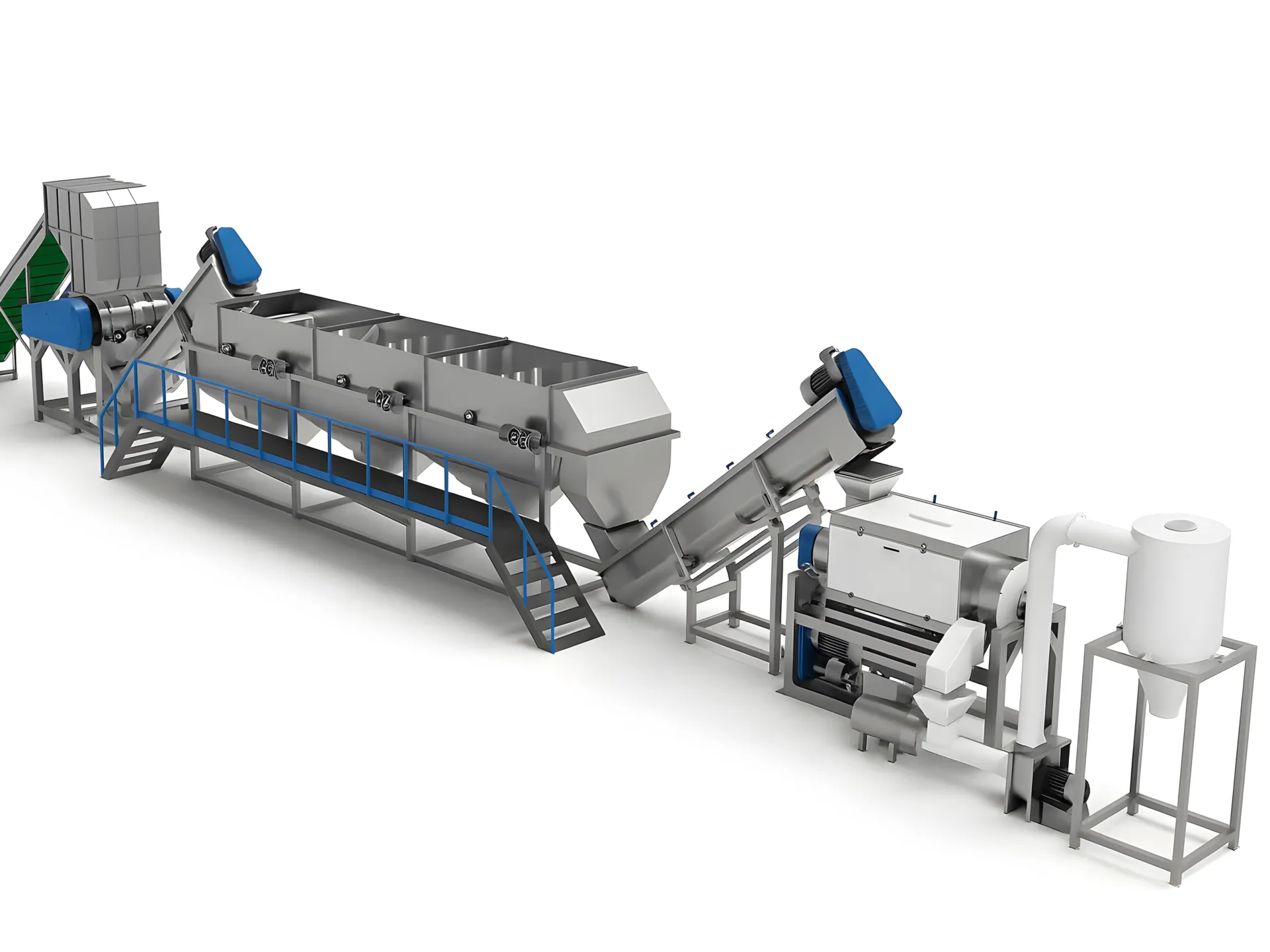
Línea de lavado y reciclaje de película PP/PE
- Materia prima
- Packaging and agricultural film
- Salida objetivo
- Washed, dried film regrind
Choose washing and drying around the dirt load and required moisture. Pelletizing can be added when finished pellets are the target.
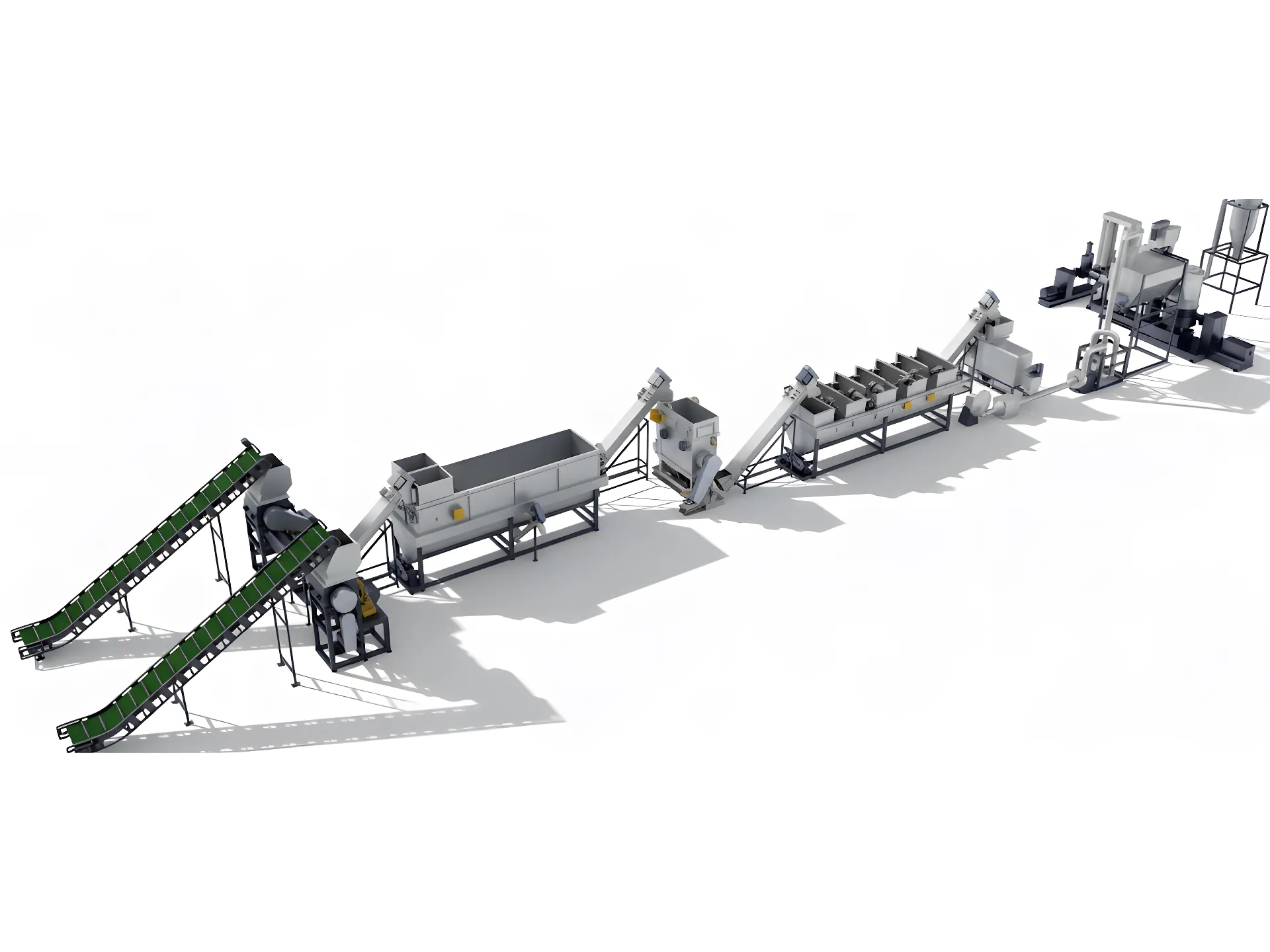
Línea de trituración y densificación de película PP/PE
- Materia prima
- Bulky or loose PP/PE film
- Salida objetivo
- Clean, densified film material
Shred and wash the film, then squeeze-dry and densify it for storage, conveying and downstream pelletizer feeding.
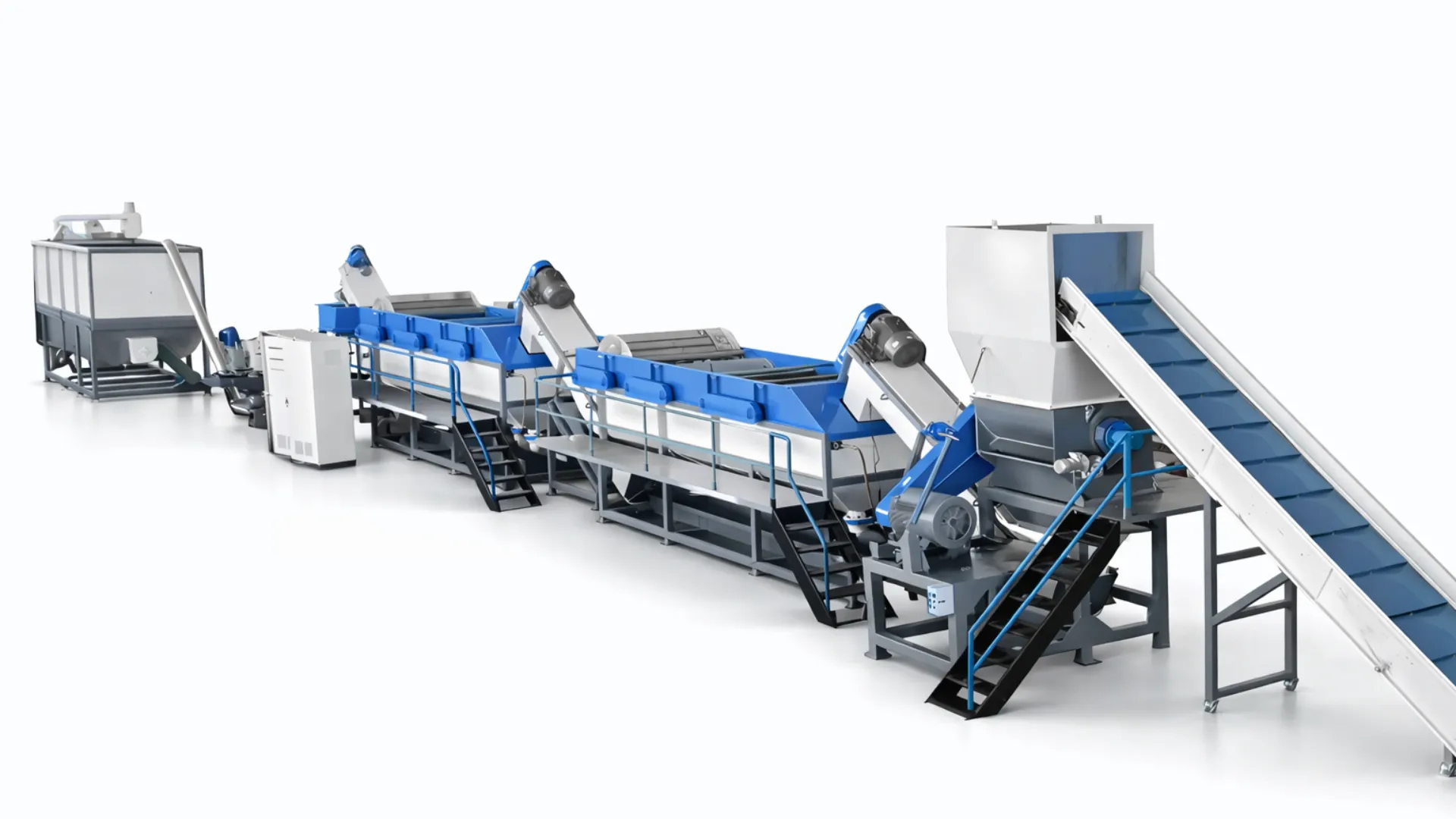
Línea de lavado de plástico rígido
- Materia prima
- A defined PP, HDPE or PVC stream
- Salida objetivo
- Washed rigid flakes
Match the route to the polymer and contamination. Mixed polymers require a sorting plan; one setup does not separate every plastic.
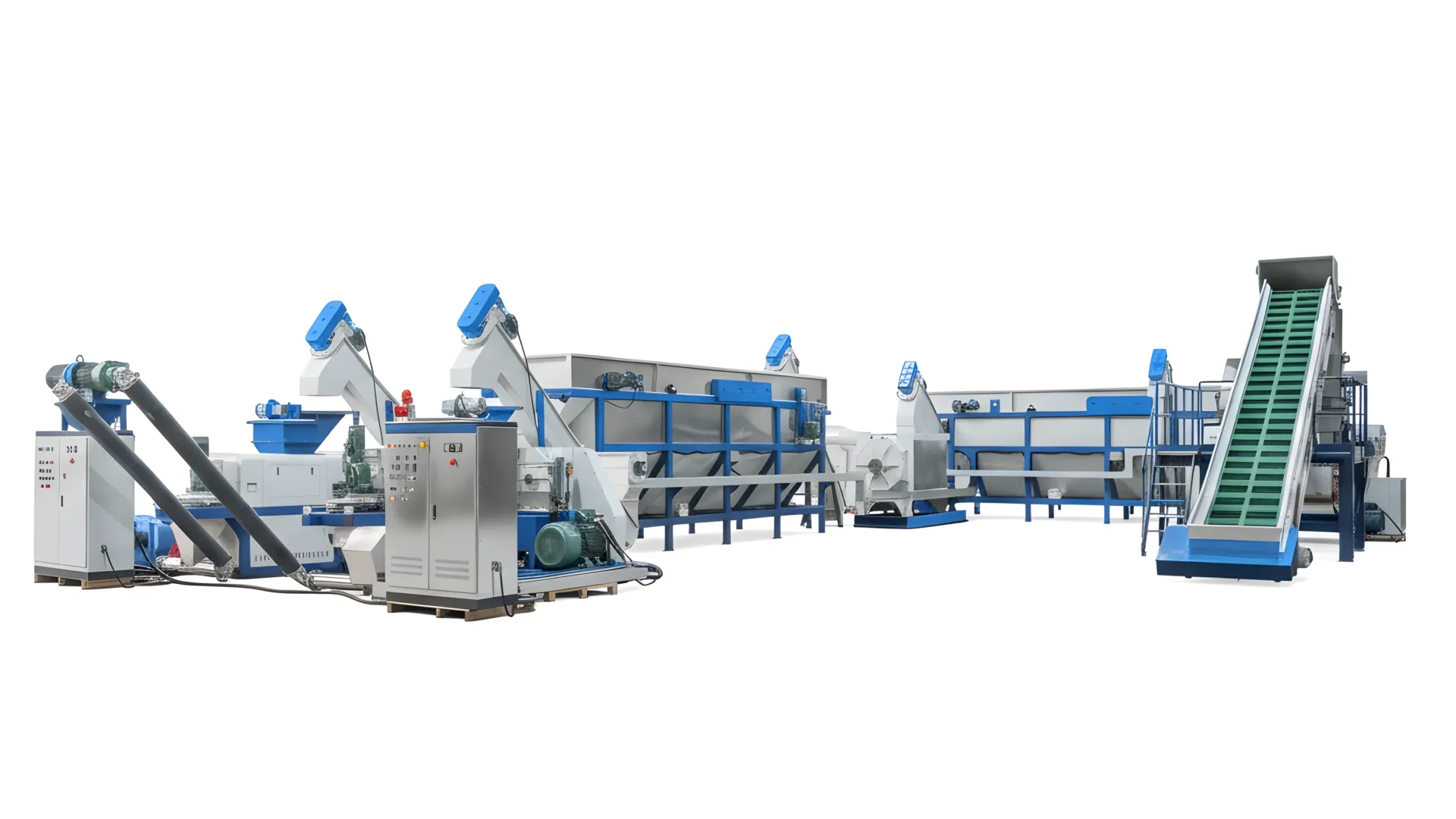
Woven Bags & Raffia Recycling Line
- Materia prima
- PP sacks, raffia and FIBC scrap
- Salida objetivo
- Washed, dried PP material
Control fibrous feeding, washing and drying. Assess coatings, liners and other polymers before specifying the recovery route.
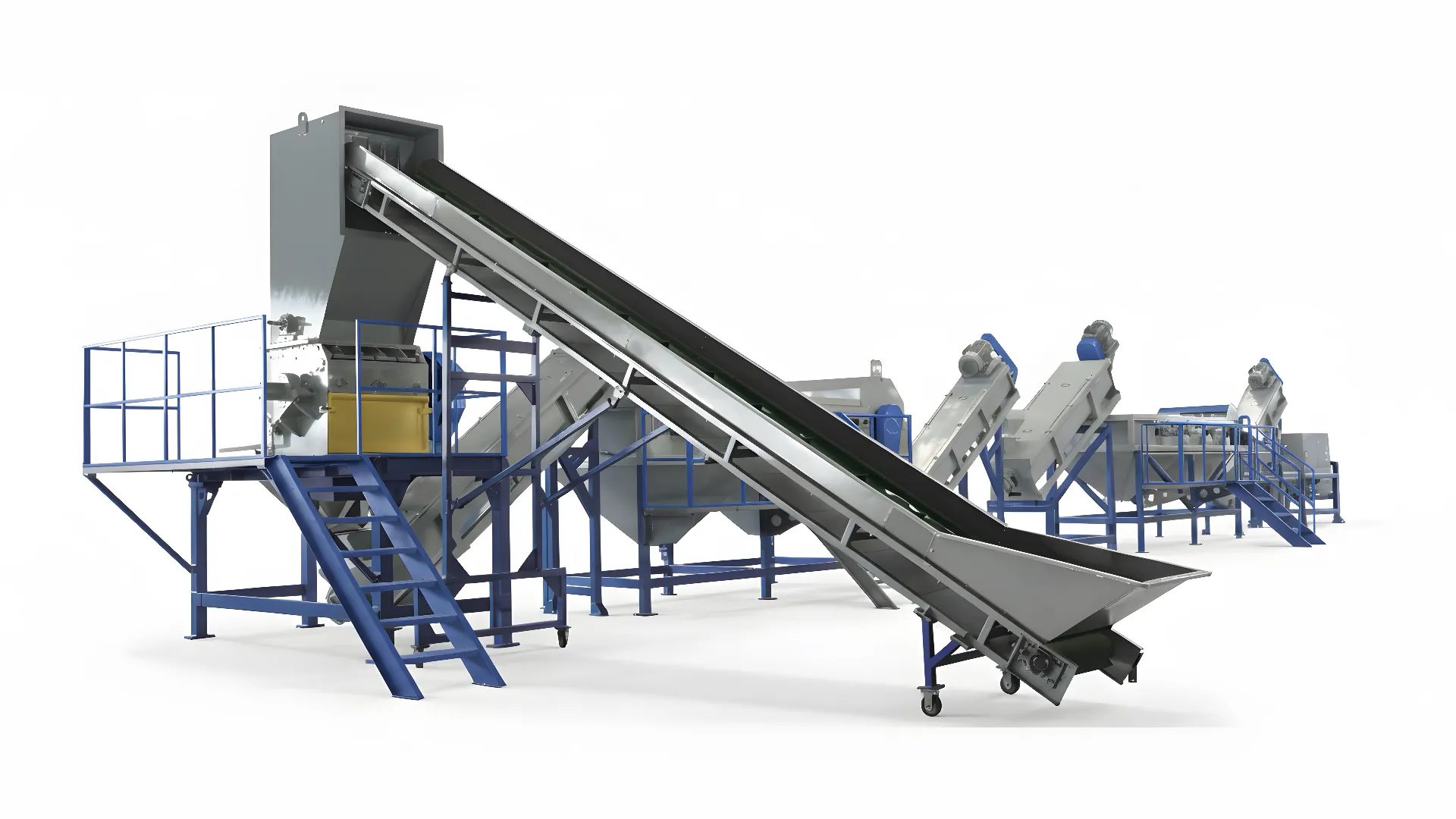
Contaminated Container Washing Line
- Materia prima
- Chemical drums, containers and IBCs
- Salida objetivo
- Washed material for agreed reuse
Assess residue chemistry, handling precautions and wastewater treatment before selecting the process and output acceptance criteria.
What Should Your Line Produce?
The same waste stream can lead to different products. Set the output specification before selecting the equipment.
Clean flakes or regrind
Choose this output when the next step is flake supply, storage or a separate conversion process. Define the polymer, contamination, particle size and moisture requirements.
Compare washing systemsDensified film material
Choose a film route with squeeze drying and densifying when loose washed film needs greater bulk density for handling and feeding. The discharge remains feed for a later extrusion stage.
Explore film densifyingPellets reciclados
Add extrusion, filtration, degassing and pellet cutting when finished pellets are required. Select the pelletizer around the polymer, feed condition and intended application.
Compare pelletizing systemsConnect the Stages Around Your Output
This is a process overview. Stages may be combined, repeated or omitted after reviewing representative material.
- 01
Prepare the feedstock
Open bales, sort unsuitable material and reduce size for controlled feeding. The preparation stage depends on material form and contamination.
- 02
Wash & separate as needed
Remove contamination with the washing and separation stages suited to the feedstock. Assess whether clean industrial scrap requires washing.
- 03
Dewater, dry or densify
Match moisture control to the next process. Add squeeze densifying where the film route requires denser, easier-to-handle output.
- 04
Finish, check & transfer
Pack clean material or add pelletizing. Check the agreed output specification and transfer the product to storage or downstream production.
Planning one stage of an existing plant? Explore Trituración primaria, Lavado, Secado y peletizado. Confirm capacities, transfer points, controls and utilities before connecting modules.
Engineering From Layout to Start-Up
A complete line needs coordinated equipment and a clear project scope.
Process & Layout Design
Define the feedstock, target output, process flow and floor layout together. Capacity and utility requirements are specified for the selected configuration.
Equipment & Controls Integration
Coordinate feeding, transfer equipment and process controls across the line. Discuss upgrade points and the interfaces to existing equipment.
Commissioning & Operating Support
Plan installation support, commissioning, operator training and spare parts. Agree on delivery scope and acceptance criteria in the project proposal.
Send the Details That Shape Your Proposal
These inputs help define a practical equipment scope, layout and utility estimate.
Feedstock & Contamination
Send the polymer, waste source, material photographs or samples, and expected residues such as soil, labels, oils or coatings. Identify mixed polymers and chemical residues.
Throughput & Operating Hours
State the target incoming feed rate in kg/h and operating hours. Distinguish incoming material from saleable output after contamination removal and process losses.
Target Product & Acceptance
Choose washed flakes, densified material or pellets. Specify moisture, residual contamination, particle or pellet size and intended use, with agreed sampling and test methods.
Site & Utilities
Share the installation location, available floor space, access, electrical supply and water arrangements. Include heating and wastewater treatment where the process requires them.
Questions About Planning a Recycling Line
Clarify the process scope before comparing equipment quotations.
¿Qué soluciones de reciclaje ofrece Energycle?
Energycle supplies configurable plastic recycling lines for PET bottles, PP/PE film, rigid plastics, woven bags and specialist contaminated containers. A project can combine size reduction, washing, separation, drying or densifying, and optional pelletizing according to its feedstock and output requirements.
Does every recycling line need a washing stage?
No. Contaminated post-consumer material commonly needs washing, while some clean, sorted industrial scrap may be prepared for direct pelletizing. Review representative material, residual contamination and the required product quality before deciding which stages to include.
How do I choose between film washing and film densifying?
Both routes can include shredding and washing. A film densifying route adds squeeze drying and densifying after cleaning when greater bulk density is needed for storage, conveying or pelletizer feeding. Select the route around contamination, moisture and the required discharge form.
Is densified film the same as finished recycled pellets?
No. Squeeze-densified film is an intermediate material for handling and downstream processing. Finished recycled pellets are produced through a separate extrusion, filtration and pellet-cutting process.
Can one line process mixed plastics or hazardous containers?
A line can be designed for a defined material range, but mixed polymers need a sorting and compatibility plan. Chemically contaminated containers require a residue-specific assessment, suitable handling and wastewater treatment, and agreed output criteria before equipment selection.
¿Cómo obtengo una solución de reciclaje personalizada?
Send the polymer and waste source, photographs or samples, target incoming throughput, required output and installation location. Include floor-space and utility constraints. These details allow the process flow, equipment scope, layout and acceptance criteria to be discussed before quotation.
Tell us what you want to recycle and what you need to produce. We can discuss the route and the information needed for a project proposal.
Request a Recycling Line Proposal