

Rotary Screening for Plastic Recycling Lines
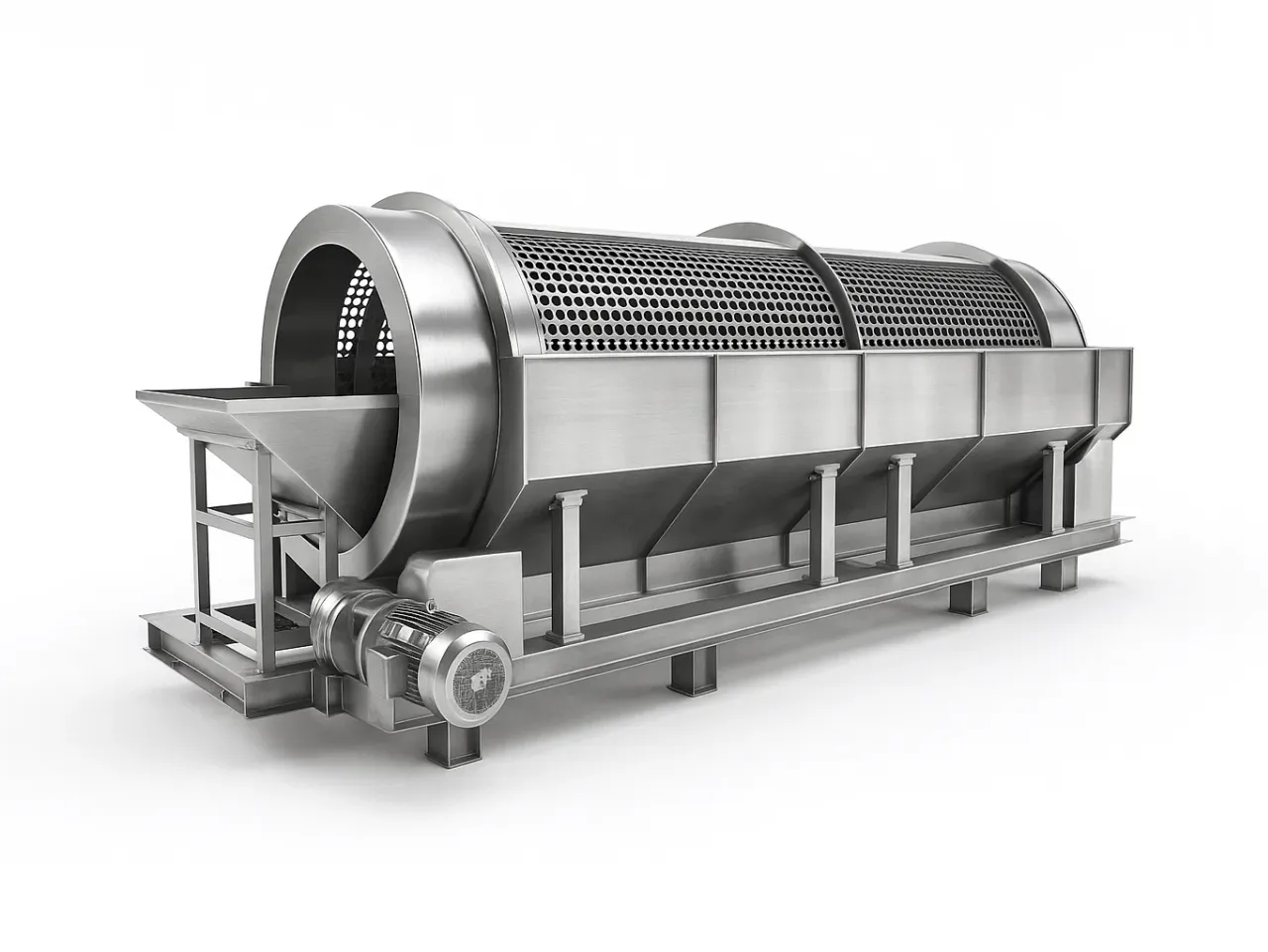
Trommel Machine for Plastic Recycling
A trommel machine designed to remove fines, glass, sand, labels, and other small contaminants from mixed plastic streams before downstream separation, washing, or sorting. The rotating drum and screening sections help plants improve feed purity, reduce wear on later machines, and stabilize line performance.
Why a Trommel Machine Improves Plastic Recycling Feed Quality
Trommel screening is usually not the final sorting step. Its main value is removing small unwanted fractions early so downstream separators, washers, and conveyors work with cleaner and more stable material.
Removes Fines Before They Overload Downstream Equipment
By screening out sand, glass, soil, dust, and small fragments early, the trommel helps protect later sorting and washing stages from unnecessary contamination load.
Self-Cleaning Screen Support
Automatic brush systems help keep the mesh open during production, reducing clogging and keeping the screening effect more stable.
Adjustable Speed for Different Material Loads
Frequency control lets operators tune drum speed and residence time around feed condition, target cut size, and contamination level.
Built for Continuous Screening Duty
Heavy-duty frame construction, drum support, and drive configurations help the machine handle long production runs in MRF and plastic recycling environments.
Reduces Wear on Washers, Separators, and Conveyors
When fines and abrasive contamination are removed first, downstream equipment sees cleaner feed and typically experiences lower maintenance pressure.
Easy Fit in Larger Line Layouts
The trommel is often used as a front-end or intermediate module inside broader plastic sorting, washing, or waste pre-processing lines.
Typical Materials and Use Scenarios
This machine is most useful where the incoming stream still contains small unwanted fractions that should be removed before finer sorting or wet processing.
MRF and Municipal Waste Front-End Sorting
Screens mixed material streams to remove fines and small contamination before optical, magnetic, air, or manual sorting.
PET and HDPE Bottle Recycling
Helps separate dirt, broken glass, labels, and small trash fractions from post-consumer bottle streams.
Film and Flexible Packaging Streams
Removes sand, grit, and organics from film-rich feed before washing or more precise air-based separation.
Mixed Rigid Plastic Pre-Screening
Useful when rigid scrap carries fines and small unwanted particles that would otherwise move into crushers or washing tanks.
Compost and Biomass Screening
Can also be used outside strict plastic recycling where particle-size separation and oversize removal are required.
Upstream Line Protection
A practical first-stage screen when the goal is to send a cleaner and more predictable feed into more sensitive downstream machines.
How the Trommel Screening Process Works
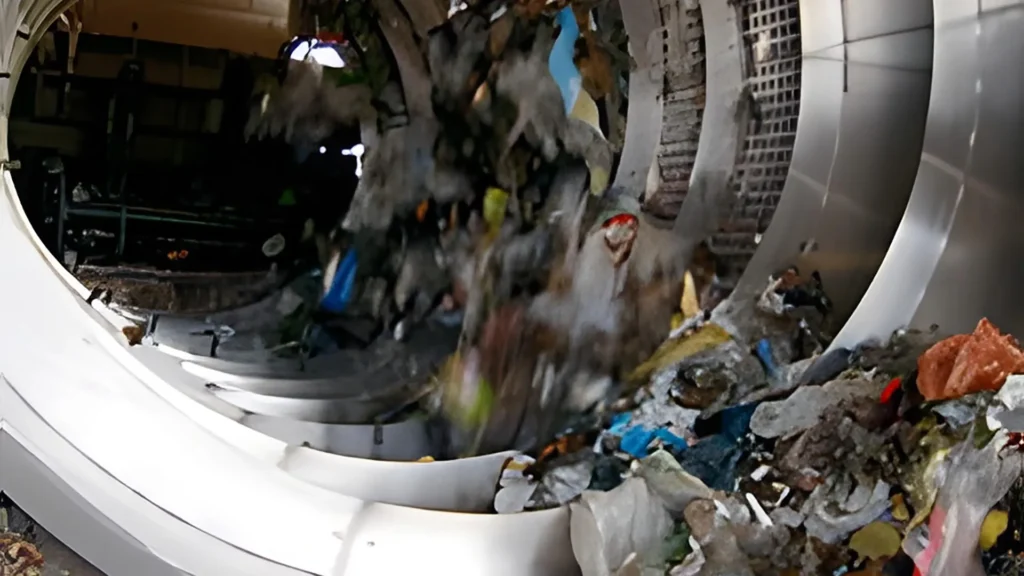
The trommel combines tumbling, screening, and controlled discharge so small unwanted fractions leave through the screen while the target oversize material moves to the next stage.
Feed the Material
Mixed plastic or waste material enters the rotating drum through the infeed section.
Tumble and Advance the Material
As the drum rotates, internal lifters and the machine angle keep the material moving while exposing it repeatedly to the screen surface.
Screen Out Fines and Small Contaminants
Material smaller than the selected mesh size drops through the screen into the lower collection area.
Discharge the Target Fraction
The larger screened material exits at the end of the drum ready for downstream sorting, washing, or size reduction.
Trommel vs Air and Metal Separation Equipment
These machines often work together in one recycling line, but each solves a different separation problem. The trommel is primarily a size-based screening stage.
| Decision Factor | Trommel Machine | Zig Zag Air Classifier | Eddy Current Magnetic Separator |
|---|---|---|---|
| Separation Principle | Particle size screening | Airflow and density behavior | Non-ferrous metal separation |
| Best at Removing | Fines, sand, glass, small dirt fractions | Labels, film fragments, dust, light contaminants | Aluminum and other non-ferrous metals |
| Line Position | Early or intermediate screening stage | After size reduction when light fractions must be removed | After magnetic and coarse screening stages |
| Main Output Logic | Clean up the feed by cut-size screening | Improve purity of the heavy plastic fraction | Recover valuable metals from mixed streams |
| When to Choose | When fines and small contamination should be removed before later processing | When lightweight contamination still remains after screening | When metal recovery is a key part of the sorting line |
Technical Specifications
These values describe a standard industrial trommel reference configuration. Drum size, screen aperture, and drive setup can be adjusted for the actual material stream.
| Machine Model | Standard Industrial Trommel |
| Drum Dimensions | 2000 mm diameter x 1200 mm length |
| Motor Power | 11 kW x 2 main drive |
| Rotating Speed | 6 - 10 RPM adjustable |
| Tilt Angle | 3 degrees |
| Features | Auto-cleaning brushes and variable frequency drive |
| Compliance | CE certified |
Frequently Asked Questions
Yes. The screen aperture can be matched to the target particle cut and the size of unwanted contamination that must be removed.
Typical materials include municipal recycling streams, PET and HDPE bottles, mixed films, rigid plastic feed, compost, and biomass fractions that benefit from size-based screening.
Brush life depends on material abrasiveness and operating hours, but regular inspection is recommended and replacement intervals are usually based on actual wear rather than a fixed calendar alone.
No. A trommel is usually one pre-screening or intermediate separation stage. Many lines still need air classification, magnetic separation, washing, or other modules afterward.
Please share the material type, target cut size, contamination level, required throughput, and where the trommel sits in the overall process layout.
Ready to Improve Feed Quality Before Sorting or Washing?
Send us your material type, contamination size, target cut size, and hourly throughput. We will help define the right trommel configuration for your recycling line.

Comments are closed.