

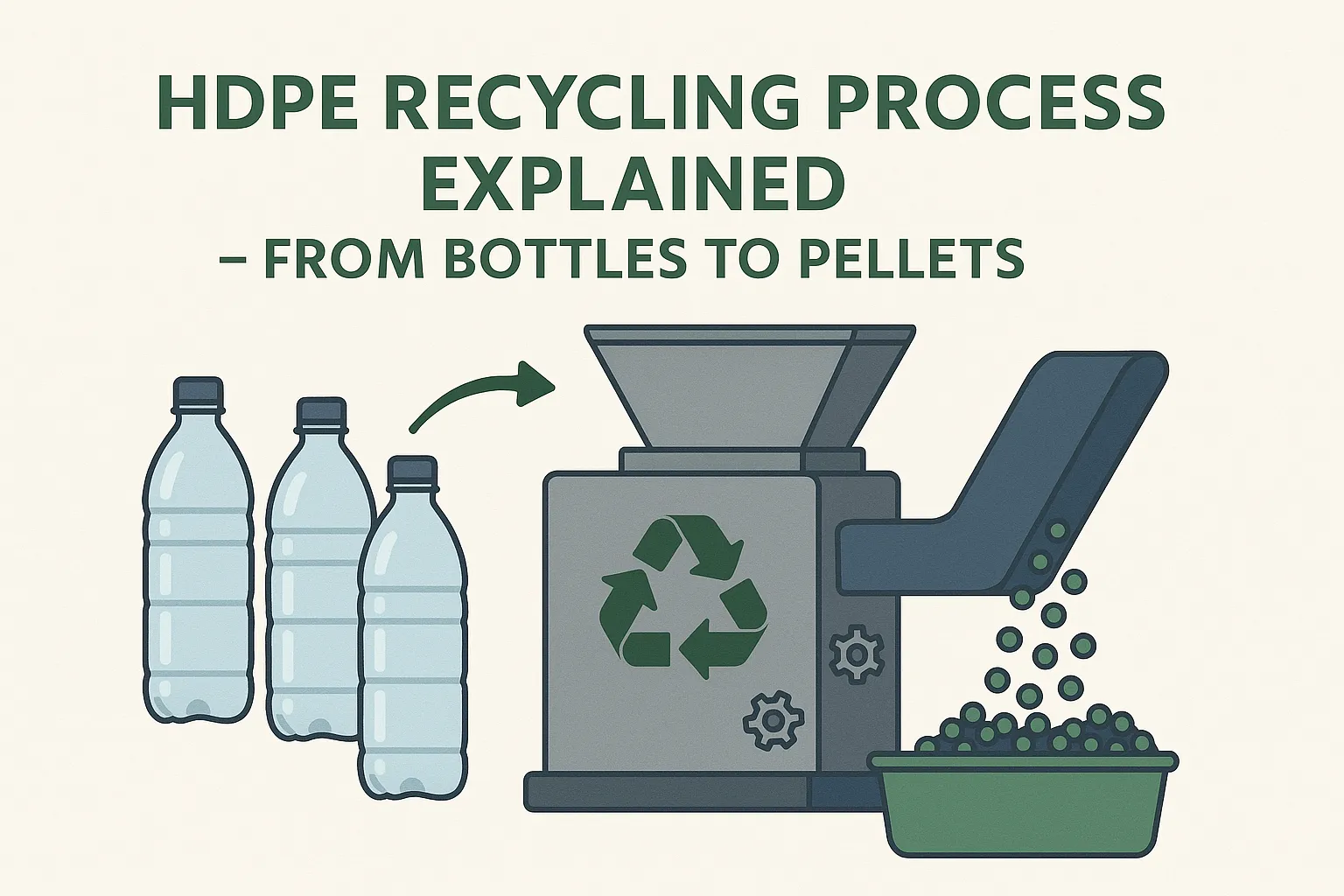
Az HDPE újrahasznosítási folyamat során a rendszerezett magas sűrűségű polietilén tartályok és merev hulladék darabokra vagy újrahasznosított granulátumokra alakul. Egy megbízható vonal a nyersanyag ellenőrzésén, a szennyeződések fokozatos eltávolításán és a vevővel megegyezett kimeneti specifikációkon múlik. Az általános áramlási, tisztasági és nedvességi adatok nem jelentősek, ha a szállító nem jelenti meg a tesztanyagot, a mintavételezési pontot és az üzemeltetési feltételeket.
Micsoda kerül be az HDPE újrahasznosítási vonalba?
Általános nyersanyagok a tej- és szappanpalackok, háztartási vegyianyagok tartályai, dobozok, tartályok, csőhulladék és gyártási vágatok. Ezek az anyagok megoszthatják az HDPE reszin családot, de különbözhetnek színben, olvadási áramlási értékben, adalékanyagokban, előző tartalmukban és szennyezettségükben. Ezért a lefolyó piac követelményei esetén gyakran elkülönítik a természetes palackos anyagot a színes vagy vegyes merev HDPE-től.
A csomagolás tervezése befolyásolja a hulladékgyűjtési folyamatot a berendezések kiválasztása előtt. A címkék, zárási elemek, gátló rétegek, ragasztóanyagok, festékek és fémalkatrészek megváltoztathatják a szűrés és mosás teljesítményét. A Plasztik hulladék újrahasznosítók Egyesülete külön tervezési iránymutatást tart fenn a natural HDPE rigid packaging és színes HDPE merev csomagolásra.
HDPE újrahasznosítási folyamat: nyolc gyakorlati szakasz
- Bevétel és ellenőrzés: dokumentálja a bála vagy szabadon adagolt anyag összetételét, nedvességet, szennyeződést, fémeket, nem HDPE műanyagokat és minden olyan tartályt, amely különleges kezelést igényel.
- Az első lépés és a szabályozott bevezetés: lazítsa fel a tömött anyagot és mérje ki a szállítószalagra, hogy az operátorok és az automatikus szortírozók egyedi tárgyakat láthassanak.
- Osztályozás: távolítsa el a fémeket, papírt, filmet, PET-et, PVC-et, polipropilént és nem megfelelő színű vagy rétegelt tárgyakat. Az optikai szortírozás támogathatja ezt a szakaszt, de a kiválasztott érzékelők és a minőségellenőrzési tervnek meg kell felelnie a folyadéknak.
- Size reduction: darabolja vagy granulálja a merev tárgyakat egy olyan formába, amelyet a mosó és szeparációs berendezések állandóan kezelhetnek. A vastag cső vagy doboz esetében más első lépésű gépet kell használni, mint a vékony falú palackok esetében.
- Mosás: használjon előmosást, súrlódásos mosást, öblítést és a szennyeződés, a termékmaradványok, címkék és ragasztó által szükséges szabályozott kémiát. A meleg mosás lehetőség, de nem általános követelmény a meghatározott szennyeződés esetén.
- Sűrűség és más szétválasztás: a úszó-süllyedő berendezés leválasztja az úszó polioléfinokat a sűrűbb szennyeződésektől. Nem különbözteti meg minden PP/HDPE keveréket, és nem távolítja el az összenőtt rétegeket, így a feldolgozás előtti szűrés továbbra is fontos.
- Szárítás és szárítás: távolítsa el a szabad és a felszíni vizet a tárolás, az extrudálás és a következő termék számára szükséges határig. Adja meg a tesztelési módszert és a mintavételezési helyet minden garancia esetén.
- Extrudálás, szűrés és granulálás: Olvasztson fel, homogenizálja, szivárogtassza ki és szűrje át a előkészített anyagot, majd alakítsa halmazatokká a polimérhez és tervezett gyártási ütemhez megfelelő módon.
Berendezések kiválasztása a folyamat funkció alapján
| Folyamatfunkció | Tipikus felszerelés | Fő kiválasztási kérdés |
|---|---|---|
| Bejárati anyag előkészítése | Debáláló, szállítószalag, kézi sortírási állomás | Stabilak-e a kötegek, nyomon követhetők és biztonságosak-e azok megnyitására? |
| Idegen anyagok eltávolítása | Mágnes, mágneses áramú vagy optikai szűrő, ellenőrzési szállítószalag | Mely szennyeződések távolítandók el a vágás előtt? |
| Méretcsökkentés | Daráló, granuláló vagy lépcsős kombináció | Milyen a legnagyobb méret, falvastagság és szükséges lemeznagyság? |
| Felülettisztítás | Előmosó, súrlódó mosó, opcionális irányított meleg mosás | Milyen maradékot, ragasztókat és szennyeződéseket kell a mosás eltávolítania? |
| Sűrűség elválasztás | Süllyedő-szivárványozó tartály | Milyen polimerek és nehéz szennyeződések vannak jelen, és hol jelentkeznek? |
| Víz eltávolítása | Centrifugális szárító, levegő vagy hőszárítás, ha indokolt | Milyen nedvességlevegőtartalmat igényel a következő folyamat, és hogyan mérik meg? |
| Melt preparation | Extruder, degázolás, olvadék szűrés és granulátor | Milyen olvadási áramot, szűrési és granulátumformát igényel a vevő? |
Mosási és szétválasztási döntések
A mosás intenzitásának a mért szennyezettségi szinthez kell igazodnia. A tiszta ipari hulladék minimális tisztítást igényelhet, míg a fogyasztás utáni tartályok esetében termékmaradvány-eltávolításra, címkeleválasztásra és többszöri öblítésre lehet szükség. A vegyszerkoncentrációt, a vízhőmérsékletet és a tartózkodási időt kísérletekkel kell meghatározni és folyamatosan ellenőrizni, mivel ezek közvetlenül befolyásolják az üzemeltetési költségeket, a szennyvízkezelést és az anyagminőséget.
A HDPE általában úszik a vízen, ami elősegíti a sűrűbb PET-től, PVC-től, fémektől, üvegtől és törmeléktől való szétválasztást. A polipropilén azonban szintén lebeg, és a töltött vagy kompozit HDPE termékek eltérően viselkedhetnek. Az úsztató-süllyesztő kád ezért csak egy része a szétválasztó rendszernek, nem pedig a garantált univerzális tisztasági szint záloga. A teljes gépsor elrendezése megtekinthető a következő oldalon: HDPE palack visszanyerési vonal oldal.
Szárítás, extrudálás és granulálás
A mechanikus víztelenítésnek a lehető legtöbb szabad vizet el kell távolítania a hőközléses szakaszok előtt. A végső szárítási teljesítmény a pelyhek geometriájától, a tárolási időtől, a környezeti feltételektől és az extrudertől függ. Az általános nedvességtartalom-ígéretek elfogadása helyett határozzon meg mérési eljárást, reprezentatív alapanyagot és a mintavételi pontokat.
Az extrudálás során a hőprofil, a szivattyú tervezése, a szivárgás és a hőkezelés a szennyeződések és a hőáramlás tartományához kell illeszkednie. A szál és a die-face rendszer mindkettő HDPE újrahasznosított granulátumot készíthet; a választás a kapacitás, a hőáramlás stabilitása, a vízkezelés, a karbantartás és a preferált granulátum forma függvénye. Lásd áttekintésünket a(z) plasztik granulálási rendszerek.
Mosott darabok és granulátum minőségellenőrzése
| Ellenőrzés | Miben rejlik | Miért jelölik meg a vevők |
|---|---|---|
| Polimer összetétel | HDPE szilárdsága és nem megfelelő-plastikai szennyezés | Véd a feldolgozási stabilitást és a mechanikai teljesítményt. |
| Olvasztott tömegáramsebesség | Áramlások egy meghatározott tesztelési feltétel mellett | Segít a anyagok illeszkedését a fújásos formázáshoz, injekciós formázáshoz, csőhez vagy más útvonalakhoz. |
| Sűrűség és hamu | Polimer minőség, töltőanyagok és szervetlen szennyezés | Támogatja a formulálást és lot-tól lot-ra történő ellenőrzést. |
| Nedvesség | Víz jelenléte a megállapodott mintavételezési ponton | Csökkenti a bevezetés, a szivárgás és a tárolási problémákat. |
| Szín és szag | Forráskeverék, hőtörténet és maradék szennyezés | Meghatározza a termékeket és meghatározza, milyen színekbe kerülhet a reciklitett anyag. |
| Fém és látható szennyezés | Rendszerezés, mosás és szűrés teljesítménye | Véd a lefolyó eszközöket és a termék megjelenését. |
Az étkezési célú termékek esetén külön vizsgálat szükséges
Egy szabványos HDPE mosó és granuláló vonal nem termel automatikusan étkezési célú anyagot. Az előrejelzett felhasználás, forrás-ellenőrzés, gyűjtőrendszer, tisztítási folyamat, kihívásos tesztelés és hatósági hatáskör mind fontosak. Az Egyesült Államokban az FDA publikál kémiai iránymutatást a hulladékplastikumokról az étkezési csomagolásban. A projekt tulajdonosoknak jogszabályi tanácsot kell kérniük és validálniuk kell a specifikus folyamatot, nem pedig a mosási hőfokot minősítésként kezelni.
Gyakran ismételt kérdések
Következhetnek-e együtt újrahasznosítani a színes HDPE anyagok?
Feldolgozható bizonyos keverékszínű termékekbe, de általában nem felel meg a természetes vagy szorosan ellenőrzött szín specifikációnak. Színezd szét a színeket a tervezett piac szerint, mielőtt beruháznál a további tisztításba.
Megtisztítja-e a vízszintű-felfelbukkantatás az összes nem HDPE műanyagot?
Nem. Az eltávolítja azokat az anyagokat, amelyek különbözően viselkednek a kiválasztott folyadékmérsékleten, de a polipropilén emelkedhet az HDPE-hez, és a kötött vagy töltött szerkezetek váratlanul viselkedhetnek. Használjon forrás ellenőrzést, szűrést és minőségtesztet is.
Minden HDPE vonalnak tartalmaznia kell granulálót?
Nem. Néhány vevő tiszta, meghatározott darabokat fogad el, míg más alkalmazások szűrt és kevert granulátumot igényelnek. Válassza ki a végpontot a vevő követelményei és az gazdaságosság alapján, ne az automatikus extrudálás miatt.
Tervezze ki a vonalat egy írásos kiadási specifikáció köré
Tegye rendelkezésre HDPE mintákat, szennyeződési adatokat, elvárt eladható kimenetet, minőségi határokat, szolgáltatásokat és helyszíni korlátokat a javaslat kérése előtt. Az Energycle így képes lesz a szükséges szűrés, mosás, szétválasztás, szárítás és granulálás fázisait meghatározni, anélkül, hogy támogatott univerzális teljesítmény vagy megtérülési követelésekre támaszkodna.
