

Final Drying Stage in Washing Lines
Thermal Dryer for Plastic Recycling
Achieve low, stable moisture levels with a high-efficiency thermal dryer system. Designed as the final drying stage in your plastic washing line, it delivers consistent flakes ready for pelletizing while helping reduce fines and humidity carryover.
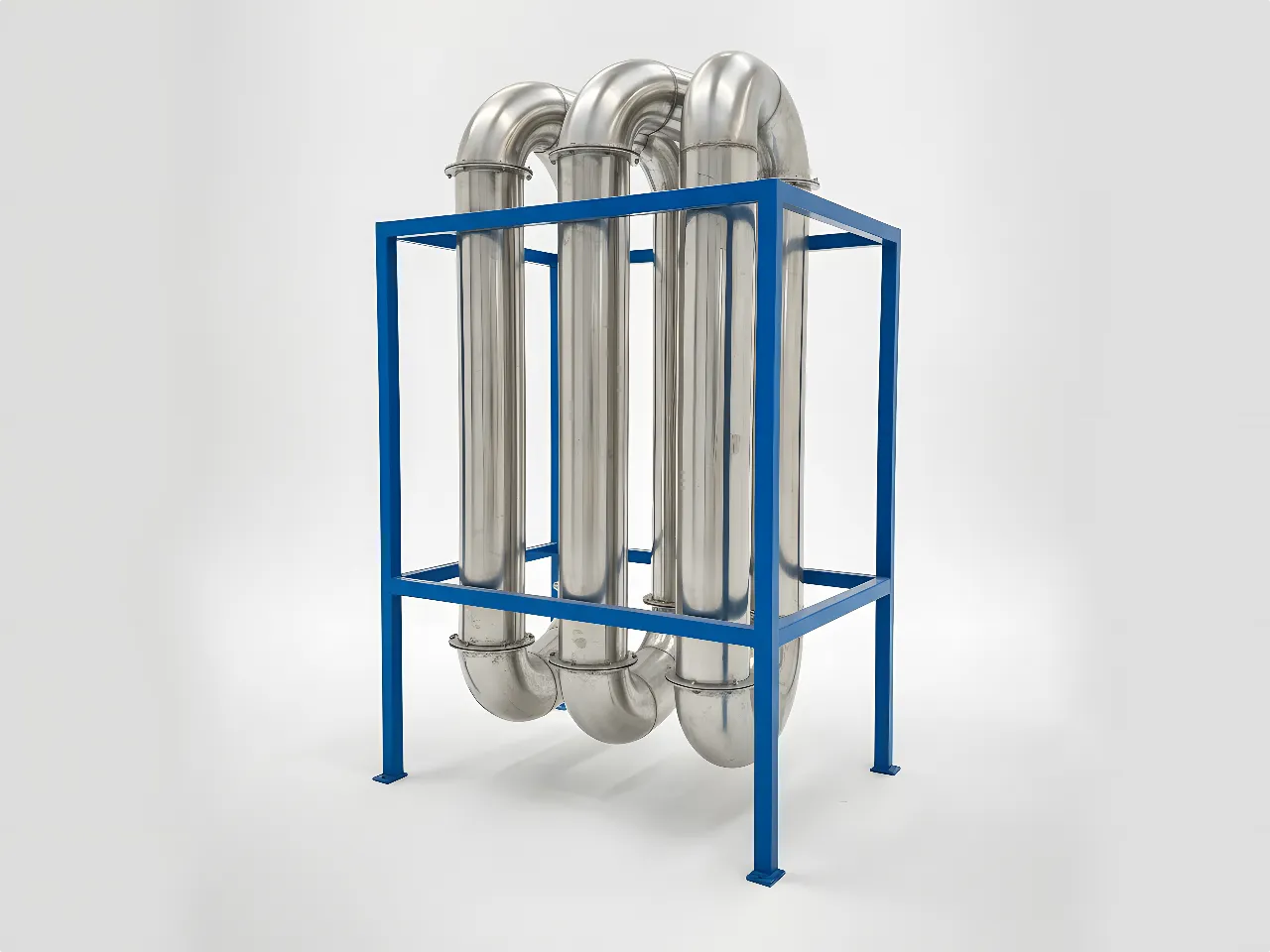
Engineered for Quality
Drying Performance
Engineered as the final quality gate in your plastic washing line — stabilize moisture, reduce defects during extrusion, and improve downstream consistency.
Low, Stable Moisture Content
After centrifugal dewatering or squeezing, controlled hot air typically reduces moisture to below 3% (often around 1–2%, depending on material type and line conditions).
Improved Pelletizing Stability
Consistently dried flakes help reduce foaming, bubbles, and voids during extrusion — supporting smoother production and more stable pellet quality.
Fines & Moist Air Separation
The cyclone separator helps remove entrained fines and humid air, delivering cleaner flakes to the next process stage.
SUS304 Stainless Steel Construction
All pipelines fabricated from Type 304 stainless steel for corrosion resistance and long service life. CE certification available for international compliance.
Hot-Air Pipeline System
Thermal Drying Process
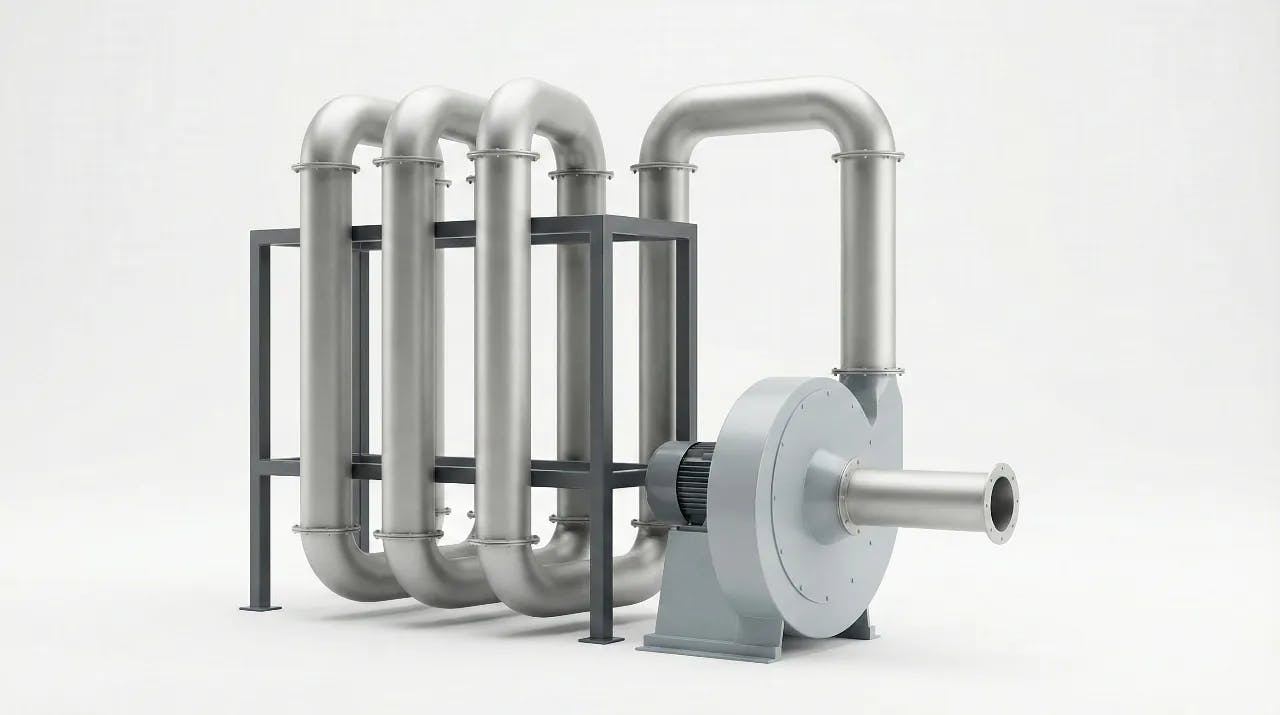
A pneumatic hot-air pipeline with cyclone separation — simple, efficient, and reliable final-stage drying.
Pneumatic Conveying
Partially dried flakes are conveyed by the blower into the thermal drying circuit.
Hot Air Injection
Heated air mixes with the flakes through a stainless-steel pipeline to promote rapid moisture removal.
Moisture Evaporation
Residual moisture evaporates during conveying, driven by airflow, temperature, and residence time.
Cyclone Separation
Dried flakes are separated from moist air and discharged to storage, bagging, or the pelletizing line.
Versatile Integration
Key Applications in Plastic Washing Lines
The thermal dryer serves as the final drying stage across multiple plastic recycling workflows.
PET Flake Drying
Common in PET bottle washing lines to reach stable, low moisture before producing high-quality rPET pellets.
PE/PP Film Drying
Final drying after the squeezer or dewatering stage before feeding pelletizing extruders.
Rigid Flake Drying (PP/HDPE)
Helps prepare rigid flakes for extrusion or compounding by reducing moisture variability and improving throughput stability.
Technical Specifications
Specifications are for reference. Final configuration can be customized to your requirements — larger blower and multi-stage heating available for higher throughput lines.
| Model | ERM-TDR-800 |
|---|---|
| Process Type | Hot-air pneumatic pipeline with cyclone separation |
| Blower Power | 5.5 kW |
| Heating Power | 36 kW |
| Target Moisture | <1–3% (depends on material, inlet moisture, and throughput) |
| Pipe Diameter | 159 mm |
| Pipe Material | Type 304 Stainless Steel |
| Capacity | Configured to match your washing line (please inquire) |
| Certification | CE Certification Available |
Machine Details & Gallery
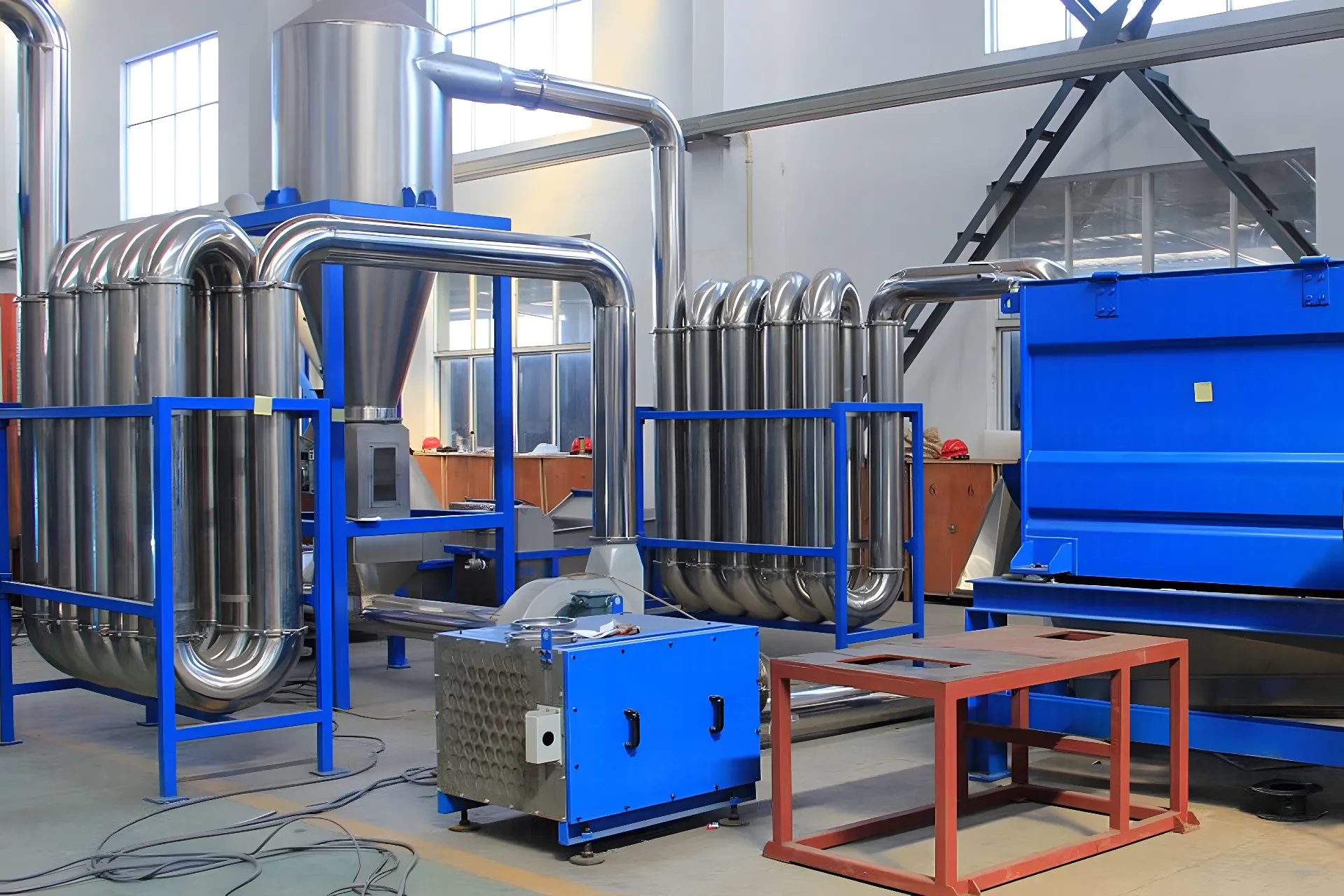
A closer look at the thermal dryer system components, ductwork, and heater module.
Sizing & Operating Notes
Centrifugal dewatering removes bulk surface water, but pelletizing lines usually need lower moisture. Thermal drying evaporates the remaining moisture and helps stabilize the feed for extrusion.
With proper configuration, final moisture is typically below 3%, and in many cases around 1–2%. Performance depends on material type, inlet moisture, throughput, and ambient conditions.
Please share your material type (e.g., PET, PP/PE film, PP/HDPE rigid), target output moisture, throughput, and upstream dewatering equipment. We can then recommend a suitable heating and blower configuration.
Yes. Larger blower and heating configurations (including multi-stage heating) are available to match higher throughput washing lines.
Get a Tailored Drying Solution
Contact our team to confirm model sizing, integration method, power requirements, pricing, and lead time.
Related Drying & Dewatering Equipment
- Centrifugal Dewatering Machine for Plastic Flakes — Mechanical pre-drying before thermal stage
- High-Speed Film Centrifugal Dewatering Machine
- Film Squeezer Dryer for PP/PE Film
- Vertical Mixing Dryer — For granule blending & drying
- Centrifugal Dryer vs Air Drying: Energy Comparison

Comments are closed.