

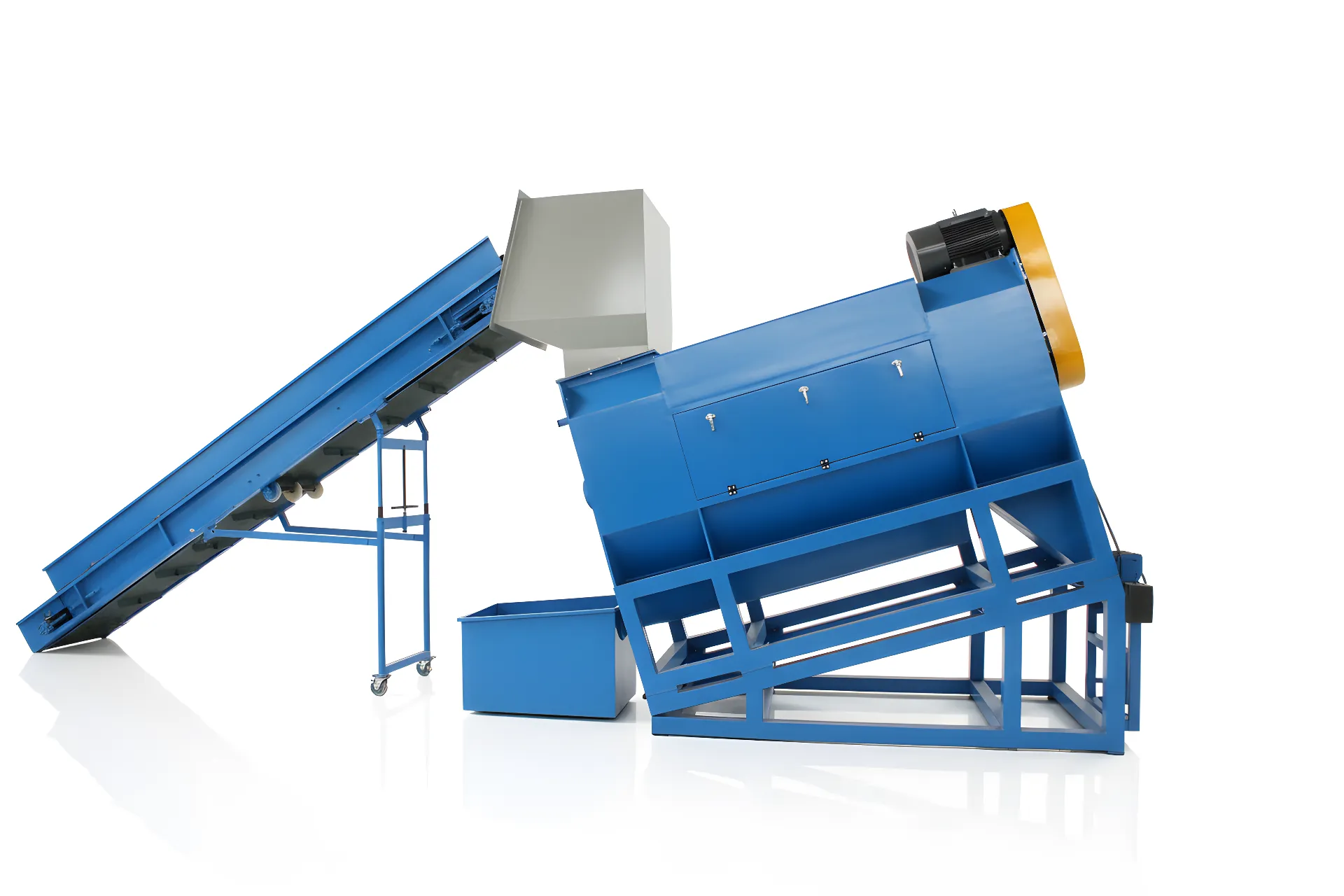
Wet Process
Wet Plastic Bottle Label Remover
Remove labels and pre-wash bottles in one stage before crushing. The wet process reduces paper, film, glue, and surface dirt carryover so the downstream PET washing line starts with cleaner feed.
See It in Operation
Key Advantages
Why This Stage Matters
Label removal is not just a cleaning step. It reduces contamination load before crushing, lowers downstream wash demand, and improves final flake quality.
Higher Flake Purity
Removing labels and loose dirt before granulation cuts carryover into the hot wash, friction wash, and sink-float stages.
Lower Wash Load
The wet stripping stage reduces the amount of paper, film, and adhesive that later washing equipment must handle.
Lower Operating Cost
Cleaner feed improves line stability and can reduce labor, water treatment load, and wear in later stages.
The Workflow
How It Works
A continuous wet stripping process that ensures maximum label separation while pre-cleaning the bottle surface.
Feed Entry
Loose or debaled PET bottles enter the chamber in a controlled stream.
Rotor Contact
Blades and friction surfaces engage the bottles and start loosening wraparound labels.
Wet Stripping
Water helps soften paper labels and adhesive while the rotor tears labels away.
Material Split
Detached label fragments and dirty wash water separate from the heavier bottle stream.
Industry Solutions
Typical Use Cases
PET Bottle Washing Lines
Installed after bale breaking and sorting to reduce label contamination before crushing.
rPET Flake Production
Used in lines targeting higher flake purity for fiber, sheet, or bottle-to-bottle preparation.
Line Retrofits
Added to existing PET recycling lines where label residue is still too high after manual removal.
Technical Data
Technical Specifications
| Processing Capacity | 500 – 2000 kg/h, depending on model and bottle condition |
|---|---|
| Typical Label Removal Efficiency | 80% – 98%, commonly above 95% |
| Bottle Breakage Rate | Typically below 5% |
| Blade Material | Hardened alloy steel |
| Cleaning Method | Wet stripping with integrated water spray |
| Service | Blades can be removed, sharpened, and replaced |
Swipe horizontally to view the full table on mobile.
Frequently Asked Questions
Yes. It is commonly used for paper labels, PP and PE wraparound labels, and many shrink-sleeve applications. Final removal rate depends on label type, adhesive condition, bottle condition, and line setup.
Water helps loosen paper labels and adhesive while also removing surface dirt. That means the machine strips labels and pre-washes bottles in one step before crushing.
It is usually installed after bale breaking, sorting, and metal removal, and before the wet granulator or crusher. This sequence reduces contamination before size reduction.
Please share capacity target, bottle mix, label type, contamination level, and the upstream and downstream equipment already in your line. Based on that, we can recommend a suitable model and layout.
Request a Tailored Proposal & Quote
Share your bottle type, target throughput, label condition, and current line setup. We will return a recommended machine configuration and integration guidance.
