

At Energycle, we process thousands of tons of PET bottles each year. We have tested both wet and dry crushing methods in real facilities. Time and again, wet crushing proves its value for operators who aim for high-quality flakes and smooth operations.
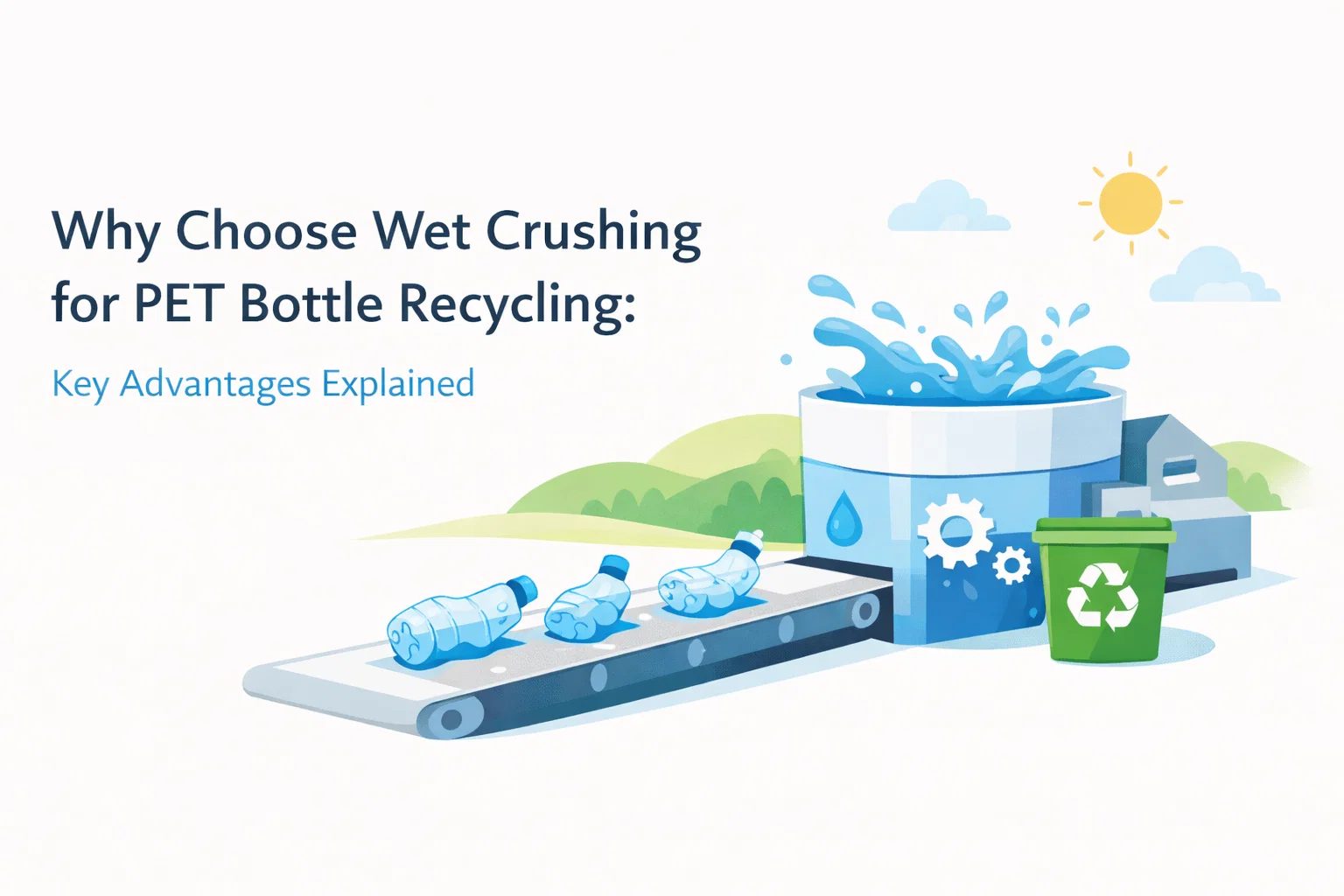
Wet crushing adds water directly into the crushing chamber as bottles feed in. This simple step changes the entire process. Water cools the material, rinses away dirt, and helps separate labels early. Dry crushing skips the water, which keeps setup basic but brings challenges like dust and heat.
Operators often ask us why we recommend wet crushing for most PET lines. The reasons come down to better results, lower long-term costs, and easier maintenance. Let us break down the main advantages we see every day.
Superior Contaminant Removal from the Start
Water acts as a built-in rinse during crushing. As blades shred bottles, water washes away sand, grit, paper pulp, and loose adhesives right away. This prevents contaminants from embedding into PET flakes.
In dry systems, labels and glue can smear across surfaces when heat builds up. That forces extra cleaning steps later. With wet crushing, flakes arrive cleaner at the washing stage. Facilities we work with report up to 30% less residue after initial crushing.
This early cleaning pays off in purer output that meets strict standards for food-grade rPET.
Protection of Material Quality and Intrinsic Viscosity
PET degrades when it gets too hot. Friction in dry crushers raises temperatures quickly, which lowers intrinsic viscosity (IV). Lower IV means weaker pellets and lost value.
Water keeps everything cool. It absorbs heat and prevents thermal damage. Tests in our lines show wet-crushed flakes retain higher IV values, often by 0.05–0.1 points compared to dry methods.
Buyers pay more for consistent, high-IV material. Wet crushing helps you deliver flakes that command better prices without extra treatments.
Extended Equipment Life and Reduced Maintenance
Dry crushing creates heavy wear on blades and screens. Abrasive particles like sand grind against metal without lubrication.
Water cushions the action and flushes abrasives away. Blades stay sharper longer, and screens clog less often. Operators tell us they replace blades 40–50% less frequently with wet systems.
Fewer breakdowns mean more uptime and lower repair costs over time.
Safer, Cleaner, and Quieter Operations
Dry crushing produces clouds of dust and plastic particles. That raises safety risks and requires strong ventilation.
Wet methods control dust almost completely. Water binds particles, so the workspace stays cleaner and workers face fewer hazards.
Noise drops noticeably too. The water dampens blade impacts, creating a quieter plant that keeps teams comfortable during long shifts.
Energy Efficiency and Consistent Performance
Water creates a smoother load on motors. Power draw stays steady instead of spiking during tough feeds.
Many lines we install use less electricity overall with wet crushing, even after accounting for pumps. The gains come from efficient cutting and reduced friction.
Practical Tips to Maximize Wet Crushing Benefits
Choose the right water flow. Start at 5–10% of material weight and adjust based on contamination levels. Our wet PET bottle crushers are designed with adjustable water injection systems to make this optimization easy.
Add a pre-sort step. Remove caps and heavy dirt before crushing to ease the load.
Maintain proper pH in the water. Neutral or slightly alkaline levels help loosen labels without harming PET.
Recycle process water. Use filtration and settling tanks to reuse it and cut fresh water needs by up to 70%.
Pair with strong downstream washing. Wet crushing handles the first clean; follow with hot wash and friction separators for top purity.
We guide every Energycle customer through these adjustments during setup. Small changes often boost output quality fast.
Interested in full PET recycling lines? Check our Systèmes de lavage de bouteilles en PET or compare options on our PET recycling equipment guide.
Insights from Industry Sources
Experts back these advantages. A detailed look at wet grinding in plastics recycling highlights reduced power use, quieter runs, and better control of fly-back material. Studies on crushing methods also show wet processes enrich pure components more effectively.
For broader PET recycling context, the EPA notes high recovery potential when processes minimize degradation.
Wet crushing stands out for serious PET recyclers. It delivers cleaner flakes, protects material value, cuts maintenance, and creates a better work environment. Initial setup costs more than dry systems, but the returns in quality and efficiency add up quickly.
Contactez Energycle if you want to explore wet crushing for your operation. We share real data from installations that match your scale.
