

PP/PE Film Shredding & Densifying System
PP/PE Plastic Film Shredding and Densifying Line
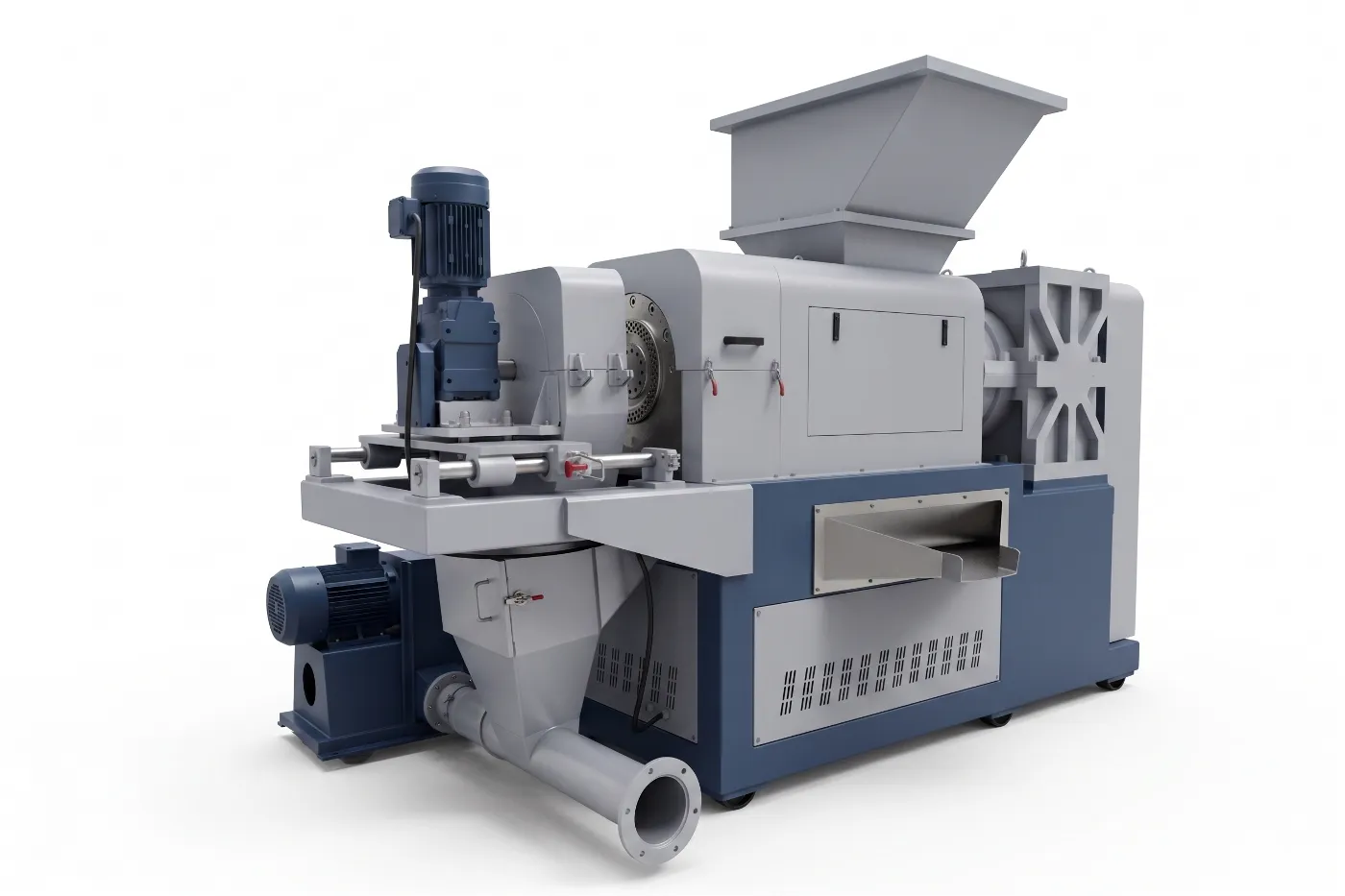
Turn baled, dirty, and loose PP PE film scrap into clean densified flakes or irregular pellets with a compact route that combines shredding, wet size reduction, washing, separation, and squeeze drying for easier storage and downstream extrusion.
Why Choose This Film Shredding and Densifying Line
This line is built for plastic film streams that are too bulky, dirty, or unstable to move directly into pelletizing, and need both washing and density improvement before reuse.
This shredding and densifying line is part of our end-to-end recycling solutions, designed to convert contaminated PP/PE film into clean, dense output ready for pelletizing.
End-to-End Efficiency
Shredding, washing, separation, and squeeze densifying are connected into one coordinated route that reduces transfer loss and manual handling between machines.
Higher Bulk Density
The squeeze drying stage converts loose film flakes into denser discharge material that is easier to store, convey, and feed into extrusion equipment.
Contamination Ready
Wet granulation, sink float separation, and friction cleaning help remove sand, paper, labels, and field contamination from post-consumer and agricultural film.
Stable Moisture Control
The densifying dryer reduces final moisture to a level that supports bagging, storage, and steady pelletizing without depending on oversized thermal drying alone.
Modular for Different Feed Conditions
The route can be adjusted around dirty bale film, agricultural mulch, PP woven bag scrap, or cleaner industrial film with changes in washing intensity, water treatment, and densifying capacity.
Video Demonstration
See how the line shreds, washes, and densifies loose film into a denser, easier-to-handle recycled output.
Operating Sequence
How the Line Works
The system reduces film volume, removes heavy contamination, and increases output density before storage or pelletizing.
Bale Opening and Shredding
Compacted film bales or bulky loose scrap are opened and shredded into a stable infeed size that moves more evenly through the wet stages.
Wet Granulation
The shredded film is wet-cut into flakes that are easier to wash while also starting the first stage of contamination removal.
Sink Float Separation
The washing tank separates heavy impurities such as sand, stones, and metal while keeping PP PE film in the target recovery stream.
Squeeze Drying and Densifying
Washed film flakes are mechanically squeezed, partially dried, and densified into an output form that is easier to bag, buffer, and feed into pelletizing.
Bale Opening and Shredding
Bulky film is opened and pre-sized for stable conveying.
Wet Granulation
Wet cutting reduces the material into wash-ready flakes.
Sink Float Separation
Heavy contamination is rejected from the PP PE target stream.
Squeeze Drying and Densifying
The cleaned film is dried and densified for easier downstream handling.
Applications
This line fits flexible PP PE waste streams that need both washing and bulk density improvement before reuse, transport, or pelletizing.
Post-Consumer Flexible Packaging Film
LDPE and LLDPE packaging film, stretch wrap, shopping bags, and mixed retail collection film that need washing before reuse.
Dirty film recoveryAgricultural Film
Mulch film and greenhouse film with high soil and sand load that require stronger washing and water treatment.
PP Woven and Raffia Scrap
Woven bags and raffia offcuts that benefit from shredding, wet cutting, and densified discharge before extrusion.
Densified Output Handling
A good fit when customers want higher output density for silo buffering, bagging, transport, or more stable pelletizer feeding.
Integrated Recycling Projects
Works well in wash-to-pellet plants that want a tighter link between contamination removal and final extrusion preparation.
Material Streams with Variable Contamination
The modular route can be tuned for bale density, water contamination, moisture targets, and downstream pellet quality instead of forcing one fixed film washing configuration.
Decision Framework: How to Specify a Film Shredding & Densifying Line
A three-axis decision: throughput capacity, feedstock condition, and downstream output target. Lock all three before requesting equipment quotes.
Step 1: Match Capacity to Daily Throughput
Capacity is rated in kg/h. Convert annual feedstock tonnage to a capacity tier by dividing annual tons by 250 working days × 16 production hours (two-shift operation), plus 20% headroom for downtime and feedstock surge. A plant processing 4,000 t/year of post-consumer film needs 4,000,000 ÷ (250 × 16) × 1.2 = 1,200 kg/h, rounded up to a 1,500 kg/h tier.
Step 2: Match Configuration to Feedstock Condition
Film feedstock falls into three contamination grades. Clean post-industrial film (factory off-cuts, color-sorted) needs only the basic shredding plus densifying module — cold-wash optional. Post-consumer flexible packaging film (curbside collection, MRF output) needs full sink-float separation plus friction wash. Heavily contaminated agricultural film (mulch film with soil, irrigation tape with mineral residue) needs an extended pre-wash, double-pass friction washing, and frequently a second sink-float stage to handle the soil load.
Step 3: Match Output to Downstream Use
The next stage of the recycling chain dictates what densifier output works. In-house pelletizing needs densified flake at 0.30–0.45 g/cm³ bulk density and under 5% moisture — ready for direct extruder loading. Sale to a third-party pelletizer needs densified flake at 0.40–0.55 g/cm³ for transport efficiency and consistent buyer specs. Direct sale as densified regrind needs higher bulk density (0.50–0.65 g/cm³) plus tighter moisture control (under 3%) to meet end-buyer warehousing specs. Confirm the buyer or downstream extruder specification in writing before sizing the line.
Decision Matrix
| Capacity | Clean post-industrial → densified flake | Post-consumer → in-house pelletizing | Heavily contaminated → densified for sale |
|---|---|---|---|
| 500 kg/h | Compact line, basic wash | Standard line + sink-float | Extended pre-wash + double friction |
| 1,000 kg/h | Standard line, basic wash | Standard line + sink-float + dryer | Extended pre-wash + double friction + 2-stage sink-float |
| 2,000 kg/h | Standard high-throughput line | Standard line + 2-stage wash + dryer | Full configuration + closed-loop water |
| 3,000 kg/h | High-throughput line + buffer silo | Full configuration + buffer silo | Full configuration + closed-loop water + buffer silo |
Capacity Configurations: 500, 1,000, 2,000, and 3,000 kg/h Lines
Specifications and CapEx ranges for the four most common capacity tiers in 2026 PP/PE film recycling.
Film shredding and densifying lines scale across four standard capacity tiers. Per-kg processing cost drops 28% from 500 kg/h to 3,000 kg/h, which is why operators with confirmed 8,000+ t/year feedstock supply almost always specify 2,000 kg/h or above.
| Specification | 500 kg/h entry | 1,000 kg/h mid-volume | 2,000 kg/h commercial | 3,000 kg/h industrial |
|---|---|---|---|---|
| Total power (kW) | 180 | 320 | 560 | 820 |
| Water (m³/t output) | 2.4 | 2.0 | 1.7 | 1.5 |
| Operators per shift | 3 | 4 | 5 | 6 |
| Footprint (m²) | 240 | 420 | 650 | 900 |
| Output bulk density (g/cm³) | 0.35-0.45 | 0.40-0.50 | 0.45-0.55 | 0.50-0.60 |
| Output moisture (%) | 4-6 | 3-5 | 2-4 | 2-4 |
| Annual capacity (t) | 2,000 | 4,000 | 8,000 | 12,000 |
| Typical CapEx (USD) | 180k-260k | 340k-460k | 620k-820k | 880k-1.15M |
500 kg/h: Entry-Level Commercial
The 500 kg/h tier is the smallest commercially efficient post-consumer film line. CapEx falls under USD 250k, three operators per shift cover production, and the equipment fits in a 240 m² hall. Plants at this tier serve regional markets — a single province or city’s collected film stream.
1,000 kg/h: Mid-Volume Workhorse
The 1,000 kg/h tier is the most common configuration sold globally for PP/PE film. Per-kg processing cost approaches the asymptotic minimum, payback periods compress to 26–36 months, and the equipment fits a standard 25 m × 17 m hall. This tier is the recommended starting point for any new film recycler with confirmed feedstock supply above 3,500 t/year.
2,000 kg/h: Commercial Scale
The 2,000 kg/h tier serves regional MRF operators and integrated film recycling plants that pelletize in-house. Two-shift operation processes 8,000 t/year, enough to feed two pelletizing lines or supply a regional injection-molding cluster. CapEx exceeds USD 600k and civil works (foundations, dewatering pit, drainage) adds another 25-30%.
3,000 kg/h: Industrial Scale
The 3,000 kg/h tier serves national operators and integrated producers turning film regrind into sheet, fiber, or strapping in-house. Annual capacity reaches 12,000 t with two-shift operation. Closed-loop water becomes mandatory at this scale due to fresh-water demand exceeding 1.5 m³/t output. Total installed cost (equipment + civil + utilities) reaches USD 1.4-1.8M.
Film Line Cost: 3-Year Total Cost of Ownership
CapEx is only the first 35-45% of three-year ownership cost. Power, water, labor, and consumables together exceed initial equipment cost by year three.
Buyers comparing two film line quotes that look 15–20% apart often discover the cheaper line costs more across three years once consumables, water, and downtime get factored in. Wet granulator blade life and friction washer screen replacement are the two costs that swing the most.
| Cost component | 500 kg/h | 1,000 kg/h | 2,000 kg/h |
|---|---|---|---|
| CapEx (mid-range) | 220,000 | 400,000 | 720,000 |
| Power (3 yr @ USD 0.10/kWh) | 52,000 | 92,000 | 161,000 |
| Water (3 yr @ USD 1.20/m³) | 17,000 | 29,000 | 49,000 |
| Labor (3 yr @ USD 600/op·month) | 194,000 | 259,000 | 324,000 |
| Maintenance (5% CapEx/yr) | 33,000 | 60,000 | 108,000 |
| Wet granulator blades | 22,000 | 38,000 | 72,000 |
| Friction washer screens | 9,000 | 16,000 | 30,000 |
| Squeezer / densifier wear parts | 15,000 | 26,000 | 48,000 |
| 3-year total (USD) | 562,000 | 920,000 | 1,512,000 |
| Per-ton processing cost (USD) | 94 | 77 | 63 |
Per-ton processing cost drops 33% from 500 to 2,000 kg/h. This is why operators with confirmed feedstock above 6,000 t/year almost never specify below 2,000 kg/h — the labor and overhead amortization wipes out any CapEx saving within 14–18 months.
Hidden Costs Most Quotes Skip
- Civil works: 8–15% of equipment CapEx for foundations, drainage pit, dewatering trench
- Closed-loop water treatment: USD 35,000-95,000 (mandatory in MENA, recommended above 2,000 kg/h)
- Electrical incoming: Transformer upgrade and cables, often USD 15,000-50,000 for greenfield sites
- First-year spare parts kit: 4-6% CapEx, typically quoted separately
- Operator training: Two engineers on-site for two weeks, USD 8,000-15,000 per visit
- Customs and import duty: 5-18% CIF in most emerging markets
Technical Specifications
Typical planning parameters for PP PE film shredding and densifying projects. Actual sizing depends on feedstock contamination, desired moisture, and output density target.
| Specification Item | Typical Range |
|---|---|
| Throughput Options | 200 to 300 kg/h, 500 to 700 kg/h, and up to 1000 kg/h |
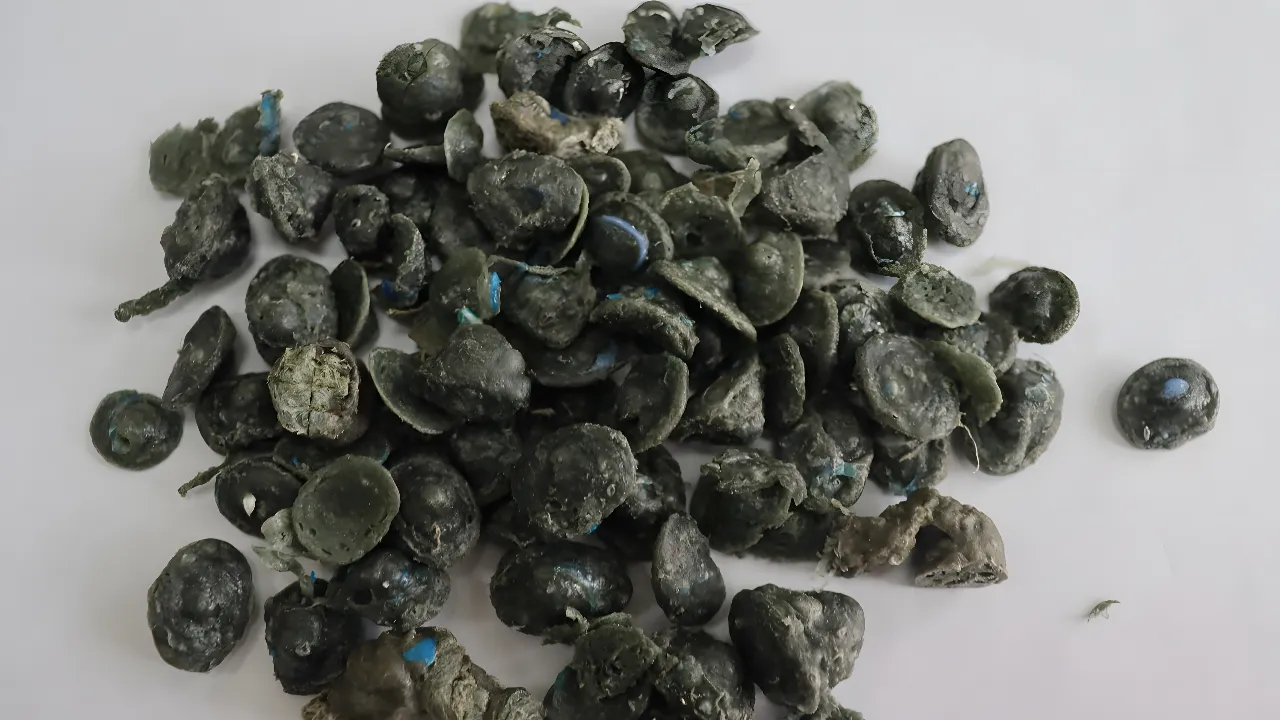
| Output Form | Densified flakes or irregular pellets after squeeze drying |
| Bulk Density | Approximately 350 to 410 kg/m3 depending on material and moisture |
| Final Moisture | Typically 3 to 5 percent after densifying discharge |
| Power Demand | Approximately 120 to 350 kW depending on capacity and washing stages |
| Water System | Closed-loop circulation with filtration and optional DAF support |
| Controls | PLC with HMI, overload protection, and interlocked safety devices |
| Layout | Modular configuration adjusted to plant footprint and downstream pelletizing plan |
Swipe horizontally to view the full table on mobile.
Machine Gallery
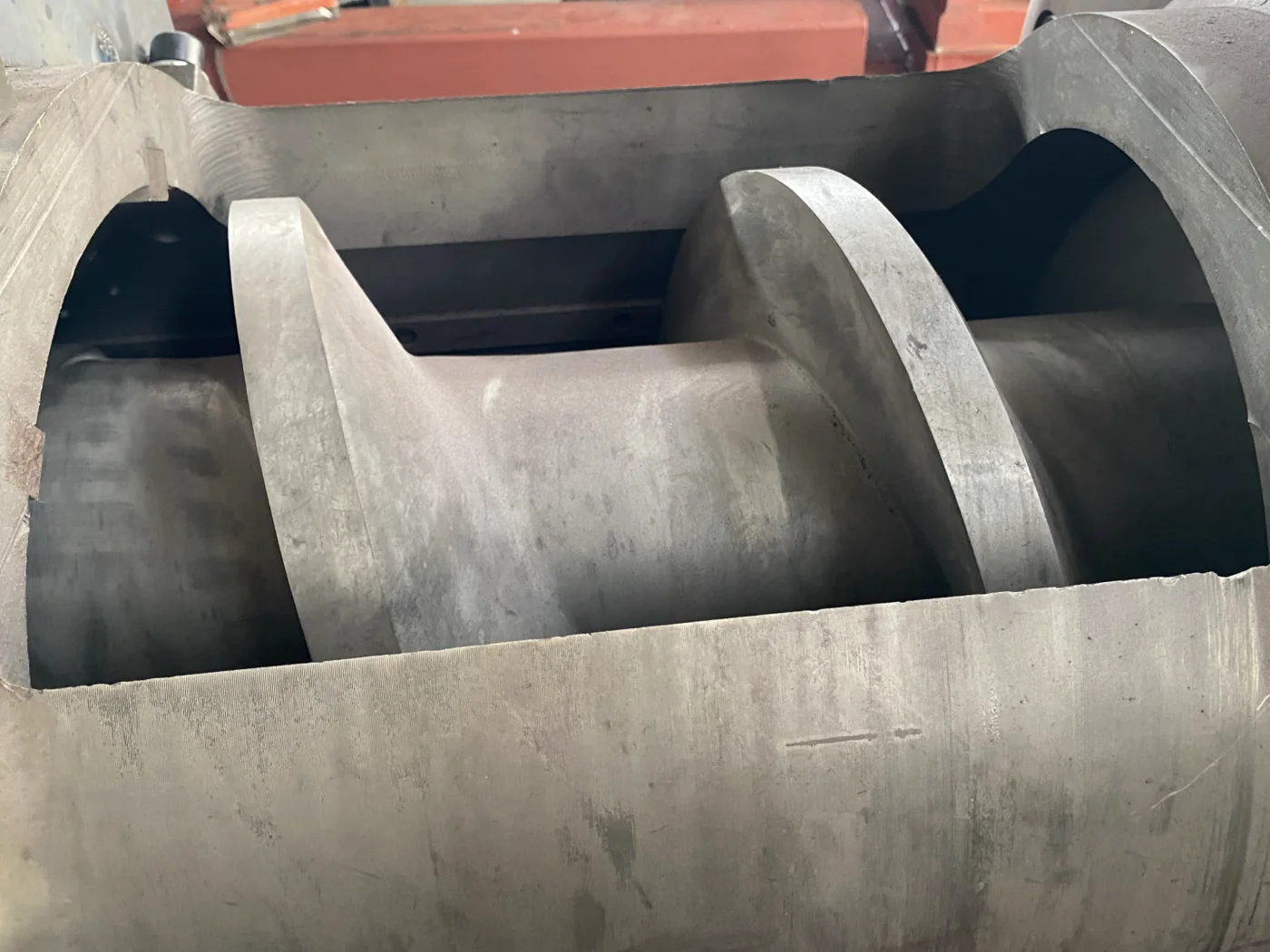
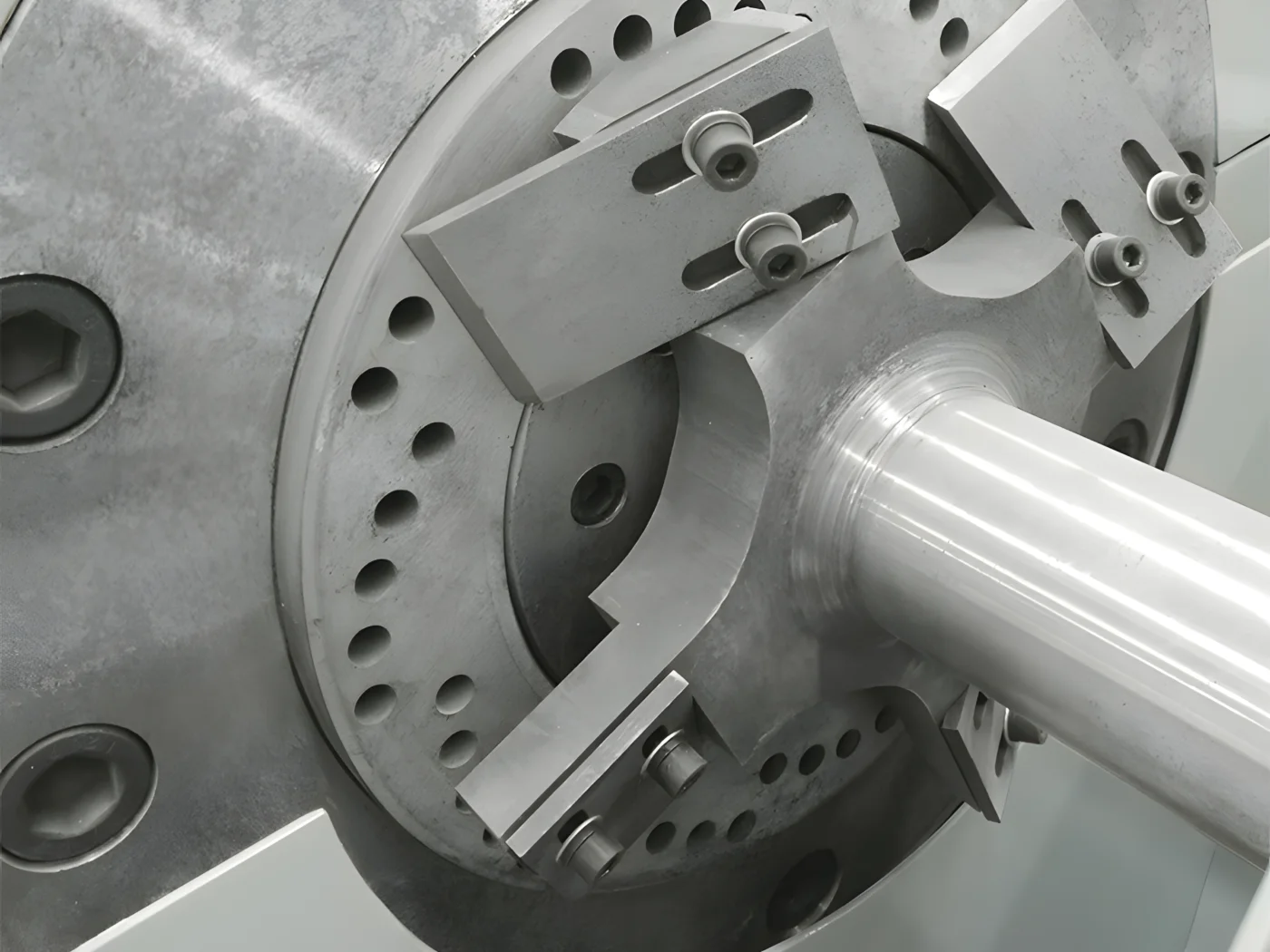
A closer look at the PP PE plastic film shredding and densifying line layout, including the integrated washing and densifying stages.
Related Recovery Solutions
These linked machines already appear in this workflow and use formal Energycle URLs that can support a full film shredding and densifying project.
Plastic Shredders
Primary volume reduction for bulky bales, rolls, and loose plastic film scrap before wet processing.
Wet Plastic Granulator
Wet size reduction stage that prepares flakes for cleaning while starting contamination removal.
PP PE Plastic Floating Separation Tank
Density separation module that ejects heavy impurities and stabilizes the washed PP PE stream.
Friction Screw Washer Machine
High-speed scrubbing support for removing paper, sand, and loose surface contamination from film flakes.
Plastic Film Squeezing Machine
Key densifying module that lowers moisture and raises bulk density for easier handling and pelletizing.
Output Quality: Defects by Film Feedstock Type
Output bulk density and moisture are direct functions of feedstock condition. Knowing which defects appear with which feedstock prevents finger-pointing between equipment supplier and operator after commissioning.
Pelletizers and end-buyers reject densified film batches for inconsistent moisture, inadequate bulk density, or visible contamination. Each feedstock type generates a distinctive defect signature that the line configuration can mitigate — but only if specified upfront.
| Feedstock condition | Most common defect | Root cause | Mitigation |
|---|---|---|---|
| Clean post-industrial film | Static cling, irregular flake size | Dry shredding without wet stage | Add light water spray during cutting |
| Mixed post-consumer (clear + colored) | Color contamination in densified output | No upstream color sorting | Pre-sort by color before shredding |
| Mixed post-consumer with paper labels | Paper fiber in densified flake | Friction wash insufficient for adhesive labels | Add hot wash or extended friction stage |
| Agricultural film (mulch, irrigation) | Sand and soil contamination | Sink-float tank under-sized for mineral load | Add pre-wash drum + 2-stage sink-float |
| Greenhouse film (UV-degraded) | Brittle flake, fines excess | Polymer chain scission from sun exposure | Cannot recover top-grade — route to lower-spec end use |
| Bale stored over 6 months wet | Fungal contamination, odor in densified output | Wet bale stored at high humidity | Reject feedstock or add chlorinated wash |
The most consequential defect is inconsistent moisture in densified output. Pelletizers fed with film at over 6% moisture experience melt-flow inconsistency and gel formation in the extruded pellet. Plants targeting in-house pelletizing should specify the squeeze-drying stage with closed-loop temperature control and a downstream thermal dryer for moisture under 3%.
Regional Adaptations for Emerging Markets
Western film line specifications fail predictably in emerging-market sites. Five engineering choices matter most across SE Asia, MENA, Africa, and LATAM.
Voltage and Frequency
Standard configurations ship at 380V/50Hz (China, Vietnam, Indonesia), 415V/50Hz (UK, Pakistan, India, much of Africa), or 440V/60Hz (Saudi Arabia, parts of LATAM). Specifying the wrong voltage means the entire motor and switchgear set arrives unusable — a 6-8 week rework with double shipping. Always confirm voltage in writing on the proforma invoice.
Water Scarcity and Closed-Loop Recycling
MENA, parts of Australia, and water-stressed African regions cannot supply 1.5-2.4 m³ fresh water per ton of densified output. A closed-loop water recycling system — sedimentation, screen filter, biological treatment, sometimes ultrafiltration — recovers 85-92% of process water and reduces fresh-water demand to 0.2-0.4 m³/t. Closed-loop CapEx adds USD 35,000-95,000, payback 14-22 months when fresh water exceeds USD 2/m³.
Spare Part Logistics
Lead time on a replacement granulator blade or friction washer screen from China to East Africa runs 28-42 days by sea, plus 7-14 days customs clearance. Plants 8,000+ km from the supplier need a first-year spare-parts kit covering 18 months of consumables on-site. Plants closer to the supplier (Vietnam, Indonesia, Philippines) can run lighter inventory with 14-21 day re-order cycles.
Climate and Dust
Film shredding and densifying generates fine plastic dust that settles inside electrical cabinets. Specify IP55 enclosure rating for control cabinets in arid regions (MENA, Northern Africa, parts of LATAM). Tropical regions (Indonesia, Philippines, parts of Brazil) need dehumidification on PLC enclosures to prevent condensation-induced contactor failure.
Operator Language and Training
The PLC HMI ships in English by default. For plants where shift operators do not read English, request Spanish, Arabic, Bahasa, French, or Vietnamese localization at the order stage. Adding it post-installation typically requires a controls engineer site visit at USD 4,000-7,000. Two-language HMI (English plus local) covers both expat managers and local operators.
8 Common Pitfalls When Buying a Film Shredding & Densifying Line
Eight buying mistakes account for the majority of post-installation regret. Use this list as a self-audit before signing any equipment purchase order.
- Sizing for nameplate capacity, not realistic throughput. Nameplate kg/h assumes ideal feedstock. Real-world throughput on dirty post-consumer film runs at 65-80% of nameplate. Size 25-35% above your annual tonnage target.
- Skipping the sink-float stage to save 12-18% of CapEx. Without sink-float, mineral and metal contamination passes through to the densifier and then to the pelletizer, causing gel formation and screen blockage. Adding sink-float later costs 60-85% more than specifying it upfront.
- Mixing components from multiple suppliers. Throughput mismatch between a Chinese shredder and a European densifier surfaces 4-6 months in, when the densifier runs starved or overloaded. Buy integrated or accept a written commissioning bond covering throughput loss.
- No factory acceptance test with your actual feedstock. A factory acceptance test (FAT) at the supplier’s plant — running production rate for 8 hours with your feedstock type — catches equipment defects before shipping. Skipping FAT trades USD 3,000-6,000 in travel for a 30-60 day site-commissioning recovery.
- Underspecifying the squeeze-drying stage. Output moisture above 6% rejects the densified flake from most pelletizer feed specs. Specify squeeze-drying capacity with 25% headroom over throughput, plus a downstream thermal dryer for moisture-sensitive end-buyers.
- Trusting the FOB quote as total cost. Add 25-35% for civil works, electrical incoming, water treatment, customs duty, and first-year spares. The all-in number is what matters for ROI calculation.
- Inadequate operator training contract. Standard contracts include 5-7 days of on-site commissioning. Operations stabilize at 10-14 weeks for film lines (longer than rigid plastic lines because feedstock is more variable). Negotiate a remote-support clause covering month 2 through month 6.
- Ignoring the wet granulator blade specification. Blade material — D2 tool steel vs SKD11 vs HVOF-coated — determines maintenance interval. SKD11 blades last 3-4× longer at 30-40% higher CapEx, paying back within 8-14 months on lines above 1,000 kg/h.
Frequently Asked Questions
Quick answers for buyers comparing film washing, drying, and densifying configurations.
It is a combined recycling system that shreds bulky film, washes contamination out of the flakes, and then squeeze-dries the material into a denser output that is easier to store, transport, or feed into pelletizing.
Typical projects start around 200 to 300 kg per hour and can scale to 500 to 700 kg per hour or up to about 1000 kg per hour depending on film type, contamination level, and required output density.
The final cleanliness depends on the washing route and incoming contamination, but the line is designed to remove sand, labels, loose paper, and field dirt before discharge into densified flakes or irregular pellets.
Yes. Agricultural film is one of the common target materials, but it usually needs stronger washing, better sludge handling, and tighter water management because soil and organics are much heavier than cleaner factory scrap.
Yes. We can support layout planning, commissioning, operator training, and startup guidance according to the project scope and delivery arrangement.
A PP/PE film shredding and densifying line costs USD 180,000 to USD 1.15 million for the equipment alone, depending on capacity. A 500 kg/h entry line runs USD 180k-260k; a 1,000 kg/h mid-volume line runs USD 340k-460k; a 2,000 kg/h commercial line runs USD 620k-820k; a 3,000 kg/h industrial line runs USD 880k-1.15M. Add 25-35% for civil works, electrical incoming, closed-loop water (where required), customs duty, and operator training. The all-in installed cost for a typical 1,000 kg/h post-consumer film line lands at USD 430k-580k delivered to most emerging-market sites in 2026.
Capacity is determined by annual feedstock tonnage divided by 250 working days x 16 production hours, plus 20% headroom. A plant processing 4,000 t/year of PP/PE film needs about 1,200 kg/h, rounded up to a 1,500 kg/h tier. The 1,000 kg/h tier is the most common configuration globally because it sits at a favorable per-ton processing cost while fitting a standard 25 m x 17 m hall. Operators with confirmed feedstock above 6,000 t/year almost always specify 2,000 kg/h or higher to capture labor and overhead amortization benefits.
Output bulk density ranges from 0.35 g/cm³ on entry 500 kg/h lines to 0.60 g/cm³ on industrial 3,000 kg/h lines with full configuration. Bulk density is determined by the squeeze-densifier specification and dryer integration. Higher bulk density (0.50+ g/cm³) reduces transport cost by 35-45% versus loose flake and is required for sale to third-party pelletizers in most markets. In-house pelletizing accepts lower bulk density (0.30-0.45 g/cm³) without economic penalty.
Payback period for a film shredding and densifying line ranges from 22 to 38 months depending on capacity, feedstock cost, and downstream integration. A 1,000 kg/h line with USD 220/t feedstock cost selling densified flake at USD 580/t pays back in 26-34 months at 70% uptime. A 2,000 kg/h line feeding an in-house pelletizing operation captures the full pellet price (USD 850-1,100/t) and pays back in 22-30 months. Sensitivity analysis on feedstock cost, output price, and uptime should run before any purchase commitment.
Agricultural mulch film with soil contamination requires an extended pre-wash drum, a 2-stage sink-float separation tank, and a double-pass friction washer. Standard PP/PE film configurations cannot handle the 8-15% mineral load typical of mulch film. Specifying the agricultural-film configuration upfront adds 18-25% to base CapEx; retrofitting later costs 45-65% more. Output recovery rate also drops — expect 70-85% mass recovery on agricultural film versus 92-96% on post-consumer flexible packaging film.
Discuss Your Film Recycling Project
Share your material type, contamination level, target throughput, and whether you need densified flakes or pelletizer-ready output. We will recommend a suitable washing and densifying configuration.