
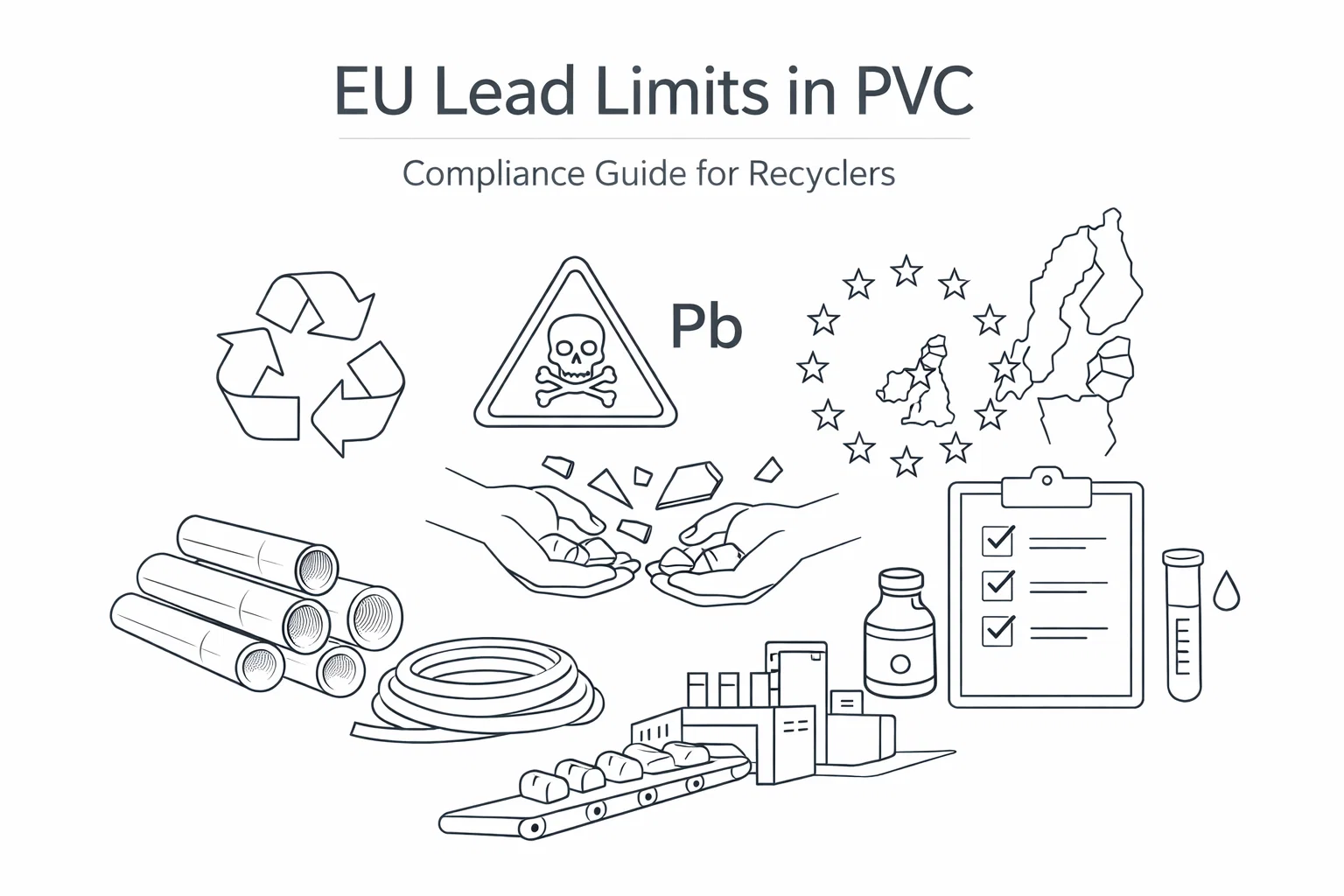
Alcuni vecchi prodotti in PVC, soprattutto in applicazioni edilizie, utilizzavano stabilizzanti a base di piombo. Quando questi prodotti raggiungono la fine del loro ciclo di vita, i riciclatori possono imbattersi in "piombo ereditario" nei flussi di PVC post-consumo. Nell'UE, questo problema è ora affrontato attraverso una specifica restrizione legale ai sensi del REACH, con limiti e deroghe definiti (incluse deroghe temporanee per alcune applicazioni di PVC riciclato).
Questo articolo riassume le implicazioni pratiche per riciclatori e produttori. Per le decisioni di conformità, fare sempre riferimento al testo legale ufficiale e consultare un supporto normativo qualificato.
Conclusioni rapide
- Le restrizioni sul piombo incidono sulle modalità di commercializzazione del PVC riciclato nell'UE.
- Molti riciclatori avranno bisogno di una migliore separazione, di test e di documentazione per il PVC post-consumo.
- La scelta delle attrezzature (smistamento, lavaggio, usi finali controllati) favorisce la conformità e la fiducia dell'acquirente.
Cosa copre il regolamento (livello alto)
Il regolamento UE modifica l'allegato XVII del REACH e stabilisce restrizioni per il piombo negli articoli in PVC, comprese condizioni e deroghe per determinati usi del PVC riciclato.
Implicazioni pratiche: – gli acquirenti potrebbero richiedere la documentazione del contenuto di piombo e delle condizioni di utilizzo legittime – alcune applicazioni potrebbero richiedere l'incapsulamento o altri controlli di progettazione laddove consentito – i riciclatori potrebbero dover separare i flussi con maggiore attenzione (profili più vecchi rispetto a quelli più nuovi, rigidi rispetto a quelli flessibili, ecc.)
Cosa significa questo per le operazioni di riciclaggio del PVC
1) Migliorare la segregazione delle materie prime
Se si accettano rifiuti da demolizione o flussi di profili misti, è possibile aspettarsi una maggiore variabilità. La separazione per origine ed età può ridurre il rischio e migliorare la coerenza del prodotto.
2) Aggiungere test e tracciabilità
Gli approcci comuni includono: – piani di campionamento dei materiali in entrata – documentazione dei materiali (fonte, lotto, risultati dei test) – etichettatura chiara dei gradi di output per usi finali appropriati
3) Considerare la tecnologia di smistamento ove giustificato
Alcune operazioni utilizzano strumenti di analisi elementare (come gli approcci basati su XRF) come parte del controllo qualità o della selezione, a seconda della produttività, degli obiettivi del prodotto e del budget.
Pagine di riferimento Energycle per la pianificazione della linea: – Soluzioni di riciclaggio (panoramica a livello di sistema) – Una guida completa per la scelta della giusta attrezzatura per il riciclaggio del PVC
Dove il rischio di piombo è più elevato (materie prime tipiche del PVC)
Il piombo di vecchia generazione è più comunemente associato al PVC utilizzato nei prodotti edili più datati. In termini di riciclo, il rischio aumenta quando l'apporto è:
- post-consumo e di età mista (flussi di ristrutturazione/demolizione)
- non controllato dalla fonte (aggregatori, broker, balle miste)
- attaccato agli assemblaggi (profili con guarnizioni/elementi di fissaggio, parti multistrato)
Gli scarti post-industriali più puliti (provenienza di fabbrica nota, formulazione nota) presentano solitamente un rischio inferiore e sono più facili da documentare.
Un semplice flusso di lavoro di conformità (pratico)
Se vuoi continuare a vendere nelle catene di fornitura rivolte all'UE, crea un flusso di lavoro in base all'uso finale previsto:
- Definire gli obiettivi di utilizzo finale leciti (quali applicazioni vendi e perché sono consentite).
- Separare per fonte ed età (separare i flussi post-industriali da quelli post-consumo; isolare i flussi degli edifici più vecchi ove possibile).
- Impostare un piano di campionamento/test che corrisponda alla tua produttività e alle esigenze dell'acquirente.
- Documentare ogni lotto di output (fonte, percorso di elaborazione, risultati dei test e dichiarazione di utilizzo previsto).
- Controlla dove va il materiale (vendere il grado giusto per l'applicazione giusta, non "un grado per tutto").
Controlli di processo che riducono il rischio per l'acquirente
Anche quando non è possibile eliminare la variabilità, è possibile ridurre gli scarti e migliorare la sicurezza con controlli quali:
- Migliore segregazione + riduzione stabile delle dimensioni così la contaminazione è più facile da rilevare e rimuovere.
- Lavaggio/separazione (quando necessario) per ridurre sporcizia, polveri sottili e contaminazione da riporto nei flussi di demolizione.
- Definizioni chiare dei gradi (ad esempio, profilato vs rigido misto) ed etichettatura coerente sulle spedizioni.
Contesto delle apparecchiature per la stabilizzazione a monte: – Stendibiancheria in plastica rigida per PP, HDPE, PVC
Lista di controllo per la richiesta di preventivo dell'acquirente (cosa preparare)
Per ridurre le infinite discussioni con gli acquirenti, prepara: – qual è il materiale (tipo di flusso, origine e fascia d'età, se nota) – la definizione del grado (colore, dimensione delle particelle, limiti di contaminazione) – il tuo approccio ai test (cosa testi, con quale frequenza e risultati tipici) – il tuo pacchetto di documentazione (tracciabilità del lotto + dichiarazione di utilizzo legale previsto)
Domande frequenti
Quali flussi di PVC hanno maggiori probabilità di contenere stabilizzanti di piombo obsoleti?
I prodotti edili più vecchi sono candidati comuni (alcuni profili per finestre, tubi e rifiuti di ristrutturazione/demolizione). La provenienza e l'età sono importanti; i flussi misti post-consumo sono considerati a rischio più elevato.
In che modo solitamente gli operatori del riciclaggio effettuano lo screening per individuare la presenza di piombo nel PVC?
Molte aziende utilizzano piani di campionamento in entrata e, ove giustificato, strumenti di analisi elementare (come gli approcci XRF) come parte del controllo qualità/smistamento. Scegliete metodi che soddisfino le vostre esigenze di produttività e conformità.
Il regolamento vieta il PVC riciclato nell'UE?
No, per alcune applicazioni sono previste condizioni e deroghe, che possono essere limitate nel tempo. Per le norme vigenti e gli usi consentiti, fare sempre riferimento al testo ufficiale.
Quale documentazione solitamente richiedono gli acquirenti?
Informazioni sulla fonte/lotto del materiale, risultati dei test (ove applicabili) e dichiarazioni chiare sulle condizioni d'uso previste e legittime. Una documentazione completa riduce il rischio per l'acquirente, anche quando il materiale è tecnicamente accettabile.
Conclusione
REACH 2023/923 non “pone fine al riciclaggio del PVC” nell’UE, ma alza l’asticella segregazione, verifica e documentazione, in particolare per i flussi edilizi misti post-consumo. Se allinei la tua strategia di gestione delle materie prime agli usi finali previsti e la supporti con un controllo qualità pratico (e lavaggio/separazione ove necessario), puoi mantenere stabili le vendite di rPVC riducendo al contempo la conformità e le sorprese a rischio per i clienti.
