

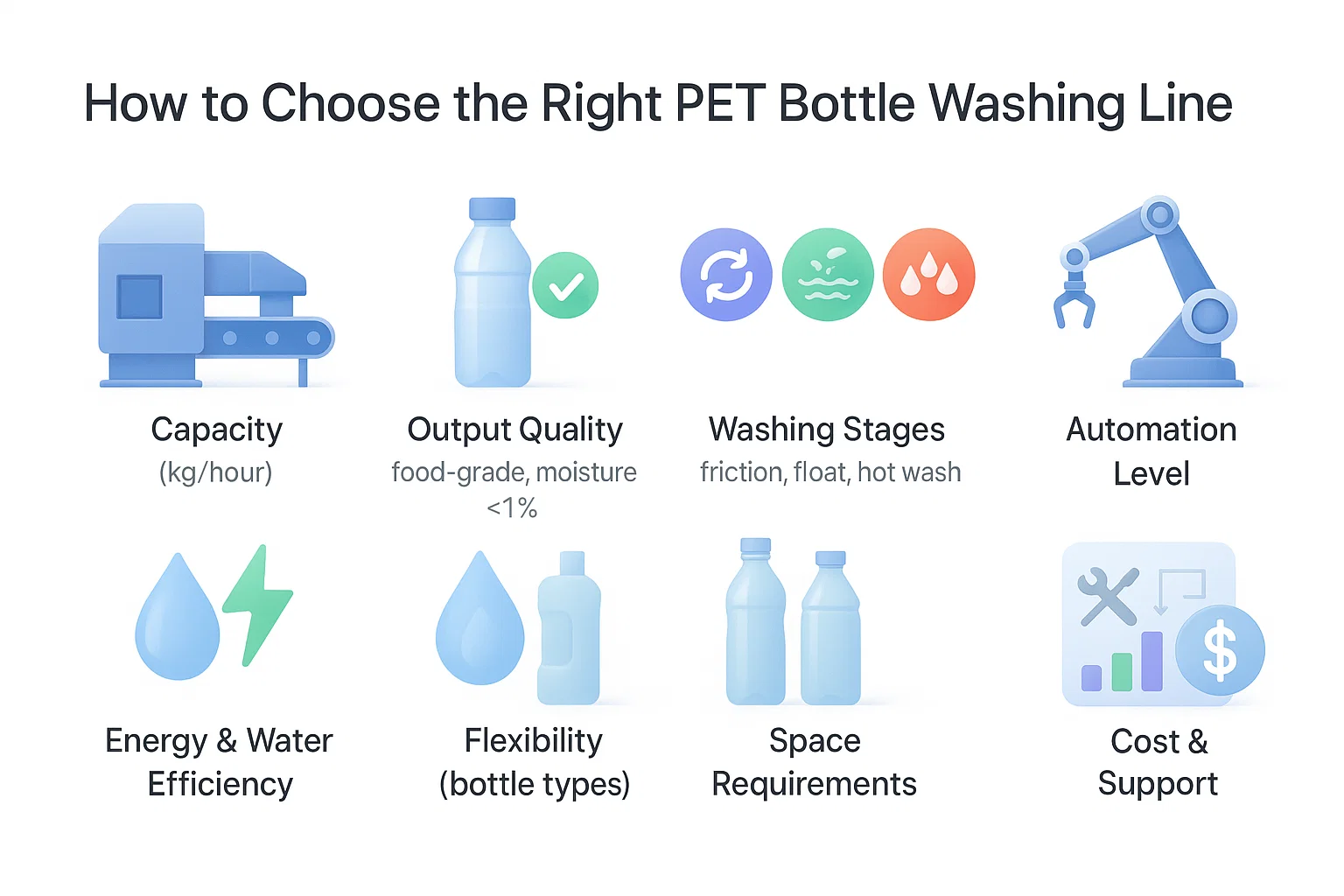
Choosing PET bottle washing line capacity begins with the required saleable flake output, not a supplier’s largest nameplate number. Feedstock composition, reject rate, planned operating time, sorting performance and the slowest process stage determine the useful capacity. A line sized from clean-bottle assumptions can miss its output target when it receives wet bales containing caps, labels, liquid, dirt and non-PET items.
Define which capacity you are comparing
Furnizorii pot descrie capacitatea ca input de sticle contaminate, flăcău umed la stadiul intermediar, flăcău uscat de ieșire sau ratingul mecanic al unei mașini. Aceste cifre nu sunt interschimbabile. Stareați atât rata de alimentare proiectată, cât și producția garantată vândabilă, împreună cu specificațiile de intrus și ieșire presupuse.
| Capacity term | What it should mean | Question for the quotation |
|---|---|---|
| Input capacity | Mass of received PET-bottle feed entering the defined process boundary | Această masă include umiditate, lichid, capse, etichete și murdărie? |
| Intermediate capacity | Mass passing a named machine or stage | Materialul este umed sau uscat și ce contaminanți rămân? |
| Saleable output | Flăcău uscat de PET care îndeplinește specificația scrisă a cumpărătorului | Care metode de eșantionare și testare determină acceptarea? |
| Nameplate rate | Manufacturer rating for one machine under stated conditions | Ce material de test și sarcină au fost folosite și pot etapele adiacente să o susțină? |
| Scheduled output | Saleable production over the planned shift, day or year | Ce presupuneri privind disponibilitatea, curățarea și schimbarea liniilor sunt incluse? |
Measure feedstock before sizing equipment
Colectați eșantioane reprezentative de la furnizori, sezoane și sisteme de colectare. Măsoara conținutul butoaielor de PET, capete și inele, etichete, containere ne-PET, metale, particule fine, praf, lichid reținut și umiditate. Înregistrați culoarea și PET opac separat atunci când cumpărătorul necesită un flux de flori specific.
Bale composition affects both mass balance and equipment load. Two tonnes of incoming bales do not necessarily produce two tonnes of PET flake. The Association of Plastic Recyclers’ PET rigid design guidance de asemenea, arată de ce etichetele, adezivii, capetele de închidere, culoarea și componentele de barieră trebuie luate în considerare în proces.
Calculate required input rate from saleable output
Utilizați randamentul vândabil măsurat și disponibilitatea operațională planificată pentru a estima rata de alimentare necesară pentru un obiectiv de producție.
Required design input = target saleable output ÷ saleable yield ÷ planned availability
Pentru o calculație ilustrativă doar, presupunem că obiectivul este 800 kg de flori de specificație pe oră programată, datele de probă arată un randament vândabil de 0.75 și disponibilitatea planificată pe program este de 0.85. Intrarea de design calculată este 800 ÷ 0.75 ÷ 0.85, sau aproximativ 1,255 kg/h. Înlocuiți aceste presupuneri cu datele proprii de probă și operaționale; acestea nu reprezintă o garanție de performanță Energycle.
Păstrați apa eliminată din materialul umed și contaminanții respinși din linie separate în balanța de masă. O masă de ieșire mai mică poate reflecta eliminarea corectă a murdăriei și a materialului non-PET, nu o recuperare slabă.
Dimensați fiecare etapă pe baza aceluiași design
O linie nu poate menține obiectivul țintă dacă stația de sortare, dispozitivul de eliminare a etichetelor, granulatorul, mașina de spălare fierbinte, tanca de separare, uscătorul sau sistemul de ambalare devine un blocaj continuu. Să cerem fiecărui furnizor să declare rata, starea materialului și alocația de buffer la fiecare etapă.
| Etapă | Factorul de capacitate | Riscul de dimensiune comună |
|---|---|---|
| Deschiderea și alimentarea baloților | Forma, densitatea și modul de livrare a baloților | Surge-urile care suprasolicită sortarea și reducerea la dimensiune |
| Triere | Rata contaminanților, prezentarea articolelor și puritatea necesară | Utilizarea vitezei de transportor fără a verifica sarcina sortatorului |
| reducerea dimensiunii | Geometria butoaielor, starea lamei, grila și rata de alimentare | Evaluarea granulatorului doar pe material curat |
| Spălare | Resturi, adeziv, chimie, temperatură și timpul de staționare | Reducerea timpului de staționare pentru a urmări randamentul |
| Separare | Încărcarea tanca, forma fulgilor, curățarea deasupra și descărcarea de respingere | Transportarea contaminanților la rata maximă |
| Uscare | Apa de intrare, dimensiunea fulgilor și starea finală necesară | Citatul umidității fără o metodă de eșantionare |
| Stocarea și ambalarea | Densitatea în grămadă, volumul silo și ciclul de ambalare | Allowing a full silo or slow bagging station to stop the line |
Match washing stages to the output specification
Spălarea la rece poate fi potrivită pentru material relativ curat pentru un iesire industrial definită. Materialele cu adeziv dificil, ulei sau reziduuri de produs pot necesita spălare caldă controlată, dozarea chimică și spălare suplimentară. Aceste alegeri afectează timpul de staționare, sarcina de încălzire, tratarea apei și capacitatea practică a liniei.
Conformitatea cu standardele de contact alimentar nu poate fi stabilită doar prin spălare la căldură. Este necesară controlul surselor, un proces de reciclare validat, testare și evaluarea reglementărilor specifice jurisdicției. Definiți piața țintă înainte de a solicita configurarea unei linii, nu adăugați doar o etichetă “alimentară” la un obiectiv de ieșire generic.
Check utility capacity at peak operating conditions
Alimentarea cu energie electrică, apa de proces, căldura, aerul comprimat, drenajul și tratarea deșeurilor de apă trebuie să susțină cererea simultană. O mașină corect dimensionată poate pierde producția atunci când presiunea apei scade, un încălzitor nu poate menține condițiile de proces sau manipularea depunerilor întrerupe circulația.
Solicitați încărcarea conectată și cererea de operare estimată separat. Confirmați calitatea apei, etapele de recirculare, sursa de încălzire, limitele de deversare și condițiile de proiectare ambientale. The sistem de reciclare a sticlelor din PET overview arată modulele care trebuie incluse în această echilibrare a utilităților.
Drying capacity needs a defined moisture test
Dezidratarea mecanică elimină apa de la suprafața liberă și reduce sarcina uscătorului aer sau termic de la etapele ulterioare. Rezultatul variază în funcție de dimensiunea plăcintei, rata de alimentare, starea uscătorului și apa de intrare. Definiți unde se prelevează eșantionul, cum este manipulat și care test de umiditate se utilizează.
Our guide to centrifugal dryers for PET washing lines explică variabilele care afectează această etapă. Nu selectați un uscător doar pe baza puterii motorului sau a unei procentaje de umiditate unconditional.
Permiteți operațiunea, curățarea și întreținerea
Producția planificată ar trebui să ia în considerare lansarea, oprirea, schimbarea produselor, curățarea, inspecția, serviciul cuțitului, curățarea ecranelor și întreținerea planificată. Folosiți jurnalele de operare de la un proces comparabil, dacă sunt disponibile. Nuestra PET bottle washing line maintenance guide enumeratează verificările care influențează disponibilitatea.
Bufferele ajută la absorbția întreruperilor scurte, dar bufferele supradimensionate nu pot corecta o etapă care este permanent prea mică. Confirmați cum răspunde linia atunci când sortarea se oprește, un rezervor de spălare necesită curățare sau oprirea ambalării.
Performance acceptance checklist
- Representative test material and documented composition.
- Input rate and saleable dry-flake output stated separately.
- Limitele de ieșire pentru contaminarea polimerului, culoarea, umiditatea, particulele fine și reziduurile.
- Durata testului trebuie să fie suficient de lungă pentru a include operațiunea stabilă și variația normală a materialului.
- Sampling locations, frequency, laboratory methods and responsible parties.
- Utilități și personalul operator disponibil în timpul testării.
- Tratament definit pentru materialul de lansare, produsele neconforme, apa și ieșirea neconformă.
După ce rata de proiectare este fixată, ghidul separat la Factorii de preț ai liniei de spălare a sticlelor PET poate fi folosit pentru a compara amploarea ofertei fără a amesteca intenția de capacitate și preț.
Întrebări frecvente
Ar trebui capacitatea liniei de spălare PET să fie măsurată la intrare sau la ieșire?
Ambele trebuie menționate. Capacitatea de intrare definește baza de alimentare, în timp ce producția vândabilă uscată arată ce poate vinde fabrica sub condițiile de materiile prime și calitate convenite.
Cât capacitate suplimentară ar trebui să aibă o linie de reciclare PET?
Nu există un procent universal. Allowance ar trebui să reflecte variațiile de intrus, cel mai lent stadiu, curățarea, disponibilitatea planificată și planurile de producție viitoare, mai degrabă decât o marjă arbitrară.
Un test de capacitate poate reprezenta fiecare flux de sticle?
Numărul compoziției balei, contaminarea, umiditatea, etichetele și culoarea pot schimba randamentul și stadiul încărcării. Folosiți material reprezentativ și specificați intervalul de materii prime acceptate.
Request a capacity-based process review
Trimiteți datele reprezentantului Energycle privind bala, ținta de producție a flăcărilor vândibile, limitele de calitate, programul de operare, utilitățile și constrângerile de pe site. Putem crea un echilibru de masă și o bază de capacitate etapizată înainte de a pregăti propunerea de proces.
