

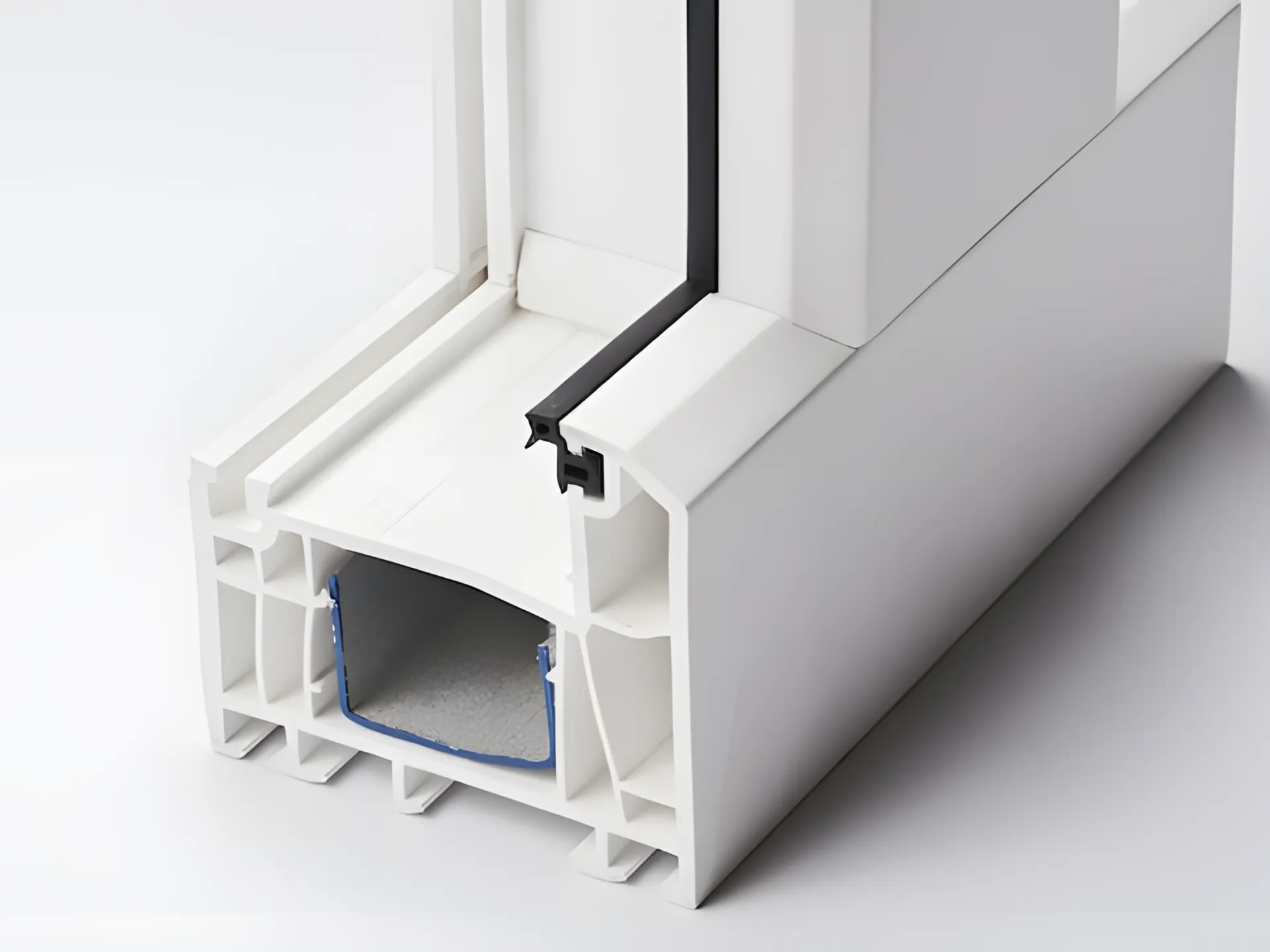
Les machines de recyclage du PVC révolutionnent la gestion des déchets de polychlorure de vinyle dans le secteur de la construction et l'industrie. Ces systèmes transforment les profilés en PVC mis au rebut (cadres de fenêtres, systèmes de portes et sections de tuyauterie) en matières premières réutilisables, bouclant ainsi la boucle d'un matériau qui peut être retraité jusqu'à sept fois sans perte de performance.[1]
Plaidoyer pour le recyclage des profilés PVC
Le secteur de la construction génère chaque année des millions de tonnes de déchets de PVC. Lorsque les profilés en PVC arrivent en fin de vie, le recyclage constitue une alternative pratique à la mise en décharge ou à l'incinération, deux options qui présentent des risques environnementaux en raison de la teneur en chlore du PVC.
Le recyclage mécanique, grâce à des équipements spécialisés, permet de maintenir le PVC en usage. Chaque tonne de PVC recyclée permet d'économiser environ 501 TP7 T d'énergie par rapport à la production de matière vierge et de réduire les émissions atmosphériques de plus de 601 TP7 T.[2] Pour la fabrication de profilés de fenêtres en particulier, l'utilisation de contenu recyclé 70% peut réduire les émissions d'eau de plus de 60% par rapport aux formulations entièrement vierges.
La durabilité du PVC constitue un atout majeur pour son recyclage. Un produit en PVC a une durée de vie d'environ 100 ans dans des conditions d'utilisation courantes. Multipliée par six ou sept cycles de recyclage, cette durée permet au matériau de rester potentiellement utilisable pendant 600 à 700 ans.[1]
Profils des processus des équipements de recyclage du PVC
Les machines modernes de recyclage du PVC prennent en charge l'intégralité du processus de conversion, des profilés contaminés aux granulés propres prêts pour la fabrication.
Tri et élimination des contaminants
Le traitement initial commence par l'inspection et le tri. Des systèmes automatisés éliminent les renforts métalliques, les joints en caoutchouc, les inserts en fibre de verre et autres composants non PVC. Cette étape de prétraitement détermine la qualité du matériau recyclé final : un tri plus fin permet d'obtenir un produit plus propre.
Réduction de taille
broyeurs de plastique Les broyeurs réduisent les profilés entiers en petits flocons, généralement de 10 à 20 mm. Cette réduction de taille remplit deux objectifs : elle augmente la surface de lavage et crée une matière première uniforme pour les étapes de traitement ultérieures.
Systèmes de lavage
Les flocons subissent un lavage en plusieurs étapes pour éliminer les contaminants de surface, les adhésifs, les étiquettes et les résidus de saleté. Cordes à linge en plastique On utilise des rondelles à friction, des cuves à flotteur et des cycles d'eau chaude pour atteindre des niveaux de propreté adaptés aux applications industrielles. L'eau de lavage est traitée et recirculée afin de minimiser sa consommation.
Séchage et granulation
Les paillettes propres sont acheminées vers des séchoirs thermiques qui réduisent leur taux d'humidité en dessous de 0,51 TP7T. La matière sèche est ensuite introduite dans des extrudeuses qui font fondre le PVC et le transforment en granulés uniformes. Ces granulés servent directement de matière première pour le moulage par injection, l'extrusion et d'autres procédés de fabrication du PVC.
Capacités et débit des équipements
Les systèmes de recyclage du PVC s'adaptent à différentes échelles, des petites unités traitant 100 à 300 kg/h aux installations industrielles gérant plusieurs tonnes par heure. Le débit dépend du type de profilé, du niveau de contamination et des spécifications des granulés recherchés.
Les machines de pointe peuvent traiter des profils complexes composés de plusieurs matériaux. La technologie de tri optique identifie et sépare les différentes formulations de PVC selon leur couleur et leur composition, préservant ainsi la qualité des matériaux recyclés.
Le contrôle de la température lors de la fusion est crucial. Le PVC se dégrade en cas de surchauffe, libérant de l'acide chlorhydrique qui endommage les équipements et altère les propriétés du matériau. Les extrudeuses modernes utilisent des zones de température précises et une gestion optimisée du temps de séjour pour prévenir cette dégradation thermique.
Qualité des matériaux en PVC recyclé
Le PVC recyclé correctement traité conserve des propriétés physiques comparables à celles du PVC vierge. Sa résistance à la traction, sa résistance aux chocs et sa durabilité face aux intempéries restent conformes aux spécifications lorsque le recyclage suit des procédures contrôlées.
L'industrie européenne du PVC a recyclé environ 912 000 tonnes en 2023, grâce à la contribution des déchets post-industriels et des produits post-consommation.[3] Le recyclage post-industriel — le traitement des chutes et des rebuts de production — représente environ 601 TP7 T de volume recyclé, car le matériau est plus propre et plus homogène.
Le recyclage post-consommation présente davantage de défis. Les déchets de construction et de démolition contiennent des matériaux mixtes, des surfaces altérées et des compositions variables. Malgré ces difficultés, les progrès technologiques continuent d'accroître les taux de valorisation post-consommation.
Gestion des variations de couleur
Les profilés en PVC sont disponibles dans de nombreuses couleurs : blanc, brun, gris et teintes personnalisées. Le mélange des couleurs lors du recyclage produit des granulés gris ou bruns qui limitent les possibilités d’application.
Certains transformateurs trient les profilés par couleur afin de préserver la valeur des matériaux. Les profilés blancs se vendent plus cher en tant que matériaux recyclés, car ils peuvent être repigmentés dans n'importe quelle couleur. Les profilés foncés restent généralement foncés, ce qui convient aux applications où la couleur importe peu ou lorsque des tons foncés sont préférés.
Autre possibilité : les fabricants mélangent de faibles pourcentages de matériaux recyclés de couleur différente au PVC vierge pour les applications non visibles, conciliant ainsi les objectifs de durabilité et les exigences esthétiques.
Intégration aux principes de l'économie circulaire
Les machines de recyclage du PVC permettent de mettre en place des systèmes de production en boucle fermée. Les entreprises collectent leurs propres déchets de production ainsi que les retours clients, les traitent sur place et réintègrent les matières recyclées dans de nouveaux produits.
Le programme VinylPlus, une initiative industrielle à l'échelle européenne, s'est fixé pour objectif de recycler 900 000 tonnes par an d'ici 2025, puis au moins 1 000 000 de tonnes d'ici 2030.[4] Pour atteindre ces objectifs, il faut à la fois une infrastructure de collecte et une capacité de traitement grâce aux équipements de recyclage.
Le recyclage chimique représente une approche alternative émergente. Plutôt que de faire fondre le PVC mécaniquement, des procédés chimiques décomposent le polymère en éléments constitutifs de base — hydrocarbures, chlore et additifs — qui sont réintégrés dans les flux de production industrielle.[5] Cette technologie peut traiter des flux mixtes et contaminés que le recyclage mécanique ne peut pas traiter, bien que son déploiement à l'échelle commerciale soit encore en développement.
Considérations opérationnelles
L'exploitation d'équipements de recyclage du PVC nécessite de prêter attention à plusieurs facteurs :
Consistance du matériauLa fluctuation de la qualité des intrants influe sur les spécifications des extrants. Mettez en place des accords avec les fournisseurs ou des protocoles de collecte qui minimisent la contamination.
calendriers de maintenanceLes charges abrasives présentes dans certaines formulations de PVC usent les arêtes de coupe et les spires des vis. Un contrôle régulier permet d'éviter les arrêts de production imprévus.
exigences en matière de ventilationMême avec un contrôle précis de la température, la transformation du PVC libère des composés volatils. Des systèmes d'extraction adéquats protègent les travailleurs et garantissent le respect des normes de qualité de l'air.
Essais de granulésUn échantillonnage périodique permet de vérifier que les matériaux recyclés répondent à vos spécifications de fabrication en matière de fluidité à chaud, de densité et de propriétés mécaniques.
Retours économiques et environnementaux
Les coûts d'investissement pour les lignes de recyclage du PVC varient de 100 000 à 100 000 dollars pour les systèmes de base à petite échelle, jusqu'à plusieurs millions de dollars pour les installations industrielles entièrement automatisées. Les délais de retour sur investissement dépendent de :
- Volume de déchets de PVC disponibles
- Différence de prix entre les matériaux vierges et recyclés
- Coûts de main-d'œuvre pour le tri et la manutention
- Dépenses en énergie et en eau
- Demande du marché pour les granulés recyclés
De nombreux transformateurs atteignent le seuil de rentabilité en 2 à 4 ans lorsque l'approvisionnement en matières premières et la demande du marché sont stables. Les avantages environnementaux — réduction du tonnage des déchets mis en décharge, diminution des émissions et réduction de l'extraction de matières premières vierges — constituent une valeur ajoutée que l'analyse financière seule ne permet pas de saisir.
Questions fréquemment posées
Tous les types de PVC peuvent-ils être recyclés ensemble ?
Le PVC rigide et le PVC souple requièrent des paramètres de transformation différents en raison de leurs formulations distinctes. Leur mélange réduit la qualité du matériau. Il est donc impératif de les trier par type avant transformation.
Comment le PVC recyclé se compare-t-il au PVC vierge ?
Correctement transformé, le PVC recyclé offre des performances quasi identiques à celles du PVC vierge dans la plupart des applications. Certaines applications critiques ou soumises à de fortes contraintes peuvent toutefois exiger un taux de PVC vierge de type 100%.
Que devient le PVC qui ne peut pas être recyclé mécaniquement ?
Le PVC fortement contaminé ou composé de matériaux mixtes peut être valorisé énergétiquement (incinération avec récupération d'énergie), recyclé chimiquement ou, de façon moins souhaitable, mis en décharge. Les progrès technologiques permettent de réduire continuellement le pourcentage de PVC non recyclable mécaniquement.
Existe-t-il un marché pour le PVC recyclé ?
Oui. Les fabricants de profilés de construction, les producteurs de tuyaux et autres transformateurs de PVC achètent activement des granulés recyclés. Les prix sont généralement de 15 à 301 TP7T inférieurs à ceux du PVC vierge, selon la qualité et les conditions du marché.
Les machines de recyclage du PVC constituent la base mécanique de la transformation des déchets de construction en matière première pour la fabrication. À mesure que les systèmes de collecte se développent et que la technologie des équipements progresse, les taux de recyclage continueront d'augmenter, permettant ainsi de réutiliser davantage de PVC et de réduire l'impact environnemental du secteur de la construction.
