

What Are PET Flakes Used For? Applications, Grades, and Quality Requirements
PET flakes are the core intermediate material produced from recycled PET bottles. Their real value depends not on volume, but on cleaning level, contamination control, and final application. This article explains where PET flakes are used, how they are graded, and which technical indicators determine their market value.
1. What Are PET Flakes?
PET flakes are produced by sorting, crushing, washing, label removal, and drying post-consumer PET bottles. They are not a finished product, but a tradable industrial raw material used by downstream manufacturers.
2. Main Applications of PET Flakes
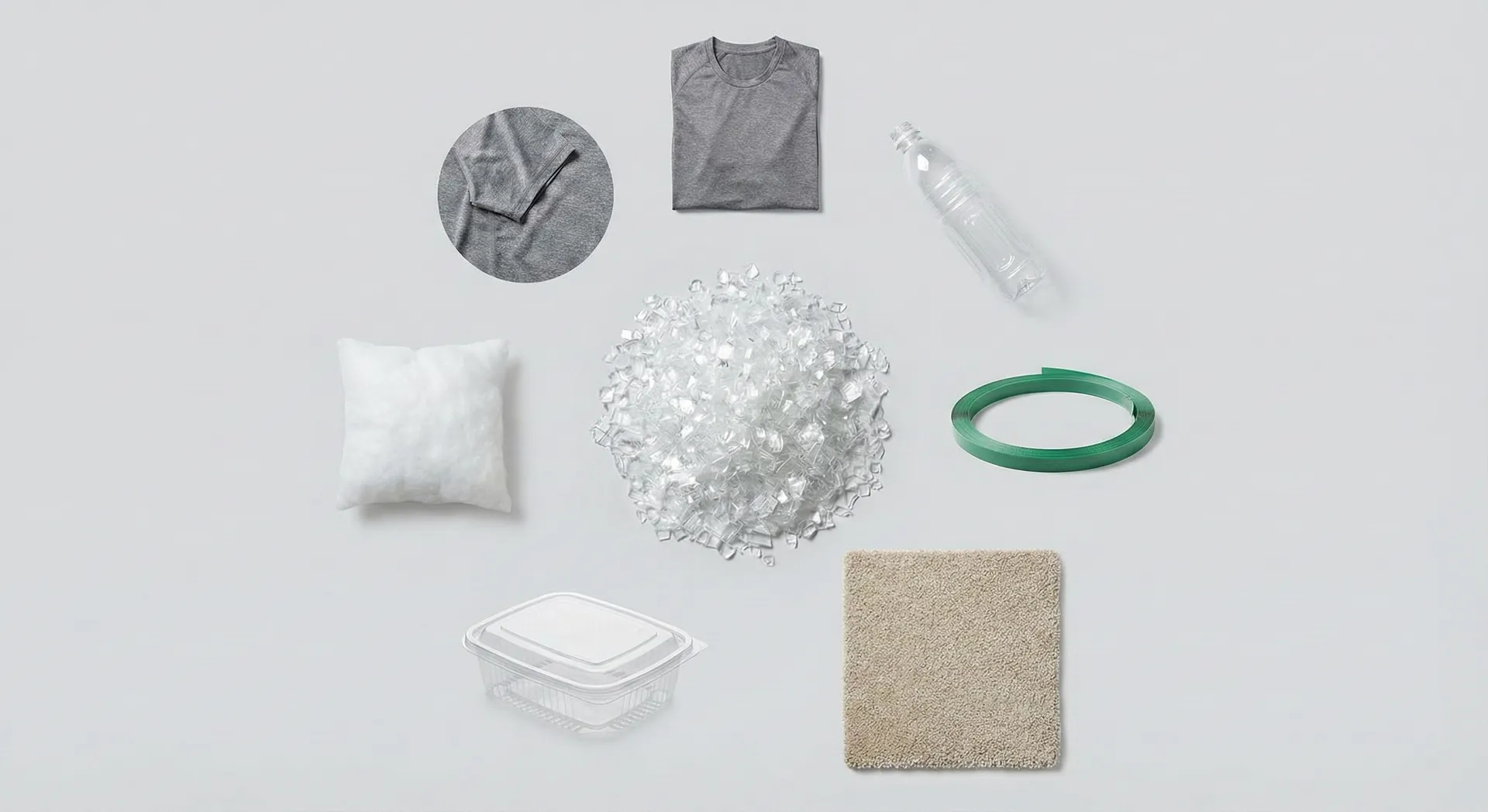
Polyester Fiber (Largest Market)
- Staple fiber and filament yarn
- Textiles, nonwovens, filling materials
- Automotive interiors and carpets
This is the most stable and high-volume outlet for PET flakes, with relatively tolerant quality requirements compared to food-grade uses.
Sheets, Strapping, and Injection Products
- RPET/APET sheets for thermoforming
- PET strapping to replace steel or PP straps
- Non-food injection molded products
These applications require low PVC, low moisture, and stable IV, but do not require food-contact approval.
Bottle-to-Bottle (Food-Grade rPET)
High-quality PET flakes can be upgraded through advanced decontamination (SSP or equivalent) and reused for food-contact bottles.
- Highest technical barrier
- Strict FDA / EFSA compliance
- Highest added value per ton
3. PET Flake Grades and Typical Uses
| Grade | Characteristics | Typical Applications |
|---|---|---|
| Basic Washed | Higher contamination, mixed colors | Low-end fiber, fillers |
| Hot Washed | Low glue, oil, and label residue | Fiber, sheets, strapping |
| Super Clean / Food Grade | Ultra-low contaminants, stable IV | Bottle-to-bottle |
4. Key Quality Indicators That Affect Price
- PVC content (critical)
- Moisture level
- Color consistency
- Glue and oil residue
- Intrinsic viscosity (IV)
5. Typical PET Bottle Recycling Process
6. Why Equipment Configuration Matters
The final application of PET flakes determines the entire recycling line design. Fiber-grade flakes and bottle-grade flakes require very different investments in washing intensity, separation accuracy, and drying performance.
Planning a PET Recycling Project?
Choosing the right process and equipment is essential to reach your target market and avoid unnecessary capital cost.
Discuss Your PET Flake Application