

PET flakes는 어디에 쓰이나? 용도와 품질 요건
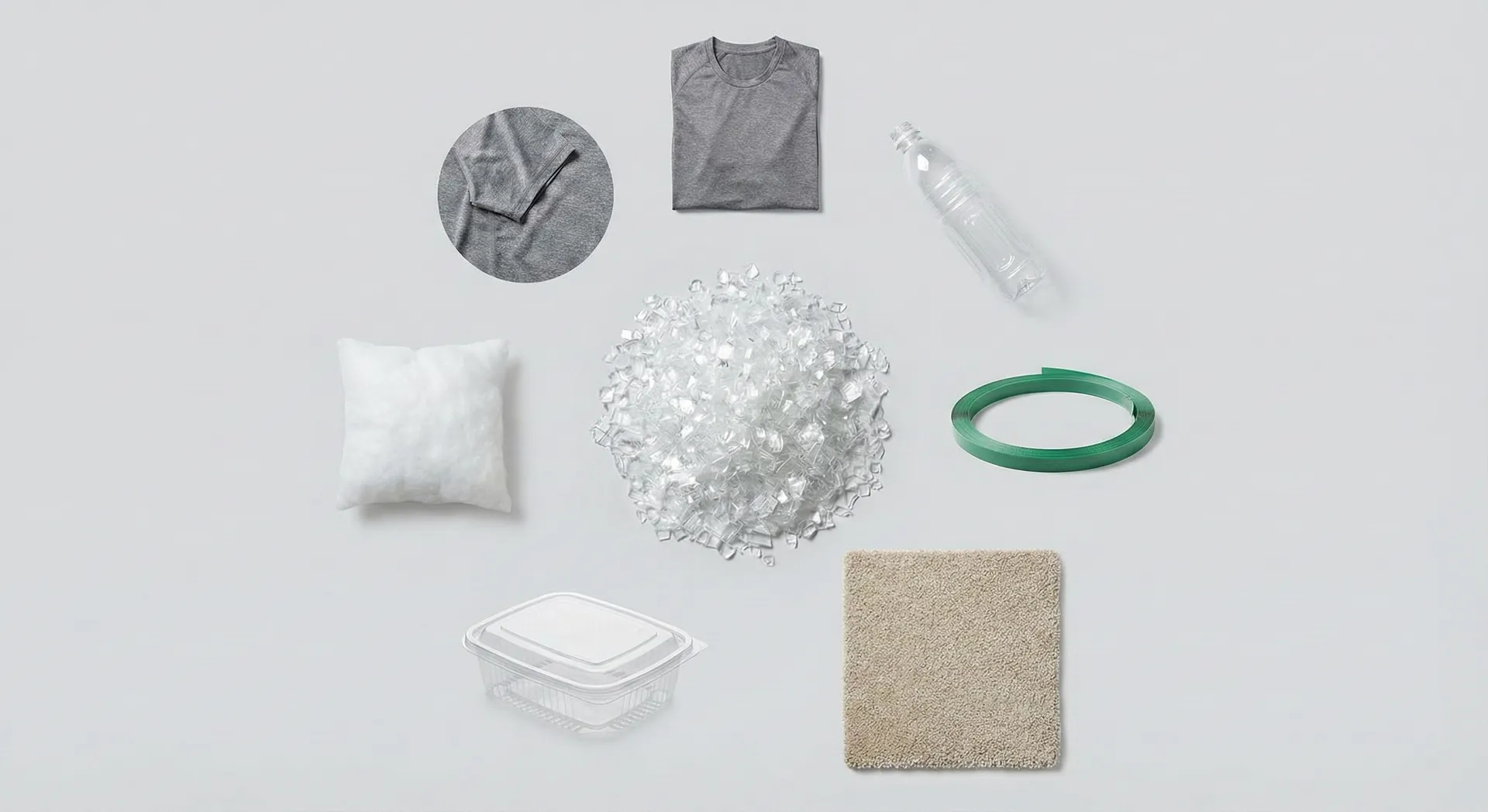
PET 플라이크는 PET 컨테이너나 다른 정의된 PET 원료를 정리, 균질화, 씻고 건조한 중간 재료입니다. 그들은 섬유, 시트, strap, 병 및 선택된 모델링 제품으로 사용될 수 있지만, 모든 플라이크 등급이 모든 응용 프로그램에 적합하지 않습니다. 색상, 고분자 오염, 습기, 내재적 유체상수, 미세 입자 및 규제 상태가 실질적인 출고를 결정합니다.
PET flake applications at a glance
| 애플리케이션 | Typical form used by converter | Important quality questions |
|---|---|---|
| Polyester staple fibre and filament | Washed flake or pellets, depending on process | Colour, filterable contamination, moisture, IV and spinning performance |
| Thermoforming sheet | Flake, pellets or a blend | Colour, black specks, gels, moisture, IV and sheet appearance |
| PET strapping | Qualified flake or pellets | 분자량, 오염, 일관성, 유연성 및 확장 성능 |
| 병에서 병으로 | Qualified rPET flake or pellets from a compliant process | 입력 원천, 오염 제거, 추적 가능성, 식품 접촉 규칙 및 병 성능 |
| Non-food containers and moulded parts | Flake or compounded pellets | Processability, colour, mechanical properties and application limits |
The Association of Plastic Recyclers’ Applications Guidance Protocol for Recycled PET 병, 시트, strap 및 섬유 응용 프로그램을 다루고, 최종 사용 시험의 중요성을 보여줍니다.
1. Polyester fibre
재활용 PET는 섬유,, 비 woven,절연 및 충용으로 용융스핀으로 변환될 수 있습니다. 변환기는 씻은 파이프를 직접 공급하거나 건조, extrusion 및 필터링 시스템에 따라 펠릿 재료를 사용할 수 있습니다.
섬유는 오염된 PET의 일반적인 출고가 아닙니다. PVC,지,금속, polyolefins 및 과도한 미세 입자는 필터를 막거나 필라멘트를 깨거나 색상 및 기계적 성능에 영향을 미칠 수 있습니다. 구매자는 허용 가능한 오염물질과 필요한 회전 또는 필터링 시험을 명시해야 합니다.
2. Thermoforming sheet
펫 플라스틱 플라이크나 펠릿은 트레이, 클램셜, 그리고 다른 형상 제품용 시트로 쏟을 수 있습니다. 투명한 응용 프로그램은 색상, 흐림, 검은 점, 그리고 불화성 플라스틱에 대한 긴급한 통제를 요구합니다. 습도와 열 역사는 쏟기 안정성에 영향을 미칩니다.
식품 접촉 시트는 적용 가능한 규제 경로가 필요합니다; 시각적으로 명확한 씻은 플라이크는 자동적으로 식품 접촉에 적합하지 않습니다. 식품이 아닌 시트도 두께, 충격, 형상에 대한 응용 프로그램 테스트가 필요합니다.
3. PET strapping
Strapping uses PET’s strength and orientation potential for unit-load packaging. Feed consistency, molecular weight and contamination influence extrusion, drawing, tensile strength, elongation and weld behaviour.
구매자는 생산 전에 고체 상태 폴리메라화나 다른 조건화 경로를 요구할 수 있습니다. 실제 출력을 목표적인 strap 과정에서 평가하는 것이 아니라 색상이나 플라이크 깨끗함에 의존하지 마세요.
4. Bottle-to-bottle rPET
병에서 병으로 재활용은 새 병에 적합한 재료를 생산하기 위해 제어된 수집 및 재활용 경로를 사용합니다. 정리, 씻기, 플라이크 품질은 필요하지만, 식품 접촉 적합성도 원료 원천 제어, 소극 처리, 추적 가능성 및 목적 시장의 요구 사항에 따릅니다.
The European Commission explains the EU framework on its plastic recycling for food-contact materials page. In the United States, the FDA publishes guidance and information on recycled plastics in food packaging. Requirements differ by jurisdiction and process.
5. Non-food packaging and moulded products
인정된 rPET는 식품이 아닌 컨테이너, 산업 포장 및 일부 형상화나 복합 응용 프로그램에 사용될 수 있습니다. 이러한 사용은 다른 색상이나 규제 상태를 받을 수 있지만, 여전히 기계적 및 공정 요구 사항이 필요합니다.
펫은 모든 주입형성 플라스틱의 간단한 대체물이 아닙니다. 건조, 결정성, 설계, 충격 요구 사항 및 재료 이력은 제품 제조업체에 의해 평가되어야 합니다.
What “PET flake grade” should mean
쌀쌀 씻기, 뜨거운 씻기, 초정화, 섬유 등급 및 병 등급과 같은 용어는 완전한 규격이 아닙니다. 두 공급자가 동일한 등급 이름을 다른 재료에 사용할 수 있습니다. 레이블을 측정 가능한 제한으로 대체하세요.
| 재산 | 그 중요성 | How to specify |
|---|---|---|
| PET polymer content | Controls incompatible resin entering the melt | Named test method and contaminant categories |
| PVC and other dense plastics | 수분 분리 후 PET에 남을 수 있으며, 처리 과정에서 저하될 수 있습니다 | Application-specific limit and detection method |
| PE/PP, labels and paper | 필터, 외관 및 하류 수출량에 영향을 미칠 수 있습니다 | 질량 또는 입자 수 제한 및 샘플링 절차 |
| 색상 | 투명한 푸른색, 녹색 또는 혼합색 출구를 결정합니다 | 필요 시 색상 분수와 기계적 가치 |
| 수분 | 저장 및 녹화 처리에 영향을 미칩니다 | 제한, 샘플 조건 및 검사 방법 |
| 내재적 비사 | 분자량 및 처리/적용 성능과 관련됩니다 | 방법, 조건 및 허용 범위 |
| 미세 입자 및 입자 크기 | 축적 전달, 건조, 손실 및 녹이는 영향 | 스ieve 분포, 일정한 크기가 아닙니다 |
| ```json { "text": "메탈, 아스, 검은 점" } ``` | -> 외관 -> 마모 -> 제품 성능 에 -> 에 영향을 -> 영향을 미칩니다 미칩니다 -> 미칩니다 외관,마모 및 제품성능에 영향을 미칩니다 | 정의된 분석적 또는 시각적 검사 방법 |
flake 색상이 출구에 미치는 영향
투명하고 푸른색 병 flake는 일반적으로 투명한 응용 프로그램에 대해 녹색이나 혼합색 재료보다 더 큰 잠재력을 가지지만, 색상만으로는 등급을 결정하지 않습니다. PVC나 접착제 오염이 있는 투명한 흐름은 일관된 색상 흐름보다 덜 유용할 수 있습니다.
가능한 경우 granulation 전에 색상을 정리합니다. flake가 혼합되면, 좁은 색상 규격을 복원하는 것이 더 어려워지고 회수가 줄어들 수 있습니다.
PVC 제어가 중요한 이유
PET와 PVC는 물에 흔들리기 때문에, 흐름분리탱크는 그들을 신뢰할 수 없게 분리합니다. PVC는 PET 처리 조건에서 분해될 수 있으며, 색상과 성질에 영향을 미칠 수 있습니다. 따라서 병 분리, 검증된 센서 분리 및 파이프 테스트가 중요합니다.
프로세스별 제어에 대한 별도 가이드를 읽어 주세요. PET 재활용에서의 PVC 오염 프로세스별 제어.
병에서 파이프로까지의 표준 경로
- 검사하고 밸리를 열고 병을 측정합니다;
- 폴리머, 색상 및 허용된 컨테이너 유형에 따라 분리합니다;
- 필요에 따라 레이블과 금속을 제거합니다;
- 제어된 파티클 크기 분포로 granulate합니다;
- 정의된 오염물에 대해 미리 씻고, 뜨거운 씻기 및/또는 마찰 씻기를 합니다;
- 적절한 잠수와 잠재 부분에 대해 밀도 분리를 사용합니다;
- 물 루프를 씻고 제어합니다;
- 기계적으로 수분을 제거하고, 열로 말려서 합의된 파이프 스펀지 규격에 맞춰 dry합니다;
- 최종 분리, 실험실 테스트 및 랏 제어 저장을 수행합니다.
그만큼 PET 보틀 재활용 시스템 최종 사용으로부터 설계되어야 합니다.
종이 사용이 장비 선택에 미치는 영향
섬유 구매자는 필터 가능한 오염물과 색상을 우선시할 수 있습니다. 클리어 시트 생산자는 검은 점과 흐림에 더 긴 제한을 둘 수 있습니다. 병에서 병으로의 응용 프로그램은 원료 공급원, 오염 제거 및 규제 제어를 추가합니다. strap필요는 일관된 분자적 및 기계적 성능이 필요합니다.
따라서 장비 용량은 판매 가능한 파이프 스펀지 품질로 측정되어야 합니다. 더 많은 씻기나 분리는 한 성질을 향상시킬 수 있지만 수확을 줄일 수 있으므로 건조 질량 균형과 모든 중요한 규격을 추적해야 합니다.
Frequently asked questions
PET 플라스크가 새로운 병을 만드는 데 직접 사용될 수 있나요?
의정확한 재활용 및 변환 경로를 통해 병과 관련된 요구사항을 충족해야 합니다. 단순히 씻은 플라스틱 파편만으로는 자동적으로 승인되지 않습니다.
핫와싱 PET 플라크가 콜드와싱 플라크보다 항상 더 좋은가요?
No. 뜨거운 씻기는 정의된 접착제나 잔여물을 제거할 수 있지만, 등급은 전체 규격, 공정 제어 및 구매자의 응용 프로그램에 따릅니다.
최고의 가치를 지닌 PET 플라스크 품질은 무엇인가요?
구매자가 신뢰할 수 있는 등급과 구매자의 규격에 대한 검증된 준수는 관련 가치가 있습니다. 공개 레이블이나 스팟 가격은 랏 테스트와 상업 조건을 대체할 수 없습니다.
구매자 규격에서 시작하세요
Energycle 대표 병과 목적 섬유, 시트, strap 또는 병 규격을 보내세요. 그런 다음, 씻기 라인, 분리 단계 및 수용 테스트는 PET 파이프 스펀지 응용 프로그램에 맞게 구성될 수 있습니다.
