

Blade Material Selection Guide
How to Choose Plastic Recycling Blades
Compare SKD-11, D2, DC53, and 55SiCr blade materials for plastic shredders, crushers, and granulators. Choose the right steel for wear resistance, toughness, uptime, and service cost.
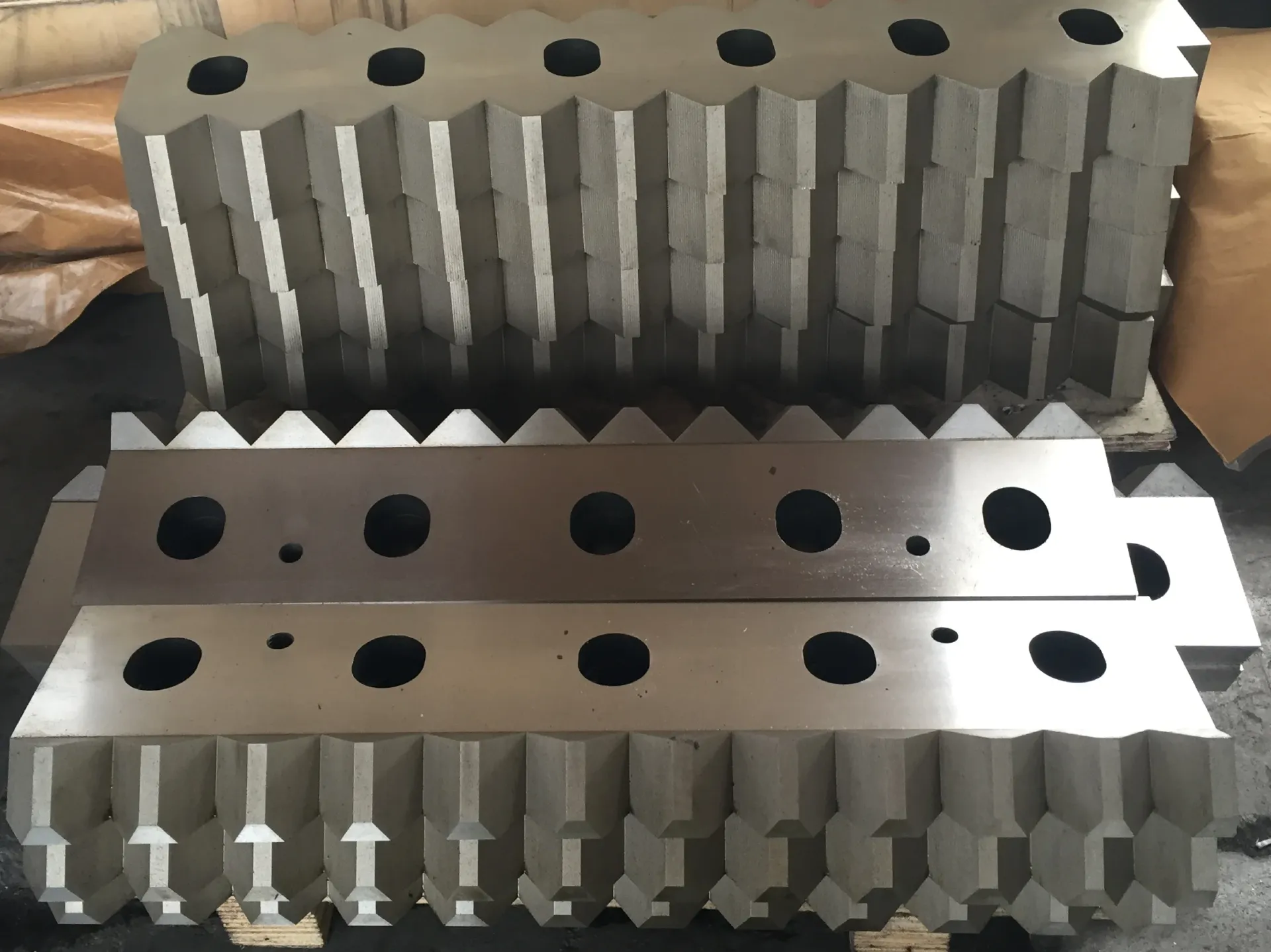
Quick Selection
Which Plastic Recycling Blade Should You Choose?
The best blades for plastic recycling are not always the hardest blades. A recycling plant needs the right balance of wear resistance, toughness, edge geometry, and heat treatment for its feedstock.
Clean PET, HDPE, PP
D2 or SKD-11 usually gives strong wear resistance at a controlled cost when the feed is clean and metal separation happens before crushing.
Mixed Rigid Scrap
DC53 is often better for purgings, thick sprues, and hard lumps because it handles repeated impact and edge chipping better than standard D2.
Film, Raffia, Woven Bags
D2 or SKD-11 works for clean film, while dirty post-consumer film needs stricter sharpening intervals and better washing or screening.
Shock-Loaded Cutting
55SiCr can suit large knives and low-speed coarse cutting where toughness and fatigue resistance matter more than maximum edge life.
Blade Steel Selection
The Four Blade Steels We Supply
Plastic recycling knives usually fail through dulling, edge chipping, cracking, or mounting-hole wear. Steel grade matters, but heat treatment and knife geometry decide whether that steel performs as expected. For the metallurgy behind these grades — carbide structure, heat treatment, and why DC53 steel behaves differently from D2 — see our shredder blade steel guide.
| Material | Typical role | Strength | Limitation | Best fit |
|---|---|---|---|---|
| SKD-11 | Cold-work tool steel close to the D2 family | High wear resistance and dimensional stability | Can chip under heavy shock | Clean plastics, bottle flake, rigid scrap |
| D2 | High-carbon, high-chromium tool steel | Excellent abrasion resistance for the price | Lower toughness than shock-resistant steels | General shredder blades and crusher knives |
| DC53 | Modified cold-work steel | Better toughness than D2 while keeping good hardness | Higher purchase cost | Mixed plastic, purgings, hard lumps, dirty feed |
| 55SiCr | Spring steel for high shock load | Good toughness and fatigue resistance | Lower wear resistance than D2 or DC53 | Large knives, low-speed shredders, coarse cutting |
| Carbide / Coated | Special wear solution | Longer life in abrasive service | Brittle if feed is unstable or impact is high | Glass-filled, mineral-filled, or highly abrasive streams |
Swipe horizontally to view the full table on mobile.
Material names vary by region. For reference, Sverker 21 is listed in the D2 / SKD 11 family, and general tool steel classifications describe D-series steels as high-carbon, high-chromium cold-work steels.
Application Match
Choose Blade Steel by Feedstock, Not by Name Alone
The same steel can perform differently in PET bottles, dirty film, purgings, or tire rubber. Start with the material stream and failure mode before changing blade grade.
PET & HDPE Containers
D2 or SKD-11 works well when feed is clean and upstream metal removal protects the crusher.
Film & Raffia
Clean film is manageable; sand, soil, and moisture shorten blade life quickly and require tighter inspection.
Rigid Purgings
DC53 is worth considering when blades chip from impact rather than wear down normally.
Tire & Rubber
Toughness often matters more than extreme hardness because cracks can damage the rotor and screen.
PET & HDPE Containers
Use D2 or SKD-11 for clean bottle and container scrap.
Film & Raffia
Control dirt and moisture before blaming blade steel.
Rigid Purgings
Use DC53 where impact chipping is the main failure mode.
Tire & Rubber
Prioritize shock resistance and rotor protection.
Engineering Factors
Blade Geometry, Heat Treatment, and Hardness
A high-hardness blade can still fail early if the cutting gap, edge angle, bolt torque, or rotor speed does not match the material.
Hook Angle
Aggressive hooks pull soft film and hollow bottles more easily, but they may bite too hard into thick purgings.
Relief Angle
Too little relief increases rubbing and heat; too much relief weakens the edge and can speed up chipping.
Knife Clearance
Tight clearance improves cut quality, but poor alignment can chip rotor knives and fixed knives quickly.
Heat Treatment
Many plastic recycling blades run around 56-62 HRC, but the target depends on steel grade, blade size, and feedstock.
Maintenance
Sharpening, Rotation, and Replacement Rules
Blade maintenance should follow operating signals, not guesswork. Track output rate, amperage, particle size, dust, vibration, and blade temperature.
| Signal | Likely cause | Action |
|---|---|---|
| Motor load rises while output falls | Dull blades or blocked screen | Inspect edges, screen, and rotor clearance |
| More fines or powder | Blades rubbing rather than cutting | Sharpen, adjust clearance, and check screen size |
| Large uneven particles | Broken edge or wrong knife gap | Stop and inspect rotor and fixed knives |
| Blade corner chips | Impact, metal contamination, or excessive hardness | Improve metal removal; consider DC53 or geometry change |
| Repeated bolt loosening | Vibration, worn seats, or wrong torque | Check mounting surfaces and replace damaged fasteners |
Swipe horizontally to view the full table on mobile.
Related Selection Pages
Match Blades with the Whole Recycling Line
A blade set lasts longer when upstream feeding, metal removal, washing, rotor design, and screen sizing work together.
PET Bottle Recycling
Match crusher blades with upstream label removal, metal detection, and washing layout in a PET bottle recycling system.
Film Recycling
Dirty film and raffia require stable pre-processing in a PP/PE film shredding and densifying line.
Granulators & Crushers
Rotor design, screen size, and feed opening on a plastic granulator or crusher can matter as much as steel grade.
Knife Grinding
An automatic knife grinder helps plants control sharpening records and replacement timing.
Product Gallery
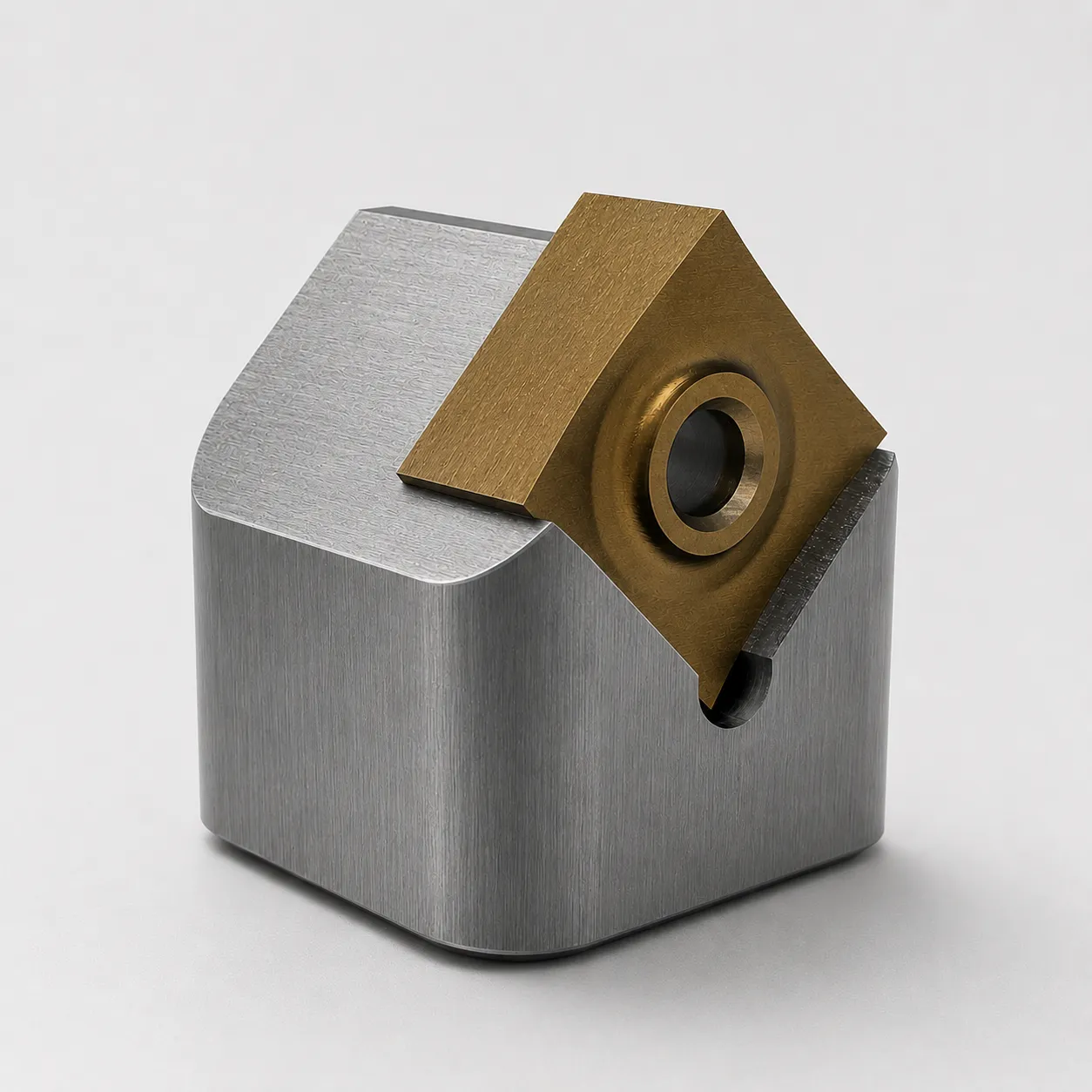
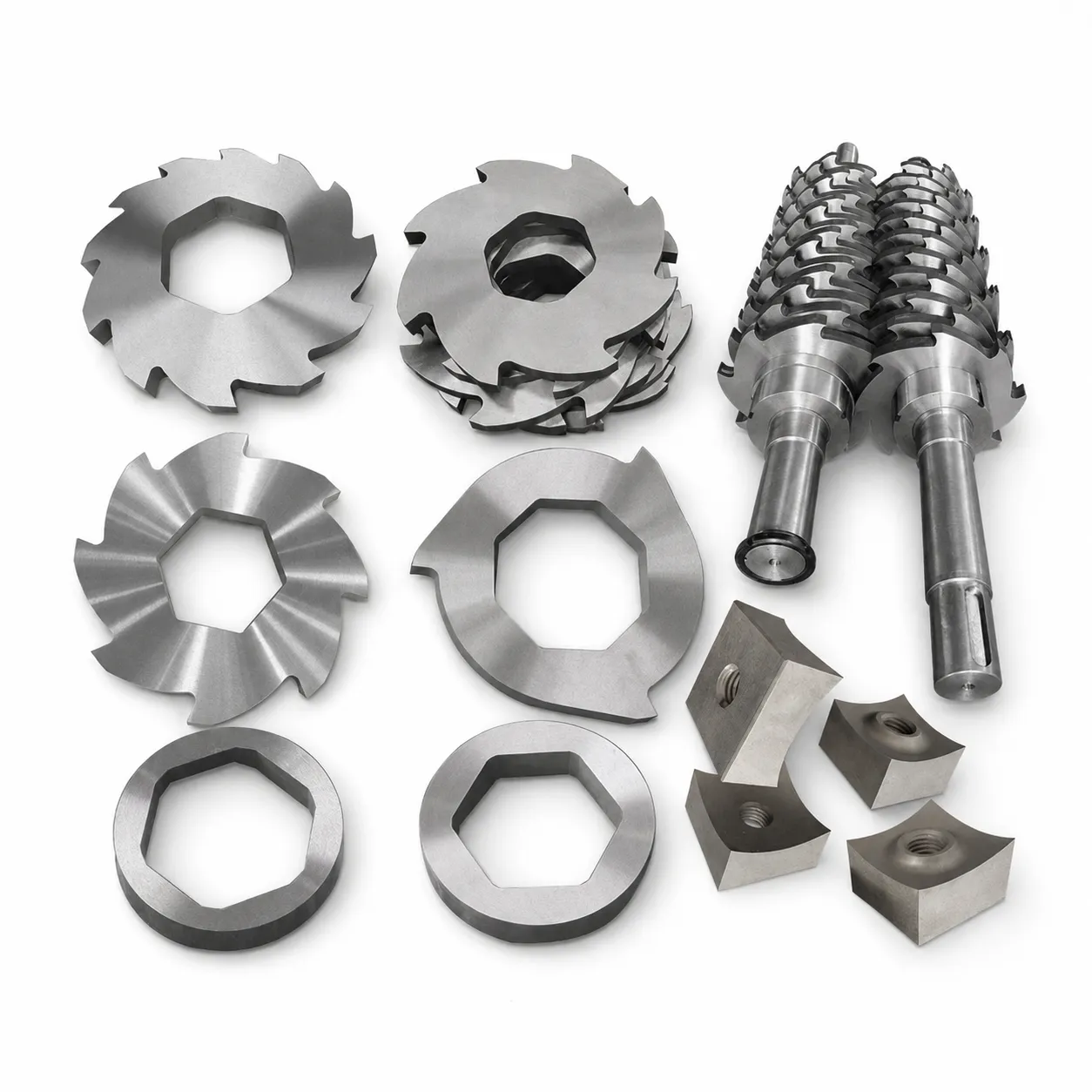
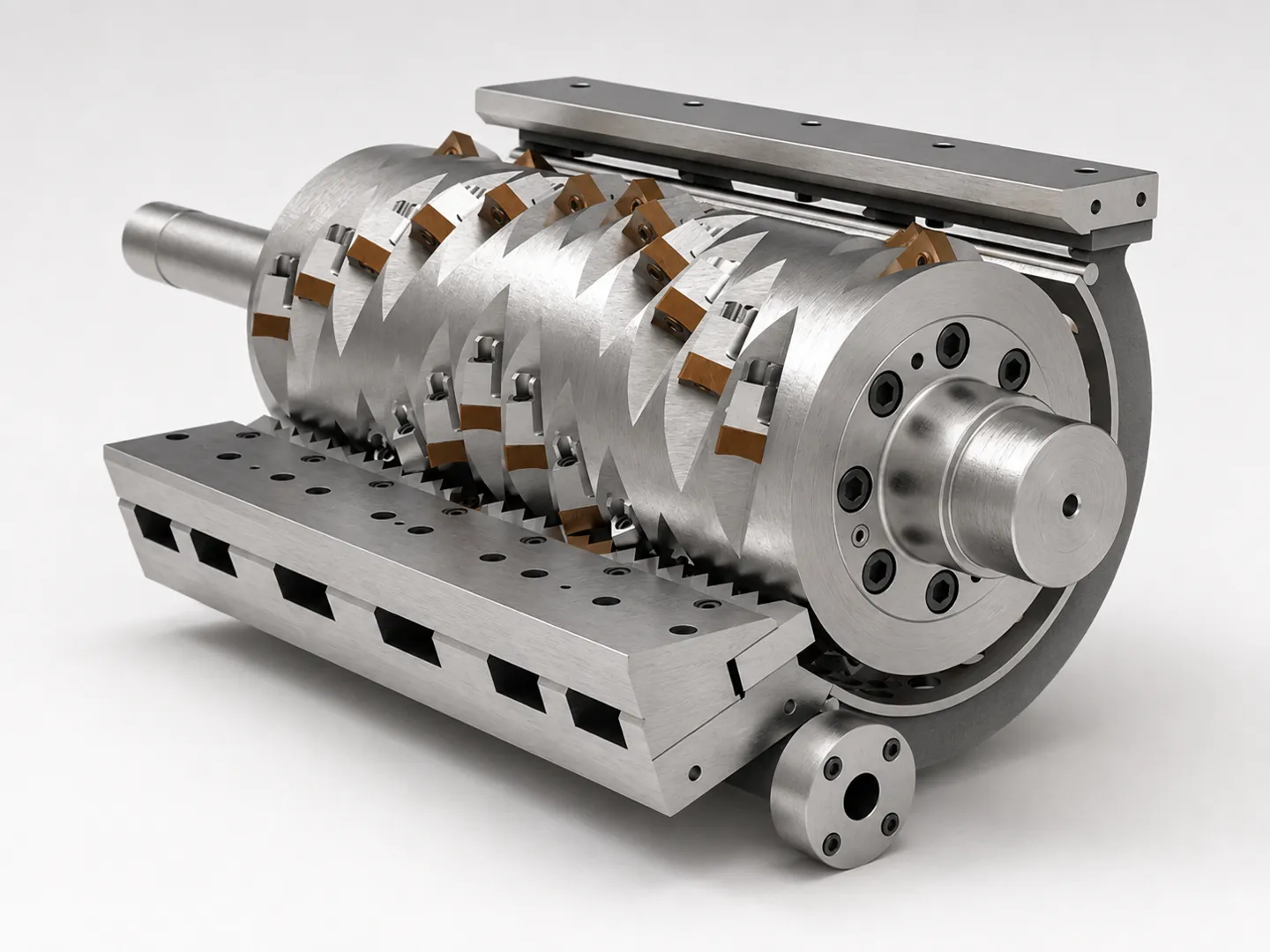
Shredder Blades and Rotor Shaft
Reference photos of shredder blades and the main shaft used in plastic recycling size-reduction equipment.
FAQ
Plastic Recycling Blade Questions
Practical answers for maintenance teams and buyers comparing shredder, crusher, and granulator blade materials.
For clean, general plastic recycling, D2 or SKD-11 is usually the most practical choice because it gives strong wear resistance at a controlled cost. For abrasive or impact-heavy feedstock, DC53 is often a better fit because it handles chipping better.
DC53 is better than D2 when the blade sees repeated impact, mixed plastics, hard lumps, or light contamination. D2 still makes sense for clean plastic scrap where abrasion matters more than shock loading.
Many plastic shredder and crusher blades run around 56-62 HRC after heat treatment. The right target depends on the steel, blade size, cutting geometry, and feedstock; pushing hardness too high can increase cracking risk.
Clean film or bottle flake applications may run for hundreds of hours before sharpening, while dirty film, woven bags, tires, or glass-filled plastics can need service much sooner. Track motor load, particle size, and output rate to set the interval.
Yes. Many shredder and crusher blades can be reground several times if the mounting holes, thickness, and edge geometry still remain within tolerance. Replace blades with cracks, severe pitting, or uneven wear that changes the cutting gap.
Need Help Choosing Replacement Blades?
Send your machine model, blade drawing, feedstock photos, and target output size. Energycle can help match blade material, hardness, edge geometry, and sharpening plan for your recycling line.
Drawing and mounting pattern check
Rotor and fixed knife matching