

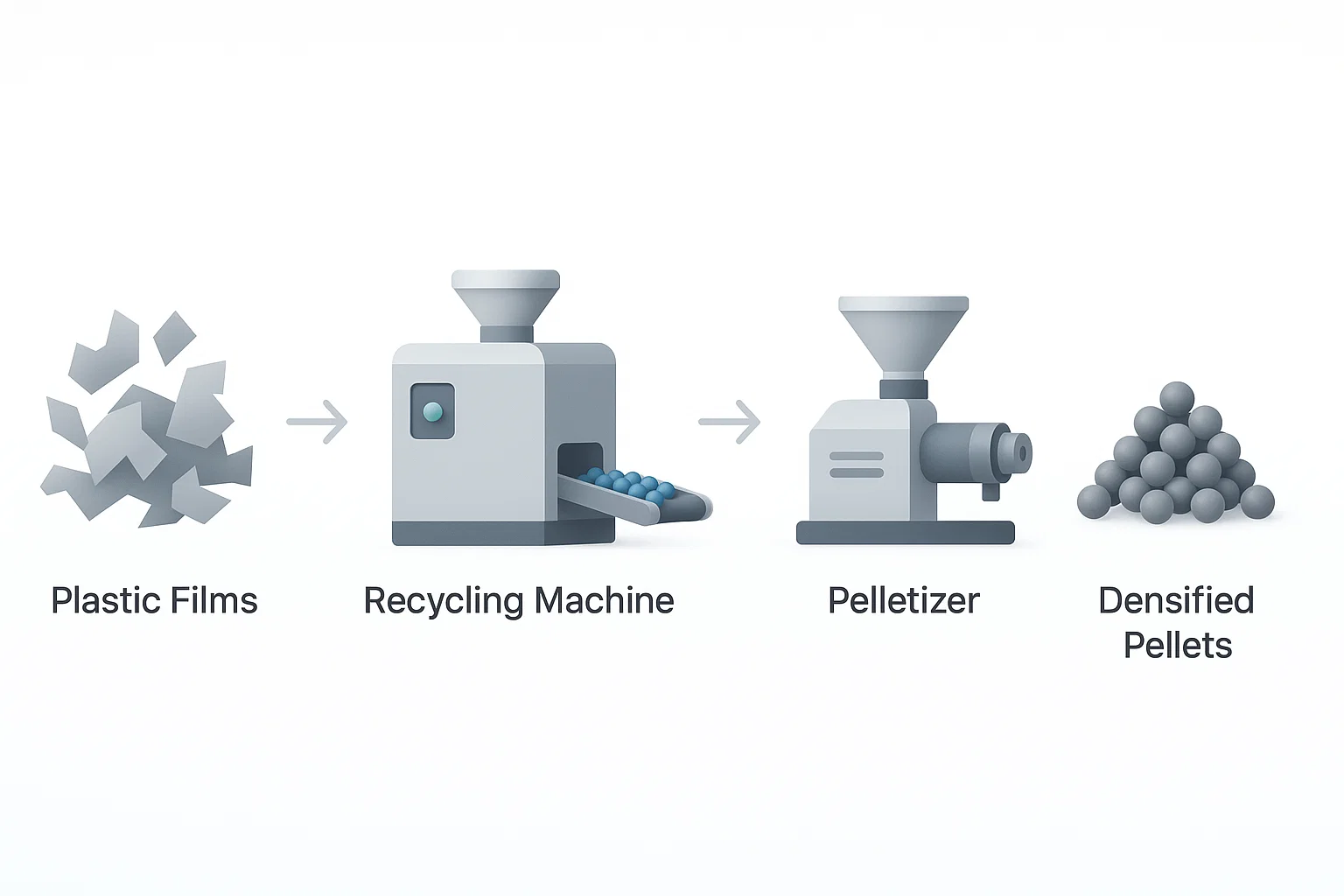
Spremašteni troškovi smanjenja troškova za film densifikacije treba izračunati iz mjerenog gustine zapremine, upotrebljive zapremine vozila, pravilne nosivosti, rasporeda skladišta, dodane energije i vrijednosti nizvodno. Densifikacija može smanjiti troškove rušenja i prijevoza kada je proizvoljni film ograničen po zapremini, ali ne garantira stalno smanjenje za svaku tvornicu. Ovaj vodič pruža formule i ilustrativni primjer koji operateri mogu zamijeniti s vlastitim podacima.
What film densification changes
Proizvoljni plastični film ima nisku i promjenjivu gustinu zapremine. Zabira značajno prostor, premoštava se u silosima i može neravnomjerno napraviti extruder. Korak densifikacije mijenja fizičku formu tako da isti masi zauzima manju zapreminu. Ovisno o procesu, može također ukloniti vodu ili stvoriti više stabilan oblik ulaza.
The equipment must match the feed condition. A screw press or Uređaj za istezanje plastične folije Namjenjen je očišćenom, vlažnom PE ili PP filmu gdje su sušenje glavni zadatak. Aglomerator ili kompakator je bolji za razvrstani, prilično sušen otpadni otpadni plastični otpad koji treba densifikaciju i pripremu ulaza. Densifikacija ne zamjenjuje gornju razvrstavanje ili očišćavanje.
Measure bulk density before calculating savings
Gustina zapremine je masa materijala djeljena s zapreminom koju zauzima pod definiranim načinom napune. Koristite isti kontejner, postupak napune i broj uzoraka prije i nakon densifikacije. Film se može usidriti tijekom skladištenja ili prijevoza, stoga dokumentirajte je li mjerenje predstavlja materijal izravno iz stroja, materijal nakon ohlađenja ili materijal nakon navodnog vremena usidrenja.
Bulk density (kg/m³) = sample mass (kg) ÷ occupied volume (m³)
Zabilježite raspon kao i prosjek. Ako se gustina mijenja po ulazu, boji ili vlažnosti, izračunajte svaki glavni tok posebno umjesto da se jedan rezultat primjenjuje na cijeli godinu.
Transport calculation: volume-limited or weight-limited?
Naložak je ograničen po zapremini kada vozilo se napuni prije nego što doseže pravilnu ili operativnu nosivost. On je ograničen po težini kada se dostigne nosivost dok zapremina ostaje. Densifikacija smanjuje broj vožnji samo kada je zapremina ograničavajući faktor ili kada omogućava sigurniji, konzistentniji uklanak.
| Calculation | Formula | Input source |
|---|---|---|
| Material volume | Mass ÷ measured bulk density | Scale and standardized density test |
| Volume-limited mass per load | Usable vehicle volume × bulk density × fill factor | Carrier specification and measured loading practice |
| Allowed mass per load | Lower of volume-limited mass and payload limit | Vehicle, container and local transport rules |
| Number of loads | Round annual or monthly mass ÷ allowed mass per load upward | Production forecast and actual dispatch records |
| Transport cost per tonne | Total freight, loading and handling cost ÷ delivered tonnes | Carrier invoices and plant labour records |
Illustrative transport example
Pretpostavite da reciklirajuća postrojenost mora premjestiti 20 tona filma svaki mjesec. Samo za ilustraciju, slobodni materijal mjeri 50 kg/m³, zagusjeni materijal mjeri 300 kg/m³, a dostupni prostor vozila je 90 m³. Pretpostavite faktor ispunjenosti od 0.85 i ograničenje nosivosti iznad oba izračunata volumenska ograničenja.
- Loose film per load: 90 × 50 × 0.85 = 3,825 kg.
- Densified film per load: 90 × 300 × 0.85 = 22,950 kg, subject to the vehicle’s legal payload.
- Loose-film trips: 20,000 ÷ 3,825, rounded upward.
- Densified-film trips: 20,000 ÷ manji od 22,950 kg i zakonitog nosivosti, zaokružen gore.
Ovaj primjer ne opisuje garantirani rezultat Energycle. Zamenite svaku pretpostavku s izmerenim materijalom, vozilom i rutom. Ako je zakonita nosivost već dostignuta s slobodnim materijalom, zagusjenost može poboljšati ručno postupanje bez smanjivanja broja putovanja.
Calculate storage space without inventing a percentage
Spremnja zaštitu ovisi o dostupnoj visini stajenja, prostoru za prolaz, zaštitu od požara, tipu kontejnera, stabilnosti materijala i danima inventara. Zahtjevi požarnog i sigurnosnog zaštite prevazilaze privlačan rezultat tabele. Koristite stvarni iznos najma skladišta, rada na ručnom postupku i danima inventara kako biste pretvorili razliku u prostoru u novac.
Required material volume (m³) = stored mass (kg) ÷ measured bulk density (kg/m³)
Indicative floor area (m²) = material volume ÷ usable stacking height × layout factor
Faktor rasporeda treba uzeti u obzir prolaze, udaljenosti separacije, pristup i prostor koji se ne može stajati. Zahtjevi požarnog i sigurnosnog zaštite prevazilaze privlačan rezultat tabele. Koristite stvarni iznos najma skladišta, rada na ručnom postupku i danima inventara kako biste pretvorili razliku u prostoru u novac.
Add the cost of densification
Transport i sprema su samo jedna strana izračuna. Uključite struju, potrošni dijelovi, planirano održavanje, radnički kapital, vodu ili toplinu gdje je primjenjivo, obradu odbačenog materijala i metodu kapitalnog povratka koju koristi poduzeće. Mjerite energiju pod predstavnim ulazom umjesto množenja instalirane snage motora sa radnim satima.
| Cost element | How to measure it | Uobičajena izostavka |
|---|---|---|
| Struja | Metered kWh during stable production ÷ saleable tonnes | Using nameplate power as actual consumption |
| Wear and maintenance | Parts, labour and planned downtime over a defined period ÷ tonnes | Ignoring screw, screen, knife or bearing wear |
| Labour | Sati operatera i ručnog rušenja materijala pripadajući tom koraku | Counting only direct machine attendance |
| Yield impact | Proizvodnja za prodaju prije i nakon granice procesa | Calling water loss or removed dirt a production loss |
| Kapitalni trošak | Use the company’s approved depreciation or financing method | Zahtijevanje perioda povratka investicije bez podataka o iskorištavanju i marži |
Downstream extrusion benefits must be tested
Gusčen film može se isporučivati konstantnije nego slobodan, zapleten film, ali utjecaj na izlaz extrudera i specifičnu energiju ovisi o mješavini polimera, vlažnosti, kontaminaciji, postavkama gusčenja i extrudera. Mjerite stabilnost isporuke extrudera, izlaz, pritisak, promjene filtracije, kvalitet granula i kWh po prodajnoj tuni tijekom kontrolirane usporedbine.
Sukavac može smanjiti opterećenje na sljedeći termodrijenje tako što uklanja mehaničku vlagu, ali rezultat mora biti izrečen s metodom ispitivanja ulaznog materijala i vlažnosti. Ne uklanja tinta, papir, metal ili nekompatibilne polimere. Naša usporedba film agglomerators, compactors and screw-press densifiers explains these different functions.
When densification may not pay
- Fabrika već šalje težinsko ograničene naloze i ne dobiva smanjenje broja vožnji.
- Blizak kupac prihvaća slobodno ili svijetljeni film i ne plaća nadprijemu za zagusjeni oblik.
- Ulazni materijal je premašno kontaminiran ili mješan za namjenjeni proizvodni proizvod.
- Proizvodnja je prekideća da bi opravdao stalno opremu i trošak održavanja.
- Izabran način zagusinjenja mijenja materijal na način koji kupac ne može procesuirati.
Kompatibilnost pakovanja i kontrola izvora ostaju važne. Udruženje za recikliranje plástova objavljuje Smjernice za dizajn fleksibilnog pakovanja PE, dok CEFLEX pruža smjernice za recikliranost fleksibilnog pakovanja.
Popis podataka za projektiranje
- Mjesečna i vrhunska masa filma po vrsti ulaznog materijala.
- Mjerena slobodna i procesirana gustoća masova.
- Ulazna i izlazna vlažnost koristeći isti testni metod.
- Upotrebljivi prostor vozila, faktor ispunjenosti, zakonita nosivost i trošak prijevoza.
- Broj dana skladištenja, pravila stajanja i trošak skladišta.
- Mjerena energija, rad, potrošni dijelovi, održavanje i prodajni izvođenje.
- Specifikacija kupca i vrijednost za svaku formu proizvoda.
Za potpun protok čišćenja i zagusinjenja pogledajte linija za rezanje i zagusinjenje PE/PP filma.
Često postavljana pitanja
Je gšenjenje uvijek smanjuje trošak prijevoza filma?
Ne. Smanjuje se broj putovanja kada su količine ograničene i procesirani materijal se može sigurno učvrstiti. Putovanje ograničeno težinom može pokazati nijedno smanjenje broja putovanja.
Je omjer kompresije dovoljan za usporedbu stješnjivača?
Broj. Usporedite izmjerenu ulaznu i izlaznu gustinu, vlažnost, količinu, energiju po prodajnoj tuni, iznošenje, temperaturu materijala i performansu procesa ispod.
Kako bi se trebala iskoristiti aglomerator ili stlačivač za mokru očišćenu filmu?
Sukavac je obično prvi izbor kada je glavna potreba mehanička dehidracija. Aglomeratori se obično koriste za razvrstani, prilično suhi film koji treba zagusiniti i pripremiti za daljnju isporuku.
Zatražite izračun temeljem vašeg materijala
Energycle može pregledati izmjerenu gustoću, vlažnost, mjesečni volumen, ograničenja prijevoza i zahtjeve struje donje strane kako bi definirao prilagođeni put zagusinjenja. Svaka procjena ušteda bi trebala pokazati njene ulaze, formule i isključenja tako da rezultat može biti provjeren.
