

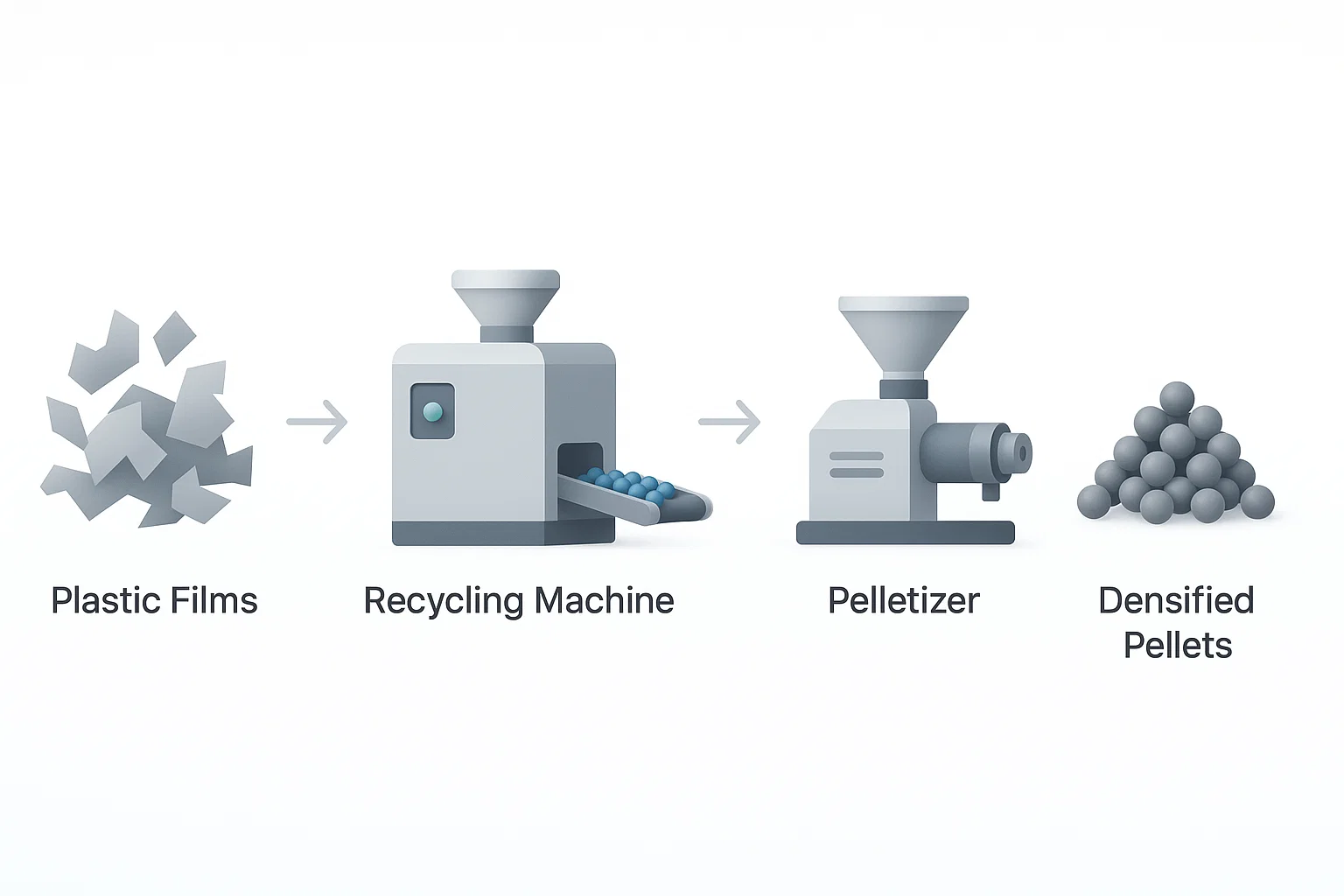
필름 밀도화 비용 절감은 측정된 볼륨 밀도, 사용 가능한 차량 부피, 법적 적재량, 저장 레이아웃, 추가 에너지 및 하위 가치로 계산되어야 합니다. 밀도화는 흩어진 필름이 부피 제한된 경우 처리 및 운송 비용을 줄일 수 있지만, 모든 공장에 대해 고정된 절감을 보장하지는 않습니다. 이 가이드는 운영자가 자신의 데이터로 대체할 수 있는 공식과 시각적인 예제를 제공합니다.
필름 밀도화 변화
흩어진 플라스틱 필름은 낮고 변동적인 볼륨 밀도를 가집니다. 많은 공간을 차지하고, 허프에 걸쳐 있으며, 엑스트루더에 불균형적으로 공급될 수 있습니다. 밀도화 단계는 같은 질량이 더 적은 부피를 차지하게 하여 물리적 형태를 변화시킵니다. 과정에 따라 물을 제거하거나 더 안정된 공급 형태를 만들 수도 있습니다.
장비는 공급 상태와 일치해야 합니다. 스크류 프레스나 플라스틱 필름 압착기 ```json { "text": "빗물을 제거한 PE나 PP 필름에 사용되며, 드레인링이 주요 작업입니다. 집적기나 컷터 컴팩터는 정리된, 꽤 건조한 열가소성 쓰레기에 적합하며, 밀도화와 공급 준비가 필요합니다. 밀도화는 상류 정리나 씻기 대신은 아닙니다." } ```
절감 계산 전 볼륨 밀도를 측정하세요
빠른 밀도는 정의된 채우기 방법 하에서 재료의 질량을 그가 차지하는 부피로 나눈 값입니다. 밀도화 전후로 같은 컨테이너, 채우기 절차 및 샘플 수를 사용합니다. 필름은 보관 또는 운송 중에 침착될 수 있으므로, 측정치가 기계에서 직접 나온 재료, 식후 재료 또는 명시된 침착 시간 후 재료를 대표하는지 문서화하십시오.
볼륨 밀도 (kg/m³) = 샘플 질량 (kg) ÷ 차지 부피 (m³)
범위와 평균을 기록하세요. 재료, 색상 또는 습도에 따라 밀도가 변화하면, 전체 연도에 대해 하나의 결과를 적용하는 대신 각 주요 흐름을 별도로 계산하세요.
운송 계산: 부피 제한형이나 중량 제한형?
차량이 법적이나 운영 적재량에 도달하기 전에 채워지면 부피 제한형입니다. 적재량이 도달했지만 부피가 남아 있을 때 중량 제한형입니다. 밀도화는 부피가 제한 요소인 경우 또는 더 안전하고 일관된 적재를 가능하게 하는 경우만 여행 횟수를 줄입니다.
| 계산 | 공식 | 입력 원천 |
|---|---|---|
| 재료 부피 | 질량 ÷ 측정된 볼륨 밀도 | 규격화된 밀도 테스트 |
| 부피 제한형 질량 | 사용 가능한 차량 부피 × 밀도 × 채우기 요인 | 운반자 규격 및 측정된 적재 실천 |
| 부분 적재 질량 | 부피 제한형 질량과 적재량 제한 중 낮은 쪽 | 차량, 컨테이너 및 현지 운송 규칙 |
| 부하 횟수 | 연간 또는 월간 질량을 둘러싸고, 적용 가능한 부하 질량을 상향으로 둘러싸세요 | 생산 예측 및 실제 배송 기록 |
| 톤당 운송 비용 | 총 운송, 적재 및 처리 비용 ÷ 배달 톤 | 운반자 청구서 및 공장 노동 기록 |
시각적인 운송 예제
재サイ클러가 매월 20톤의 필름을 이동해야 한다는 가정을 해보겠습니다. 시각적인 예제로만 사용하세요, 흩어진 재료는 50 kg/m³, 밀도화된 재료는 300 kg/m³, 사용 가능한 차량 부피는 90 m³입니다. 채우기 요인 0.85 및 적재량 제한을 초과하는 가정을 합니다.
- Loose film per load: 90 × 50 × 0.85 = 3,825 kg.
- Densified film per load: 90 × 300 × 0.85 = 22,950 kg, subject to the vehicle’s legal payload.
- Loose-film trips: 20,000 ÷ 3,825, rounded upward.
- Densified-film trips: 20,000 ÷ 22,950 kg와 법적 토탈로운 중량 중 낮은 값, 올림.
이 예시는 보장된 Energycle 결과를 설명하지 않습니다. 모든 가정을 측정된 재료, 차량 및 경로 데이터로 대체하세요. 법적 토탈로운 중량이 흩어진 재료로 이미 달성되면, 집적화는 트립 횟수를 줄이지 않고 처리를 개선할 수 있습니다.
Calculate storage space without inventing a percentage
저장 비용은 사용 가능한 스택 높이, 구간 공간, 화재 보호, 컨테이너 유형, 재료 안정성 및 재고 일수에 따라 다릅니다. 먼저 재료 부피를 계산한 다음, 현실적인 스택 높이와 레이아웃 요인을 사용하여 필요한 바닥 면적으로 변환하세요.
Required material volume (m³) = stored mass (kg) ÷ measured bulk density (kg/m³)
Indicative floor area (m²) = material volume ÷ usable stacking height × layout factor
레이아웃 요인은 구간, 분리 거리, 접근 및 집적할 수 없는 공간을 고려해야 합니다. 현장 화재 및 안전 요구 사항은 매력적인 스프레드시트 결과를 우선합니다. 실제 창고 임대료, 처리 노동력 및 재고 일수를 사용하여 공간 차이를 돈으로 변환하세요.
Add the cost of densification
운송 및 저장은 계산의 한쪽에 불과합니다. 전기, 부식 부품, 계획 유지보수, 노동력, 물이나 열이 필요한 경우, 반품 처리 및 사업이 사용하는 자본 회수 방법을 포함하세요. 대표적인 원료로 에너지를 측정하세요. 설치된 모터 전력을 운영 시간으로 곱하는 대신.
| Cost element | How to measure it | Common omission |
|---|---|---|
| 전기 | Metered kWh during stable production ÷ saleable tonnes | Using nameplate power as actual consumption |
| 고장과 유지보수 | 정의된 기간 동안의 부품, 노동 및 계획된 정지 시간 ÷ 톤 | 스크류, 스크린, 날이나 베어링의 고장을 무시 |
| 노동 | 운영자 및 재료 처리 시간 | 직접적인 기계 출석만 계산 |
| 생산성 영향 | 과정 경계 전후의 판매 가능한 출력 | 물 손실이나 제거된 먼지를 생산 손실으로 간주 |
| 자본 비용 | 회사의 승인된 감가상각이나 재정 방법을 사용 | 이용 및 마진 데이터 없이 수익 회수 기간을 주장하는 것 |
하위 extrusion 혜택은 테스트되어야 합니다
밀집된 필름은 흐린, 엉킨 필름보다 일관되게 공급할 수 있지만, extruder 출력과 특정 에너지에 미치는 영향은 고분자 혼합물, 습도, 오염, 밀집기 설정 및 extruder에 따릅니다. 제어된 비교 중에 extruder 공급 안정성, 출력, 압력, 필터링 변화, 펠릿 품질 및 판매 가능 톤당 kWh를 측정하십시오.
스크루 프레스 밀집기는 기계적 물을 제거하여 하위 열 건조에 대한 부하를 줄일 수 있지만, 결과는 원료와 습도 테스트 방법과 함께 명시되어야 합니다. 인쇄물, 종이, 금속 또는 불일치하는 고분자를 제거하지 않습니다. 우리의 필름 밀집기, 압축기 및 스크류 프레스 밀집기 비교는 이러한 다른 기능을 설명합니다.
밀집화가 이익을 가져오지 않을 때
- 공장은 이미 중량 제한된 화물을 운송하며 여행 횟수 감소를 얻지 못합니다.
- 근처의 구매자는 흐린 또는 밀봉된 필름을 받아들이며 밀집된 형태에 대한 프리미엄을 지불하지 않습니다.
- 원료는 목표 하위 제품에 적합하지 않게 오염되거나 혼합되었습니다.
- 출력량이 불규칙하여 고정 장비와 유지보수 비용을 합리화할 수 없습니다.
- 선택한 밀도화 방법은 구매자가 처리할 수 없는 방식으로 재료를 변화시킵니다.
포장 상호 호환성과 원자재 관리는 여전히 중요합니다. Plastics Recyclers Association는 발행합니다 PE 유연한 포장 설계 지침, CEFLEX는 제공합니다 flexible-packaging recyclability guidance.
프로젝트 계산용 데이터 체크리스트
- 월간 및 최대 필름 질량은 원자재 유형에 따라.
- 측정된 흩어진 상태와 처리된 볼륨 밀도 범위.
- 같은 테스트 방법을 사용하여 들어오는 출발하는 습도.
- 사용 가능한 차량 부피, 채우기 요소, 법적 터미널 및 운송 비용.
- 저장된 재고 일수, 쌓기 규칙 및 창고 비용.
- 측정된 에너지, 노동, 부식 부품, 유지보수 및 판매 가능한 수익.
- 각 제품 형태의 하류 구매자 규격 및 가치.
완전한 씻기와 밀도화 흐름을 보려면, PP/PE 필름 쪼개기와 밀도화 라인.
Frequently asked questions
밀도화가 영상 운반 비용을 항상 줄여줍니까?
번호. 부하가 부피로 제한되어 있고 처리된 재료가 안전하게 적재될 수 있는 경우 여행 횟수를 줄입니다. 중량 제한된 경로는 여행 횟수 감소가 보이지 않을 수 있습니다.
축소 비율이 압축기의 비교에 충분한가요?
No. 측정된 입력 및 출력 볼륨 밀도, 습도, 처리량, 판매 가능 톤당 에너지, 경질, 재료 온도 및 하류 공정 성능을 비교하십시오.
습식 씻은 필름에 집적기인지 압축기인지 사용해야 하나요?
축축기는 일반적으로 주로 수동퇴수가 필요할 때 최적의 첫 번째 선택입니다. 집적기는 일반적으로 정리된, 적절히 건조한 필름이 밀도화와 공급준비가 필요할 때 사용됩니다.
귀하의 재료에 따른 계산을 요청하십시오
Energycle는 측정된 밀도, 습도, 월간 부피, 운송 제한 및 하류 요구 사항을 검토하여 적절한 밀도화 경로를 정의할 수 있습니다. 모든 절감 추정치는 입력, 공식 및 제외 사항을 표시해야 하여 결과를 확인할 수 있습니다.
