

Screw-Conveyor Washing Stage for Plastic Recycling Lines
Friction Screw Washer Machine for Plastic Recycling
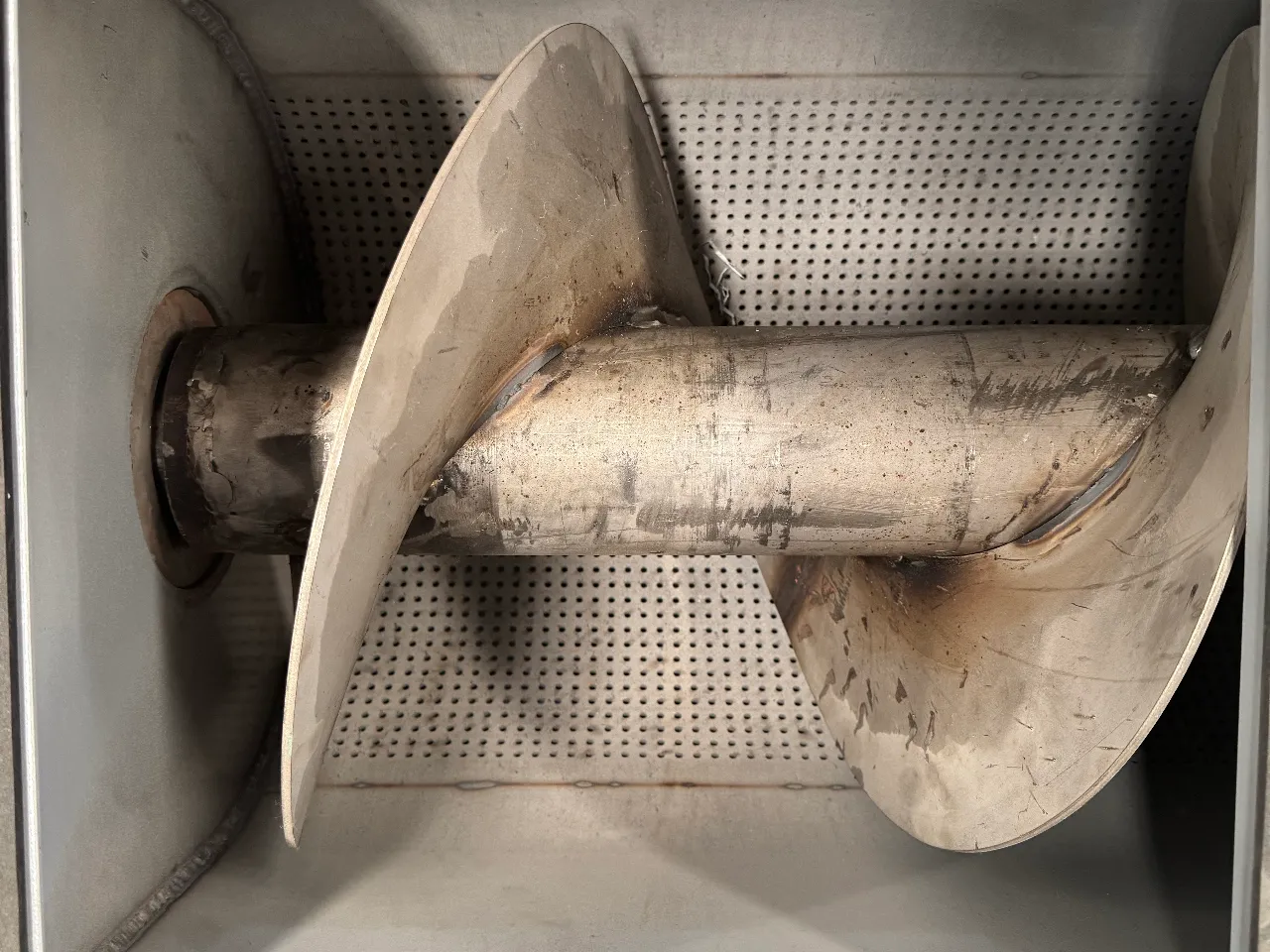
A friction screw washer that uses a rotating helical screw to convey, tumble, and scrub plastic flakes against a perforated trough while flushing contamination out through the screen. It removes sand, stones, heavy organics, and surface dirt in a single pass, and is commonly installed in the early wet-cleaning stage before density separation or intensive friction washing. For how the machine works and how to choose between screw and high-speed types, see our friction washer guide.
Why a Friction Screw Washer Is the Right Pre-Cleaning Stage
The screw washer is not the same machine as a high-speed friction washer. It uses a different mechanism — controlled screw conveying with tumbling and spray rinsing — to strip gross contamination from incoming plastic material before intensive washing, density separation, or drying.
Screw Tumbling Removes Heavy Gross Contamination
The helical screw tumbles plastic against the perforated trough wall, dislodging sand, gravel, stones, heavy organics, and thick surface dirt that flush through the screen openings with the rinse water.
Integrates Conveying and Washing in One Unit
The screw simultaneously transports material from the infeed to the discharge end, eliminating the need for a separate conveyor between the pre-wash and the next line stage.
Low Water Consumption Compared to Soak Tanks
Targeted spray bars inject water at controlled points along the trough, flushing contamination through the screen without requiring the large water volumes of immersion-style pre-wash tanks.
Protects Downstream Equipment from Abrasive Particles
By removing sand and grit in the early line position, the screw washer reduces abrasive wear on the rotors, screens, and paddles of downstream intensive washers, centrifugal dryers, and extruders.
Simple Structure with Replaceable Wear Parts
The screw, trough liner, and screen sections are designed as replaceable components so the machine can be returned to service quickly without full equipment replacement.
Moderate Speed Reduces Flake Breakage Risk
Operating at lower rotational speed than a high-speed friction washer, the screw mechanism reduces the risk of fines generation on brittle or thin-wall plastic input materials.
Typical Materials and Line Positions
The friction screw washer is typically installed early in the wet line, before density separation or intensive friction washing, to remove heavy surface contamination from incoming plastic material.
Post-Consumer PET Bottle Bales
Removes sand, soil, and heavy gross contamination from baled PET bottles before granulation and intensive washing.
Rigid PP and HDPE Regrind with Heavy Dirt Load
A pre-wash stage for heavily soiled crate, drum, and agricultural container regrind where standard washing alone is insufficient for the grit load.
Agricultural Film and Mulch Film
Pre-cleans heavily soil-contaminated agricultural film before shredding and film washing, reducing the abrasive load on downstream equipment.
Pipe and Profile Regrind with Grit
Handles regrind from construction or drainage pipe recycling where embedded grit and soil are present in the incoming flake stream.
Before Sink-Float Separation
Pre-washing with the screw washer removes heavy fines that would otherwise settle in the float tank, reducing tank cleaning frequency and improving separation accuracy.
Before High-Speed Friction Washers
Used as the first wet stage when the incoming material is too heavily contaminated to feed directly to a high-speed friction washer without excessive screen and rotor wear.
How the Friction Screw Washing Process Works
The screw washer moves material through an inclined perforated trough using a helical screw. As the material travels, it is tumbled, scrubbed, and flushed with spray water so contamination passes through the screen while clean plastic advances to the discharge end.
Feed the Plastic Material
Baled, shredded, or pre-crushed plastic is fed into the infeed end of the trough as part of a continuous wet process line.
Screw Conveys and Tumbles
The rotating helical screw pushes material along the trough while tumbling it repeatedly against the perforated screen surface, generating the friction needed to dislodge surface contamination.
Spray Water Flushes Contamination
Spray bars inject water along the trough so sand, grit, organics, and loosened dirt are flushed continuously through the screen apertures and away from the plastic stream.
Pre-Washed Material Exits at Discharge
The screw conveys cleaned material upward along the inclined trough and out at the elevated discharge end, ready for the next line stage such as sink-float separation or high-speed friction washing.
Feed the Plastic Material
Baled, shredded, or pre-crushed plastic is fed into the infeed end of the trough as part of a continuous wet process line.
Screw Conveys and Tumbles
The rotating helical screw pushes material along the trough while tumbling it repeatedly against the perforated screen surface, generating the friction needed to dislodge surface contamination.
Spray Water Flushes Contamination
Spray bars inject water along the trough so sand, grit, organics, and loosened dirt are flushed continuously through the screen apertures and away from the plastic stream.
Pre-Washed Material Exits at Discharge
The screw conveys cleaned material upward along the inclined trough and out at the elevated discharge end, ready for the next line stage such as sink-float separation or high-speed friction washing.
Friction Screw Washer vs High-Speed Friction Washer vs Pre-Wash Tank
These machines address different cleaning problems in the wet line. The screw washer is a gross-contamination removal stage, not a substitute for intensive surface scrubbing or density separation.
| Decision Factor | Friction Screw Washer | High-Speed Friction Washer | Pre-Wash Soak Tank |
|---|---|---|---|
| Core Mechanism | Screw conveying with trough tumbling and spray rinse | High-RPM rotor forcing plastic against a screen at 1080–1400 RPM | Immersion soaking with agitation or gentle paddle movement |
| Best Line Position | Early wet stage before crushing, separation, or intensive washing | After crushing or separation, before dewatering or drying | Very early stage when loose dirt must be softened before mechanical washing |
| Main Problem Solved | Sand, grit, stones, heavy organics, gross surface soil | Paper fibers, label glue, fine organics, residual surface sludge | Mainly softens caked-on dirt; limited mechanical cleaning |
| Flake Breakage Risk | Lower — screw runs at moderate speed | Moderate — rotor forces plastic against screen at high speed | Very low — no high-force mechanical contact |
| When to Choose | When the incoming material carries sand, grit, or heavy soil that would damage or overload downstream washing equipment | When surface cleanliness is still not sufficient after basic washing or separation stages | When the contamination is loose and water-soluble and no mechanical scrubbing is needed |
Technical Specifications
These reference models show how screw diameter, motor power, and throughput scale across the friction screw washer range.
| Model | ERM-FSC400 | ERM-FSC550 | ERM-FSC750 |
|---|---|---|---|
| Motor Power | 11 kW | 18.5 kW | 30 kW |
| Screw Diameter | 400 mm | 550 mm | 750 mm |
| Rotating Speed | 120 RPM | 100 RPM | 80 RPM |
| Capacity | 500 – 1000 kg/h | 1000 – 2000 kg/h | 2000 – 4000 kg/h |
CE certification, stainless-steel trough upgrades, and custom screw pitch configurations can be specified to match feedstock type, contamination level, and line capacity requirements.
Reliable Support Throughout the Equipment Lifecycle
From installation planning to routine maintenance, our service team helps keep your equipment operating safely, consistently, and efficiently.
1-Year Limited Warranty
Coverage includes manufacturing defects in major mechanical and electrical components for one year. Normal wear parts and damage caused by improper operation are handled separately.
Installation Guidance
We provide layout, foundation, utility, clearance, line-integration, and commissioning guidance to support a smooth installation and reliable startup.
Spare Parts Supply
Replacement wear parts, bearings, seals, sensors, electrical components, and other service items are available for scheduled maintenance and long-term operation.
Technical Assistance
Remote troubleshooting, operating recommendations, maintenance guidance, and optional on-site service are available when your project needs additional support.
Frequently Asked Questions
Common questions from buyers deciding whether a friction screw washer is the right pre-cleaning stage for their washing line.
Need a Friction Screw Washer Sized to Your Washing Line?
Tell us your material type, contamination level, hourly capacity, and current upstream and downstream equipment. We will recommend the right screw diameter, motor power, and line position.
Comments are closed.