

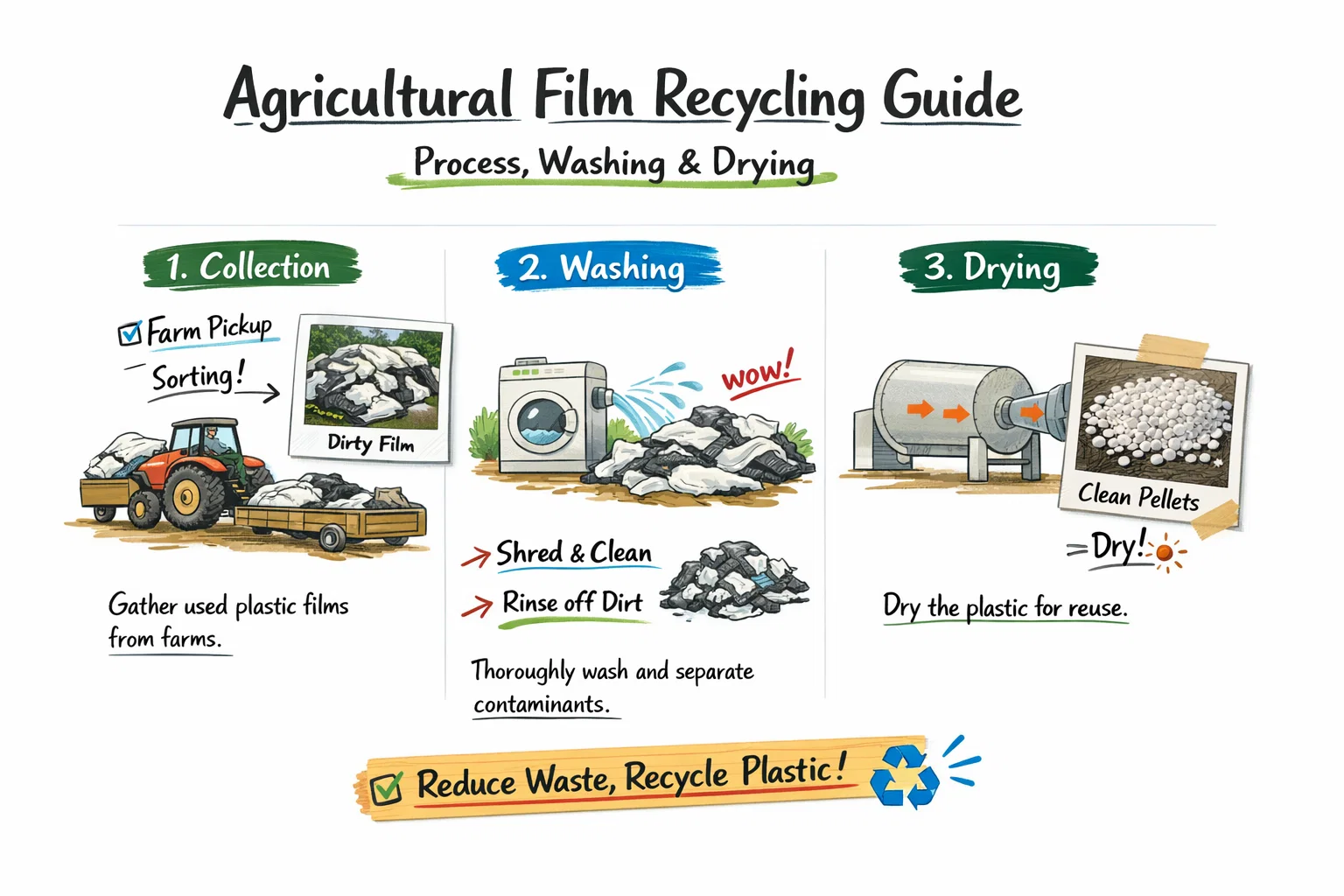
Az agrárfilc újrahasznosítása a mezőn kezdődik, nem a mosóban. A mulcslap, a szántóföldi film, a silófilm és az öntözési termékek földet, köveket, növényi maradványokat, nedvességet, köteget és vegyi maradványokat hordozhatnak. A szennyezés mennyisége és típusa befolyásolja a gyűjtés gazdaságosságát, a eladható termelést, az eszköz kopását, a víztisztítást és a végül újrahasznosított anyag specifikációját.
Identify the agricultural plastic stream
| Folyam | Typical process concern | Information to record |
|---|---|---|
| Mulch film | Soil, stones, plant residue and thin torn pieces | Polymer, thickness, recovery method and dry contamination |
| Greenhouse film | Large sheets, clips, dust, UV exposure and mixed covers | Film construction, colour, service age and attachments |
| Silage film and stretch wrap | Organic residue, moisture, odour and netting | Resin, collection condition and incompatible materials |
| Irrigation pipe or tape | Rigid fittings, emitters, soil and different polymers | Product construction and whether it needs a separate line |
| Bags and twine | Woven PP, strings and product residue | Tartsa külön a PE-filctől, ha a vevő ezt kéri |
Ne kombinálja ezeket a termékeket csupán azért, mert egy gazdaságból származnak. Egy vevő elfogadhat egy meghatározott PE-filc keveréket, de elutasíthatja a PP köteget, PVC-t, biológiailag lebomló filmet vagy jelentősen lekopott anyagot.
Source collection controls process cost
Engedje, hogy a filc lefolyjon és távolítsa el a laza földet a gyűjtés során, ha biztonságos és engedélyezett. Védje a rakományokat az értelmetlen eső elől és különítse el ismert terméktípusok alapján. A bálozás csak akkor javítja a szállítást, ha nem tömöríti össze a köveket, metált vagy ismeretlen termékeket egy nem biztonságos blokkba.
The FAO’s 2025 Önkéntes Magatartási Kódex a műanyagok fenntartható használatáról és kezeléséről az agrárágazatban megjegyzés, hogy a föld, nedvesség, növényi maradványok és veszélyes anyagok korlátozhatják az újrahasznosítást. Biztonságos gyűjtést és anyag specifikus feldolgozást ajánl, nem pedig egy általános megközelítést.
Test contamination on a dry basis
Az agrárfilmben lévő föld mennyiségének meghatározott százaléka nem megbízható régiók vagy évszakok között. Választószámú minták és különítsd el a száraz szennyeződést a vízből:
- weigh the received sample;
- determine moisture using a documented method;
- separate polymer, soil, stones, organics, metal and other plastics;
- jelentse minden arányt a száraz bemenet ellen, ahol megfelelő;
- tartsa meg a fényképeket és kapcsolja azokat a beszállítóhoz és gyűjtési dátumhoz.
Ez a táplálék audit meghatározza a várt elutasított töltelmet és eladható hozamot, és megakadályozza, hogy a víz összezavarodjon a újrahasznosítható polimérral.
Ajánlott folyamatfolyamat
- Inspection and opening: azonosítsa a tilos töltékeket és nyissa meg a kötegeket ellenőrzött körülmények között.
- Dry removal: engedje el a szabad földet, köveket és metealt, mielőtt ezek vízbe és vágó berendezésekbe kerülnének.
- Size reduction: vágja a filmet egy stabil, mosható formába, anélkül hogy túl sok finom részt hozna létre.
- Prewashing: szeparálja el a nehéz szemcséket és a lazított szilárd anyagokat korán.
- Friction washing: mosson le a film felületeit és szabadítsa meg a maradék célzott szennyeződést.
- Rinsing and separation: kezelje a víz minőségét és a meghatározott úszó/süllyedő elválasztást.
- Mechanikus víztelenítés: távolítsd el a szabad és felszíni vizet olyan berendezéssel, amely megfelelő a rugalmas darabokhoz.
- Densifying and pelletizing: készítsen elő anyagot az extrudálásra csak akkor, ha megfelel a bemeneti követelményeknek.
Remove soil before intensive washing
A homok és kő növeli a darabolók, granulátorok, pumpák, szivattyúk és szűrők kopását. A száraz rázogatás, trommel szűrés vagy más validált előtisztítási szakasz csökkentheti a vízkör terhelését. A legjobb konfiguráció a film mérete, nedvességtartalma és hogy a föld szabadon vagy összegyűrve van-e a anyagban.
Mérjék meg a száraz elutasított anyag tömegét és vizsgáljátok meg a polimer veszteséget. Agresszív előtisztítás, amely használható filmet küld ki földdel, csökkentheti az eladható termelést, még akkor is, ha a folyadék a folyamatban tiszábbnak tűnik.
Válasszátok a darabolást és a nedves granulációt a kísérletek alapján
A könnyű film átkelhet egy acéltartályban és körkörösen forgó részeket befedhet. Egy alacsony sebességű daraboló megnyithat nagy lapokat és kötegeket; egy granulátor biztosíthatja a kontrollált részecskeméretet. Egy fokozatos rendszer indokolt lehet a nagyobb, szennyezett táplálék esetén.
A nedves granuláció vízt juttat a vágó kamrába, és elkezdheti a szennyeződés lazítását. Ezen kívül víz és szilárdanyag terhelést is hozzáad. Hasonlítsa össze a vágó károsodását, a finom szemcséket, a teljesítményt és a folyadék utáni tisztítást a valós film alapján. Lásd a nedves és száraz tördelés útmutatóját.
Tervezze meg a szennyeződés körüli mosást, ne csak a szlogeneket
Előmosók és a szitálásos tartályoknak el kell távolítaniuk a nehéz szilárdanyagokat a magas sebességű fröcskölő mosás előtt, ha lehetséges. A fröcskölés intenzitása, a tartózkodási idő, a szűrőnyílások és a víz minősége befolyásolja a tisztítást. Az olaj vagy mezőgazdasági vegyszer maradék esetén külön kockázatelemzés és validált kémia szükséges.
Ne feltételezze, hogy a mosás biztonságossá teszi az ismeretlen kémiai tartályokat vagy a szennyezett filmet. Határozza meg a tilos bevitelt és kövesse a helyi hulladék, folyadék hulladék és munkavállalói védelem követelményeit.
Szabályozza a vizet, a lecsapott lerakót és a polimer veszteséget
A víz visszakereső rendszerhez szűrők, leülejtés vagy más szilárd anyag eltávolítás szükséges, amely megfelel a szennyezőanyag terhelésnek. A szennyezett víz újrahasznosítása ellenőrzés nélkül fineseket és földet juttathat vissza a filmbe. Nyomon kövesse a friss víz hozzáadást, a��ökölt szilárd anyagokat, lerakót és a lerakatban lévő polimert.
Biztosítsa a lerakat biztonságos eltávolítását, víztelenítését és elhelyezését. A telep környezetvédelmi engedélye és a kibocsátási határoknak megfelelően határozzák meg a kezelési követelményeket; az eszközbeszállító nem állíthat be egy globális vízhasználati számot.
Vízeltetse a könnyű filmet a hőszárítás előtt
A centrifugális szárító, csavarprés vagy filcsavaró használható a részecskék formájától függően. Egy Műanyag fólia préselő eltávolítja a vizet és növeli a tömeges sűrűséget, javítva a tároló vagy granulátorba való kezelhetőségét.
Nincs univerzális “alatta 5%” cél. Egyeztessen meg a végső nedvességtartalommal, tömeges sűrűséggel, mintavételezési ponttal és a tesztelési módszerrel a lefolyó folyamat megfelelően. További hűtés vagy szárítás szükséges a tárolás vagy extrudálás előtt.
A granulátum minősége már az extruder előtt kezdődik
Az extrudálás és a hőkezelés nem képes korrigálni a súlyos polimer keveredést, földet, nedvességet vagy degradációt. Határozza meg az engedélyezett PE vagy PP keveréket, hamut, nedvességet, színt, szagot, olvadási áramot és szűrési képességet a vevővel együtt.
A UV-exponálás és a helyszíni szolgáltatás megváltoztathatja a anyag tulajdonságait. Minősítse a granulátumokat a tervezett alkalmazásukban, ne feltételezze, hogy a vizuálisan tiszta film újra megfelel az alapanyag teljesítményének.
Méretgépesség a kiszállítható száraz kimenetből
A szennyezett nedves bemenet nem a végső kimenet. Használjon tömegegyenleget a reprezentatív próbákból:
Szükséges nedves bemenet = kívánt kiszállítható száraz kimenet ÷ száraz polimer arány ÷ folyamatú helyreállítás ÷ tervezett elérhetőség
Tartsa külön a feltételezéseket. Egy nedvesebb vagy szennyezettebb töltet növeli a beérkezett tonnázatot, anélkül hogy növelné a polimert. Ellenőrizze a előkezelés, mosás, víztisztítás, víztelenítés és extrudálás fenntartható kapacitását ugyanabban az alapanyagban.
Elfogadás-teszt ellenőrzőlistá
- meghatározott mezőgazdasági film keverék és szennyeződés minta;
- polimer, föld, elutasított anyag és eladható kimenet száraz tömeg egyensúlya;
- részecske mérete, finom szennyeződések, hamu és maradék szennyeződés;
- beérkezett és végleges nedvességtartalom egy megegyezett módszerrel;
- frissvíz készlet, lerakat és szennyvíz minősége;
- teljes sor elektromossága az elfogadott száraz tonna alapján;
- megállások, kopás megfigyelések és műszaki beavatkozások;
- Gyanta vagy granula minőségi követelményeinek meghatározása.
Gyakran ismételt kérdések
Mennyi föld van általában az agrárfilmben?
Nincs univerzális százalék. Az adott növény, gyűjtési módszer, időjárás, filmvastagság és tárolás változik. Mérje meg minden beszállítási áramot és jelentse be a száraz szennyeződést.
A mezőgazdasági film közvetlenül bekerülhet granulálóba?
Általában nem, ha földet, nedvességet, növényi maradványokat vagy vegyes anyagokat hordoz. Először szűrésre, megfelelő tisztításra, víztelenítésre és táplálékminőség ellenőrzésre van szükség.
Egy soros folyamatban lehet feldolgozni a mulch filmet, a szántóföldi filmet és a silófóliát?
Lehet külön kampányokban, de csak miután a kísérletek megerősítik a táplálás, mosás, szárítás és a kimeneti minőség kérdését. A termék felépítése és a szennyezés különböző beállításokat vagy eszközöket igényelhet.
Küldje meg a film minta gyűjtési adatait.
Adjon meg Energycle-t a film típusaival, gyűjtési módszerrel, jellemző szennyeződéssel, nedves és száraz tömeg adatokkal, havi beszállítási és termelési specifikációval. A PP/PE fólia mosóvonala valós talaj, víz és hozam egyensúly köré állítható be.
