

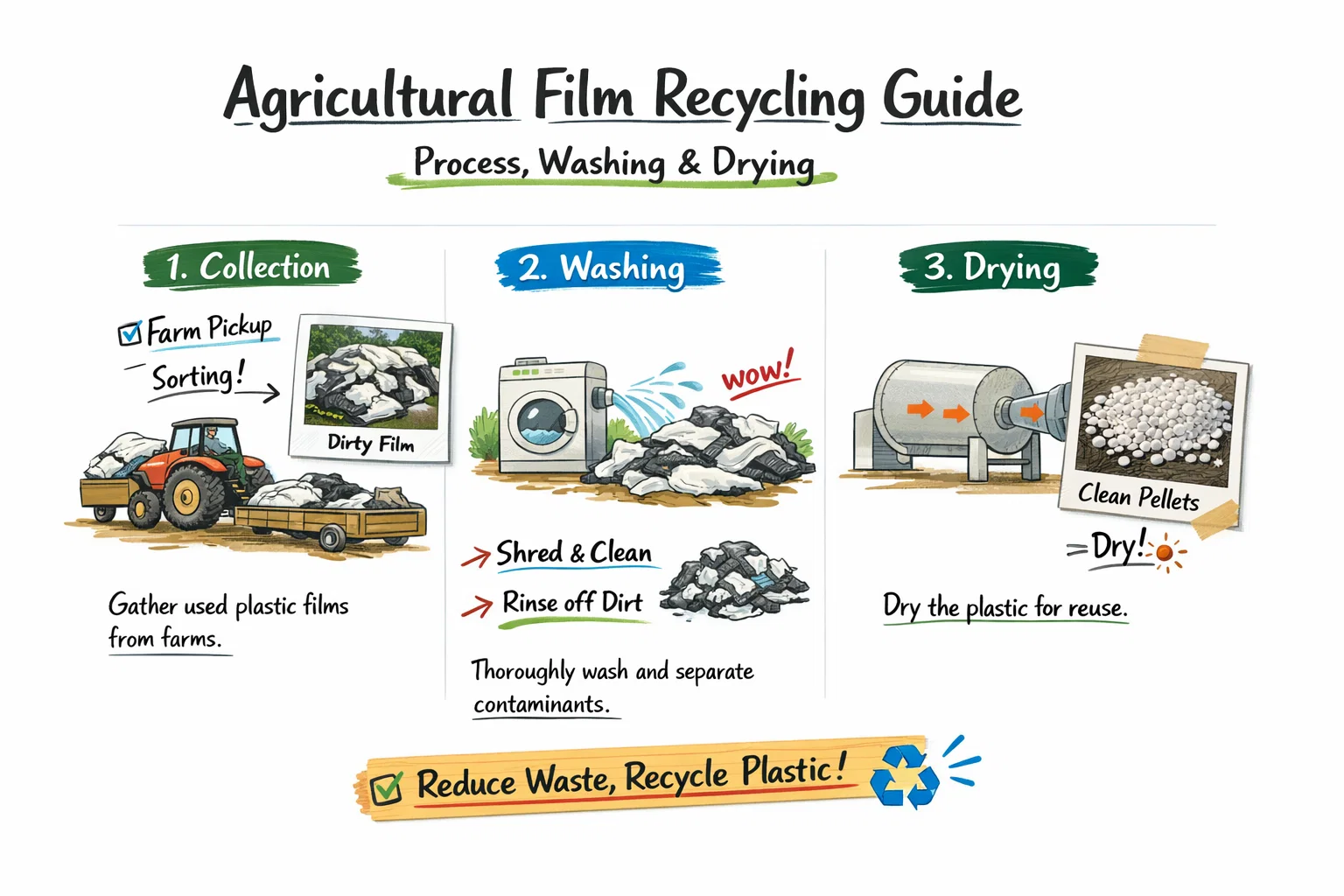
Recikliranje poljoprivrednih filmova počinje na polju, ne kod pralice. Mulčni film, film za staklenike, silazni film i irrigation proizvodi mogu nositi zemlju, kamenje, ostave usjeva, vlagu, vezice i hemijske ostave. Količina i vrsta kontaminacije određuju ekonomiku prikupljanja, prodajni iznos, izmorđenje opreme, obradu vode i specifikaciju konačnog recikliranog materijala.
Identify the agricultural plastic stream
| Strujanje | Typical process concern | Information to record |
|---|---|---|
| Mulch film | Soil, stones, plant residue and thin torn pieces | Polymer, thickness, recovery method and dry contamination |
| Greenhouse film | Large sheets, clips, dust, UV exposure and mixed covers | Film construction, colour, service age and attachments |
| Silage film and stretch wrap | Organic residue, moisture, odour and netting | Resin, collection condition and incompatible materials |
| Irrigation pipe or tape | Rigid fittings, emitters, soil and different polymers | Product construction and whether it needs a separate line |
| Bags and twine | Woven PP, strings and product residue | Zadržite odvojenost od PE filma gdje ga kupac zahtijeva |
Nemojte kombinirati te proizvode samo zato što dolaze iz jednog polja. Kupac može prihvatiti definirani mješavac PE filma ali odbiti vezice od PP, PVC, biodegradabilni film ili teško degradirani materijal.
Source collection controls process cost
Dopustite da se film isprazni i uklonite slobodnu zemlju tijekom izvlačenja gdje je sigurno i dopušteno. Zadržite terete zaštićene od neobveznog kiša i odvojeni po poznatoj vrsti proizvoda. Balovanje poboljšava transport samo kada ne kompaktilizira kamenje, metal ili nepoznate proizvode u nesigurni blok.
The FAO’s 2025 Volunturni kodeks ponašanja za održivi upotrebu i upravljanje plastičnim materijalima u poljoprivredi navodi kako zemlja, vlažnost, ostave biljaka i opasne tvari mogu ograničiti recikliranje. Promovi sigurno prikupljanje i specifičnu obradu materijala umjesto jednog univerzalnog pristupa.
Test contamination on a dry basis
Izjava da sadrži poluvjetni film postotak zemlje nije pouzdana preko regija ili sezona. Primjeri predstavnih naloža i odvojite vodu od suhe kontaminacije:
- weigh the received sample;
- determine moisture using a documented method;
- separate polymer, soil, stones, organics, metal and other plastics;
- izvještavati svaku frakciju protiv suškog ulaza gdje je prikladno;
- zadržati fotografije i povezati rezultat s dobavljačem i datumom prikupljanja.
Ovaj pregled ulaza postavlja očekivani otpadni teret i prodajni iznos i sprečava da se voda pomiješa s reciklabilnim polimerom.
Preporučeni procesni tok
- Inspekcija i otvaranje: identificirati zabranjene terete i otvarati valjeve pod kontroliranim uvjetima.
- Suška uklanjanje: osloboditi prošireni zemljinu, kamenje i metal prije nego što uđu u vodu i rezinsko uređaje.
- Smanjivanje veličine: rezati film na stabilnu pranjuvajuću formu bez stvaranja prevelike količine finih čestica.
- Predpranje: razdvojiti teške sitne čestice i oslonjene čvrste tvari rano.
- Frakcija pranja: izmijetati površine filma i osloboditi preostali ciljani kontaminant.
- Izlijevanje i razdvajanje: upravljati kvalitetom vode i definiranim razdjelom plavac/ton.
- Mehaničko odvodnjavanje: ukloniti slobodnu i površinsku vodu uređajima prilagođenim fleksibilnim česticama.
- Gustocenje i granulisanje: pripremiti materijal za extrudiranje samo nakon što ispunjava zahtjeve ulaza.
Uklanjanje zemlje pri intenzivnom pranju
Pješčani kamen povećava izgaranje u rezacima, granulatorima, pumpama, štapovima i ekranima. Suško trebljanje, trommel ekraniranje ili drugi provjereni pred čišćenje stupanj može smanjiti teret na vodeni krug. Najbolja konfiguracija ovisi o veličini filma, vlagi i tome je li zemlja proširena ili savijena u materijal.
Mjerite masu suhih odbjeka i inspektujte njihovu gubitak polimera. Agresivno pred čišćenje koje šalje upotrebljiv film zajedno s zemljom može smanjiti prodajni iznos čak i ako voda u nizvodnom dijelu izgleda čistija.
Izaberite rezanje i mokru granulaciju iz ispitivanja
Lagani film može premostiti u silušti i omotati rotirajuće dijelove. Nizak brzinski reznik može otvoriti velike listove i valjke; granulator može pružiti kontrolirani veličinu čestica. Stupni sustav bi se mogao opravdati za debeli, mračni ulaz.
Mokra granulacija uvozi vodu u rezni prostor i može početi razlažiti kontaminaciju. Također dodaje vodu i čvrste tvari. Uspoređite izgaranje noža, finuču, količinu i nizvodno čišćenje koristeći stvarni film. Vidi vodeni protiv sušnog prečesa.
Dizajniranje pranja oko kontaminacije, ne štampi sloganove
Predpranja i tankovi za sink-float trebaju ukloniti teške čestine prije brzog friccionog pranja gdje je to praktično. Intenzitet friccionog pranja, stajanje, otvori mreže i kvaliteta vode utječu na čišćenje. Njeft ili ostaci agrokemikalija mogu zahtjevati posebnu procjenu rizika i provjerenu kemiju.
Nemojte pretpostavljati da pranje čini nepoznate kemikalne kontejnere ili kontaminirane filmove sigurnima. Definirajte zabranjene ulazne sastojke i slijedite lokalne zahteve za otpadom, otpadnim vodama i zaštitu radnika.
Kontrolirajte vodu, sluz i gubitak polimera
Sustav ponovne uporabe vode treba imati mreže, sedimentaciju ili drugi mehanizam za uklanjanje čestina prilagođen teretu kontaminacije. Povrat čestina i zemlje u film može se dogoditi prilikom ponovne uporabe nečiste vode bez kontrole. Slijedite dodatak svježeg voda, suspendirane čestine, masu sluzi i polimera u sluzi.
Omogućite sigurno uklanjanje sluzi, sušenje i odlaganje. Odluka o zahtjevima za obradu ovisi o ekološkoj dozvoli tvornice i granicama ispuštanja; prodavač opreme ne može postaviti jedan globalni broj za uporabu vode.
Odvajanje vode iz svjetlih filmova pri toplinskom sušenju
Prema obliki čestica može se koristiti centrifugalni sušilac, valjčani pritisak ili filmovac. A Uređaj za istezanje plastične folije izbriše vodu i poveća gustinu, poboljšavajući ručno manipuliranje do spremnika ili pelletizera.
Ne postoji univerzalni cilj ispod 5%. Saglasite se o konačnoj vlažnosti, gustini, točki uzorkovanja i metodi testiranja s nizom procesa. Dodatno hlađenje ili sušenje može biti potrebno prije skladištenja ili extrudiranja.
Kvaliteta pelleta počinje prije ekstrudera
Ekstrudacija i filtracija topiva ne mogu ispraviti ozbiljno mješanje polimera, zemlju, vlagu ili degradaciju. Definirajte dopušteni mješavine PE ili PP, pepeo, vlagu, boju, miris, protok topiva i filtraciju s kupcem.
UV izlaganje i terenska služba mogu promijeniti svojstva materijala. Kvalificirajte granule u njihovoj namjeni umjesto da pretpostavljate da će vizualno čista folija reprodukovati performanse nepromijenjenog materijala.
Veličina kapaciteta iz prodajljivog suškog izlaza
Nečista vlažna ulazna količina nije konačni izlaz. Koristite maseni iznos iz predstavnikovih ispitivanja:
Potrebna vlažna ulazna količina = ciljani prodajljiv suški izlaz ÷ sušna polimerna frakcija ÷ procesni povrat ÷ planirana dostupnost
Zadržite pretpostavke odvojeno. Vlažnija ili nečistija količina povećava primljene tone bez povećanja polimera. Provjerite održivu kapacitetu pred čišćenja, pranja, vodene obrade, odvajanja vode i extrudiranja na istom ulazu.
Popis za provjeru prihoda
- definirana mješavina poljoprivredne folije i uzorak kontaminacije;
- suha masa balans polimera, zemlje, otpada i prodajnog izlaza;
- veličina čestica, sitništa, pepeo i ostali kontaminanti;
- ulazna i konačna vlažnost koristeći dogovorenu metodu;
- sastav novog vode, sluz i kvaliteta otpadne vode;
- potpun niz električne energije po prihvaćenoj suvoj toni;
- prekidi, opažanja o iznošenju i intervencije operatera;
- kvalifikacija kupca za čipove ili granule.
Često postavljana pitanja
Koliko je obično zemlje u poljoprivrednoj foliji?
Nema univerzalnog postotka. Variira po kulturi, metodi izvlačenja, vremenskim uvjetima, debljini filma i čuvanju. Primjerite svaki izvor i izvještaj suhi kontaminaciju.
Može se polietilenska folija direktno staviti u pelitizator?
Obično ne, kad nosi zemlju, vlagu, biljni otpad ili mješovite materijale. Prvo treba izbrisati, pravilno očistiti, odvjetriti i kvalificirati ulazni materijal.
Može jedan proces linija obraditi mulč film, staklenički film i silozno omot?
Možda u posebnim kampanjama, ali samo nakon što ispite potvrde hranjenje, pranje, sušenje i kvaliteta izlaza. Konstrukcija proizvoda i kontaminacija mogu zahtjevati različite postavke ili opremu.
Pošaljite podatke o prikupljanju s uzorkom filma
Prijavite Energycle sa vrstama filma, metodom prikupljanja, predstavnom kontaminacijom, težinom vlažnim i suhom, mjesečnim količinama i specifikacijama izlaza. Tako linija za pranje folije PP/PE može biti konfiguriran oko stvarnog balansa zemlje, vode i plodnosti.
