

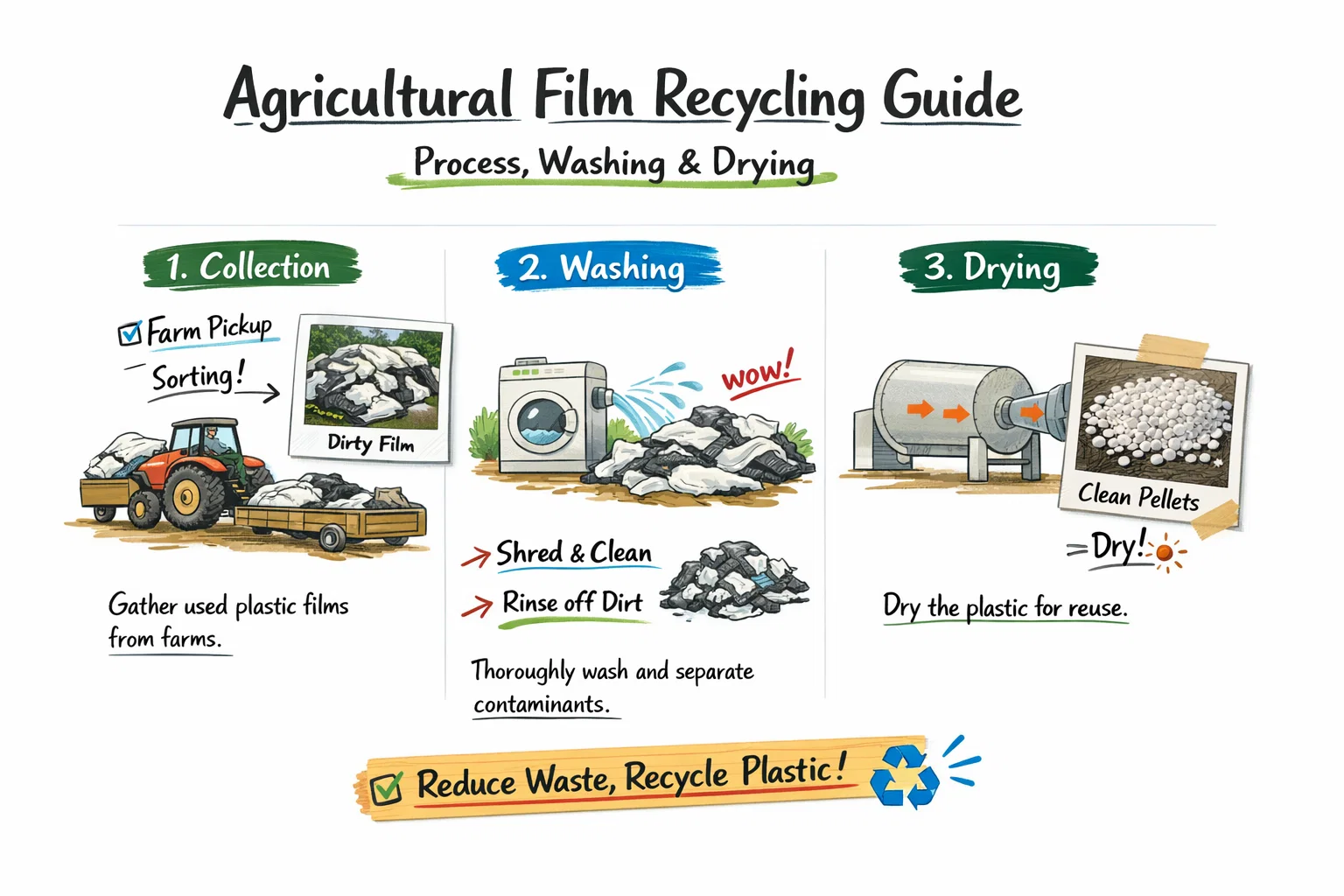
Recyklace zemědělských fólií začíná na poli, ne na myčce. Mulčovací fólie, fólie pro skleníky, silážní fólie a zavlažovací produkty mohou obsahovat půdu, kameny, zbytky rostlin, vlhkost, provázky a chemické zbytky. Množství a druh kontaminace určují ekonomiku sběru, prodejní výnos, opotřebení zařízení, očistu vody a konečnou specifikaci recyklovaného materiálu.
Identify the agricultural plastic stream
| Proud | Typical process concern | Information to record |
|---|---|---|
| Mulch film | Soil, stones, plant residue and thin torn pieces | Polymer, thickness, recovery method and dry contamination |
| Greenhouse film | Large sheets, clips, dust, UV exposure and mixed covers | Film construction, colour, service age and attachments |
| Silage film and stretch wrap | Organic residue, moisture, odour and netting | Resin, collection condition and incompatible materials |
| Irrigation pipe or tape | Rigid fittings, emitters, soil and different polymers | Product construction and whether it needs a separate line |
| Bags and twine | Woven PP, strings and product residue | Oddělte od fólie PE, pokud to kupující vyžaduje |
Nez kombinujte tyto produkty pouze proto, že pocházejí z jedné farmy. Kupující může přijmout definovanou směs PE fólie, ale odmítnout PP provázky, PVC, biodegradabilní fólii nebo silně rozpadlý materiál.
Source collection controls process cost
Povolte fólii, aby se odváděla a odstranila volná půda během sběru, kde je to bezpečné a povoleno. Udržujte náklady chráněné před neopodstatněným deštěm a oddělte je podle známého druhu produktu. Balení zlepšuje přepravu pouze tehdy, když nekomprimuje kameny, kov nebo neznámé produkty do nebezpečného bloku.
The FAO’s 2025 Volitelný kodex chování pro udržitelné využití a správu plastů v zemědělství uvádí, že půda, vlhkost, rostlinné zbytky a nebezpečné látky mohou omezit recyklaci. Podporuje bezpečný sběr a zpracování materiálu specifického pro materiál místo jednoho univerzálního přístupu.
Test contamination on a dry basis
Prohlášení, že zemědělská folie obsahuje pevný podíl půdy, není spolehlivé napříč regiony nebo ročními obdobími. Vzorky reprezentativních nákladů a oddělení vody od suchého nečistota:
- weigh the received sample;
- determine moisture using a documented method;
- separate polymer, soil, stones, organics, metal and other plastics;
- připravovat každý díl proti suchému vstupu, kde je to vhodné;
- uchovávat fotografie a propojit výsledky s dodavatelem a datem sběru.
Tento audit suroviny stanoví očekávanou nákladovou hmotnost a prodejní výnos a zabrání tomu, aby voda byla omylem pokládána za recyklovatelný polymer.
Doporučený procesní tok
- Inspekce a otevření: odhalit zakázané náklady a otevřít baly za kontrolovaných podmínek.
- Sušení: uvolnit volný půdu, kameny a kov předtím, než vstoupí do vody a řezacího zařízení.
- Zmenšení velikosti: řezat film na stabilní mytelný tvar, aniž by se vytvořily nadměrné jeminy.
- Předmytí: oddělit těžký písek a uvolněné pevné látky včas.
- Frakční mytí: vyčistit povrchy filmu a uvolnit zbylou cílovou kontaminaci.
- Prolisování a separace: spravovat kvalitu vody a definovaný rozdělení plovoucí/sedící.
- Mechanické odvodňování: odstranit volnou a povrchovou vodu zařízením vhodným pro flexibilní šupiny.
- Zahušťování a pelletizace: připravovat materiál pro extruzi pouze poté, co splní požadavky na surovinu.
Odstranit půdu před intenzivním mytím
Písek a kámen zvyšují opotřebení v drcovačích, granulátorech, čerpadlech, šroubech a sítích. Suché otřesné mytí, trommelová síť nebo jiná ověřená předčištěná fáze může snížit zatížení vodního okruhu. Nejlepší konfigurace závisí na velikosti filmu, vlhkosti a tom, zda je půda volná nebo zabalena do materiálu.
Změřte hmotnost suchých odmítnutí a zkontrolujte jejich ztrátu polymeru. Agresivní předčištění, které posílá použitelnou folii s půdou, může snížit prodejní výnos, i když vodní prostředí na dolním toku vypadá čistší.
Vyberte zkušební drcení a mokré granulaci
Lehká folie může přecházet v hodišti a obalovat rotující části. Nízkorychlostní drcení může otevřít velké listy a balíky; granulátor může poskytnout kontrolovanou velikost částic. Stupňovaný systém může být ospravedlněn pro objemné, nečisté vstupní materiály.
Mokrá granulace zavádí vodu do řezacího prostoru a může začít uvolňovat nečistoty. Také přidává vodní a pevnou složku. Porovnejte opotřebení nožů, jemné částice, průtok a následné čištění pomocí skutečné folie. Viz návod na mokré a suché drcení.
Návrh mytí kolem kontaminace, ne sliby
Předmytí a tanky na vznášky by měly odstranit těžké nečistoty před rychlým frikčním mytím, kde je to praktické. Intenzita frikce, doba pobytu, otvory na síť a kvalita vody ovlivňují čištění. Olej nebo zbytky zemědělských chemikálií mohou vyžadovat oddělenou rizikovou hodnocení a ověřenou chemii.
Nezavídejte, že mytí učiní neznámé chemické nádoby nebo kontaminovanou fólii bezpečnou. Definujte zakázané suroviny a dodržujte místní požadavky na odpad, odpadní vodu a ochranu pracovníků.
Kontrola vody, slámy a ztráty polymeru
Systém recirkulace vody potřebuje sítě, sedimentaci nebo jiný odstraňování nečistot přizpůsobený zatížení kontaminací. Opakované použití špinavé vody bez kontroly může vrátit jeminy a půdu zpět na fólii. Sledujte dodatek čisté vody, suspendované nečistoty, hmotnost slámy a polymer v slámě.
Zajistěte bezpečné odstraňování slámy, sušení a likvidaci. Odpadová povolení a limity vyplývající z ekologické povolenky závodu určují požadavky na zpracování; dodavatel zařízení nemůže stanovit jednu globální hodnotu spotřeby vody.
Odvodnění lehkého filmu před termickým sušením
Podle tvaru částic může být použit centrifugální sušička, lis nebo filmová stlačovací jednotka. A Lis na plastové fólie odstraní vodu a zvýší objemovou hustotu, což zlepší manipulaci do bufferu nebo pelletingové jednotky.
Neexistuje univerzální cíl „pod 5%“. Dojednejte konečnou vlhkost, objemovou hustotu, bod vzorkování a metodu zkoušení s následným procesem. Před uskladněním nebo extrudováním může být nutné dodatečné chlazení nebo sušení.
Kvalita granulátu začíná před extrudérem
Extrudace a filtrace taveniny nejsou schopny opravit závažné míchání polymeru, znečištění, vlhkost nebo degradaci. Definujte povolenou směs PE nebo PP, popel, vlhkost, barvu, vůni, proudění taveniny a filtraci s kupujícím.
UV expozice a terénní služby mohou změnit vlastnosti materiálu. Ověřte granule ve svém zamýšleném použití místo toho, abyste předpokládali, že vizuálně čistá fólie bude reprodukovat výkon prvně vyrobeného materiálu.
Kapacita velikosti z prodejného suchého výstupu
Nečistý mokrý vstup není konečný výstup. Použijte hmotnostní rovnici z reprezentativních zkoušek:
Požadovaný mokrý vstup = cílový prodejný suchý výstup ÷ suchá polymerová frakce ÷ procesní recovery ÷ plánovaná dostupnost
Udržujte hypotézy odděleně. Mokřejší nebo nečistější náklad zvyšuje přijaté tuny bez zvýšení polymeru. Ověřte udržitelnou kapacitu předčištění, mytí, vodního ošetření, odvody vody a extruze na stejném vstupu.
Seznam pro schválení testu
- definovaná směs zemědělské fólie a vzorek kontaminace;
- suchý hmotnostní bilance polymeru, půdy, odpadků a prodejného výstupu;
- velikost částic, jeminy, popel a zbytková kontaminace;
- příchozí a konečná vlhkost pomocí dohodnuté metody;
- kvalita čerstvé vody, slámy a odpadní vody;
- celá linka elektřiny na přijatou suchou tunu;
- přestávky, pozorování opotřebení a zásahy operátora;
- kvalifikace kupujícího pro štěpky nebo granuláty.
Často kladené otázky
Kolik půdy obvykle obsahuje zemědělská fólie?
Neexistuje žádný univerzální procento. Výše znečištění se liší podle plodiny, metody sběru, počasí, tloušťky filmu a skladování. Vzorkujte každý dodavatelský tok a zpravujte suché znečištění.
Může zemědělská folie jít přímo do granulátoru?
Obvykle ne, pokud nese půdu, vlhkost, rostlinné zbytky nebo smíšené materiály. Nejprve vyžaduje třídění, vhodné čištění, odvodyňování a kvalifikaci suroviny.
Může jedním procesem zpracovávat mulčovací fólie, fólie pro skleníky a senážní fólie?
Možná v oddělených kampaních, ale pouze poté, co zkoušky potvrdí kvalitu příjmu, mytí, sušení a výstupu. Konstrukce produktu a kontaminace mohou vyžadovat různé nastavení nebo vybavení.
Odeslat sběr dat s vzorkem filmu
Poskytněte Energycle s typy filmu, sběrovou metodou, reprezentativní kontaminací, suchou a mokrou hmotností, měsíčním dodacím a výstupním specifikem. The PP/PE filmová myčková linka pak může být nakonfigurován kolem skutečného půdního, vodního a výnosového rovnováhy.
