

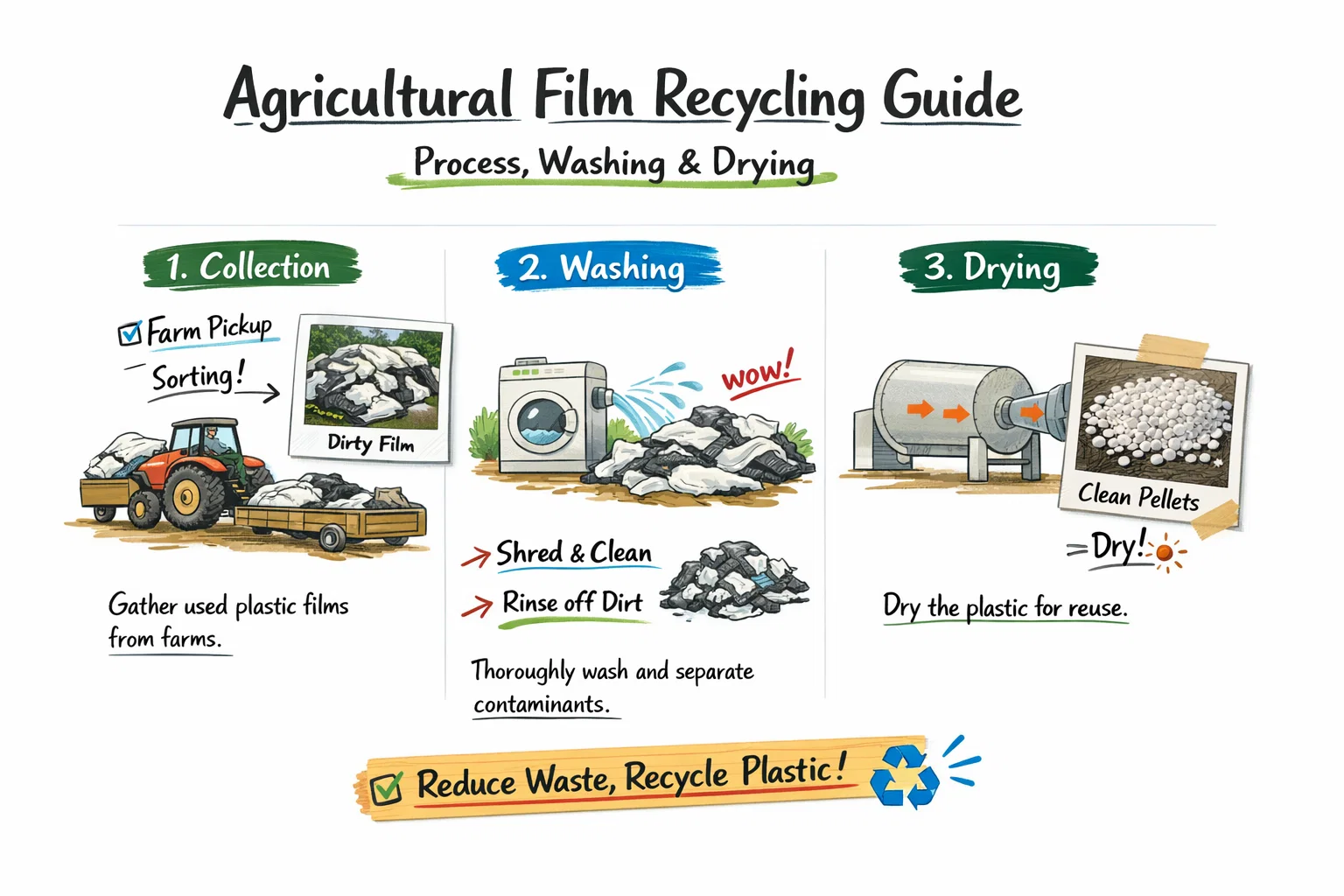
농업 필름 재활용은 세척기에서 시작되지 않고 현장에서 시작됩니다. mulch 필름, 고온실 필름, silage 필름 및 이라이제이션 제품은 토양, 돌, 작물 잔해, 습기, 줄과 화학 잔해를 운반할 수 있습니다. 오염의 양과 종류는 수집 경제성, 판매 가능한 수확량, 장비 손상, 수질 처리 및 최종 재활용 재료 규격을 결정합니다.
Identify the agricultural plastic stream
| 개울 | Typical process concern | Information to record |
|---|---|---|
| Mulch film | Soil, stones, plant residue and thin torn pieces | Polymer, thickness, recovery method and dry contamination |
| Greenhouse film | Large sheets, clips, dust, UV exposure and mixed covers | Film construction, colour, service age and attachments |
| Silage film and stretch wrap | Organic residue, moisture, odour and netting | Resin, collection condition and incompatible materials |
| Irrigation pipe or tape | Rigid fittings, emitters, soil and different polymers | Product construction and whether it needs a separate line |
| Bags and twine | Woven PP, strings and product residue | 구매자가 요구하는 경우 PE 필름과 구분하여 보관하세요 |
이 제품들이 한 농장에서 나왔기 때문에 단순히 이들을 결합하지 마세요. 구매자는 정의된 PE 필름 혼합물을 받아들이지만, PP 줄, PVC, 생분해 가능한 필름 또는 심하게 노화된 재료를 거부할 수 있습니다.
Source collection controls process cost
안전하고 허용된 경우, 필름을 배출시키고 흙을 제거하여 수집합니다. 불필요한 비를 피하고, 알려진 제품 유형에 따라 분리하여 보호합니다. 바닥을 압축하지 않는 한, 밀봉은 운송을 개선합니다.
The FAO’s 2025 자발적 플라스틱의 지속 가능한 사용 및 관리에 관한 행동지침 토양, 습기, 식물 잔해 및 독성 물질이 재활용을 제한할 수 있다고 강조하며, 일반적인 접근법 대신 안전한 수집 및 재료별 처리를 추천합니다.
Test contamination on a dry basis
농업 필름이 지역이나 계절에 따라 일정한 퍼센트의 토양을 포함한다는 주장은 신뢰할 수 없습니다. 표본 대표 부하와 건조 오염물에서 물을 분리하세요:
- weigh the received sample;
- determine moisture using a documented method;
- separate polymer, soil, stones, organics, metal and other plastics;
- report each fraction against dry input where appropriate;
- 사진을 유지하고 결과를 공급업체와 수집 날짜에 링크하세요.
이 피드 검토는 예상 부정 부하와 판매 가능 수량을 설정하고 재활용 가능한 폴리머로 오해할 수 있는 물을 방지합니다.
Recommended process flow
- Inspection and opening: identify prohibited loads and open bales under controlled conditions.
- Dry removal: 해물과 절단 장비에 들어가기 전에 풀림, 돌, 금속을 제거하세요.
- Size reduction: cut film to a stable washable form without creating excessive fines.
- Prewashing: separate heavy grit and loosened solids early.
- Friction washing: scrub film surfaces and release remaining target contamination.
- Rinsing and separation: manage water quality and a defined float/sink split.
- 기계적 탈수: 유연한 파이프를 제거하기 적합한 장비로 무료 및 표면 물을 제거하세요.
- Densifying and pelletizing: 축출에 필요한 요구사항을 충족한 후에만 재료를 준비하세요.
Remove soil before intensive washing
사과석이 쇼드러, 그란ولا이저, 펌프, 스크류, 스크린에서 손상을 가합니다. 건조한 진동, 트롬mel 스크리닝 또는 다른 검증된 사전 정화 단계는 물 루프에 대한 부하를 줄일 수 있습니다. 최적의 구성은 필름 크기, 습도, 토양이 흩어져 있는지 접어져 있는지에 따라 다릅니다.
건조한 거부물의 질량을 측정하고 그들의 폴리머 손실을 검사하세요. 사용 가능한 필름과 토양이 함께 나가는 공격적인 사전 정화는 하류 물이 깨끗해 보일 수 있지만 판매 가능한 수익을 줄일 수 있습니다.
시험에서 쇼드러와 습식 그란ولا이제이션을 선택하세요
가벼운 필름은 허브에서 브리지를 이루고 회전 부품을 감싸습니다. 저속 쇼드러는 큰 시트와 백을 열 수 있으며, 그란ولا이저는 조절된 입자 크기를 제공할 수 있습니다. 대형, 더러운 재료는 단계적인 시스템이 적합할 수 있습니다.
습식 granulation은 자르는 공간에 물을 도입하여 오염물을 풀기 시작할 수 있습니다. 또한 물과 고체 부하를 추가합니다. 실제 필름을 사용하여 날이 닳는 정도, 미세 입자, 처리량 및 하류 정화를 비교해 보세요. wet versus dry crushing guide.
Design washing around contamination, not slogans
전처리기 및 침식 튜브는 가능한 한 고속 마찰 씻기 전에 중량적인 불순물을 제거해야 합니다. 마찰 강도, 머무는 시간, 스크린 구멍 및 물질의 품질이 청소에 영향을 미칩니다. 기름이나 농업 화학 물질의 잔여물은 별도의 위험 평가와 검증된 화학물질이 필요할 수 있습니다.
불명확한 화학 용기나 오염된 필름이 씻기로 안전하다고 가정하지 마세요. 금지된 원료를 정의하고 지역의 폐기물, 폐수 및 노동자 보호 요구사항을 따르세요.
Control water, sludge and polymer loss
물 재사용 시스템은 오염 부하에 맞춘 스크린, 정리 또는 다른 불순물 제거가 필요합니다. 통제 없이 더러운 물을 재사용하면 미세 입자와 토양이 필름으로 돌아올 수 있습니다. 새로운 물의 구성, 킬로그램, 슬러지 질량 및 슬러지 내opol리머를 추적하세요.
Provide safe sludge removal, dewatering and disposal. The plant’s environmental permit and discharge limits determine treatment requirements; an equipment vendor cannot set one global water-use figure.
Dewater light film before thermal drying
A centrifugal dryer, screw press or film squeezer may be used according to particle form. A 플라스틱 필름 압착기 물을 제거하고 볼륨 밀도를 증가시켜, 버퍼나 펠릿화기로의 처리를 개선합니다.
대규모 5% 미만 목표는 없습니다. 최종 습도, 볼륨 밀도, 샘플링 포인트 및 검사 방법을 하류 과정과 협의하세요. 저장이나 전 추가적인 쉼직이나 건조가 필요할 수 있습니다.
펠릿 품질은 엑스트루더 이전부터 시작됩니다
축출 및 용해 필터링은 심한 폴리머 혼합, 토사, 습기 또는 퇴화를 수정할 수 없습니다. PE나 PP 혼합물, 흑, 습기, 색상, 냄새, 용해 흐름 및 필터링에 대해 구매자와 정의하세요.
UV 노출 및 현장 서비스는 재료 성질을 변경할 수 있습니다. 시각적으로 깨끗한 필름이 원재료 성능을 재현할 것이라고 가정하는 대신, 목적된 응용 분야에서 펠릿을 인정하세요.
Size capacity from saleable dry output
DIRTY WET INPUT은 최종 출력이 아닙니다. 대표적인 시험에서 질량 균형을 사용하세요:
Required wet input = target saleable dry output ÷ dry-polymer fraction ÷ process recovery ÷ planned availability
가정을 분리하세요. 더 습기가 많거나 더 더러운 부하는 수령 톤수를 증가시키지만 폴리머는 증가하지 않습니다. 동일한 원료에 대해 사전 정화, 씻기, 물 처리, 물 제거 및 축출의 지속 가능한 용량을 확인하세요.
인정 시험 체크리스트
- defined agricultural film mix and contamination sample;
- dry mass balance of polymer, soil, rejects and saleable output;
- particle size, fines, ash and remaining contamination;
- incoming and final moisture using an agreed method;
- fresh-water makeup, sludge and wastewater quality;
- complete-line electricity per accepted dry tonne;
- stoppages, wear observations and operator interventions;
- buyer qualification of flake or pellets.
Frequently asked questions
일반적으로 농업 필름에 얼마나 많은 토양이 들어 있나요?
일반적인 비율은 없습니다. 작물, 수집 방법, 기후, 필름 두께, 저장 방법에 따라 다릅니다. 공급 흐름을 각각 샘플링하여 건조한 오염물을 보고하십시오.
농업 필름이 직접 펠렛화기에 들어갈 수 있나요?
일반적으로 토양, 습기, 식물 잔해나 혼합 재료를 포함하고 있지 않을 때는 그렇지 않습니다. 먼저 정리, 적절한 청소, 물 제거 및 원료 품질 인정이 필요합니다.
mulch film, greenhouse film, silage wrap를 한 줄 처리할 수 있나요?
분리된 캠페인에서 가능하지만, 먹이, 씻기, 건조 및 출력 품질이 시험을 통해 확인된 후에만. 제품 구조 및 오염은 다른 설정이나 장비가 필요할 수 있습니다.
필름 샘플과 함께 수집 데이터를 보내세요
Energycle에 필름 유형, 수집 방법, 대표적인 오염물, 습기와 건조 질량 데이터, 월간 공급 및 출력 규격을 제공하세요. The PP/PE 필름 씻기 라인 실제 토양, 물, 수확 균형에 맞게 설정할 수 있습니다.
