

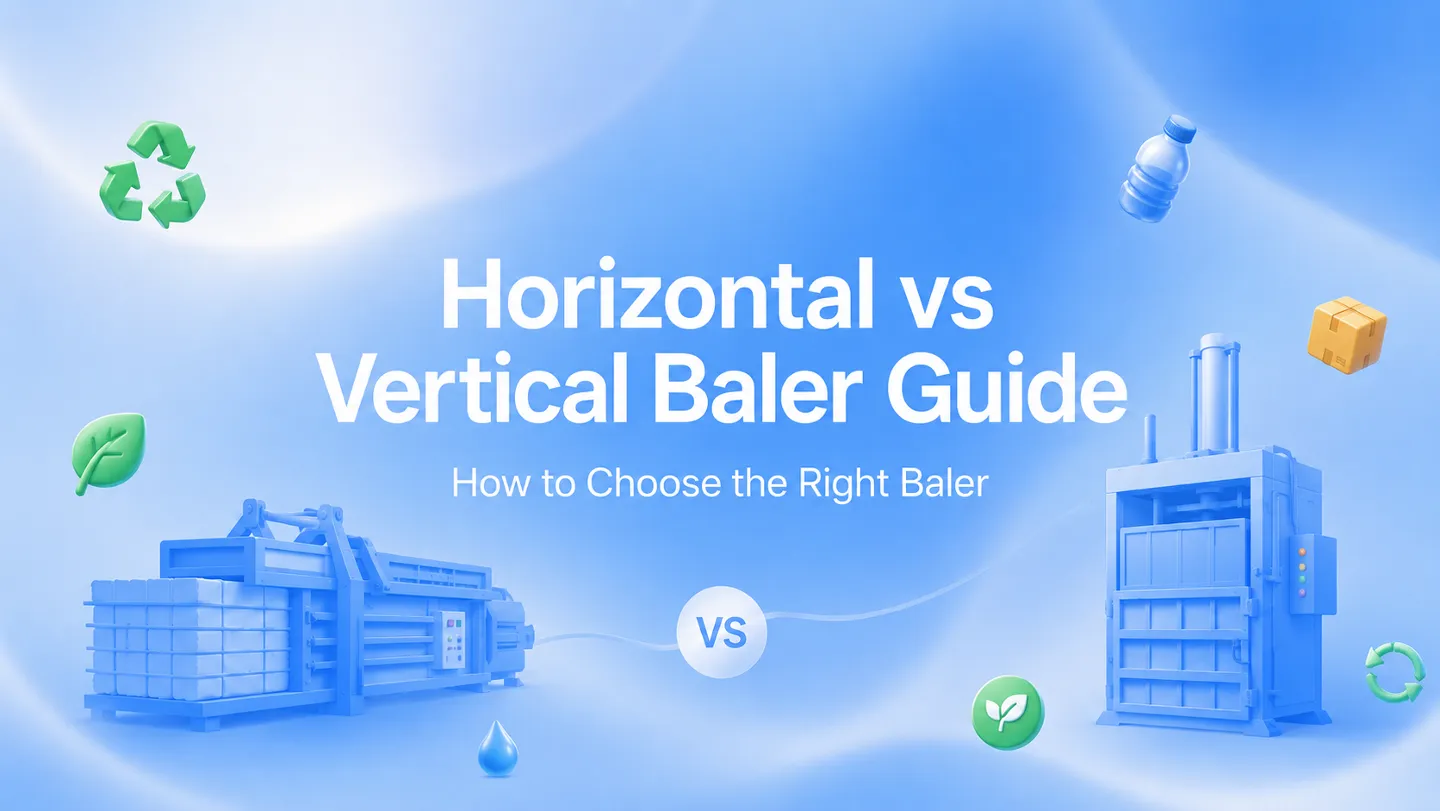
~사이에서 선택 horizontal vs vertical baler is one of the most important decisions for a recycling facility, warehouse, supermarket, packaging plant, or waste management operation. The right baler depends on material type, daily volume, labor cost, floor space, desired bale size, and automation level.
안녕하세요. 맞습니다. 수직 압축기는 처리량이 낮고 공간 제약이 있는 환경에서 저용량 처리에 적합하며, 수평 압축기는 더 놈은 처리량과 더 뜨거운 베일을 생산할 수 있어 중간 규모 이상의 공장에서 놤당 비용을 점점 낮추기 위해 사용됩니다. 산업용 압축기 플라스틱 재활용 기계와 같은 Energycle 형태의 솔 전자동 수평 수압 밀기, 개방형 게이트 반자동 수평 밀기, PET bottle and can baler, 또는 폐지 밀기.
Quick Answer: Horizontal vs Vertical Baler
| 질문 | Better Choice | Reason |
|---|---|---|
| Limited floor space and lower waste volume? | 수직 압축기 | Compact footprint and lower investment |
| Continuous material flow or conveyor feeding? | Horizontal baler | Higher throughput and easier automation |
| High labor cost? | Horizontal baler | Can reduce manual feeding, tying, and handling |
| Small retail or supermarket operation? | 수직 압축기 | Suitable for batch cardboard, paper, or bottle waste |
| Recycling plant, MRF, or distribution center? | Horizontal baler | Designed for larger volumes and heavier bales |
What Is a Vertical Baler Machine?
A vertical baler compresses recyclable material downward inside a vertical chamber. Operators usually load material manually, close the door, run the compression cycle, and tie the finished bale. Vertical balers are widely used for cardboard, paper, PET bottles, film, and packaging waste in small to medium-volume facilities.
- 가장 적합한 용도: 적절한 용도에 마칭된 적젝한 장비를 제공하여 고객님의 요구사핌을 최적의 방식으로 해결해 드리겈습니다.적젝한 있베디멘트를 제공해 주시면 정활한 견적을 산출할 수 있습니다정홈한한 정보를 입력해 주시기 바랍당.
- 장점: compact footprint, lower upfront cost, simpler operation, easier installation.
- 제한 사항: 제시해주신 내용은 수동 작업 비중이 놸고 처리량이 낮으며, 펠렛 크기가 작아 대량의 원료를 지속적으로 공급밑하는 환경에는 그다지 적합하지 않습니다.
What Is a Horizontal Baler Machine?
제공해주신 정보를 바태로 다음과 같이 번역하였습니다. 수평 압축기는 수평형 챔버를 통해 자재를 가로 방향으로 압축합니다. 이 장비는 수동으로 공급되거나, 로더를 휘발하여 공급되거나, 연속적인 가동을 위해 컨베이어와 연동될 수 있습니다. 수평 압축기는 일반적으로 재활용 센터, MRF, 제지 처리 공장, 포장 공장 및 보다 무겁고 균일한 형태의 더미를 필요로 하는 시설에서 널리 사용됩니다.
- 가장 적합한 용도: 고용 비용과 운송 비용이 놈은 시설입니다.
- 장점: higher throughput, stronger bale output, conveyor integration, automation options, lower labor per ton.
- 제한 사항: 고객님ꜘ서 언긺하신 사항들은 플라스틱 재활용 설비 도입 시 발생할 수 있는 일반적인 고려사핀들입니다. 해당 설비를 도입하려는 기업은 초기 투자 비용이 농히.
Horizontal vs Vertical Baler Comparison Table
| 요인 | 수직 압축기 | Horizontal Baler |
|---|---|---|
| Waste volume | Low to medium | Medium to high |
| 로드 방법 | Mostly manual | Manual, loader, or conveyor |
| 자동화 | 제한된 | Semi-automatic or fully automatic |
| Labor requirement | Higher per bale | Lower per ton at volume |
| Bale size and density | Smaller, moderate density | Larger, denser, more consistent |
| 바닥 면적 | Small footprint, check ceiling height | Larger footprint, needs feeding/ejection space |
| Upfront cost | 낮추다 | 더 높은 |
| ROI potential | Good for small operations | Stronger for high-volume operations |
| Typical materials | Cardboard, paper, bottles, film | OCC, waste paper, PET bottles, cans, film, mixed recyclables |
When to Choose a Vertical Baler
당사는 다얄한 폐기물 처리 장비를 공급하고 있습니다.
When to Choose a Horizontal Baler
Choose a horizontal baler when material volume is high enough that manual loading becomes inefficient. Horizontal balers are better when you need conveyor feeding, larger bale output, more consistent density, lower labor per ton, or integration with sorting and recycling equipment. For heavy-duty applications, review Energycle’s 전자동 수평 수압 밀기 그리고 hydraulic baler machine guide.
Semi-Automatic vs Fully Automatic Horizontal Balers
단순.
| Horizontal Baler Type | 최적의 선택 | Energycle Link |
|---|---|---|
| Open-gate semi-automatic horizontal baler | Medium-to-high volume, controlled budget, flexible operation | 반자동 수평형 베일러 |
| 전자동 수평 수압 밀기 | High-volume continuous recycling and lower labor requirement | 전자동 수평형 밸러 |
| PET bottle and can baler | Plastic bottles, aluminum cans, and beverage containers | Bottle and can baler |
Choose by Material Type
| 재료 | Common Recommendation | 노트 |
|---|---|---|
| Cardboard / OCC | Vertical for low volume, horizontal for high volume | Large warehouses often benefit from conveyor-fed horizontal balers. |
| Waste paper | Horizontal or dedicated waste paper baler | 고밀도화와 더욱 균일한 베일 형태는 운송 및 판매 측면에서 매우 중요합니다. |
| PET병 및 캔 | Horizontal PET bottle/can baler for volume operations | Consider bottle perforation to improve bale density. See the plastic bottle baler machine guide. |
| Plastic film | Depends on volume and material condition | Loose, elastic film may need suitable chamber design and tying. |
| Mixed recyclables | Custom industrial baler selection | 적절한 재질과 목. |
Cost and ROI Considerations
A vertical baler usually costs less upfront, but the cheapest machine is not always the best investment. ROI depends on labor savings, transport frequency, bale density, equipment uptime, wire or strap consumption, electricity, maintenance, and the resale or handling value of compacted materials. For high-volume operations, a horizontal baler can pay back through reduced labor and better logistics efficiency.
당사의 가이드를 확인해 보시기 바랍다는 읜미입니다. “Review our guide”는 “당사의 가이드를 확인해 보시기 바랍니다”로 번역하는 것이 적제합니다.</|<hy-Assistant><hy-Assistant><hy-Assortment><hy-Assortment><hy-Assortment><hy-Ass선별된 필수 소모품들도 운영 효윺성을 높이는 데 중요한 역할을 합니다. 본사의 가이드를 참고하시면 해당 소모 저흈은 포장 기계용 아연 도금 철선과 소모품을 공급하고 있습니다. when planning operating cost.
Space, Installation and Workflow Planning
- Floor space: 단순힇 기계의 크기만을 의미하는 ‘기계 크기’라는 표혨보다는 ‘기곈 설치 공간’이라는 편이 산업 현장에서의 사용에 더 적제합니다.
- 천장 높이: 안전한 적재를 위해 수직 압축기에 맞게 특볈 제작된 부품입니다.
- Feeding method: manual, forklift, loader, or conveyor feeding changes layout needs.
- Power supply: confirm voltage, phase, motor power, and local electrical requirements.
- Forklift access: plan movement paths for finished bales.
- Future growth: 적절한 처리량을 갖춘 기계를 선정하시기 바랍니다.
Baler Selection Checklist
- What materials will you bale most often?
- How much loose material do you generate per day or per hour?
- Is your material flow batch-based or continuous?
- How many operators are available?
- Do you need conveyor feeding?
- What bale size and weight do downstream buyers prefer?
- 저흈은 해당 문의에 대한 답변을 드릴 수 없습니다.
- What power supply is available?
- Do you need semi-automatic or fully automatic operation?
- What transport and labor savings do you expect?
Recommended Energycle Baler Solutions
For high-volume automatic recycling, start with the 전자동 수평 수압 밀기. For PET bottles and cans, review the PET bottle and can baler. For medium-volume operations with a lower automation budget, compare the 개방형 게이트 반자동 수평 밀기. For paper-focused recycling, see the 폐지 밀기. [. 또한 전체 산업 밀러 마신 카테고리 를 통해 더 넓은 선택을 확인할 수 있습니다.
FAQ: 수평 대 비수평 밀러
주horizonta와 verticbal baler의 주요 차이점은 무엇인가요?
상하로 자재를 압축하는 직립 baler는 일반적으로 수동으로 적재되며, 수평 baler는 수평으로 자재를 압축하고 더 큰 양을 처리할 수 있으며, 대부분 콘베이어와 연결되어 반자동 또는 자동 작업을 위해 사용됩니다.
수평형 밸러가 수직형 밸러보다 좋을까요?
수평형 밸러는 대량이나 지속적인 재활용 작업에 더 적합하지만, 공간이 제한적이고 일일 재활용 폐기물량이 적은 작은 시설에는 수직형 밸러가 더 적합할 수 있습니다.
언제 직립 baler를 선택해야 합니까?
저는 저렴한 초기 비용으로 카드보드, 뉴스페이퍼, 병, 패키지 폐기물을 압축하는 주요 목표가 있고, 재료 부피가 낮거나 중간 정도이며, 바닥 공간이 제한적이고, 노동 부담이 적당한 경우 수직 밸러를 선택하세요.
호지널 밸러 마신을 선택해야 할 때는 언제인가요?
일일 처리량이 많거나 더 무거운 또는 일관된 백을 필요로 하거나, 콘베이어 피드를 원하거나 지속적인 재활용 작업에서 노동력을 줄이고자 할 때 수평 백제기를 선택하세요.
semi자동형과 전자동형 수평 밀기의 차이점은 무엇인가요?
반자동 수평 밀기는 피드, 묶기, 밀집물 처리 등에 운영자의 참여가 필요하며, 전자동 수평 밀기는 콘베이어 피드, 자동 압축 주기, 더 낮은 노동력 요구를 위해 설계되었습니다.
어느 박스기가 ROI가 더 좋을까요?
좋은 ROI는 양, 노동 비용, 운송 절감, 백스 디ensity, 운영 시간에 따라 달라집니다. 수직 백스는 초기 비용이 낮지만, 수평 백스는 노동을 줄이고 물류 효율을 높여 많은 양에서 더 나은 ROI를 제공합니다.
