

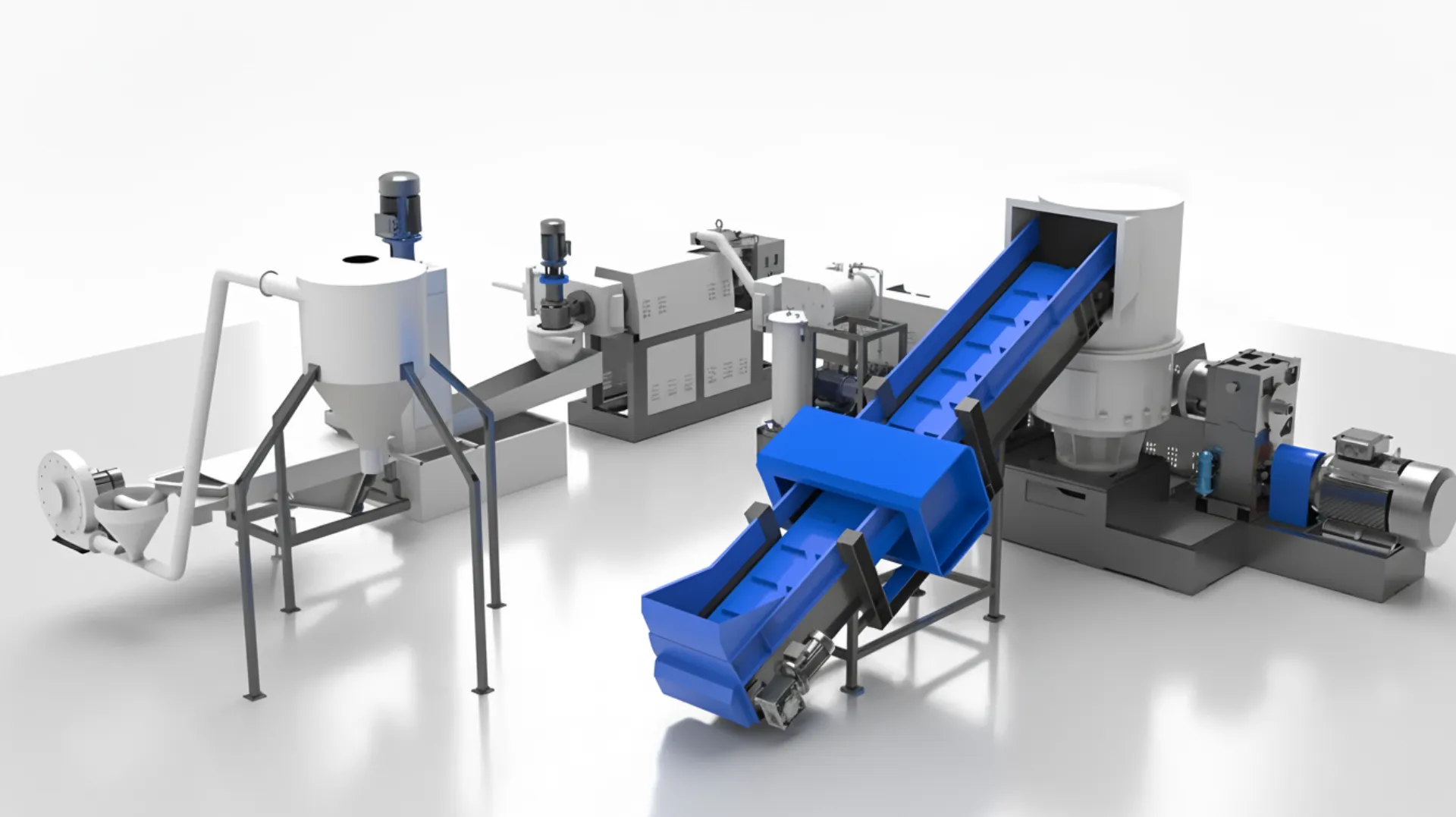
PE PP Film Recycling Pelletizing System
Cutter Compactor Recycling Granulating Line for PE Film, PP Raffia, and Light Soft Plastic Scrap
A cutter compactor pelletizing line designed for low-bulk-density PE and PP film, woven bags, non-woven scrap, and light flexible waste. Integrated compaction, degassing, melt filtration, and water-ring pelletizing help turn loose scrap into dense, reusable pellets with stable output.
Why a Cutter Compactor Granulating Line Works for Loose Film Waste
Low-density film and raffia are difficult to feed into a standard extruder. The cutter compactor solves that feeding problem first, then stabilizes the rest of the pelletizing process.
Compaction Converts Loose Film into Stable Extruder Feed
The cutter compactor cuts, mixes, warms, and densifies soft plastic scrap so the extruder sees a more continuous and manageable material flow.
High Throughput for Soft Plastic Recycling
Typical models cover output ranges from about 180 kg/h to 1500 kg/h depending on material condition, contamination, and configuration.
Degassing Improves Pellet Stability
Vacuum venting helps remove moisture and volatiles, which is especially useful for printed film, lightly washed feed, and mixed flexible scrap.
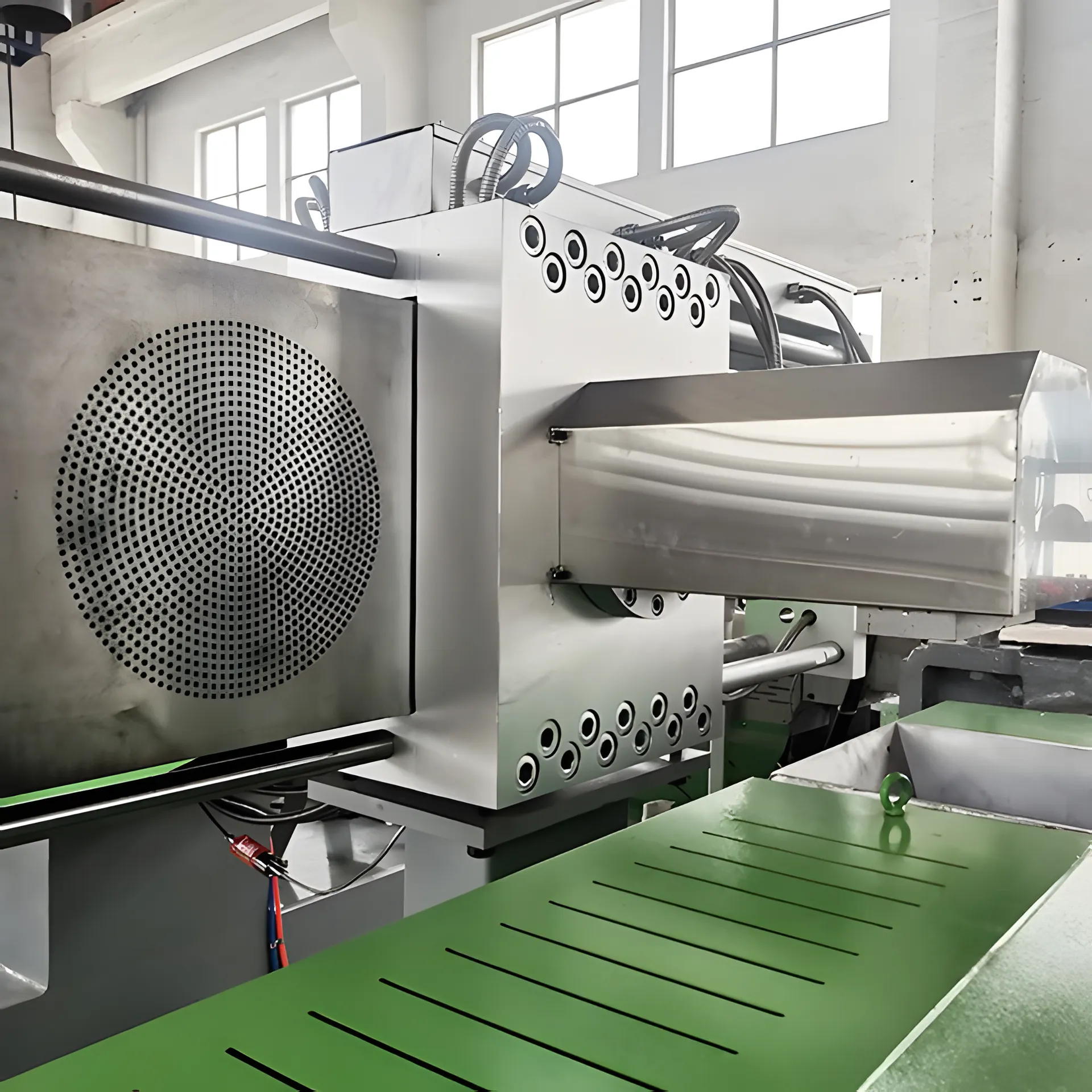
Melt Filtration Protects Pellet Quality
Screen changing and melt cleaning stages help remove residual contamination before pellet cutting, improving pellet appearance and downstream reuse value.
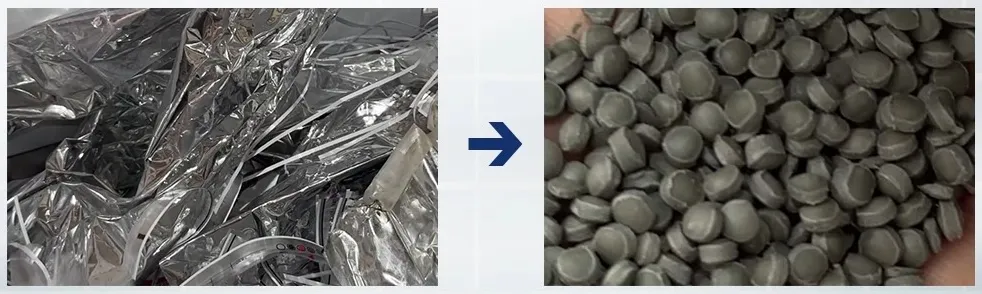
Water-Ring Pelletizing Produces Uniform Recycled Pellets
The die-face cutting and pellet drying sequence is optimized for PE and PP soft plastics, giving stable pellet shape, density, and handling performance.
Configurable for Material and Output Target
Screw size, degassing, filtration, and pelletizing sections can be adjusted around your feed condition, target kg/h, and pellet quality requirement.
Materials and Feedstock Range
This pelletizing line is intended for low-bulk-density soft plastic streams that need densifying before stable extrusion and pellet formation.
PE Film Scrap
Handles HDPE, LDPE, and LLDPE film scrap from packaging, industrial trimming, and flexible recycling workflows.
PP Raffia and Woven Bags
Suitable for woven sacks, jumbo bag cuttings, and raffia scrap that benefit from pre-compaction before melting.
Film Rolls and Edge Trims
Works well on production edge trim, rolls, and offcuts where consistent feeding is needed for continuous pelletizing.
Agricultural Film
Often used for greenhouse and mulch film after washing when moisture, dirt, and print levels are brought into a manageable range.
Non-Woven and Fiber Waste
Processes PP non-woven scrap, fiber residues, and similar soft flexible streams where densifying improves extrusion stability.
Lightly Printed Flexible Scrap
Double-zone degassing helps when the feed contains light printing or residual volatiles that would otherwise affect pellet quality.
How the Cutter Compactor Pelletizing Workflow Runs
The line is built to solve one key problem step by step: make loose film feed continuously, melt it cleanly, and cut it into reusable pellets.
Feed with Conveyor and Metal Check
Loose scrap is conveyed to the compactor, and optional metal detection helps protect the downstream extrusion system.
Cut, Mix, and Compact
Rotating blades generate friction heat while chopping and densifying the film, making the feed more stable for the screw.
Extrude and Degas
The single-screw extruder melts and homogenizes the material while vacuum zones remove moisture and volatiles.
Filter the Melt
A screen changer removes residual contamination before the melt reaches the die face and pelletizing chamber.
Water-Ring Pelletizing and Drying
The die-face cutting system forms pellets that are immediately cooled, then dried for easier conveying, packaging, and reuse.
Cutter Compactor Pelletizing Line vs Standard Single-Screw Pelletizer
The right choice depends on the bulk density and feed stability of the material. Film scrap usually needs more front-end preparation than rigid flake or densified feed.
| Decision Factor | Cutter Compactor Line | Standard Single-Screw Pelletizer |
|---|---|---|
| Best Feed Type | Loose film, raffia, woven bags, and low-bulk-density flexible scrap | Denser flakes, regrind, or already stabilized feed |
| Feeding Stability | Compactor improves feed consistency before extrusion | Weaker on very fluffy or bridging film feed |
| Process Complexity | More integrated front-end preparation in one line | Simpler when the feed is already suitable for direct extrusion |
| Typical Use Case | Film recycling plants and soft-plastic pellet production | Rigid flake, cleaner regrind, or lower-preparation material streams |
| Pellet Quality Control | Compaction, degassing, filtration, and water-ring cutting work together to stabilize output | Depends more heavily on the uniformity of incoming feed |
Capacity and Models
These model ranges are typically selected by material cleanliness, bulk density, print level, filtration demand, and target pellet output.
| Model | Output |
|---|---|
| GL85 | 180 – 250 kg/h |
| GL100 | 300 – 400 kg/h |
| GL130 | 500 – 600 kg/h |
| GL160 | 700 – 800 kg/h |
| GL180 | 1000 – 1500 kg/h |
Machine Showcase
Key views of the melt filtration, finished pellets, and overall process layout used in cutter compactor pelletizing lines.

Watch the Pelletizing Line in Operation
See how film scrap is compacted, melted, filtered, and pelletized into a reusable PE or PP pellet stream.
Technical FAQs
Quick answers to the questions buyers usually ask before choosing a cutter compactor pelletizing line.
A cutter compactor pelletizer combines a densifying cutter-compactor with an extruder so loose film scrap can be compacted first, then melted, filtered, and pelletized in one continuous system.
Typical materials include LDPE, LLDPE, HDPE film, PP film, woven bags, raffia, non-woven scrap, edge trims, film rolls, and lightly printed flexible waste.
Degassing removes moisture and volatiles from the melt, helping reduce bubbles, odor, instability, and pellet defects, especially on washed or lightly printed film streams.
This line uses a water-ring die-face pelletizing method, which is widely used for PE and PP soft-plastic pellet production because it supports stable cutting and uniform pellet output.
Please send your material type, contamination level, moisture level, print level, target output in kg/h, pellet use case, and local power standard so the correct screw, filtration, and degassing setup can be matched.
Build the Right Film Pelletizing Line for Your Scrap
Share your PE or PP material type, moisture, contamination, print level, and throughput target. We will recommend the right cutter compactor line layout, melt filtration, and pelletizing configuration.

Comments are closed.