

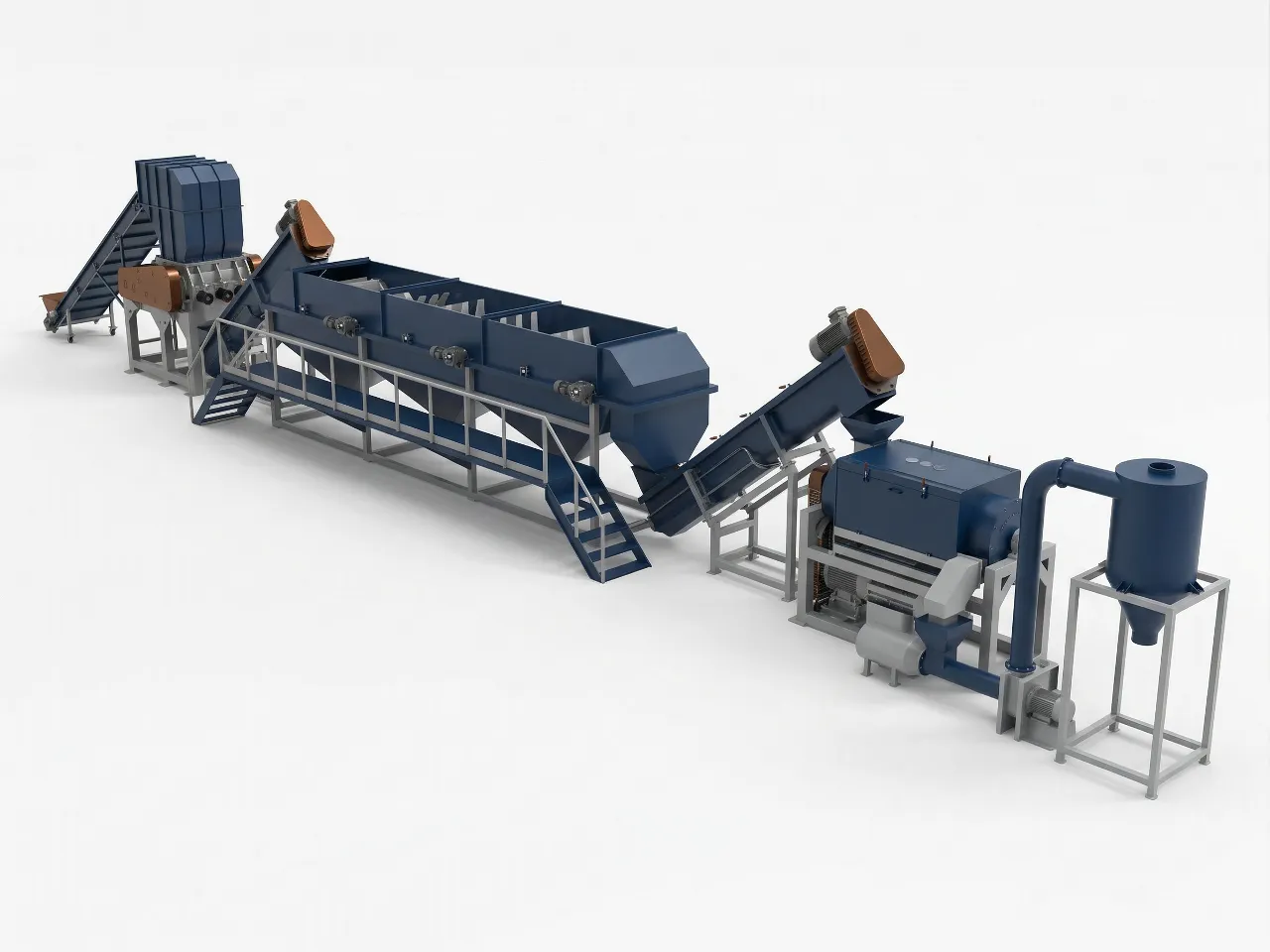
PP PE Film Washing and Pelletizing System
Línea de lavado y reciclaje de película triturada de PP y PE
Convert contaminated PP and PE film scrap into clean, low-moisture regrind or stable pellet feed. This modular line combines shredding, washing, density separation, drying, and optional pelletizing for post-consumer film, agricultural film, woven bags, and rigid PP PE regrind.

Why Choose This Film Washing Line
The line is designed for dirty flexible plastic streams where yield, water control, and downstream pellet quality matter more than simple rinsing.
Salida de alta pureza
Intensive scrubbing and density separation remove soil, labels, paper, and loose contamination before drying and pelletizing.
Energy Efficient Layout
Mechanical dewatering reduces thermal load so the line can control moisture without unnecessary power consumption.
Modular y escalable
The process can be configured for 300 to 2000 plus kg per hour depending on contamination level and final quality target.
Descarga de Baja Humedad
Centrifugal or squeeze drying combined with hot air piping helps achieve low final moisture for extrusion stability.
Adapted to Film, Raffia, and Regrind Feedstock
Whether the material is stretch film, agricultural film, woven bags, or rigid PP PE regrind, the washing route can be adjusted around contamination type, sand load, and target pellet quality.
Demostración en video
Watch the PP PE film washing and recycling line in operation.
Excelencia modular
Componentes clave de la línea
Each module supports stable washing performance, lower moisture, and easier integration into a pelletizing workflow.
Maquina trituradora de plastico
A pre-shredding stage stabilizes infeed size, reduces tangling, and protects downstream washing equipment from uneven loading.
View related shredderGranulador húmedo
Reduces material to a conveyable flake size while helping the pre-wash stage start contamination removal.
Arandela de fricción
High-speed scrubbing removes labels, glued paper, and stubborn surface dirt from flexible plastic flakes.
Tanque de separación de flotación por hundimiento
Density separation rejects heavy impurities while keeping PP PE material in the target stream.
View separation tankSecado centrífugo y térmico
Mechanical dewatering and hot air drying control moisture before storage or extrusion.
Pelletizing and Buffering
A clean flake buffer silo and pelletizing stage turn washed material into stable finished pellets for reuse in film, molding, and extrusion applications.
De los residuos al valor
Flujo del proceso
A multi-stage washing route designed to transform contaminated PP PE waste into clean regrind and pellet-ready material.
Input and Size Reduction
Film and regrind are shredded or ground into a stable size that can move through washing equipment without tangling.
Lavado intensivo
Friction and hot wash stages remove labels, paper, oil, and surface contamination from the plastic stream.
Sink Float Separation
Density separation removes heavy impurities such as stones, metal, and grit while retaining target film material.
Mechanical and Thermal Drying
Centrifugal or squeeze dewatering combined with hot air piping lowers final moisture to a pelletizing-friendly level.
Peletización
Optional pelletizing melts, filters, and cuts the washed plastic into stable pellets for reuse and storage.
Input and Size Reduction
Film and regrind are prepared into a stable size for washing.
Lavado intensivo
Friction and hot wash stages remove labels, paper, and oil.
Sink Float Separation
Density separation ejects heavy impurities while retaining PP PE material.
Mechanical and Thermal Drying
Dewatering and hot air drying lower final moisture before storage or extrusion.
Peletización
Optional pelletizing converts washed material into uniform reusable pellets.
Especificaciones técnicas
Typical project planning range for PP PE film and regrind recycling lines. Final sizing depends on contamination level, moisture target, and downstream pellet requirements.
| Specification Item | Rango típico |
|---|---|
| Capacidad de línea | 300 to 2000 plus kg per hour |
| Materiales aplicables | PP PE film, raffia, woven bags, jumbo bags, rigid PP PE regrind |
| Contamination Type | Soil, sand, labels, paper, oil, light organics |
| Drying Route | Centrifugal dewatering, squeeze drying, hot air thermal drying |
| Humedad final | Typically 3 to 5 percent before pelletizing |
| Sistema de agua | Open or closed-loop with filtration and optional DAF support |
| Optional Downstream | Water ring pelletizing, storage silo, conveying integration |
| Power and Voltage | Customized for regional standards such as 400V 50Hz or 460V 60Hz |
Desliza el dedo horizontalmente para ver la tabla completa en dispositivos móviles.
Machine Layout and System View
A typical modular arrangement suitable for 300 to 2000 kg per hour lines with future upgrade paths.
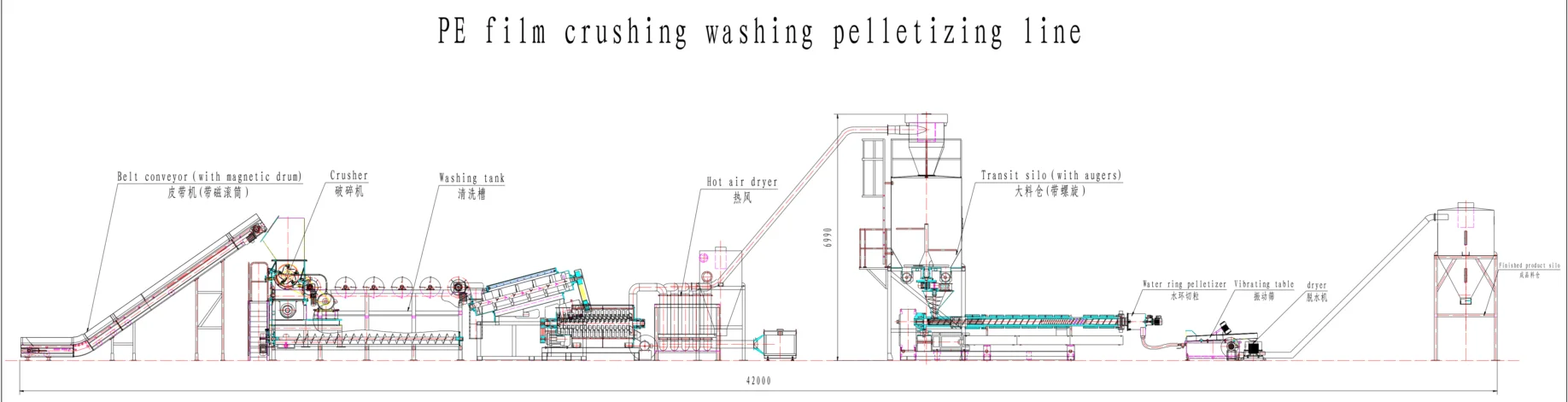 Example layout for a 500 kg per hour PE film recycling line
Aplicaciones
This washing route fits both contaminated flexible plastics and cleaner industrial regrind streams.
Película de embalaje flexible
Post-consumer LDPE and LLDPE stretch film, shrink wrap, and commercial packaging waste.
Película agrícola
Heavily soiled mulch film, greenhouse film, and irrigation tubing with higher sand and soil load.
Woven Bags and Jumbo Bags
PP raffia and FIBC materials that need stable size reduction and strong washing performance.
Rigid PP PE Regrind
Crushed flakes from bottles, crates, molded parts, and pipe scraps that need cleaning before reuse.
Chatarra postindustrial
Cleaner film edge trim, defective rolls, and factory offcuts where the target is stable pellet feed.
Integrated Washing and Pelletizing Projects
A strong fit for plants that want one coordinated route from dirty film input to washed flakes or finished pellets.
Preguntas frecuentes
Quick answers to common technical, utility, and delivery questions for PP PE film washing lines.
A complete line may include shredding, pre-washing, friction washing, sink float separation, dewatering, thermal drying, storage buffering, and optional pelletizing depending on feedstock condition and final quality target.
Typical projects range from around 300 kg per hour for smaller installations up to 2000 kg per hour or more for industrial recycling plants. Real output depends on contamination load and drying requirements.
Yes, but agricultural film usually requires stronger pre-washing, more settling capacity, and tighter water management because sand, soil, and organics are much heavier than in cleaner industrial scrap.
Configurations can be adapted to regional power standards such as 400V 50Hz for Europe or 460V 60Hz for North America. CE-oriented configurations and English HMI support are available.
Yes. We support layout planning, remote or onsite commissioning, and operator training according to project scope and delivery arrangement.
Water systems can be configured as open or closed-loop circuits with filtration and sludge handling support, helping reduce consumption and simplify environmental compliance.
Solicitar una cotización
Share your material type, contamination level, target throughput, and whether you need washed flakes or finished pellets. We will propose a tailored configuration and layout.

Los comentarios están cerrados.