

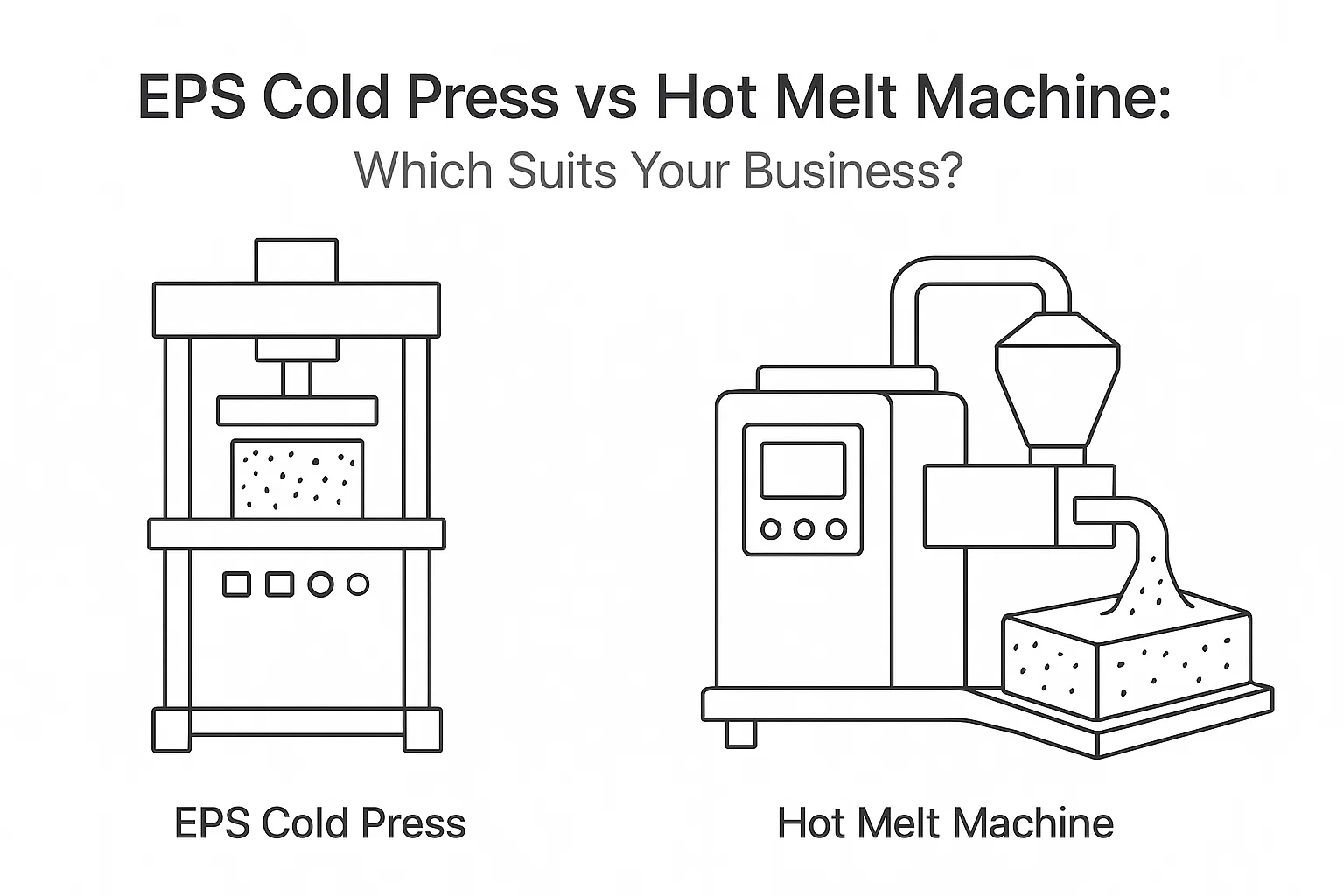
Izbor između hladnog pritiska EPS i EPS topljenog zagusnjenika je uglavnom odluka o čistoti ulaza, zahtjevima za oblikom isporuke, energiji, ventilaciji, vještini operatera i kupcu na nivou isporuke. Oba smanjuju teret pri transportu i skladištenju ekspandiranog polistirena, ali koriste različite mehanizme i proizvode različite srednje materijale. Objavljeni omjeri kompresije i satišnja kapaciteta nisu usporedivi osim ako se navodi testni ulaz i gustoća izlaza.
Hladni pritisak i topljeni zagusnjenik na prvi pogled
| Točka odluke | Hladni pritisak EPS | EPS topljeni zagusinilac |
|---|---|---|
| Mehanizam | Razbijanje plus cijevni ili hidraulični mehanički kompresor | Razbijanje plus kontrolirano zagrijavanje i extrudiranje u ingot |
| Izlaz | Kompaktirane blokove, drveće ili brikete s vidljivom celičnom strukturom | Soliđeni logovi ili ingoti |
| Termički opterećenje | Nema procesnog topljenja; motor i fricija još uvijek stvaraju toplinu | Zahtjeva kontrolirano zagrijavanje i hlađenje |
| Upravljanje zrakom | Kontrola praha i loših zrna je ključna | Kontrola praha plus lokalni ispuh i procjena dima |
| Tolerancija ulaza | Preferirano čisto, suho EPS; debeli dijelovi moraju biti konzistentno isporučivani | Čisto, suho EPS još uvijek je zahtjevano; toplina ne čini kontaminirani ulaz prihvatljivim |
| Pitanje kupca | Hoće li kupac prihvatiti mehanički komprimirani EPS? | Hoće li kupac prihvatiti ingote topljenog EPS i njihovu termičku povijest? |
Kako radi EPS hladni pritisak
Ulazni taljer prihvaća čist EPS pakovanje ili proizvodni otpad. Rastavljac ili kompresor otvara velike dijelove, a cijev ili hidraulični komor apply pritisk da ispušta zrak i oblikuje gušći oblik. Kompaktirani izlaz se izreže ili razbije na upravljive duljine za skladištenje i transport.
Odsustvo faze topljenja simplificira termičku kontrolu, ali stroj još uvijek treba imati zaštitu, zaštitu od preopterećenja, upravljanje prahom i stabilan ulaz. Slobodne zrnca i svjetle komadi mogu izbjeći mjesta za prikupljanje. Vlažni ili hranom kontaminirani polustrijel mogu stvarati miris, koroziju, loše blokove i odbijanje kupca.
Kako radi EPS topljeni zagusnjenik
Sustav topljenja prvo smanji valovitu strukturu i izмерi ju u zagrijani trubnik. Toplina i cijev djeluju na smanjenje celične strukture i premještaju mekši polistiren kroz die. Materijal zatim ohladi u gušće logove ili ingote.
Temperatura mora biti kontrolirana za specifičan stroj i ulaz. Prekomjerna toplina ili dugotrajno zadržavanje mogu degradirati ili zažuti polimer; nedostatak topline može stvarati nestabilan izlaz ili preopterećenje. Topljenje plastičnih materijala također zahtjeva procjenu izlaganja i prikladni lokalni ispuh. OSHA’s safety resources for styrene opisuje relevantne zdravstvene opasnosti, ali poslodavac mora procijeniti stvarne tvari i izlaganje na postrojenju.
Nemojte birati samo po omjeru kompresije
Omjer smanjenja volumena ovisi o gustini lošeg ulaza, obliku, vlažnosti, načinu isporuke i zadanoj gustoći. Veoma laki izrađeni pakovanja mogu pokazati veći omjer nego gušći izrezci na istom stroju. Tako da je izjava prodavača o “50:1” ili “90:1” nekompletna bez testnih uvjeta.
Za značajni isprobni period, izmjerite poznatu ulogu, izмерite njeni prostranstvo koji zauzima u obliku, izmjerite prihvaćeni kompaktni izlaz i odredite konačne dimenzije ili gustinu. Izvještajte o odbijenom materijalu i gubitcima u obliku. Usporedite prijevoznu sposobnost koristeći zakonitu teretnu nosivost i upotrebljivu prostorninu vozila, jer neke rute postaju težinsko ograničene prije nego što je kontejner pun.
Usporedite kapacitet prihvaćenog izlaza
Nominalna ulazna kapacitet može biti ograničena ručnim punjenjem, prekidačkim mostovima, performansom kompresora, zaustavljanjem zbog kontaminacije, hlađenjem ili obradom izlaza. Zatražite održiv prihvaćeni izlaz od kupca EPS tijekom dogovorenog vremenskog perioda. Zabilježite:
- suha ulazna masa i prihvaćena izlazna masa;
- tip uloge, dimenzije, gustina i vlažnost;
- odbici i gubitci materijala;
- vrijeme rada i uzroci zaustavljanja;
- elektricnost za cijeli sustav, uključujući izvlačenje i hlađenje;
- izlazna gustina, oblik, temperatura i prihvaćenost kupca.
Kvaliteta uloge određuje oboje mogućnosti
Odvojite EPS od extrudiranog polistirena (XPS), polietilenske gume, polietilenske gume, papira, trake, etiketa, ostatka hrane i požarno zaštitnog gradnog materijala kada to zahtijeva specifikacija nizvodnog procesa. Boja i prethodna uporaba mogu također utjecati na izlaz.
Udruženje za recikliranje plástika objavljuje EPS rigid design guidance koje ilustrira kako karakteristike pakovanja utječu na sposobnost kompatibilnosti s recikliranjem. Zbiratelj i recikliratelj još uvijek trebaju pisani pravilnik za ulaz za stvarni tržišni sustav.
Usporedite električnu energiju i utilitete
Usporedite izmjerene kWh po prihvaćenoj tuni, ne samo motorima s oznakom naziva. Hladni pritisak koristi rezne i kompaktni pogoni. Vruća jedinica dodaje zagrijavanje cjevovoda i može zahtijevati više izvlačenja ili hlađenja. Stvarno potrošnja mijenja se s uporabom, gustinom uloge, radom i zaustavljanjem te kontrolom temperature.
Pripremite potpun popis punjenja za kompresor, valjak, hidraulinu, grijalke, ventilatore, transportere i kontrolu. Uključite perioda zagrijavanja i mirisanja u isprobnom periodu. Potvrdite struju mjesta, fazu, frekvenciju, zaštitne uređaje i dostupnu struju prije narudžbe.
Sigurnost i kontrola radnog mjesta
Oboje strojevi trebaju zaštićene rotirajuće dijelove, sigurni pristup, hitni zaustavljac i izolaciju opasne energije. EPS je lagan i zapaljiv; održavajte izvor zapaljivosti kontroliranim i obratite se kućanskoj higijeni, prahu, skladishu i zaštiti od požara s lokalnom vlasti i osiguranjem.
Stroj za vruću toplinu dodaje vruće površine, topli polimer i potencijalnu izloženost dimu. Odredite zatvaranje, lokalni ispuh, zaštitu ispusta i sigurno uklanjanje vrućeg izlaza. Hladni pritisak izbjegava namjerno zagrijavanje ali može još uvijek stvarati toplinu, prah, zvuk i opasnosti kompresije.
Razlike u održavanju
| Provere hladnim pritiskom | Provere topljenim pritiskom |
|---|---|
| Noževi za prekivac, mreža, vijak ili hidraulični ventili | Noževi za prekivac, vijak, cev i matrica |
| Komorica za kompresiju i ograđenje izlaza | Grijalac, temperaturni senzori i kontroleri |
| Naloženi motor, valjci i izlaz tekućeg materijala | Naloženi motor, valjci, hlađenje i izvlačenje dima |
| Konzistencija bloka i mehanički iznošenje | Ostaci, ugljeničeni materijali i konzistencija izlaza |
Razmjeri održavanja trebaju slijediti instalirani priručnik i zapise o stanju. Ne očistite zaglavljenje, ulazite u taljer ili održavajte vijak sve dok se ne izoloira i ne potvrdi sva opasna energija.
Izračunajte ekonomiju iz rute do tržišta
Pridobijte uvjete kupca za svaku formu izlaza prije kupnje zagusitelja. Izračunajte godišnji uvoznji EPS, prihvaćeni iznos, rad, struja, vrećice ili paleti, održavanje, izvlačenje, prostor na podu, količaru i odbačene količine. Usporedite to s trenutnim troškovima prikupljanja ili odlaganja i stvarnim prihodima kupca.
Jedna jedinica topljenog pritiska može opravdati dodane usluge kada se oblik izlaza smanji transport ili je preferiran od strane kupca. Hladni pritisak može biti preferiran gdje dominira energija, ventilacija, jednostavnost upravljanja ili postojeci izlaz kompresiranih EPS-a. Ne postoji univerzalni period povratka ili nadizvođeni cijena.
Kontrolna lista za odabir
- Potvrdite da je ulaz EPS i dokumentirajte kontaminacije i prethodnu upotrebu.
- Pridobijte pisane kriterije prihvaćanja i osnovu cijene od strane nizvodnog kupca.
- Prouzmi predstavnici materijala na obje tehnologije gdje je to moguće.
- Usporedite prihvaćeni iznos, gustinu, kWh, rad i zastoj na istom osnovu.
- Pregledajte snagu, ventilaciju, zaštitu od požara, buku i prostor s lokalnim stručnjacima.
- Saglasite se s kriterijima prihvaćanja, obukom, zaliha i opseg održavanja prije kupnje.
Često postavljana pitanja
Je EPS vrućem lepidom gomilac uvijek postizao veću volumensku smanjenost?
Često proizvodi gušću gegu, ali izvješćeni omjer ovisi o lošem ulazu i metodi testiranja. Uspoređite konačnu gustinu i teret pri prijevozu koristeći predstavni EPS.
Može smećena EPS za usluge hrane direktno ići u bilo koju mašinu?
Ne osim ako to dopušta politika uvoza i kupac. Ostanak hrane, vlažnost i mješoviti materijali mogu uzrokovati miris, nestabilnu obradu i odbačeni izlazni proizvod; mogu biti potrebni sortiranje ili pranje.
Koji EPS zagusitelj ima niže troškove operacije?
To ovisi o električnoj energiji, radu, iskorištenju, održavanju, ekstrakciji, prijevozu i kupčarskim uvjetima. Mjerite ukupni trošak po prihvaćenoj tuni, a ne samo poručeni motorski snaga.
Testirajte EPS kupca prije izbora
Pošaljite Energycle predstavnika EPS, mjesečni volumen, fotografije kontaminacije, javne usluge i specifikaciju izlaza kupca. Usporedite EPS cold press machines operate through a straightforward mechanical process. Loose foam enters the hopper, where rotating blades shred it into smaller pieces. These pieces then fall into the path of a heavy-duty screw auger that applies tremendous pressure, compacting the foam and extruding it as a continuous dense block. The entire process occurs at ambient temperature, with no heating elements required, resulting in lower energy consumption and simpler maintenance. s Mашina za topjenje EPS staklenice koristeći jedan dokumentirani osnovu prihvaćanja.
