

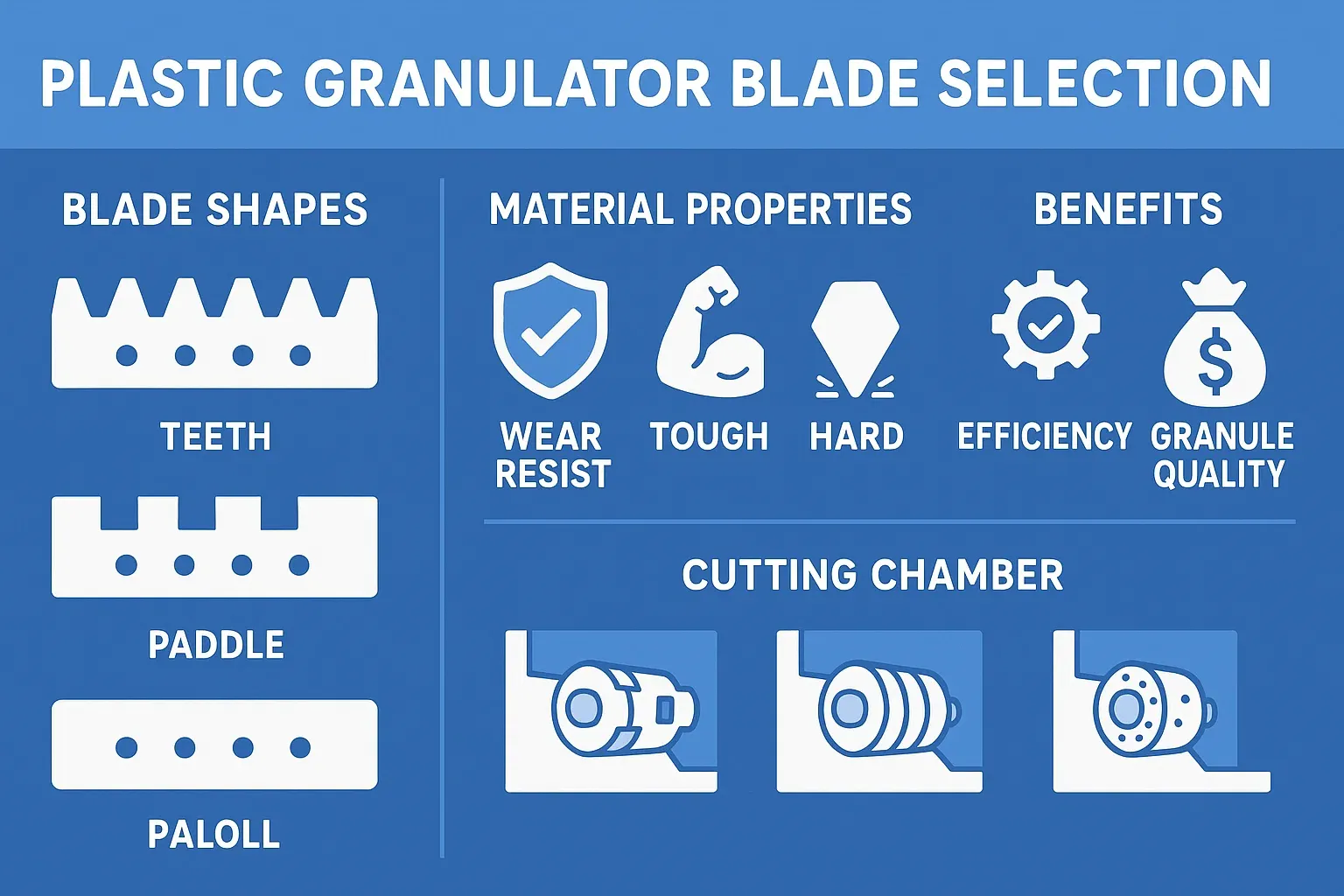
Selecting the right plastic granulator blades determines your facility’s throughput, energy consumption, and long-term maintenance costs. For operators processing everything from virgin polymers to contaminated post-consumer waste, knowing how to select plastic granulator blades prevents catastrophic edge chipping and excessive downtime. In our experience testing various setups across recycling plants, matching the blade’s material science to your specific feedstock increases efficiency and drops the Total Cost of Ownership (TCO). This guide breaks down exact material profiles, design configurations, and the critical hardness versus toughness trade-off to help you configure a superior granulation process.
The Core Trade-Off: Plastic Granulator Blade Hardness vs. Toughness
The hardness versus toughness trade-off is the fundamental principle that defines blade durability against impact resistance. Hardness measures a blade’s ability to resist wear and stay sharp, while toughness determines its ability to absorb shock without fracturing.
When processing clean, abrasive materials like glass-filled nylon, prioritize high hardness to maintain edge retention. However, if your feedstock contains unexpected metal contaminants, selecting the hardest blade will cause catastrophic chipping. For post-consumer waste streams, balancing moderate hardness with high toughness prevents fracture and extends the blade’s operational life.
Analyzing the Best Granulator Blade Materials
최적의 합금 선택은 운영 시간에 직접적인 영향을 미칩니다. 산업 응용 프로그램에 따라 추천하는 특정 재료 프로파일을 소개합니다.
SKD11 (D2 Tool Steel)
SKD11은 일반적인 플라스틱 granulation의 산업 표준으로 사용되는 고탄소, 고크롬 도구 강으로, 58–62 HRC (Rockwell Hardness)로 평가됩니다. 이 재료는 PE, PP, ABS와 같은 표준 폴리머 처리에 대한 우수한 내식성을 제공합니다. 깨끗한 원료 환경에서 가장 경제적인 솔루션으로 남아 있습니다.
High-Speed Steel (M2)
고속 강(HSS)은 고온에서도 내 hardness를 유지하는 업그레이드 합금으로, 지속적인 granulation 중에 발생하는 마찰로 인해 발생하는 열을 방지합니다. 이 재료는 공정 시간이 매우 비싼 엔지니어링 플라스틱을 처리하는 고속 생산선에 추천됩니다.
텅스텐 카바이드
탄화웅은 매우 경사진 폴리머용으로 설계된 초고 복합재료입니다. 우리의 마모시험에 따르면, 탄화물 도구는 표준 SKD11 강보다 5에서 8배 더 오래 사용됩니다. 초기 비용이 높지만, 광물 채운 플라스틱이나 유리섬유를 처리하는 작업의 교체 빈도를 크게 줄입니다.
| 블레이드 소재 | 경도 | 강인함 | 상대적 비용 | 가장 적합한 |
|---|---|---|---|---|
| SKD11 / D2 tool steel | HRC 56–60 | 좋은 | 기준선 | General plastic regrind; the industry default |
| High-Speed Steel (M2) | HRC 62–65 | 보통의 | 더 높은 | Thin films and fibers needing a keen, long-holding edge |
| Tungsten Carbide (tipped) | HRA 88+ | Low (brittle) | 최고 | 유리 가득한 고가소성 합성물, 깨끗한 원료만 |
Choosing Granulator Blade Designs and Configurations
균열 공간의 물리적 지형은 재료 흐름과 에너지 소모를 결정합니다. 적절한 날 배치 선택은 두꺼운 또는 밀도가 높은 플라스틱에 대한 최적의 투출량을 보장합니다.
Staggered Blade Layouts
간격이 떨어진 날 배치는 단일 전체 너비의 충격 대신 여러 연속적인 절단점을 제공하는 단계적인 절단 날 배치입니다. 이 구성은 모터 부하를 줄이고 일관된 플라스틱 재귀를 생산하여 두꺼운 벽면 재료에 매우 적합합니다.
Paddle and Teeth Blades
치수 날은 큰 물체를 가벼운 갈기로 갈아 부수기 위한 날카로운 날이 달린 칼로, 큰 플라스틱 덩어리를 자르는 작업을 수행합니다. 반대로, 팔레트 날은 날카로운 잘라내는 작업을 수행합니다. 두 가지 설계 모두 재료 흡수를 개선하여, 밀도가 높은 플라스틱이 막히지 않고 부드럽게 줄어듭니다.
Essential Alignment and Maintenance Rules
적절한 유지보수는 고급 날이 예정된 방식으로 작동하는 것을 보장합니다. 물리적 간격을 확인함으로써 품질 저하를 방지합니다.
Setting the Proper Blade Gap
로터-베드 날 간격은 움직이는 날과 고정된 날 간의 간격입니다. 장비 제조업체에 따르면, 이 간격을 0.1mm에서 0.2mm 사이로 설정하면 에너지 소비를 최소화하고 과도한 먼지 미세 입자 생성을 방지합니다. 불일치한 간격은 모터 마찰을 증가시키고 출력 품질을 저하시킵니다.
Sharpening Schedules and Upgrades
빛났은 날은 플라스틱을 자르지 않고 녹이는 과도한 열을 생성합니다. 정확한 갈라내는 일정을 설정함으로써 일관된 생산량을 유지합니다. 귀하의 운영이 매우 내구성 있는 대체 부품이 필요하다면, 높은 성능 재활용 기계 날짜 carbide와 고성능 합금 솔루션을 제공하는 고성능 대체 부품을 조달하세요.
귀하의 운영을 위한 최종 추천
플라스틱 granulator 날짜 선택 시, 특정 원료를 검토하고, 단단도와 내구도의 적절한 균형을 파악하고, 긴밀한 물리적공차를 유지하는 것이 중요합니다. 깨끗한 폐기물에 대해서는 SKD11를 우선시하고, 가소선에 대해서는 탄화물리움 또는 고속강으로 전환하세요. 날짜 재료를 플라스틱 흐름에 맞추면, 생산성을 극대화하고 에너지 피크를 감소시키며 장기적으로 장비 운영 비용을 영구적으로 낮출 수 있습니다.
