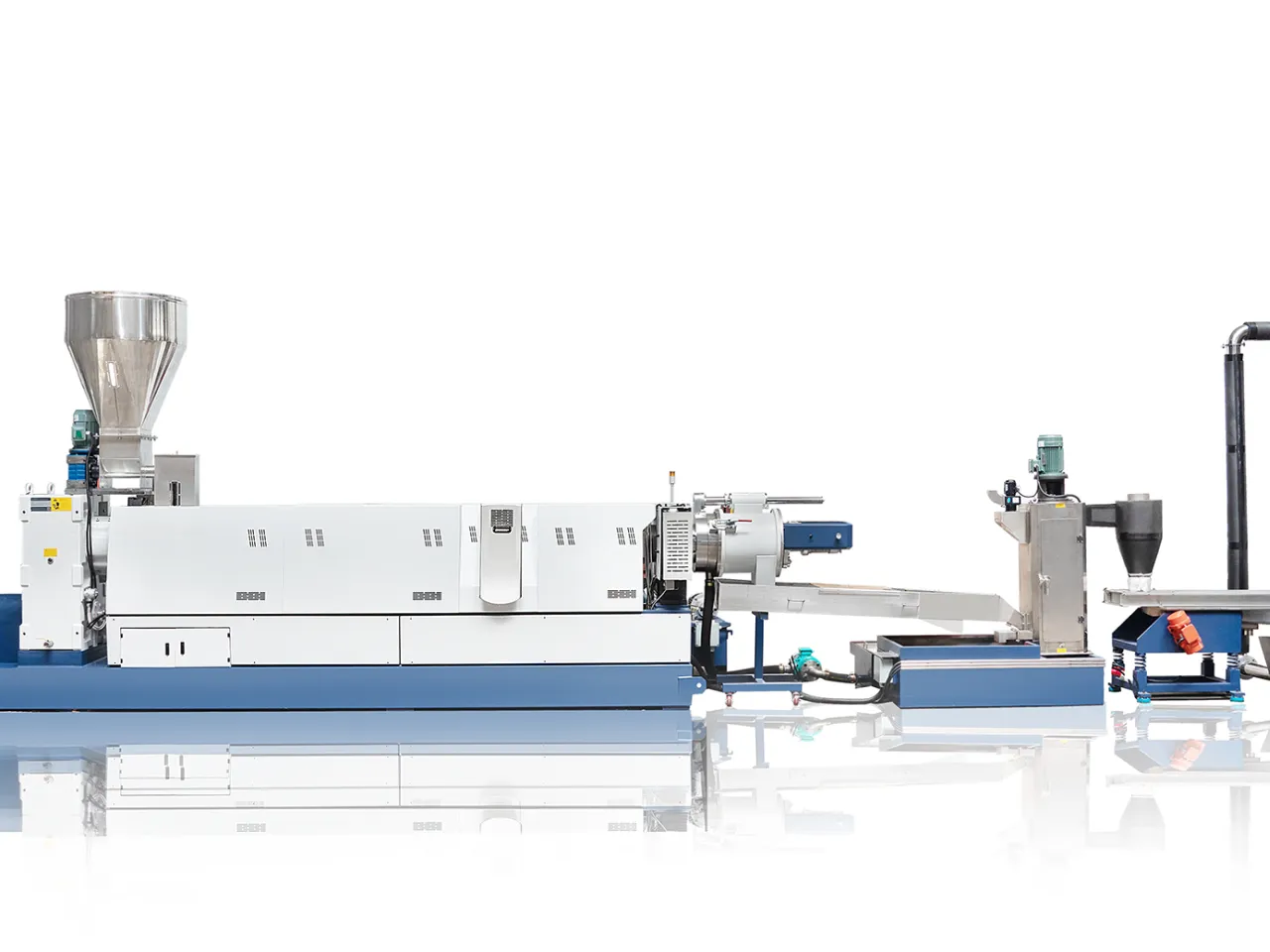
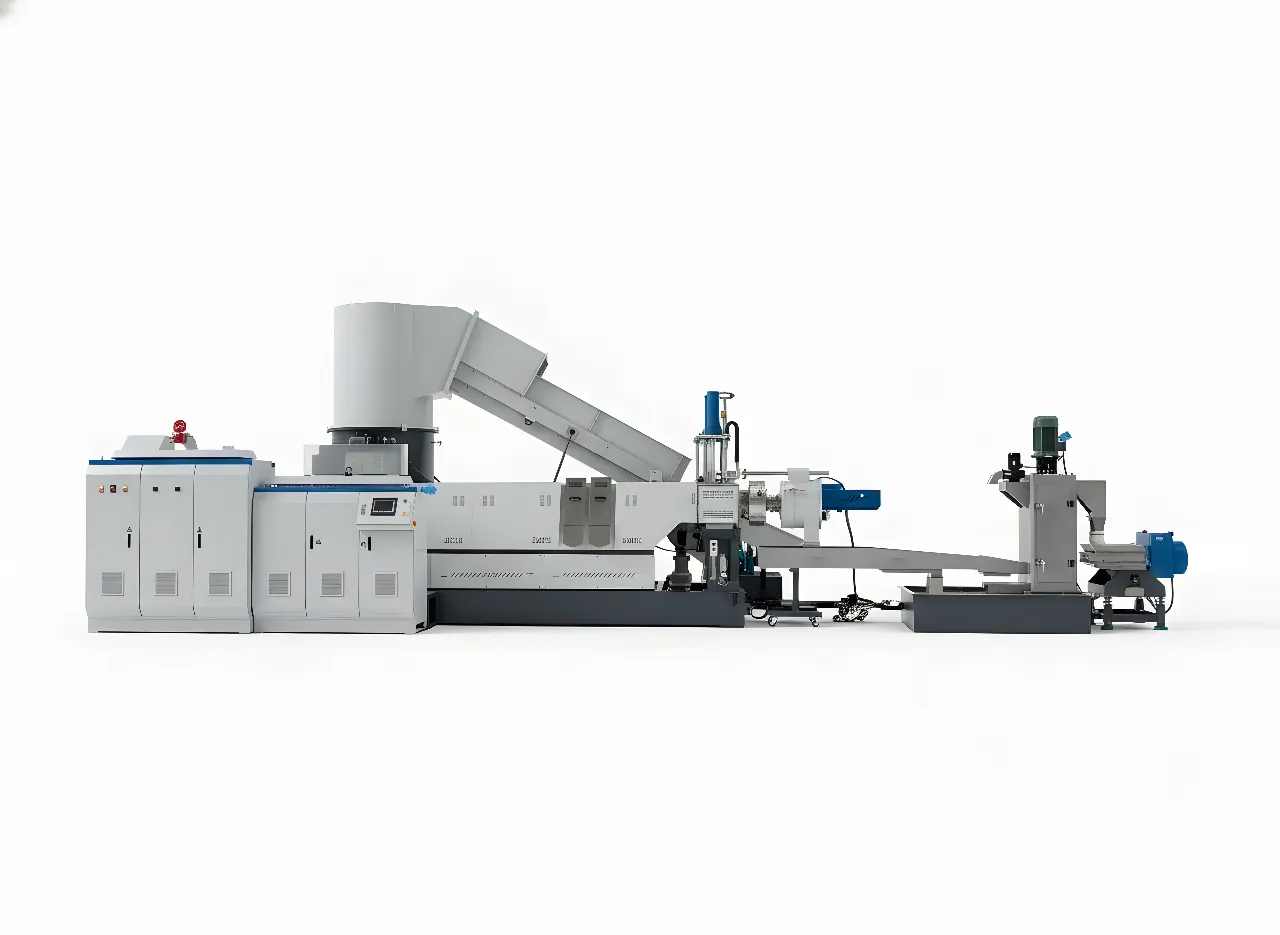
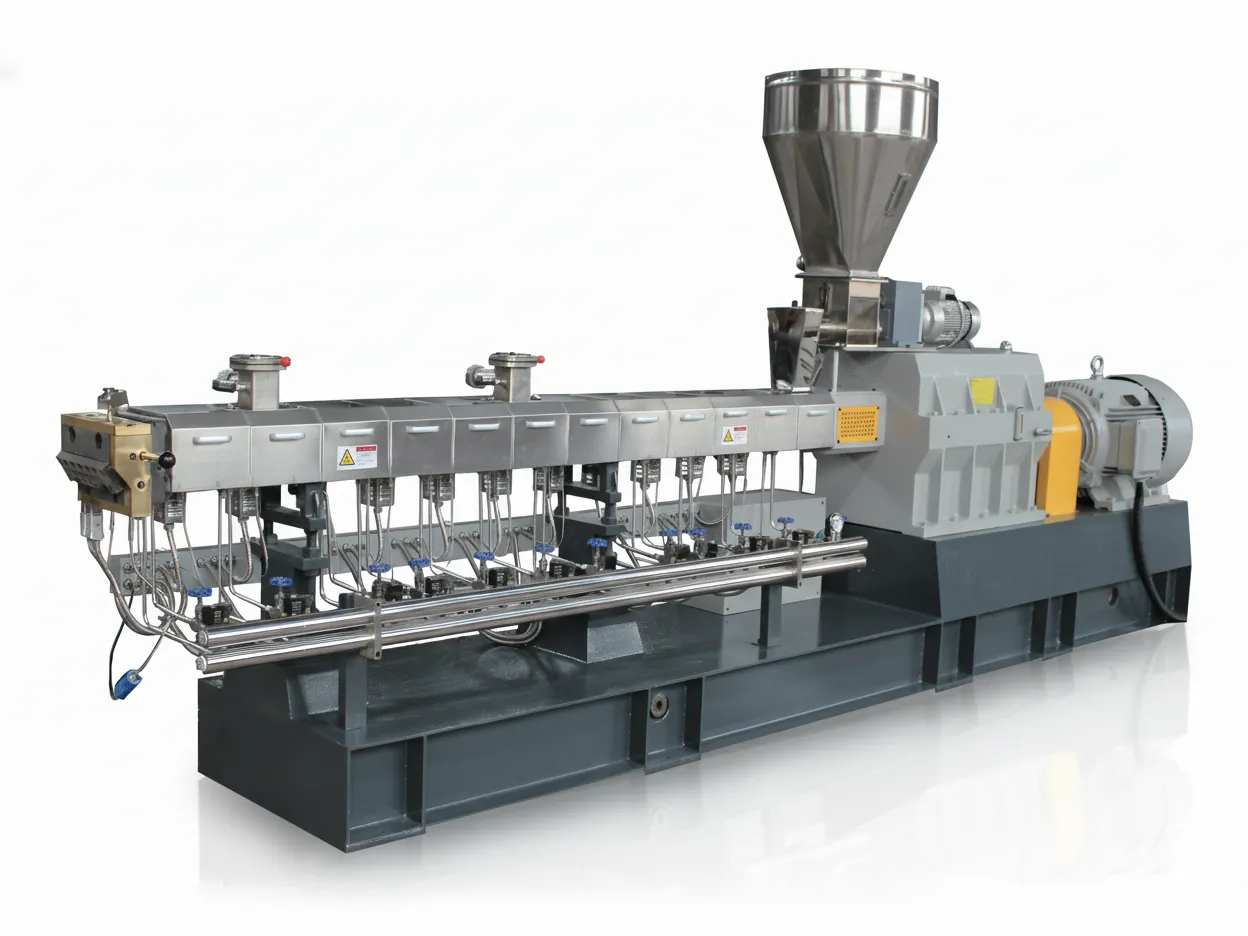
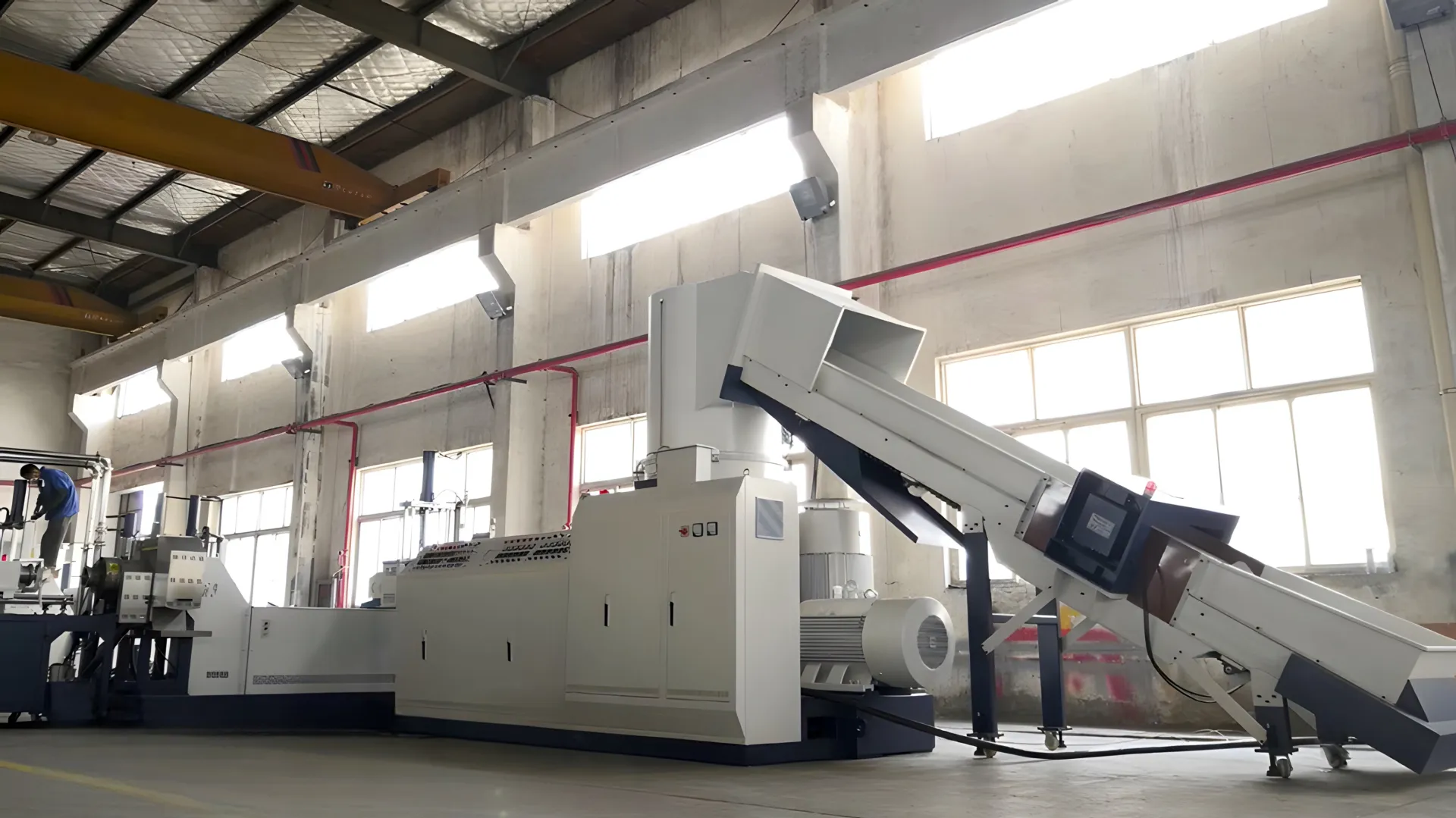
Plastic Pelletizers & Granulating Lines
for Every Recycled Material
From PE/PP film and rigid flakes to PET, EPS foam, and meltblown nonwovens — our pelletizing lines convert your washed, sorted waste into dense, uniform, high-value pellets ready for re-manufacturing.
One Platform. Every Recyclable Plastic.
Purpose-built lines for PE, PP, PET, EPS, Meltblown & more
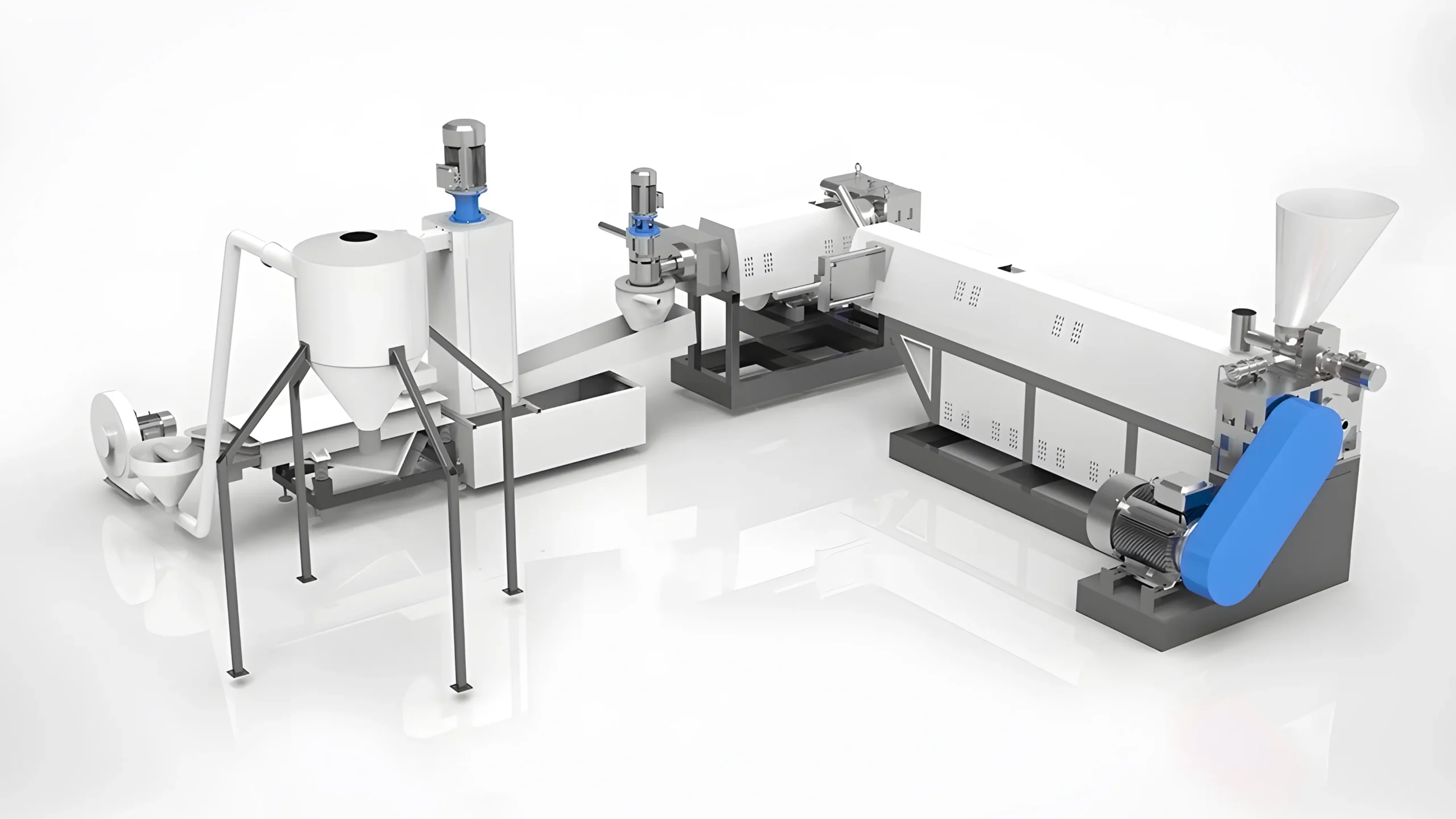
Not all plastics pelletize the same way. Low-density PE/PP film needs a cutter-compactor to compact before extrusion. PET flakes require precise drying and single-screw processing to prevent IV loss. EPS foam must be densified before it can be extruded. Meltblown nonwovens demand controlled temperature to preserve melt flow index. That is why we engineer a dedicated line for each material type — not a one-size-fits-all solution. If you need a complete system from shredding and washing through to pelletizing, see our full recycling line solutions.
From Low-Value Waste to Premium-Grade Pellets
Produce High-Quality Pellets
Advanced triple-degassing and filtration systems remove volatiles, inks, and moisture — producing pure, consistent, high-value pellets across all material types.
30–50% Higher Resale Value
Uniform pellets command a significant market premium over washed flakes or film, and reduce transport costs through higher bulk density.
CE-Certified, Turnkey Lines
Every line ships CE-certified and ISO 9001-compliant, complete with installation, commissioning, and operator training worldwide.
Overcome the Challenges of Plastic Recycling
Common Recycling Hurdles
- Low market value and high transport costs for bulky, washed plastic flakes and films.
- Inconsistent material quality and contamination (ink, moisture) lead to rejected batches.
- Difficulty processing low-density or heavily printed materials in standard extruders.
The Integrated Pelletizer Solution
- Create dense, valuable pellets that are in high demand and cheaper to transport and handle.
- Advanced degassing and filtering ensures a pure, consistent final product ready for manufacturing.
- An integrated cutter-compactor pre-processes fluffy and printed film for stable output.
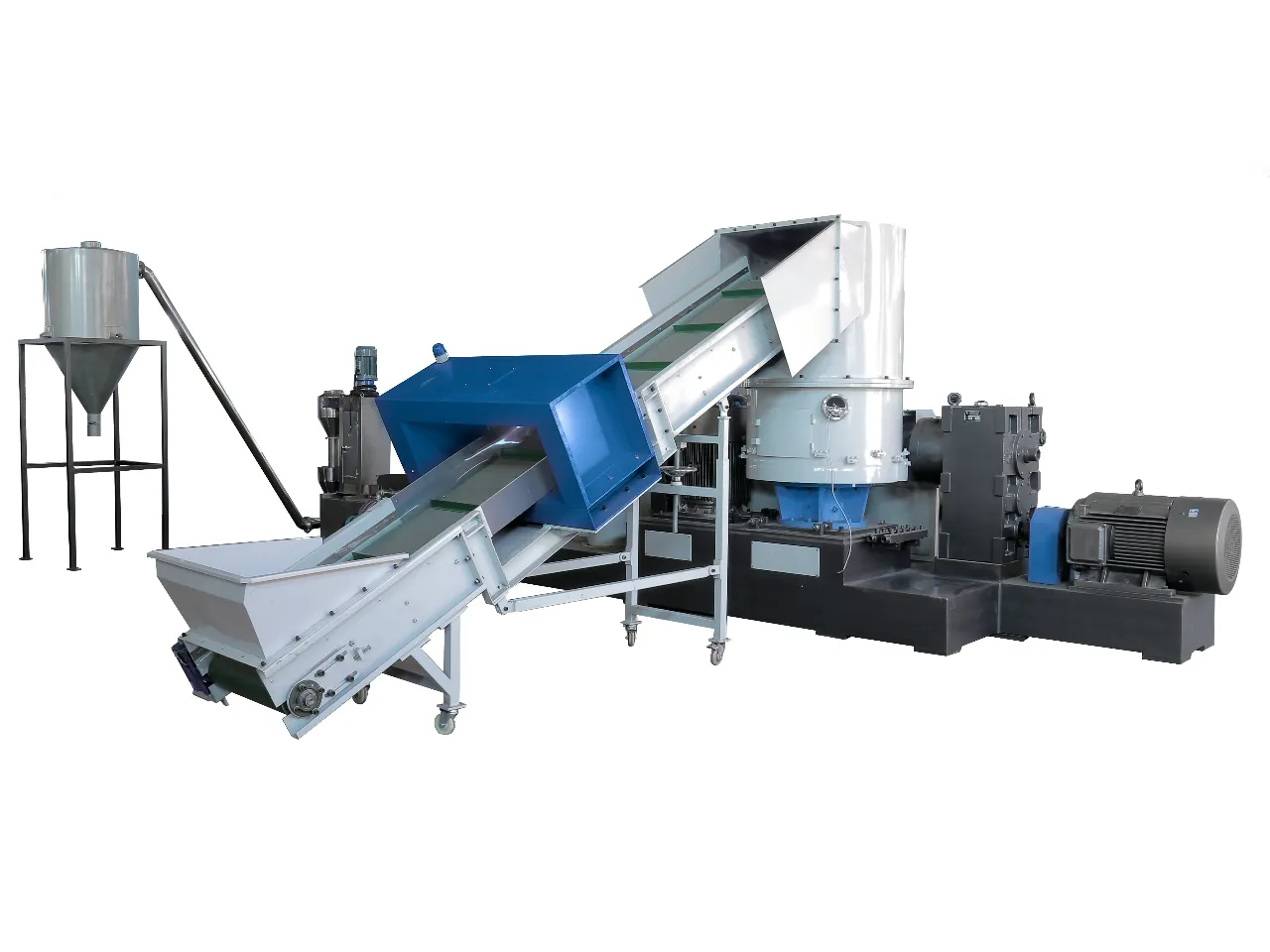
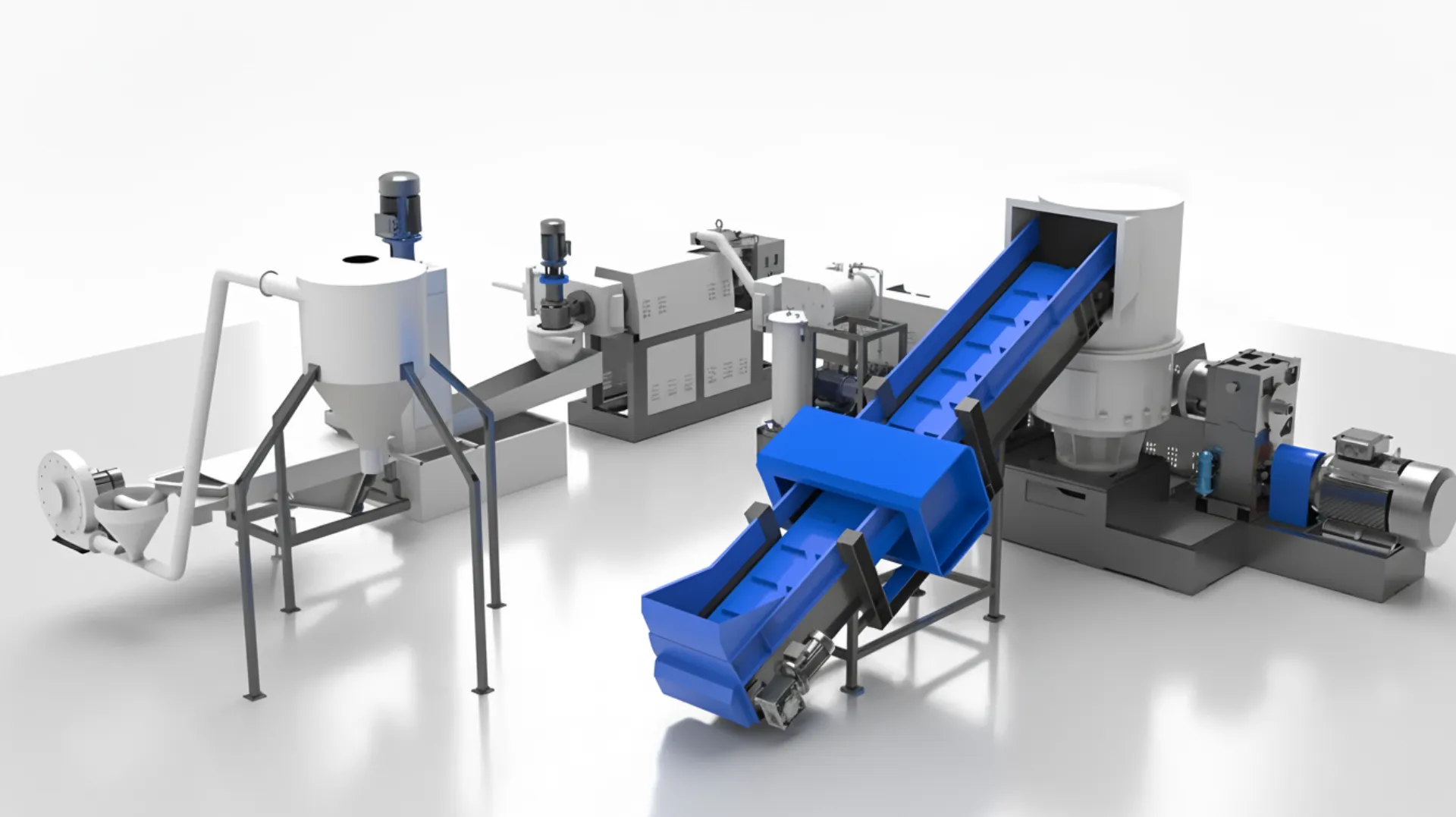
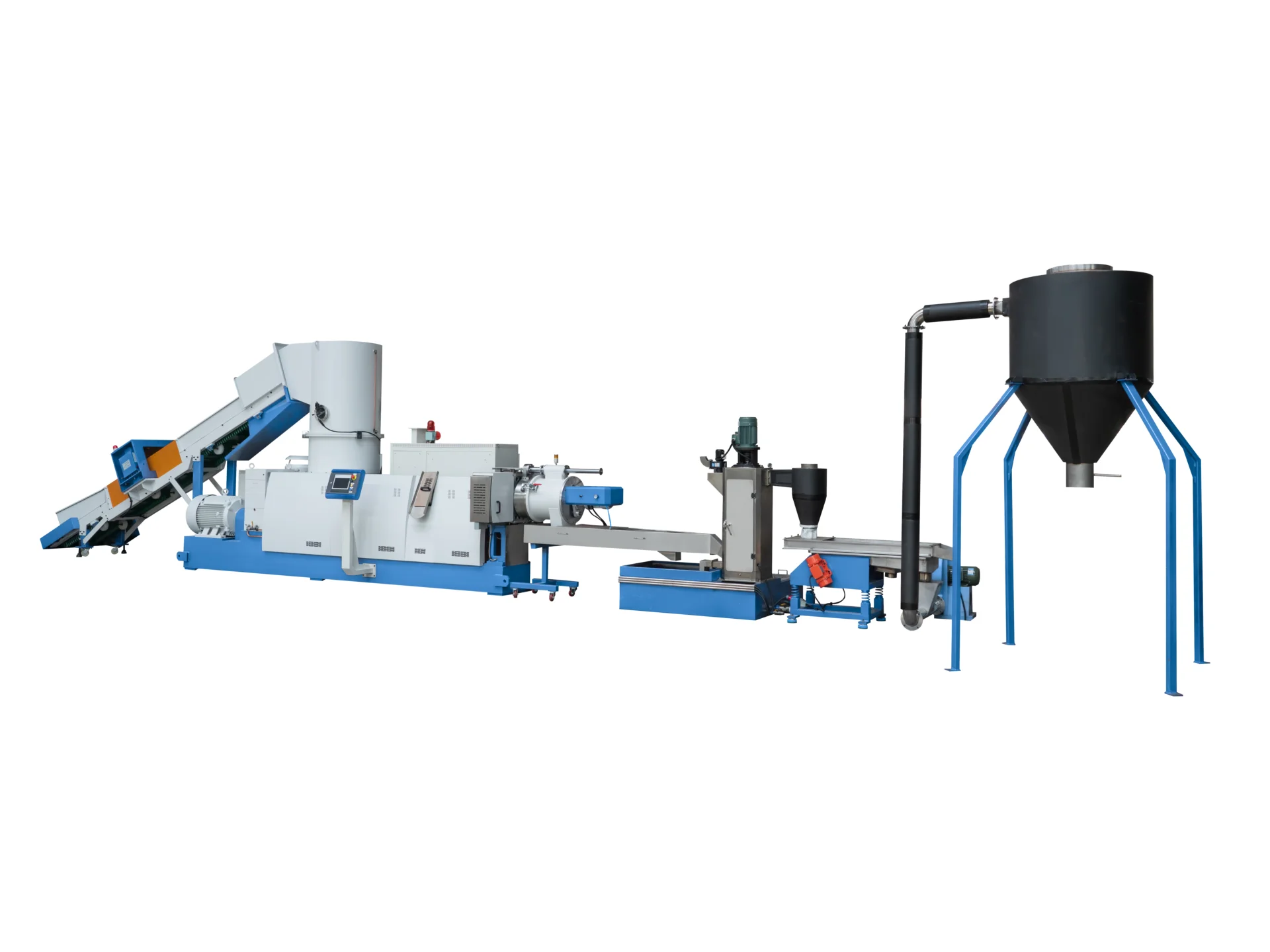
How a Plastic Pelletizing Line Works
Feeding & Compacting
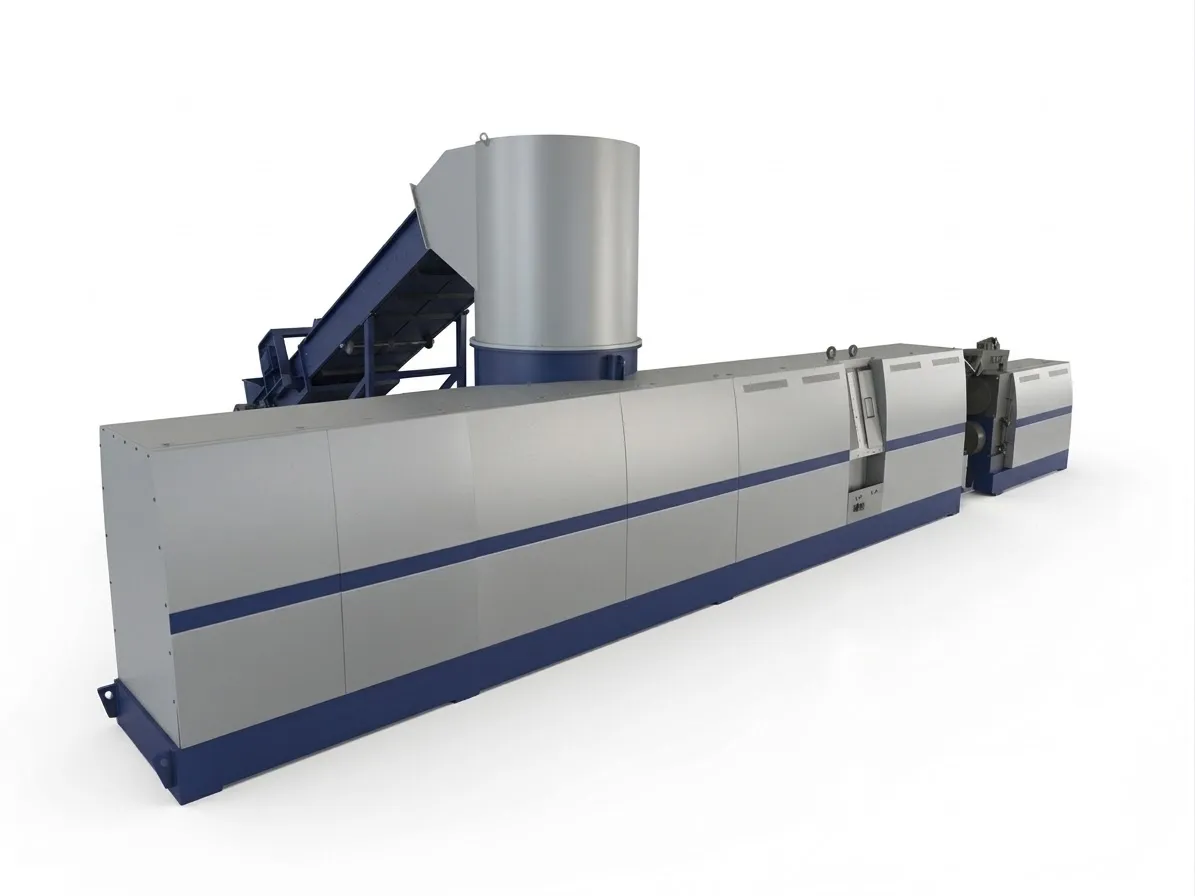
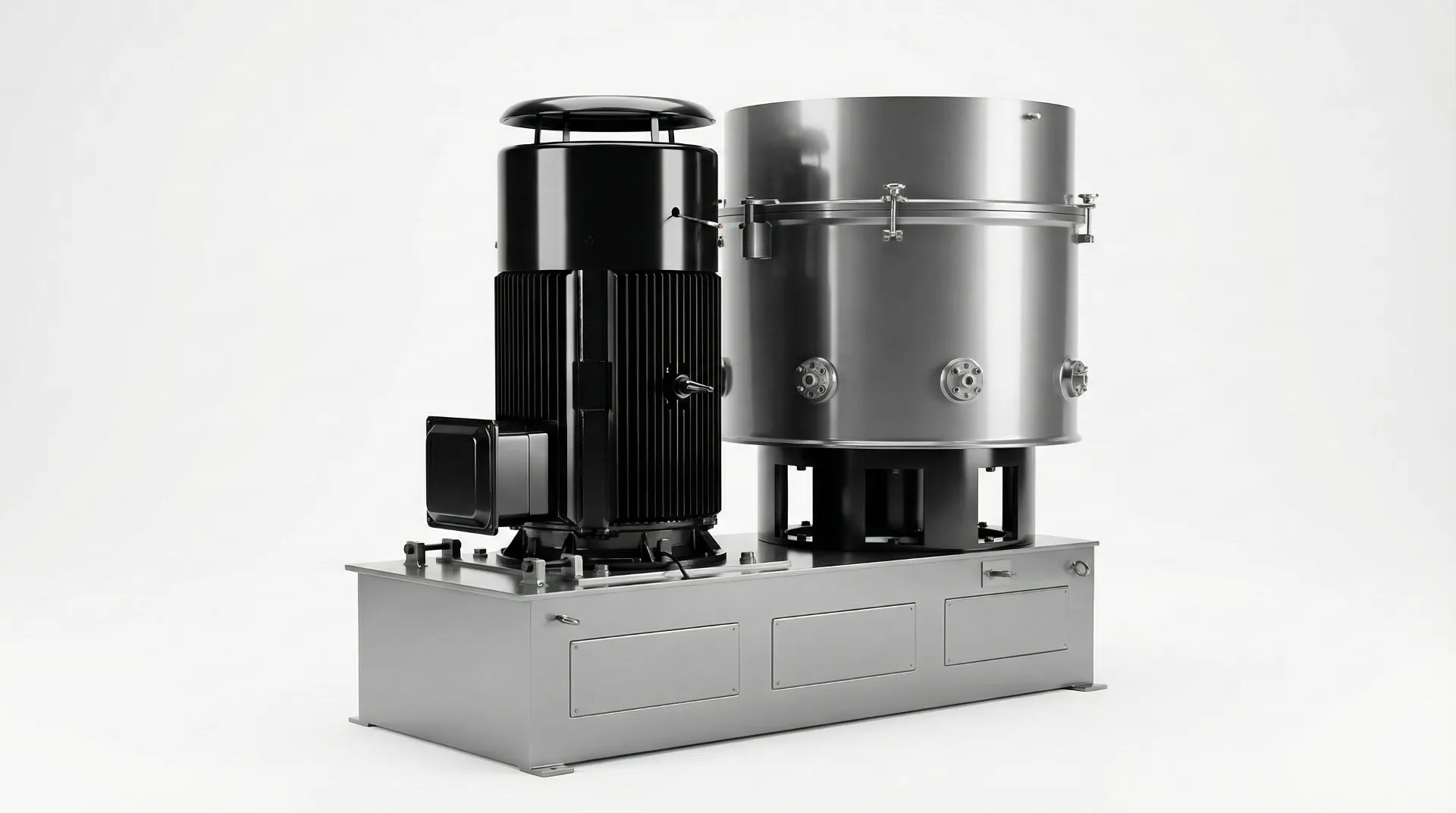
Plastic scrap is fed into the cutter-compactor, which cuts, mixes, and densifies the material for extrusion.
Extrusion & Degassing
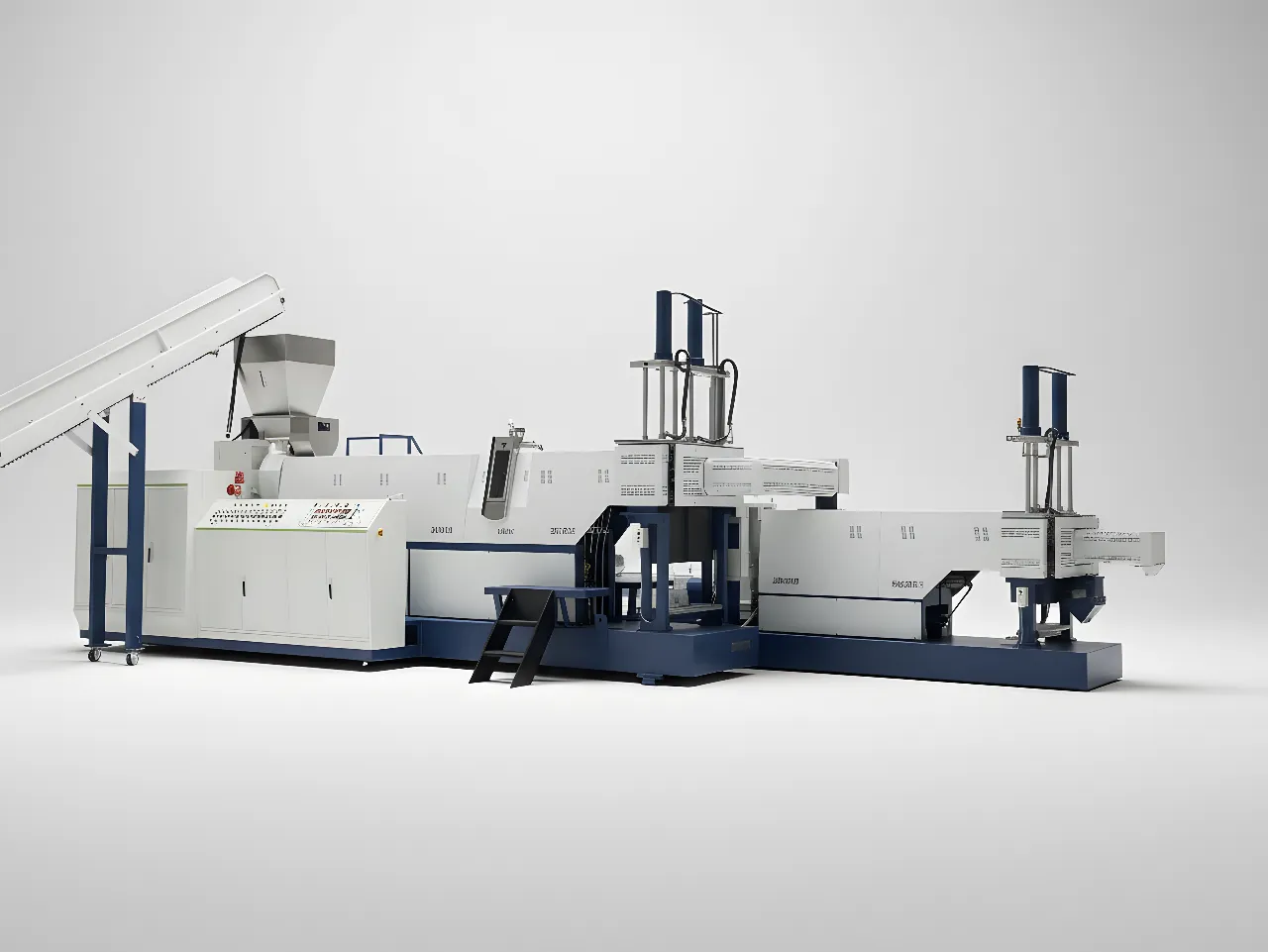
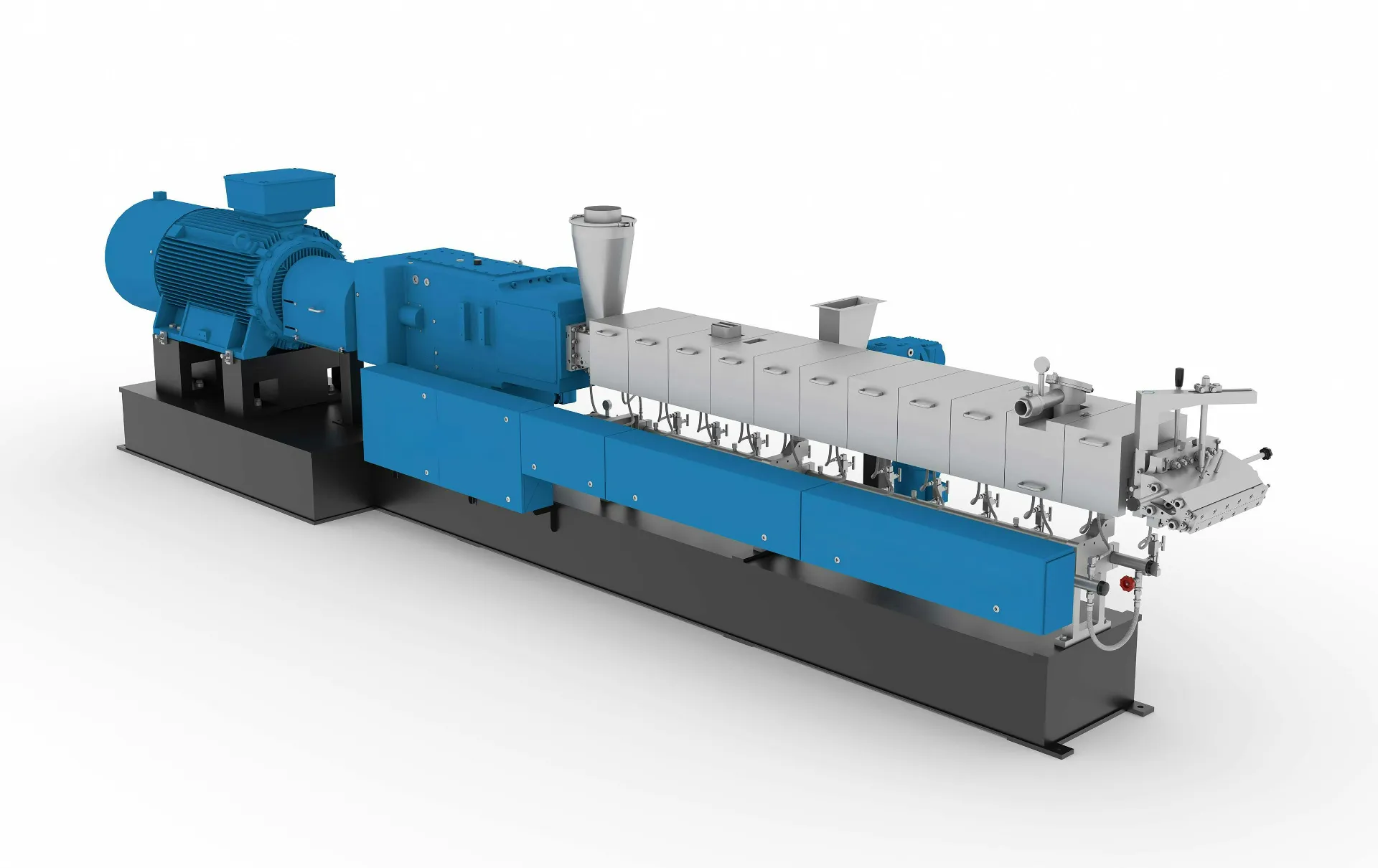
Material is melted in the extruder, while triple vacuum zones remove volatiles, ink, and moisture.
Filtration & Pelletizing
Molten plastic is filtered and then cut into uniform pellets by a water-ring pelletizing system.
Drying & Storage
Pellets are rapidly dewatered and dried before being pneumatically conveyed to a product silo.
Feeding & Compacting
Plastic scrap is fed into the cutter-compactor, which cuts, mixes, and densifies the material for extrusion.
Extrusion & Degassing
Material is melted in the extruder, while triple vacuum zones remove volatiles, ink, and moisture.
Filtration & Pelletizing
Molten plastic is filtered and then cut into uniform pellets by a water-ring pelletizing system.
Drying & Storage
Pellets are rapidly dewatered and dried before being pneumatically conveyed to a product silo.
Selling Flakes vs. Selling Pellets
Washed Flakes / Film
Typically 30–50% lower per tonne than equivalent-grade pellets. Buyers apply a heavy discount for handling and processing risk.
- Low bulk density (~50–150 kg/m³)
- High freight cost per tonne
- Limited to granulators only
Recycled Pellets / Granules
Commands a 30–50% premium per tonne. Consistent quality and low contamination make them directly re-manufacturable.
- High bulk density (~500–600 kg/m³)
- ~70% lower freight cost vs. film
- Global shipping-ready
- Blow molding plants
- Injection molders
- Film extruders worldwide
See the Complete Line in Operation
Unlock New Manufacturing Possibilities
Film Blowing
Produce high-quality recycled films for use in packaging, agriculture, and construction.
Pipe Extrusion
Create durable, non-pressure pipes, conduits, and profiles from your recycled PE and PP pellets.
Injection Molding
Manufacture a wide range of products like pallets, crates, furniture, and automotive parts.
Fiber & Nonwoven Production
Re-pelletized meltblown and PET granules feed directly into spunbond and nonwoven fiber extrusion lines.
Technical Specifications
| Processing Capacity | 300 – 2,000 kg/h (custom configurations available) |
|---|---|
| Applicable Materials | HDPE, LDPE, LLDPE, PP, BOPP, PET flakes, EPS foam, Meltblown nonwoven |
| Screw L/D Ratio | 30:1 – 36:1 (optimized per material type) |
| Degassing Zones | Triple vacuum degassing (standard); removes volatiles, inks & moisture |
| Filter System | Continuous hydraulic screen changer; mesh 40–400 μm |
| Pelletizing Method | Water-ring (standard); strand or underwater available on request |
| Final Pellet Size | 3 – 5 mm diameter (adjustable via blade speed) |
| Moisture Tolerance (Input) | Up to 5 – 8% (cutter-compactor pre-dries during compaction) |
| Certification | CE certified; manufactured under ISO 9001 quality system |
| Power Supply | Customized to regional standards (e.g., 480V/60Hz, 415V/50Hz, 380V/50Hz) |
Frequently Asked Questions
What is the maximum moisture content for input materials?
Can this line handle heavily printed films?
How is the pellet size controlled?
Is this a complete, turnkey solution?
Can you design a complete line from shredding and washing to pelletizing?
What is the difference between a pelletizer and a granulator?
How long does installation and commissioning take?
What after-sales support and spare parts service do you provide?
What Our Clients Are Saying
Upgrading from selling flakes to pellets has transformed our business. This line produces exceptionally high-quality pellets that fetch a premium price. The investment paid off much faster than we anticipated.
Recycling Plant Owner — United States
The ability to process our heavily printed post-industrial film waste was a game-changer. The degassing system works flawlessly, and the pellet quality is consistently excellent. Our rejection rate dropped from ~12% to under 2%.
Production Manager — Germany
We were impressed by how automated the entire line is. The cutter-compactor handles fluffy film without any issues, and the system runs smoothly with minimal operator oversight. ROI was achieved within 14 months.
Operations Director — Australia
Upgrade Your Recycling Operation
Contact our specialists today to configure the right pelletizing line for your material. If you need upstream washing, separation, or drying, see our complete recycling line solutions and we’ll design the full process around your feedstock.
- Line sizing based on your material type and target throughput
- Support for complete systems from washing to pelletizing
- Fast quotation with layout, utilities, and configuration guidance