

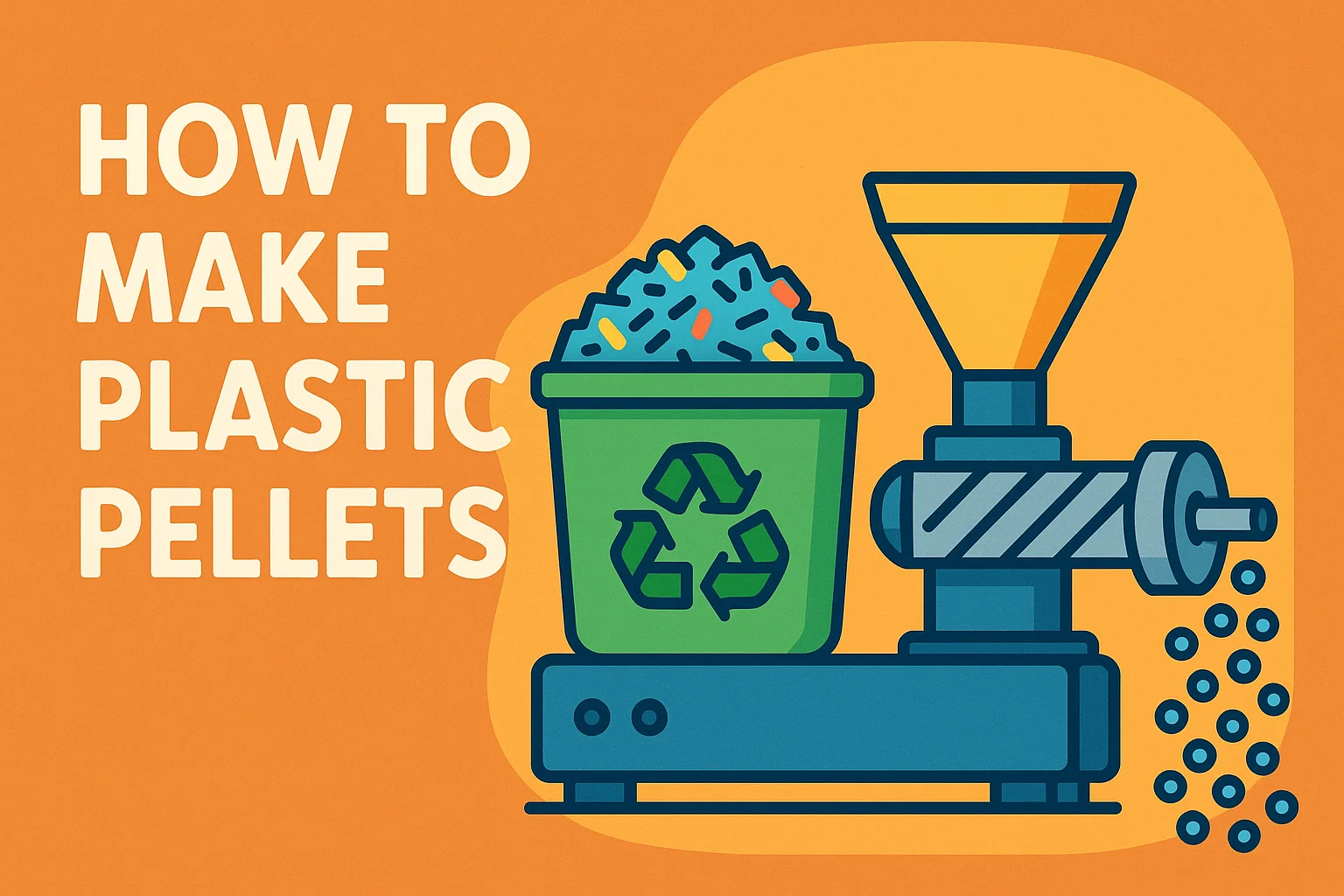
Como fazer pellets de plástico: um guia passo a passo para PET, HDPE e LDPE
Pelotas de plástico (grânulos) são o insumo padrão para moldagem por injeção e extrusão, produzidas em máquinas de fabricação de grânulos plásticos. Se você
recycle PET bottles, HDPE containers, or LDPE films,
you can turn waste into consistent, sellable material—but only when you control contamination, moisture,
melt quality, and cutting stability.
This guide explains the full pelletizing workflow with buyer-ready checkpoints, and shows what to look
for in a professional peletização
linha.
Etapas principais: triagem → trituração → lavagem → secagem → extrusão → granulação
Riscos críticos: polímeros mistos, umidade, filtração deficiente, corte instável.
Precisa de uma linha de granulação que seja adequada ao seu material e à sua produção desejada?
See our pelletizing equipment overview and typical configurations (rigid regrind, film, printed
waste, degassing + filtration).
Granuladoras de plástico da Energycle |
2026 Machine
Price List
O processo de granulação em 7 etapas (o que realmente controla a qualidade dos grânulos)
If you want stable, saleable pellets, treat each step as a quality gate. Problems usually start early
(sorting/moisture) and only show up later (black specs, bubbles, odor, weak pellets).
1Coleta e triagem (impedir a contaminação antes que ela comece)
You protect pellet quality by separating polymers and colors early. Mixed PET/PE/PP streams
create unstable melting,
inconsistent properties, and “off-spec” pellets that buyers reject.
- Separar por polímero: PET vs. HDPE vs. LDPE film must run on different
settings (and often different feeding setups). - Remover metais: Ímãs e detectores de metal evitam danos aos parafusos/cilindros.
- Manuseie as garrafas PET corretamente: remove caps/labels; use float/sink separation
(PET sinks; most caps/labels float).
2Trituração/Granulação (para uniformizar a ração)
You want uniform flake size so washing works better and the extruder feeds steadily. Oversized
pieces melt unevenly and destabilize pressure.
- Alvo típico de flocos: Aproximadamente 5 a 12 mm, dependendo do polímero e do sistema.
- Os filmes requerem cuidados especiais: fluffy LDPE/PP film can bridge and starve the
extruder unless you densify/compact it. - Ponto de verificação do comprador: ask whether the line includes film
compaction/densification for stable feeding.
3Lavagem (a maneira mais barata de melhorar o valor dos pellets)
Clean flakes melt more consistently and filter more easily. Residues (oil, glue, sand, paper)
create odors, smoke, black specs, and die buildup.
- Módulos comuns: friction washer, float/sink tank, hot wash (as needed),
rinsing. - Nota sobre PET: sugars/adhesives and label glue matter; poor cleaning shows up as
yellowing and specks. - Nota sobre o filme de LDPE: agricultural film often needs more aggressive washing due
to soil contamination.
4Secagem (controle de umidade = extrusão estável)
You remove water before melting. Moisture turns into steam, creates bubbles, and can degrade
certain polymers—especially PET.
- Desidratação mecânica: secador centrífugo Remove a água da superfície rapidamente.
- Secagem térmica: hot-air or desiccant drying improves stability; PET
typically needs the strictest moisture control. - Ponto de verificação do comprador: request target moisture ranges and how the line verifies
them (monitoring, sensors, process control).
5Extrusão (criar uma fusão limpa e homogênea)
The extruder melts, mixes, pressurizes, and stabilizes the melt for pelletizing. A stable melt
reduces die pressure swings and pellet size drift.
- Estabilidade térmica: correct heating zones + screw design prevent burning
and under-melting. - Degaseificação (ventilação a vácuo): removes volatiles/moisture/odor sources—especially
helpful for printed or slightly wet feed. - Filtração: pacotes de tela + trocadores de tela parar contaminantes não derretidos
reaching pellets.
6Granulação (o método de corte determina a uniformidade dos grânulos)
You turn molten plastic into uniform pellets. Your choice of strand vs. die-face affects
throughput stability, pellet shape, and ease of operation.
- Linha de pesquisa: Derreter → fios → banho-maria → cortador. Simples e amplamente utilizado.
- Face do molde (anel de água): cut at the die; great for continuous operation and
common in PE/PP recycling. - Ponto de verificação do comprador: ask how the system controls pellet length when throughput
fluctuates (cutter speed control, pressure feedback).
7Resfriamento, Secagem e Controle de Qualidade (entregar um produto que os compradores possam utilizar)
You cool pellets, remove surface moisture, and screen out fines/oversize. You then verify key
metrics that buyers care about.
- Secagem de pellets: secador centrífugo or air drying prevents clumping and
improves packaging. - Triagem: Remove partículas finas/excessivas para uma alimentação consistente a jusante.
- Exemplos de perguntas e respostas: appearance (specks), moisture, melt flow index (MFI), bulk
density (as required by buyers).
Observações específicas sobre o material (PET vs. PEAD vs. PEBD)
| Material | O que geralmente dá errado | O que você deve controlar | O que perguntar ao seu fornecedor de equipamentos |
|---|---|---|---|
| BICHO DE ESTIMAÇÃO | Degradação causada pela umidade, amarelamento, grânulos quebradiços, IV/MFI inconsistente | Secagem rigorosa, perfil de temperatura estável, filtração limpa. | Objetivo e método de secagem, configuração de desgaseificação, estratégia de filtração, projeto da rosca |
| PEAD | Contaminação por cor, odor proveniente de resíduos, pontos pretos devido à má filtragem. | Qualidade de lavagem, fusão estável, troca de tela confiável | Características do tipo de trocador de tela, robustez do motor/caixa de engrenagens e estabilidade da pressão de fusão. |
| Filme de LDPE | Instabilidade na alimentação (formação de pontes), oscilação da massa fundida, controle inadequado do tamanho dos grânulos. | Vantagens de compactação/densificação, alimentação consistente e granulação na matriz | A linha inclui compactador? Como ele evita a formação de pontes na película? Qual o tipo de granulador recomendado? |
will “chase problems” in the extruder. A good system helps, but it cannot magically fix uncontrolled
input.
Métodos de granulação: filamento versus face da matriz (anel de água)
Both methods can produce excellent pellets. The right choice depends on your polymer, cleanliness,
throughput, and how stable your melt flow is.
- Fluxo de trabalho simples: Os fios são resfriados em banho-maria antes do corte.
- Fácil manutenção: Amplamente utilizado, familiar para a maioria dos operadores.
- Melhor opção: Fluxo de fusão estável e matéria-prima mais limpa.
Atenção: quebra de fios, fluxo irregular de fios e tempo de inatividade se os fios quebrarem com frequência.
- Corte contínuo: cuts at the die face; often handles output variations
better. - Layout compacto: Resfriamento e transporte integrados.
- Melhor opção: Linhas de produção de PE/PP e filmes onde a operação estável e contínua é essencial.
Watch-outs: requires proper die-face management and consistent process control for best pellet
shape.
If you recycle mixed-quality film or want a smoother continuous operation, die-face pelletizing often
reduces sensitivity to strand handling issues.
If your melt is stable and you want a straightforward configuration, strand pelletizing remains a
reliable choice.
Máquina de granulação de plástico: tipos, custos e como escolher
UM plástico
máquina de peletização converts clean plastic flakes or film into uniform pellets ready for
manufacturing. Your choice of pelletizer type affects pellet shape, throughput stability, labor needs,
and total investment. Here is a practical comparison based on real-world recycling operations.
Peletizador de anel de água vs. Peletizador de filamento: qual se adapta melhor à sua operação?
| Fator | Peletizador de fios | Peletizador de Anel de Água | Peletizador Subaquático |
|---|---|---|---|
| Como funciona | Extrusão do material fundido em filamentos → resfriamento em banho-maria → corte rotativo | Corte na face da matriz → o anel de água resfria e transporta os grânulos. | Corte subaquático na face da matriz → os grânulos solidificam instantaneamente |
| Formato de grânulo | Cilíndrico | Esférico / quase esférico | Esférico |
| Melhor para | Material rígido reciclado (HDPE, PP, ABS) com fusão estável. | Filme PE/PP, plásticos flexíveis, linhas contínuas | Mistura de alto rendimento, plásticos de engenharia |
| Capacidade típica | 100–2.000 kg/h | 100–1.500 kg/h | 500–5.000+ kg/h |
| Faixa de preço (USD) | $10.000–$80.000 | $20.000–$120.000 | $50.000–$300.000+ |
| Necessidades de mão de obra | Enfiamento manual dos fios na inicialização; monitorar para detectar quebras. | Em grande parte automatizado; intervenção mínima do operador. | Totalmente automatizado; requer configuração especializada. |
| Manutenção | Troca simples de lâminas; baixa manutenção cost |
Gerenciamento da face do molde; manutenção moderada | Manutenção mais exigente; peças especializadas |
peletizador offers the lowest investment. For PE/PP film recycling where continuous operation
matters, a water ring system reduces strand-handling headaches. See our full peletização
methods comparison Para obter detalhes técnicos mais aprofundados.
Sistema de compactação e granulação Cutter Compactor: a configuração preferida dos recicladores de filmes.
UM cortador compactador pelletizing system combines four functions in one integrated unit: cutting,
compacting, plasticizing, and pelletizing. The high-speed rotating blades inside the compactor chamber
shred and densify film scraps through frictional heat—bringing the material just below its melting
point—then force-feed it directly into the extruder screw. This eliminates the bridging and
feeding instability that plagues conventional film recycling setups.
- Filme extensível de LDPE/LLDPE e filme agrícola
- Sacos de polipropileno trançado e ráfia
- Filme impresso ou laminado com problemas de odor/voláteis
- Filme misto pós-consumo com umidade variável
- Sistema de estágio único: $45.000–$150.000
- Duplo estágio (com desgaseificação adicional): $80.000–$250.000
- Faixa de capacidade: 200–1.500 kg/h
- Comparar opções: PE/PP
film pelletizing machines
Linha de Granulação de Plástico: O que um Sistema Completo Inclui
A plastic pelletizing line is not a single machine—it is a coordinated system of modules that
convert raw plastic waste into sellable pellets. The exact configuration depends on your material,
contamination level, and output target. Here is what a typical line includes and what each stage costs.
| Estágio | Equipamento | Função | Custo típico (USD) |
|---|---|---|---|
| 1. Redução de tamanho | Destruidor / triturador | Reduzir o plástico a flocos de 5 a 12 mm. | $3.000–$25.000 |
| 2. Lavagem | Arruela de fricção, tanque de flutuação e afundamento |
Remova sujeira, etiquetas, cola e óleo. | $15.000–$200.000 |
| 3. Secagem | Secador centrífugo, secador térmico | Reduzir a umidade abaixo do limite de extrusão | $5.000–$30.000 |
| 4. Extrusão | parafuso único ou extrusora de dupla rosca |
Derreter, misturar, desgaseificar, filtrar | $10.000–$250.000 |
| 5. Granulação | Cortador de fios / anel de água / face da matriz | Corte o plástico derretido em grânulos uniformes. | $5.000–$80.000 |
| 6. Resfriamento e Garantia de Qualidade | Esteira de resfriamento, peneira vibratória, silo | Resfrie, peneire as partículas finas, armazene para embalagem. | $3.000–$15.000 |
costs $50,000–$150,000. Medium-capacity lines (500–1,500 kg/h) run $150,000–$350,000.
For detailed pricing by capacity tier and material type, see our 2026 plastic
recycling machine price list. Para análises de custos específicas de peletizadoras, leia what
drives pelletizer prices.
Pellets versus grânulos: qual a diferença?
The terms "pellets" and "granules" are often used interchangeably in plastic recycling, but they refer
to different products with distinct manufacturing processes and market values.
| Característica | Grânulos de plástico | Grânulos de plástico (reciclado) |
|---|---|---|
| Forma | Cilíndrico ou esférico uniforme (3–5 mm) | Fragmentos irregulares e angulares |
| Método de produção | Extrusão → filtração do material fundido → granulação (corte do filamento ou da matriz) | Triturar ou moer sem derreter |
| Consistência | Tamanho, densidade e fluidez uniformes | Tamanho variável e densidade aparente |
| Alimentação a jusante | Dosagem estável e previsível em injeção/extrusão | Pode formar pontes ou alimentar de forma irregular. |
| Preço de mercado | Mais caro — os compradores pagam um preço premium pela consistência. | Menor — limitado a compradores que conseguem lidar com a variabilidade. |
| Melhor caso de uso | Venda para fabricantes que precisam de material pronto para produção. | Reutilização interna ou mistura com resina virgem. |
flakes adds $50–$200/ton in processing cost but typically earns $100–$400/ton more than
loose regrind. The benefits
and limitations of recycled pellets Dependem muito da qualidade da matéria-prima e do mercado-alvo.
Guia de decisão: como escolher um sistema de pelotização (com foco no comprador)
If you want fewer surprises after purchase, decide from the material backward—not from the brochure
forward.
Use this checklist to align your line configuration with your feedstock and your pellet sales target.
UMDefina a sua realidade de entrada
- Tipo(s) de polímero: PET / PEAD / PEBD / misto?
- Forma: material rígido moído, flocos, filme, resíduos de impressão, pós-consumo?
- Contaminação: papel/etiquetas, areia, óleo, umidade, risco de metais?
BDefina seus requisitos de saída.
- Mercados-alvo: reutilização interna versus venda de pellets para compradores?
- Qualidade: tolerância a partículas, tolerância a odores, estabilidade da cor?
- Testes necessários: MFI, umidade, densidade aparente, etc.?
CCombine os módulos “essenciais”
- Filme: Compactador/densificador para evitar a formação de pontes e estabilizar a alimentação.
- Risco de impressão/odor: Desgaseificação (ventilação a vácuo) para remover substâncias voláteis.
- Alimentação suja: stronger filtration + practical screen change method to
maintain uptime.
DProteja o tempo de atividade e o custo total.
- Confirme os materiais da caixa de engrenagens, do parafuso/cilindro e wear
parts strategy. - Pergunte como o sistema lida com picos de pressão e objetos estranhos.
- Avalie a facilidade de uso para o operador: acesso, tempo de limpeza, lógica de controle.
pelletizing control.
If you process PET, prioritize drying discipline, temperature stability, and effective
degassing/filtration.
Por que os compradores escolhem Energycle (o que você ganha na operação real)
You don’t buy a pelletizer to “own a machine.” You buy it to run stable production, hit output targets,
and deliver pellets that customers accept.
Energycle focuses on practical engineering that protects your uptime and pellet quality.
- Configurações com materiais compatíveis: we recommend layouts based on your
feedstock (rigid vs. film vs. PET). - Foco na estabilidade da qualidade: process control + filtration/degassing options
reduce specks, bubbles, and odor risks. - Mentalidade de disponibilidade: robust core components and practical maintenance design to
reduce unplanned stops. - Comunicação técnica clara: you get a configuration that fits your
constraints, not generic promises.
- Comprar uma linha que não consegue alimentar o filme de forma confiável (provocando interrupções e falhas na alimentação).
- Funcionamento sem filtragem adequada (pontos pretos, matrizes entupidas, reclamações de compradores).
- Ignorar o controle de umidade (bolhas, corte instável, risco de degradação do PET).
- Gastar demais em recursos que não correspondem às suas reais necessidades de entrada e saída.
Próximo passo recomendado (rápido e prático)
Send your material type, input form (film/rigid/flake), contamination level, target output
(kg/h), and pellet application.
We’ll suggest a suitable configuration and share options from our pelletizing range.
Comece aqui: Energycle Plastic
peletizadoras
Perguntas frequentes sobre a fabricação de grânulos de plástico
Qual o tamanho de chumbo que devo usar?
Most recycled plastic pellets are produced around 3–5 mm. The exact size depends on your downstream
customer’s feeding system and product requirements.
The key is consistency: uniform pellets feed better and produce more stable manufacturing output.
Preciso tomar banho sempre?
If your feedstock contains dirt, labels, glue, oils, or sand, washing is one of the most
cost-effective ways to raise pellet value and reduce defects.
Clean input reduces filtration load, odor risk, and die buildup during extrusion.
Por que a reciclagem de filmes plásticos parece mais difícil do que a de plásticos rígidos?
Film is light and “fluffy,” so it bridges and feeds inconsistently. A compactor/densifier (or
integrated cutting-compaction) stabilizes feeding and protects extrusion pressure,
which directly improves pellet size uniformity and output stability.
Quando devo optar pela granulação por contato direto com a matriz (anel de água) em vez da granulação por filamento?
If you run PE/PP (especially film) and want continuous operation with less sensitivity to strand
handling, die-face methods can be a strong match.
If your melt is stable and you prefer a straightforward configuration, strand pelletizing remains
reliable and widely used.
Que informações devo preparar antes de solicitar um orçamento?
Prepare: polymer type(s), input form (flakes/film/rigid), contamination level, moisture condition,
target output (kg/h),
and pellet application (internal reuse or external buyers). With that, a supplier can recommend a
configuration that matches your real operating conditions.
Qual o preço de uma máquina de granulação de plástico?
A single-screw strand pelletizer starts at around $10,000 for small capacities (100-200 kg/h).
Water ring pelletizers range $20,000-$120,000. A complete pelletizing line including shredder,
washer, dryer, and extruder typically costs $50,000-$350,000 depending on capacity and automation
level. See our peletizador
cost analysis Para análises detalhadas.
Qual a diferença entre grânulos e pellets de plástico?
Pellets are uniform, cylindrical or spherical particles (3-5 mm) produced through extrusion and
controlled cutting. Granules (regrind) are irregular fragments produced by shredding or grinding
without melting. Pellets command higher market prices because they feed more consistently in
manufacturing equipment and deliver predictable melt behavior.
Como faço para produzir grânulos de PEAD a partir de embalagens recicladas?
HDPE pelletizing follows the standard 7-step process: sort by color, shred to 8-12 mm flakes, wash
with friction and float-sink separation, dry below 1% moisture, extrude through a single-screw
system with screen filtration, and pelletize using a strand cutter. The main challenge is
controlling color contamination and removing residual odors from post-consumer containers.
Granulador de anel de água ou granulador de filamento - qual devo escolher?
Choose a strand pelletizer for rigid plastics (HDPE, PP, ABS) with clean, stable melt flow - it
costs less and is simple to maintain. Choose a water ring pelletizer for PE/PP film lines where
continuous, automated operation matters and you want to avoid strand-break downtime. See the tabela de comparação completa acima.
O que é um cortador compactador sistema de granulação?
UM cortador compactador pelletizing system combines cutting, compacting, plasticizing, and pelletizing in
one integrated unit. High-speed rotating blades shred and densify film scraps through frictional
heat, then force-feed the material directly into the extruder. This design is specifically built for
LDPE/LLDPE film, PP woven bags, and other soft materials that are difficult to feed through
conventional extruder hoppers.
Conclusão
You can make high-quality pellets from PET, HDPE, and LDPE when you control the process end-to-end: keep
polymers separated,
clean and dry the feedstock, stabilize extrusion with proper degassing and filtration, and choose a
pelletizing method that fits your material.
When you align the system configuration with your real input and output goals, you protect uptime,
reduce defects, and deliver pellets buyers can run confidently.
Explore equipamentos e configurações de granulação.
Peletizadoras de plástico — see options
for rigid plastics and film recycling, with practical configurations that prioritize stable
production and pellet quality.
