

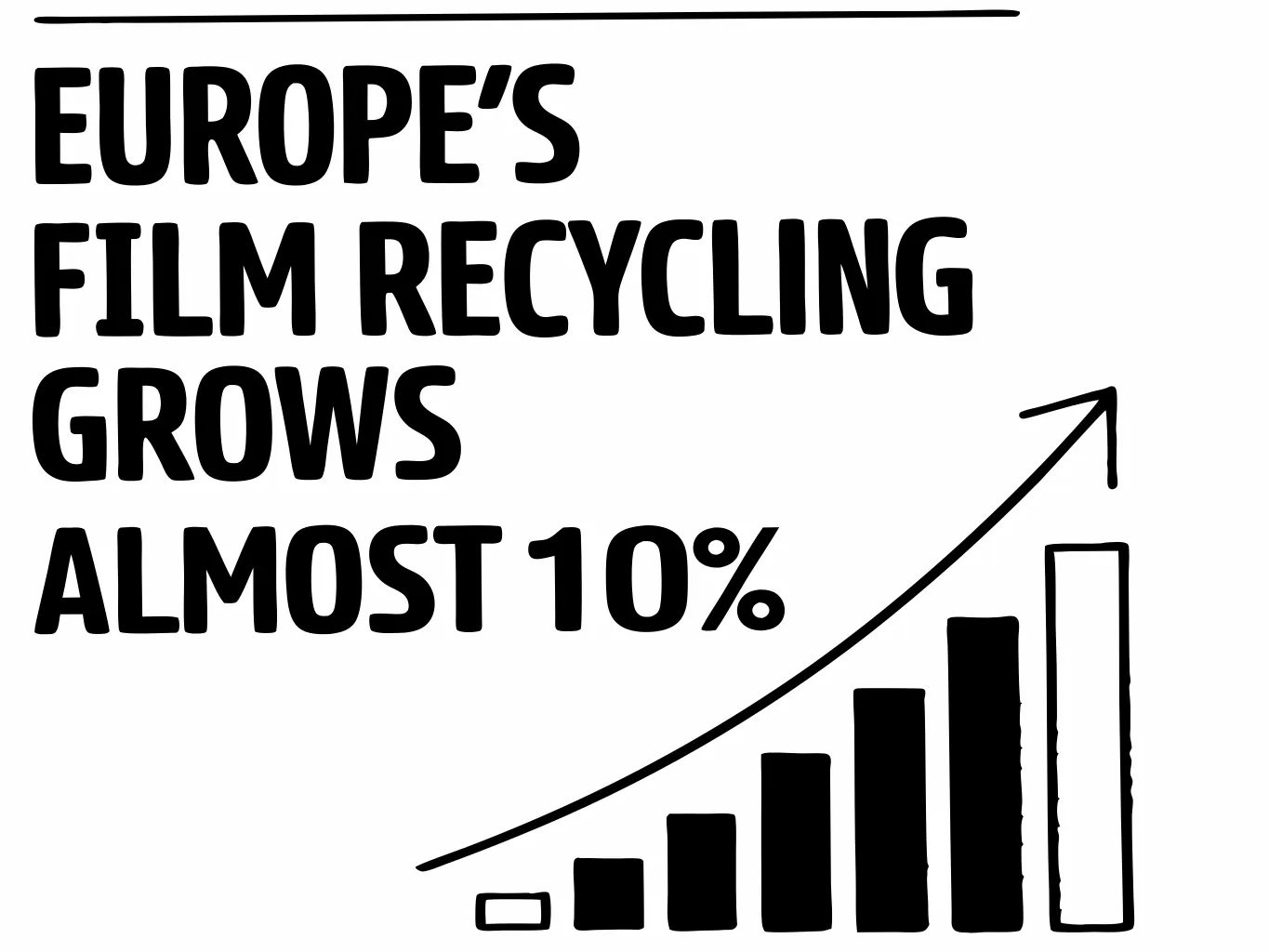
Flexible Folien (LDPE/LLDPE) gehören zu den am schwierigsten zu recycelnden Kunststoffarten in großen Mengen. Steigende Recyclingkapazitäten deuten in der Regel darauf hin, dass der Markt Wege gefunden hat, Verunreinigungen, Feuchtigkeit und Gerüche zu beherrschen – und das zu wirtschaftlich vertretbaren Betriebskosten.
Berichte europäischer Branchenverbände deuten auf ein anhaltendes Wachstum der installierten Recyclingkapazitäten für flexibles Polyethylen hin. So fasste beispielsweise Packaging Europe die Schätzung von Plastics Recyclers Europe zusammen, wonach die installierten Recyclingkapazitäten für flexible Folien im Jahr 2020 trotz der durch COVID-19 verursachten Beeinträchtigungen um “fast 101.700 Tonnen” gestiegen seien. Dieser Wachstumstrend wird durch bessere Umweltbedingungen unterstützt. Prozessdesign für das Recycling von PE/PP-Folien und ein verstärkter politischer Druck in Bezug auf Verpackungsabfälle.
Kurzgefasste Erkenntnisse Die Wirtschaftlichkeit des Folienrecyclings hängt ebenso stark von der Wasch- und Trocknungsqualität wie vom Zerkleinern oder Extrudieren ab. Für die Herstellung von Folien ohne weitere Aufbereitung sind sauberere Ausgangsmaterialien und eine feinere Schmelzfiltration erforderlich als bei Anwendungen mit geringeren Anforderungen. Bei der Projektbewertung sollten Sie zunächst die Rohstoffqualität und die Produktspezifikation festlegen und erst dann die Anlagendimensionierung vornehmen.
Was “Kapazitätswachstum” bedeutet (und was nicht)
Das Wachstum der installierten Kapazitäten ist ein Zeichen dafür, dass Investoren und Marken mit einer Nachfrage nach recyceltem Polyethylen rechnen. Es bedeutet jedoch nicht automatisch, dass jede Anlage hochwertiges Foliengranulat herstellen kann. Beim Folienrecycling sinkt die Qualität häufig aufgrund folgender Faktoren: – Verunreinigungen und Feuchtigkeitsschwankungen (die Zusammensetzung von Altfolien variiert) – Gerüche und flüchtige Stoffe (insbesondere in Haushaltsabfällen) – instabile Zuführung und Ausfallzeiten der Filtration
Wenn Sie eine Produktionslinie aufbauen, betrachten Sie die “Kapazität” als Ausgangspunkt und planen Sie dann auf einen verkaufsfähigen Output pro Stunde.
Was treibt das Wachstum an (Jenseits der Schlagzeilen)?
Zwei Kräfte beeinflussen üblicherweise die Kapazität: – Nachfrageorientiert: Verpflichtungen zu Recyclinganteilen und Druck in der Verpackungsabfallpolitik. Technologieoffensive: Durch besseres Waschen, Trennen und Filtern wird ein gleichmäßigerer Filmausbeute erzielt.
Wachstumstreiber: Technologie und Politik
Zwei Hauptfaktoren treiben diese Expansion an: der “Sog” der Gesetzgebung und der “Push” der technologischen Möglichkeiten.
1. Der politische Rahmen
In Europa treiben Verpackungspolitik und Erwartungen an den Recyclinganteil die Nachfrage nach recycelten Polymeren an. Die Übersicht der Europäischen Kommission zur Verpackungs- und Verpackungsabfallverordnung (PPWR) bietet einen hilfreichen Anhaltspunkt, um zu verstehen, warum Marken einen höheren Recyclinganteil anstreben und warum Recyclingunternehmen in ihre Kapazitäten investieren (siehe die Übersicht der Europäischen Kommission). PPWR-Übersicht).
2. Technologische Evolution
Früher war gebrauchte Folie schwer zu recyceln (sie roch unangenehm, war nass und stark verschmutzt). Heute hat der Einsatz moderner Maschinen die Situation verändert: * Heißes Waschen: Industrie Filmwasch- und Recyclinganlagen kann organische Stoffe entfernen und Gerüche reduzieren, was im Vergleich zum Downcycling höherwertige Endverwendungen ermöglicht. * Verbesserte Filtrationsstrategien: Eine verbesserte Schmelzfiltration und Siebwechselkontrolle reduzieren Ausfallzeiten und verbessern die Pelletkonsistenz bei realen Rohstoffen.
Welche Geräteverbesserungen sind beim Filmrecycling wirklich wichtig?
Filmproduktionsanlagen sind dann erfolgreich, wenn sie drei Faktoren stabilisieren: Zufuhr, Feuchtigkeit und Verunreinigungen. Diese Tabelle veranschaulicht, was sich geändert hat und warum dies von Bedeutung ist.“
| Linienherausforderung | Was verbessert die Ergebnisse | Warum Käufer das interessiert |
|---|---|---|
| Instabile Zufuhr (niedrige Schüttdichte) | Verbesserte Zuführungs- und Verdichtungs-/Kompaktierungskonzepte | Stabiler Schmelzdruck und weniger Stillstände |
| Feuchtigkeit nach dem Waschen | Verbesserte Entwässerungs- und Trocknungskonstruktion | Geringeres Dampf-/Schaumrisiko, gleichmäßigere Extrusion |
| Klebstoffe, Papier und Feinstoffe | Waschen und Trennen optimiert für Filmströme | Sauberere Pellets und weniger Kundenreklamationen |
| Ausfallzeit der Filtration | Filtrationsstrategie, dimensioniert für die reale Kontaminationsbelastung | Höherer verkaufsfähiger Output pro Stunde |
Herausforderung: Das “Film-zu-Film”-Gebot
Obwohl die Produktionskapazitäten wachsen, bleibt die Qualität der Produkte die zentrale Herausforderung für die Branche. Bisher wurde ein Großteil der recycelten Folie für minderwertige Spritzgussanwendungen (z. B. Blumentöpfe) verwendet.
Das neue Ziel ist Kreislaufwirtschaft: * Aktueller Stand: Ein Großteil der recycelten Folien wird immer noch in Anwendungen mit geringerer Nachfrage eingesetzt, wenn Verunreinigungen und Gerüche nicht kontrolliert werden. * Richtungstrend: Die Käufer fordern zunehmend saubereres rPE, das für Folienanwendungen geeignet ist, was die Anforderungen an Waschen, Trocknen und Filtration erhöht.
Um dies zu erreichen, ist eine strikte Einhaltung von Design für Recycling Prinzipien. Mehrschichtige Barrierefolien (z. B. PE + PA/EVOH) stellen weiterhin eine Verunreinigung im Recyclingstrom dar. Die Industrie strebt verstärkt nach monokompositen PE-Strukturen, die Barriereeigenschaften beibehalten, ohne die Recyclingfähigkeit zu beeinträchtigen.
Strategische Perspektive
Das Wachstum Europas verdeutlicht auch, dass Politik, Infrastruktur und Kundenanforderungen eng miteinander verknüpft sind. Wenn Ihr Endmarkt strengere Spezifikationen erwartet, müssen Ihre Geräte – insbesondere in den Bereichen Waschen, Trocknen und Filtern – auf diese Anforderungen ausgelegt sein.
Wenn Sie ein Filmwaschprojekt planen, ist Energycle's Recycling-Waschsystem Diese Seite kann dazu beitragen, die Terminologie für Waschkreisläufe, Trennung und Wassermanagement zu vereinheitlichen.
Checkliste für Käufer: Was Sie vor Ihrer Investition prüfen sollten
1) Um welche Art von Filmmaterial handelt es sich bei Ihrem eingehenden Filmstrom (Haushaltsfilme vs. Industriefilme) und wie hoch ist der Verschmutzungsgrad?
2) Welche Spezifikation wird für das Endprodukt benötigt (Folienqualität vs. Downcycling-Anwendungen) und wie wird diese geprüft?
3) Welcher Feuchtigkeitszielwert ist am Extruder-Einlauf erforderlich und wie wird dieser gemessen?
4) Welche Filtrationsstrategie wird bei Ihrer Kontaminationsbelastung angewendet und in welchem Intervall ist mit einem Siebwechsel zu rechnen?
5) Wie sieht der Plan für Geruchsstoffe/flüchtige Verbindungen aus und wie wird er durch Versuche validiert?
Häufig gestellte Fragen (FAQ) (Echte Fragen zum Beschaffungsprozess)
Was ist der häufigste Grund dafür, dass Filmwaschprojekte die Qualitätsziele verfehlen?
Schwankungen bei Feuchtigkeit und Verunreinigungen sind entscheidend. Folienströme können zwar “sauber” aussehen, aber dennoch Waschmittelreste, Etiketten, Papierfasern und Schmutzpartikel enthalten, die das Waschsystem belasten und später die Filtration überlasten. Wird die Feuchtigkeit nach dem Waschen nicht kontrolliert, wird die Extrusion instabil und die Pelletqualität variiert von Charge zu Charge. Die Lösung ist nicht eine einzelne Maschine, sondern ein optimal abgestimmtes System: Waschen, Trennen, Entwässern/Trocknen und Filtration, abgestimmt auf Ihren Materialstrom. Definieren Sie vor dem Kauf die Abnahmetests Ihres Abnehmers und führen Sie einen Materialversuch durch, der die Waschqualität, die Feuchtigkeit im Zulauf und das Filtrationsverhalten bei Produktionsraten misst.
Muss ich Altfilme heiß waschen?
Oft, aber nicht immer. Heißwäsche kann organische Stoffe, Klebstoffe und Rückstände entfernen, die zu Geruchs- und Qualitätsproblemen beitragen, erhöht aber den Energie- und Wasserbedarf. Die Entscheidung sollte sich nach den Spezifikationen Ihres Abnehmers und Ihrem Materialfluss richten. Für Anwendungen mit Folienqualität benötigen Sie in der Regel höhere Reinheit und einen stabileren Output, was eine intensivere Wäsche rechtfertigen kann. Akzeptiert Ihr Markt Produkte mit niedrigerer Reinheit, kann eine einfachere Anlage ausreichen. Bitten Sie Lieferanten um Referenzdaten zu ähnlichen Folienströmen und um eine Definition der Verunreinigungen, für die ihre Anlage ausgelegt ist.
Wie vergleiche ich die Angaben zur “kg/h-Kapazität” verschiedener Anbieter?
Fragen Sie nach der Menge an verkaufsfähigen Pellets pro Stunde bei definierten Rohstoffbedingungen. Geben Sie einen Bereich für Verunreinigungen und Feuchtigkeit vor und fordern Sie von den Lieferanten die Waschqualität, die Feuchtigkeit am Extruderzulauf, das Filtrationsverfahren und das erwartete Siebwechselintervall an. Kapazitätsangaben ohne diese Definitionen sind nicht vergleichbar. Fragen Sie außerdem nach der Anzahl der benötigten Bediener und den zu erwartenden Ausfallzeiten für Reinigung und Wartung. Folienrecyclinganlagen können eine beeindruckende “mechanische Kapazität” aufweisen und dennoch nur geringe Mengen an verkaufsfähigen Pellets produzieren, wenn die Ausfallzeiten durch Filtration und der Ausschuss beim Wiederanfahren hoch sind.
Welche politischen Dokumente sollte ich zuerst lesen, wenn ich in Europa investiere?
Beginnen Sie mit offiziellen EU-Quellen, die den Kontext der Verpackungs- und Verpackungsabfallverordnung erläutern und die Entwicklung der Verpackungspolitik darstellen. Die Europäische Kommission PPWR-Übersicht Dies ist ein praktischer Ausgangspunkt, um zu verstehen, warum Vorschriften zu Recyclingmaterialien und Verpackungsabfällen die Nachfrage beeinflussen. Prüfen Sie anschließend, wie Sie die Anforderungen Ihrer Kunden und Ihres Landes erfüllen können. Die Richtlinien geben die Richtung vor, die Käufer legen jedoch die Akzeptanzkriterien fest. Ihre Geräteauswahl sollte weiterhin von den Kundenspezifikationen und den Gegebenheiten Ihrer Rohstoffversorgung abhängen.
Welchen Feuchtigkeitsgehalt sollte ich vor der Extrusion von gewaschenen Folienflocken anstreben?
Fragen Sie Ihren Granulierlieferanten, welchen Feuchtigkeitsbereich sein Extruder ohne Dampfblasen, instabilen Schmelzdruck oder Qualitätseinbußen beim Granulat toleriert. Definieren Sie anschließend rückwärts Ihre Trocknungsspezifikation. Mechanische Entwässerung entfernt freies Oberflächenwasser, jedoch können Folienflocken in Falten und Feinanteilen weiterhin Wasser enthalten. In der Praxis hängt der angestrebte Feuchtigkeitsgehalt vom Polymer, der Schmelztemperatur und der Empfindlichkeit Ihres Kunden gegenüber Gelen und Lufteinschlüssen ab. Geben Sie sich nicht mit “trocken genug” zufrieden – fordern Sie einen messbaren Feuchtigkeitsgehalt, den Messort (nach der Entwässerung, nach der Heißlufttrocknung, am Extrudereinlauf) und die Auswirkungen steigender Feuchtigkeit auf den Durchsatz.
Welche beiden Ausrüstungsgegenstände haben den größten Einfluss auf die Filmqualität?
Erstens ist die Wasch-/Trennanlage entscheidend, da die Filmqualität leidet, wenn Klebstoffe, Papierfasern und Schmutzpartikel die Filtration überlasten. Zweitens ist die Schmelzfiltrationsstrategie wichtig, da Filmproduktionsanlagen häufig mit Kontaminationsspitzen zu kämpfen haben, die zu Stillstandszeiten und Druckinstabilität führen. Schredder und Verdichter sind zwar wichtig, beheben aber selten Qualitätsprobleme, die durch unzureichende Wasch- oder Filterprozesse mit zu geringer Maschenweite verursacht werden. Bitten Sie Ihre Lieferanten, Ihnen zu zeigen, wie ihre Anlage mit einem definierten Kontaminationsbereich umgeht, einschließlich des Verhaltens beim Siebwechsel, des Ausschusses beim Wiederanlauf und der maximal zulässigen Schmutzbelastung. Filmwasch- und Recyclinganlage Die Seite dient als nützliches Nachschlagewerk für die Prozessterminologie beim Vergleich von Angeboten.
Referenzen
- Packaging Europe – Die Recyclingkapazität für flexible Folien “wächst im Jahr 2020 um fast 101.700 Tonnen” (Angabe von Plastics Recyclers Europe)
- Plastics Recyclers Europe – Forschung und Berichterstattung über die europäischen Recyclingkapazitäten für Kunststoffe
- Europäische Kommission – Überblick über die Verordnung zu Verpackungen und Verpackungsabfällen
- PlasticsEurope – Die Kreislaufwirtschaft für Kunststoffe (Europäische Analyse, 2024)
