

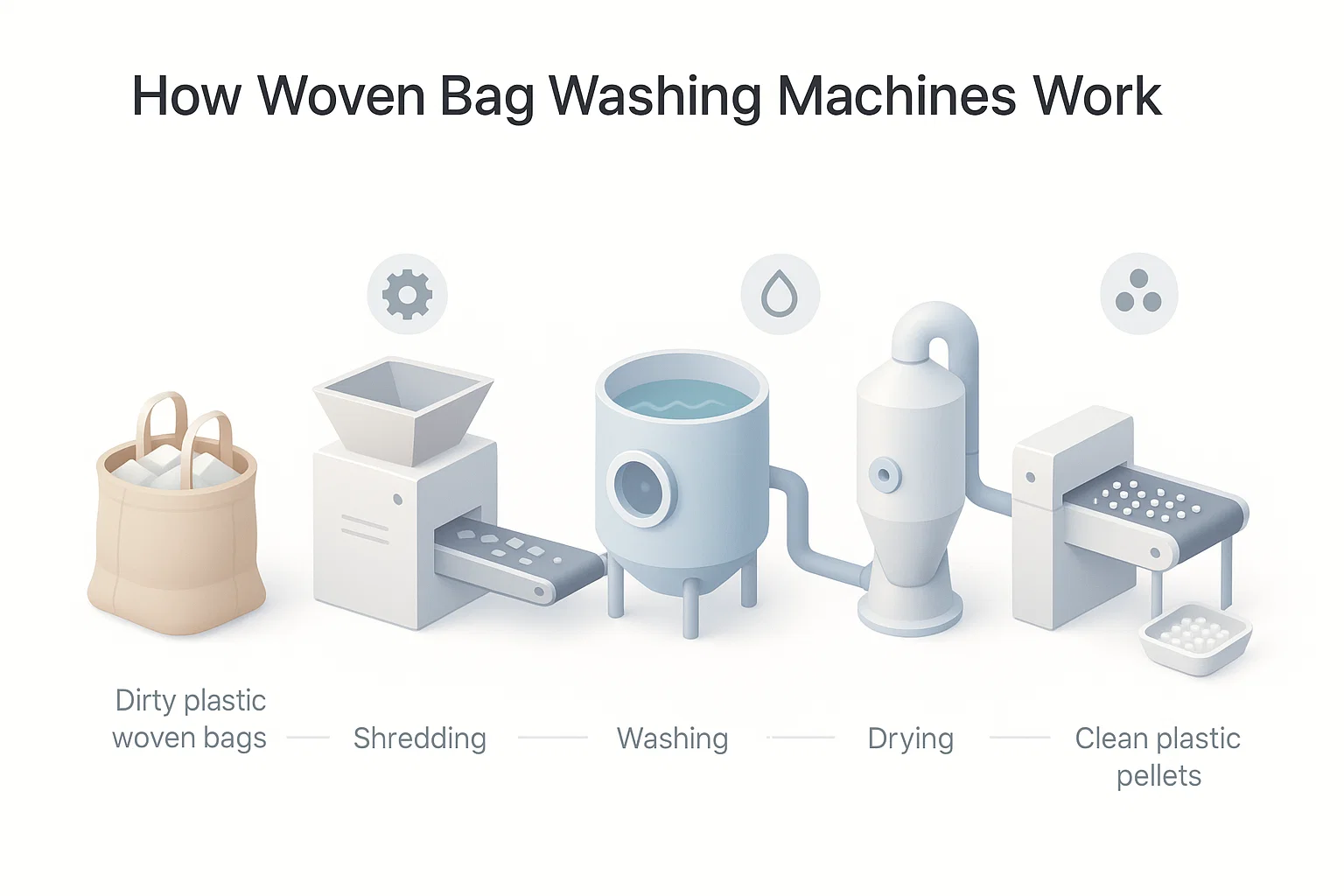
Vijenčana mašina za pranje vreća je koordinirana linija za recikliranje PP vijenčanih vreća, palmovih vreća i fleksibilnih srednjih kontejnera (FIBCs). Otvara ili rezuje ulaz, uklanja slobodne i ugrabećene kontaminacije, odvaja teške materijale, isušuje prane plastične materijale i priprema ih za ekstrudaciju. Pravilna linija se određuje po stvarnoj izgradnji vreće i kontaminaciji—not samo po nominalnom protoku.
What material enters a woven bag washing line?
Tipični ulaz uključuje gnojivo i hrane vreće, rižne vreće, cementne vreće, industrijsko palmovo pakiranje i iskoristene FIBCs. Iako je vijenčani podlog često polipropilen, iskoristena vreća može sadržavati PE unutrašnji liner, BOPP printani film, vezivanje, rebreze, etikete, papir, metal, zemlju ili ostatke proizvoda.
Identify these components before choosing equipment. A mono-material PP stream may be suitable for mechanical recycling after effective cleaning. Multilayer coatings, incompatible liners and hazardous residues can require source segregation or a different outlet. The CEFLEX design guidance for flexible packaging explains how construction and attached components affect polyolefin recycling.
Process flow from bags to clean regrind
| Pozornica | Glavni posao | What to confirm |
|---|---|---|
| Inspection and sorting | Remove unsuitable bags and large foreign objects | Previous contents, resin, liners, metal and moisture |
| Opening and size reduction | Cut compacted bags into a controlled, washable size | Feed form, rotor loading, screen or discharge size |
| Prewashing | Release loose sand, dust and product residue | Contamination load and water-loop capacity |
| Čišćenje trncanjem | Scrub surfaces and transport material | Residence, wear, screen condition and rejected solids |
| Razdvajanje po gustoći | Separate floating polyolefins from many heavy contaminants | Material pair, trapped air, flow and bottom discharge |
| Odvod vode i sušenje | Remove free and surface water | Downstream moisture requirement and air handling |
| Densifying or pelletizing | Stabilize low-bulk-density feed and melt-filter the plastic | End-product specification and contaminant tolerance |
1. Inspect, sort and meter the feed
Start by defining acceptable and prohibited feed. Bags that held chemicals, pesticides or other controlled products need an appropriate risk assessment and disposal route; washing equipment does not by itself make an unknown residue safe. Remove metal hooks, stones and oversize objects before the cutting chamber.
Otvajač valova, transportna traka ili merilsko uređaj treba isporučiti ravnomjernu lozicu. Velike valove uzrokuju nestabilno rezanje, pranje i sušenje. Zabilježite ulaznu masu i predstavni uzorci kontaminacije tako da se kasniji izlazni testovi mogu vezati za poznatu ulaznu količinu.
2. Choose shredding or wet granulation
Plaćeni PP je lagan, snažan i nagnut za omotavanje. Sječač je koristan za otvaranje debelih valova i FIBC, dok može granulator stvoriti bolje kontrolirani veličinu čestica. Neki linije koriste oboje. Geometrija rotora, razmak noža, izbor mreže i mjere protiv omotavanja trebaju odgovarati isprobanoj ulozi.
Vlažno smanjivanje veličine uvozi vodu u rezni prostor i može početi razlažiti prljotu. Suho rezanje simplificira vodeni sustav te mašine ali prenosi više kontaminacije nizvodno. Pravilni izbor ovisi o izdržljivosti, upravljanju vodom i zahtjevanim veličinama čestica umjesto o univerzalnom izvoru efikasnosti.
3. Uklonite zemlju, papir i ostatke proizvoda
Prijenosno pranje štiti nizvodno opremu kada valovi nose pijesak ili prah cementa. A brzi friccionni pralac zatim primjenjuje mehaničko češljanje dok perforirana mreža oslobađa vodu i finu kontaminaciju. Uložnost praljača, stanje rotora, otvori mreže i kvaliteta vode utječu na rezultat.
Toplo pranje se može razmotriti za potvrđeni kontaminant ili lepidinu, ali mijenja zahtjeve za zagrijavanjem, kemijom, očiscavanjem i otpadnim vodama. Ne određujte toplinu ili deterdžent prije isprobavanja ostatka i potvrđivanja lokalnih obveza otpusta.
4. Odvojiti teške kontaminante
U vodenoj cijevi mnoge neispune PP i PE komade plavaju dok kameni, metal, staklo i gušći plasti tonu. To je korisno za uklanjanje definirane teške frakcije, ali ne isporučuje pouzdanu odvojnost PP od PE linerija jer oboje često plavaju. Napunjuvala, površinske zaštite i zatvoreni zrak mogu također promijeniti ponašanje.
Koristite principe u našem izmijenjeni vodič za razdvajanje sink-float da bi postavili brzinu ulaza, agitaciju, uklanjanje plavajućih komada i ispuštanje dna. Testirajte oboje izlaza: visoka čistota plavajućih komada može sakriti nadmirovanu gubitak uporabljivog PP u sink frakciji.
5. Oduzeti vlagu za sljedeći proces
Mehaničko odvajanje vode prvo uklanja slobodnu vodu. Centrifugalni sušilac, valjni pritisak ili filmovnik se može koristiti prema obliku čestica i narednom procesu. Toplinski zračni sušni proces se može izvršiti kada extruder ili specifikacija za skladишte zahtijeva nižu površinsku vlažnost.
Ne postoji univerzalni postotak vlažnosti koji bi bio “idealan” za svaku liniju za pranje vezanih torba. Postavite granicu prihvaćanja s dobavljačem granula ili kupcem komada, definirajte metodu testa i izмерite uzorke nakon stabilne operacije. film squeezing machine je jedna opcija za istovremeno uklanjanje vode i povećavanje gustine.
6. Pripremiti čistu materijal za granulizaciju
Izbrisane vezane materijale ostaju svjetle i nepravilne. Bufferno skladište, pritisak ili faza aglomeracije može poboljšati konzistenciju dovoza, ali gustomiranjem se ne uklanja kontaminacija. Tijekom extrudiranja, ekranovna filtracija uklanja određene čvrste kontaminante; ne može ispraviti nekompatibilne polimere, tešku degradaciju ili nesigurnu namirnicu.
Definirajte zahtjeve za granule prije kupnje linije za pranje: namijenjena aplikacija, boja, pećina, vlažnost, raspon toplinske protoka, miris, filtracija i dopuštena kontaminacija. Ove ciljeve određuju koliko sortiranja, pranja i sušenja je opravdano.
Kako izmjeriti i procjeniti liniju
Zamolite dobavljače da navede kapacitet na definiranoj osnovi ulaza i izlaza. Nominalna brzina ulaza nije ista kao prodajni suh izlaz. Koristite maseni bilans koji obuhvata uklonjenu kontaminaciju, procesne gubitke, vlagu i odbijeni materijal. Potvrdite da su sječanje, pranje, vodena obrada, sušenje i peliranje moguća da održavaju predloženu brzinu.
Za test prihoda, dogovorite sastav ulaza, trajanje rada, točke uzorkovanja i granice izlaza prije isporuke. Zabilježite energiju, vodu, radnički kapital, potrošničke robe i masu odbijenog materijala tijekom isprobavanja. Ove izmjerene vrijednosti su više korisne za planiranje troškova operacije nego generički postotci uštede.
Radni pregledi koji štite kvalitetu
- Inspekcija dolazećih torba za smola, liner, prethodni sadržaj i teške predmete.
- Slijedite stanje noža, izgaranje mreže i omotavanje oko rotirajućih dijelova.
- Nadgledajte opterećenost pralja, klarost vode, suspendirane čestice i protok ponovne cirkulacije.
- Uzmetite uzorke plavajućih i potonih izlaza te konačnog očišćenog materijala.
- Slijedite vlažnost, pepeo ili kontaminaciju protiv promjena ulaza i postavki rada.
- Slijedite dokumentirani zaključavanje/označavanje prije očlanjivanja zavoja ili održavanja opreme.
The OSHA upute za opasnu energiju predstavlja osnovu za postupke kontroliranja energije. Također moraju se obraditi specifične za mjesto zaštitne mjere, pristup i zahtjevi za otpadnom vodom.
Često postavljana pitanja
Može jedan pralni niz procesuirati oboje PP vezane torbe i PE film?
Možda, ali samo nakon isprobavanja. Materijali se mogu razlikovati po debljini, obliku omotavanja, kontaminaciji i potrebi za odvodom vode, te izlaz mješovitog PP/PE ne bi mogao ispuniti specifikaciju namjerjenog kupca.
Razlikuje li sink-float tank torbe od polipropilena (PP) od linera od polietilena (PE)?
Nije pouzdan u vodi jer nenasjeni PP i PE često plavaju. Potrebno je izdvojiti po izvoru, kontrolirati dizajn vreća ili drugi potvrđeni metoda razdvajanja, kada se ova dva polimera moraju prodavati posebno.
Da li trebaju očišćene vezane torbe direktno ići u ekstruder?
Only when moisture, bulk density and contamination meet the extruder’s feed specification. A squeezer, agglomerator, buffer or additional drying stage may be required.
Navedite ulaz prije zahtjeva linije
Pošaljite predstavitelju Energycle uzorke vreća, fotografije kontaminacije, informacije o prethodnoj uporabi, dostupnost ulaza po satu i zahtjevane specifikacije čipova ili granula. Tada PP woven bag and raffia recycling line može se konfigurirati oko provjerenog materijala umjesto općeg popisa opreme.
