

Compact Solid-Liquid Separation
Lamella Clarifier for Industrial Wastewater Treatment
A high-rate inclined plate clarifier for removing settleable suspended solids from plastic recycling wash water and industrial effluent. Five Energycle configurations cover 10-100 m³/h while providing two to four times the effective surface loading of a conventional settling tank in a much smaller footprint.
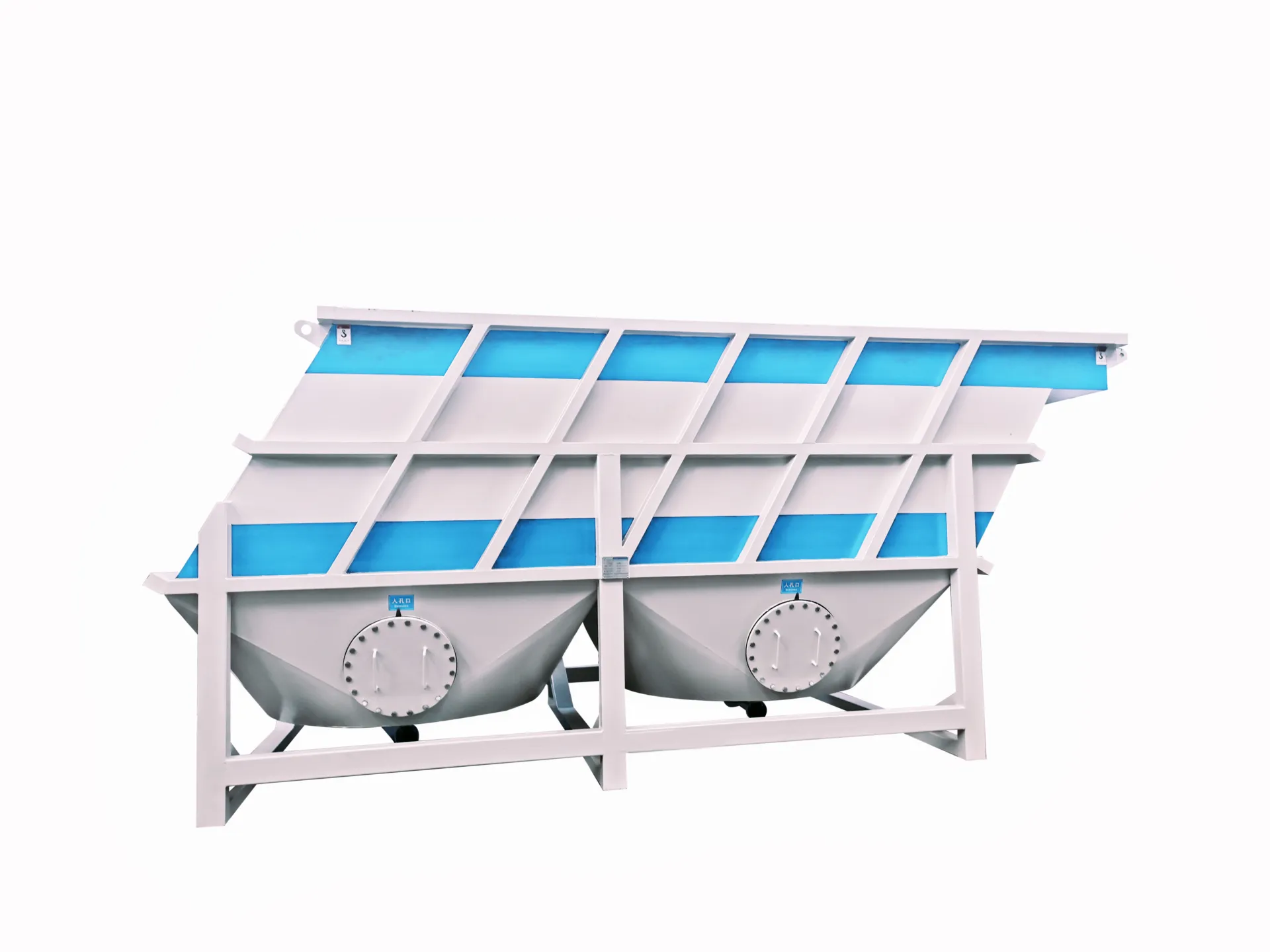
More Settling Area in Less Floor Space
Parallel inclined plates shorten the particle settling distance and multiply the effective clarification area, making the system practical for new plants, compact equipment rooms, and wastewater treatment retrofits.
2-4x Effective Surface Loading
The inclined plate pack creates a large settling area inside a compact tank, increasing hydraulic capacity compared with a conventional clarifier of similar footprint.
Compact Plant Layout
A smaller footprint simplifies installation where floor space is limited or an existing wash-water loop needs additional clarification capacity.
Stable Water Distribution
Internal distribution channels spread influent evenly across the plate pack to reduce short-circuiting and improve settling consistency.
Backwashable Plate Pack
Integrated backwash connections support routine cleaning of plate surfaces and help maintain hydraulic performance under changing solids loads.
Durable Inclined Plates
High-strength plate modules are selected for stiffness, corrosion resistance, and stable spacing without easy collapse or deformation.
Optional Mechanical Sludge Scraper
A bottom scraper can be supplied where sludge is sticky, unevenly distributed, or likely to bridge above the discharge hopper, improving continuous removal.
How a Lamella Clarifier Separates Solids
The process combines controlled water distribution, shallow settling between inclined plates, gravity sludge collection, and clarified-water overflow.
Flocculated Water Enters
Conditioned wastewater enters the lower distribution zone and is spread evenly beneath the inclined plate modules.
Upflow Through Plates
Water rises slowly between parallel plates while the short settling path allows suspended flocs to contact the plate surfaces.
Solids Slide to Hopper
Settled particles agglomerate on the inclined surfaces, then slide downward under gravity into the sludge collection hopper.
Clarified Water Exits
Clarified water is collected at the upper outlet while concentrated sludge is discharged or sent to downstream dewatering.
Flocculated Water Enters
Conditioned wastewater enters the lower distribution zone and spreads beneath the plate pack.
Upflow Through Plates
Water rises between the parallel plates while suspended flocs settle across a short vertical distance.
Solids Slide to Hopper
Agglomerated solids slide down the inclined surfaces and collect in the sludge hopper.
Clarified Water Exits
Treated water leaves from the top while concentrated sludge is discharged from below.
Core Components for Reliable Clarification
Each section of the clarifier supports controlled flow, stable plate spacing, predictable sludge handling, and maintainable operation.
Influent Distribution Zone
Directs incoming flocculated water across the tank width to minimize hydraulic short-circuiting and uneven solids loading.
Inclined Plate Modules
Parallel plate channels multiply the settling area and shorten the distance particles must travel before separation.
Clarified Water Collection
Upper collection channels and outlets remove clarified overflow evenly without disturbing the sludge blanket below.
Sludge Hopper and Discharge
Sloped hoppers concentrate settled solids for periodic or continuous discharge to a sludge tank or dewatering unit.
Plate Backwash Connection
A dedicated DN50 connection supports scheduled plate cleaning where solids accumulation could reduce hydraulic capacity.
Optional Sludge Scraper
A low-power mechanical scraper is available for difficult sludge that does not move consistently by gravity alone.
Where Lamella Clarification Fits
Lamella clarifiers are best suited to heavier, settleable suspended solids and are commonly positioned after screening and chemical conditioning.
Plastic Recycling Wash Water
Removes soil, sand, label fines, and dense suspended contamination from PET, HDPE, PP, and film washing circuits before reuse or polishing.
Closed-Loop Water SupportPrimary Settling
Provides compact first-stage clarification where influent solids density is greater than water and reliable gravity settling is achievable.
Secondary Clarification
Separates biological solids after treatment where sludge settleability is suitable for inclined plate clarification.
Sludge Thickening
Concentrates settled sludge before mechanical dewatering, helping reduce downstream handling volume.
Industrial Pretreatment
Clarifies process water in manufacturing, minerals, paper, food, chemical, and other industrial facilities with settleable solids.
Technical Specifications
Five Energycle configurations cover nominal treatment capacities from 10 to 100 m³/h. Final sizing depends on solids concentration, particle settling behavior, chemical conditioning, peak flow, and effluent target.
| Model | Capacity (m³/h) | Inlet | Outlet | Sludge | Backwash | Dimensions L×W×H (mm) | Scraper Power (kW) |
|---|---|---|---|---|---|---|---|
| ERM-LC-10 | 10 | DN100 | DN100 | DN80 | DN50 | 3350×1800×3000 | 0.37 |
| ERM-LC-20 | 20 | DN100 | DN100 | DN80 | DN50 | 3500×2000×3000 | 0.37 |
| ERM-LC-40 | 40 | DN150 | DN150 | DN100 | DN50 | 4000×2800×3000 | 0.37 |
| ERM-LC-60 | 60 | DN200 | DN200 | DN100 | DN50 | 5000×2800×3000 | 0.37 |
| ERM-LC-100 | 100 | DN250 | DN250 | DN100 | DN50 | 7050×3000×3000 | 0.37×2 |
Swipe horizontally to view all specifications.
The scraper drive is optional. Connections, plate spacing, tank material, access platform, sludge discharge arrangement, and dimensions can be customized for the project. Confirm final data on the approved technical drawing.
Lamella Clarifier vs DAF System
The correct technology depends primarily on whether the contamination settles or floats. Many demanding wastewater lines use both stages in sequence.
| Selection Factor | Lamella Clarifier | Dissolved Air Flotation |
|---|---|---|
| Best Contaminants | Dense, settleable suspended solids | Light solids, oils, grease, and weakly settling flocs |
| Separation Direction | Solids settle downward | Micro-bubbles float solids upward |
| Energy Demand | Low; mainly optional scraper and pumps | Higher due to recycle pressurization and air system |
| Footprint | Compact compared with conventional settling | Compact high-rate flotation footprint |
| Typical Role | Primary settling, clarification, sludge thickening | Fine polishing, FOG removal, difficult industrial effluent |
| Combined Train | Lamella first for heavy solids, followed by DAF for light and fine contaminants | |
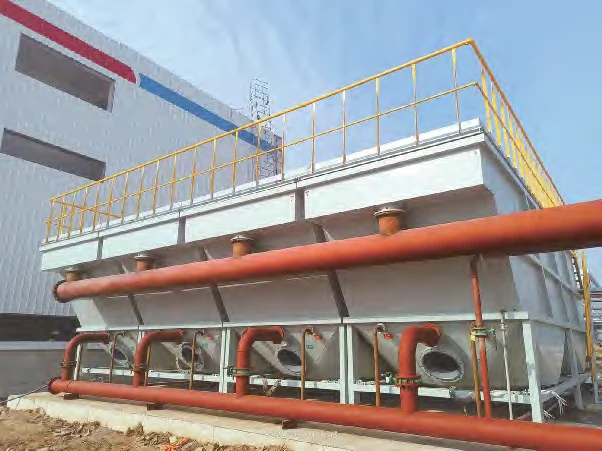
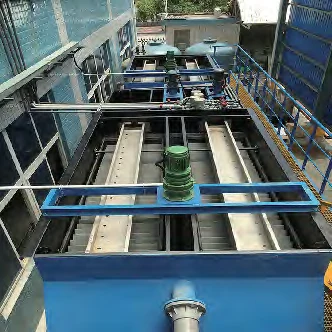
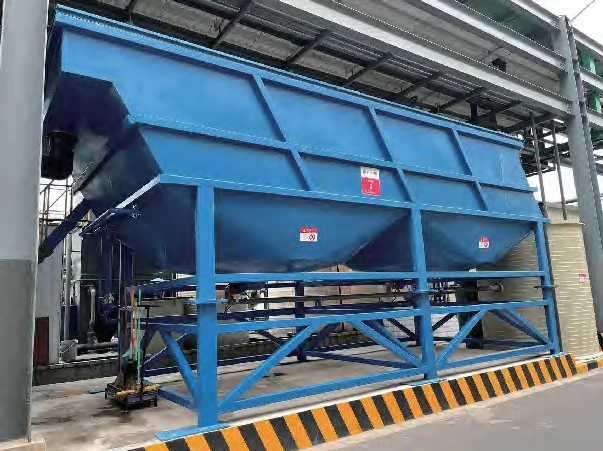
Lamella Clarifier Construction and Installations
Reference views of the packaged clarifier, inclined plate zone, and industrial installations.
Support from Sizing Through Commissioning
We support hydraulic sizing, process integration, installation preparation, commissioning, and routine maintenance planning for the complete clarifier lifecycle.
1-Year Limited Warranty
Coverage includes manufacturing defects in major mechanical and electrical components for one year. Wear parts and damage from improper operation are handled separately.
Application Review
Our engineers review flow, solids loading, settling behavior, pH, temperature, chemical dosing, and discharge targets before final model selection.
Installation Guidance
Foundation, access, piping, sludge discharge, backwash, electrical, platform, and upstream flocculation requirements are coordinated before delivery.
Maintenance Planning
Recommended routines cover plate inspection, backwashing, hopper cleaning, scraper checks, and sludge discharge management.
Lamella Clarifier FAQ
Common questions about wastewater suitability, sizing, plate cleaning, sludge handling, and comparison with DAF.
It is best for suspended solids that are denser than water and can settle after screening and, where needed, coagulation or flocculation. Typical examples include soil, sand, dense plastic fines, mineral particles, and settleable biological flocs.
The inclined plates create many shallow settling channels and a much larger effective clarification area inside the same footprint. This allows higher hydraulic loading and a smaller tank than conventional open settling.
Not always. Large, dense particles may settle directly, while fine or colloidal solids usually require coagulation and flocculation to form settleable flocs. Jar testing is recommended when the wastewater characteristics are uncertain.
The interval depends on solids type, biological growth, chemical dosing, and operating hours. Differential water level, declining overflow quality, or visible plate accumulation indicates that backwashing or manual inspection is required.
A scraper is useful for sticky sludge, uneven hopper loading, intermittent discharge, or applications where solids may bridge and fail to move reliably by gravity. Free-flowing sludge may not require one.
Provide average and peak flow, suspended-solids concentration, particle or sludge type, settling test results if available, pH, temperature, chemical dosing, required effluent quality, available footprint, and preferred sludge discharge method.
Choose lamella clarification for heavier solids that settle readily. Choose DAF for oils, grease, low-density particles, and fine flocs that float more effectively than they settle. A combined lamella-plus-DAF train is appropriate when both contamination types are present.
Need a Lamella Clarifier Sized for Your Wastewater?
Share your average and peak flow, suspended-solids data, settling behavior, available footprint, and effluent target. Our engineers will recommend the model, plate configuration, chemical pretreatment, and sludge-handling arrangement.