

Heavy-Duty Size Reduction for Purgings and Lumps
Single-Shaft Shredder for Extruder Lumps and Head Waste
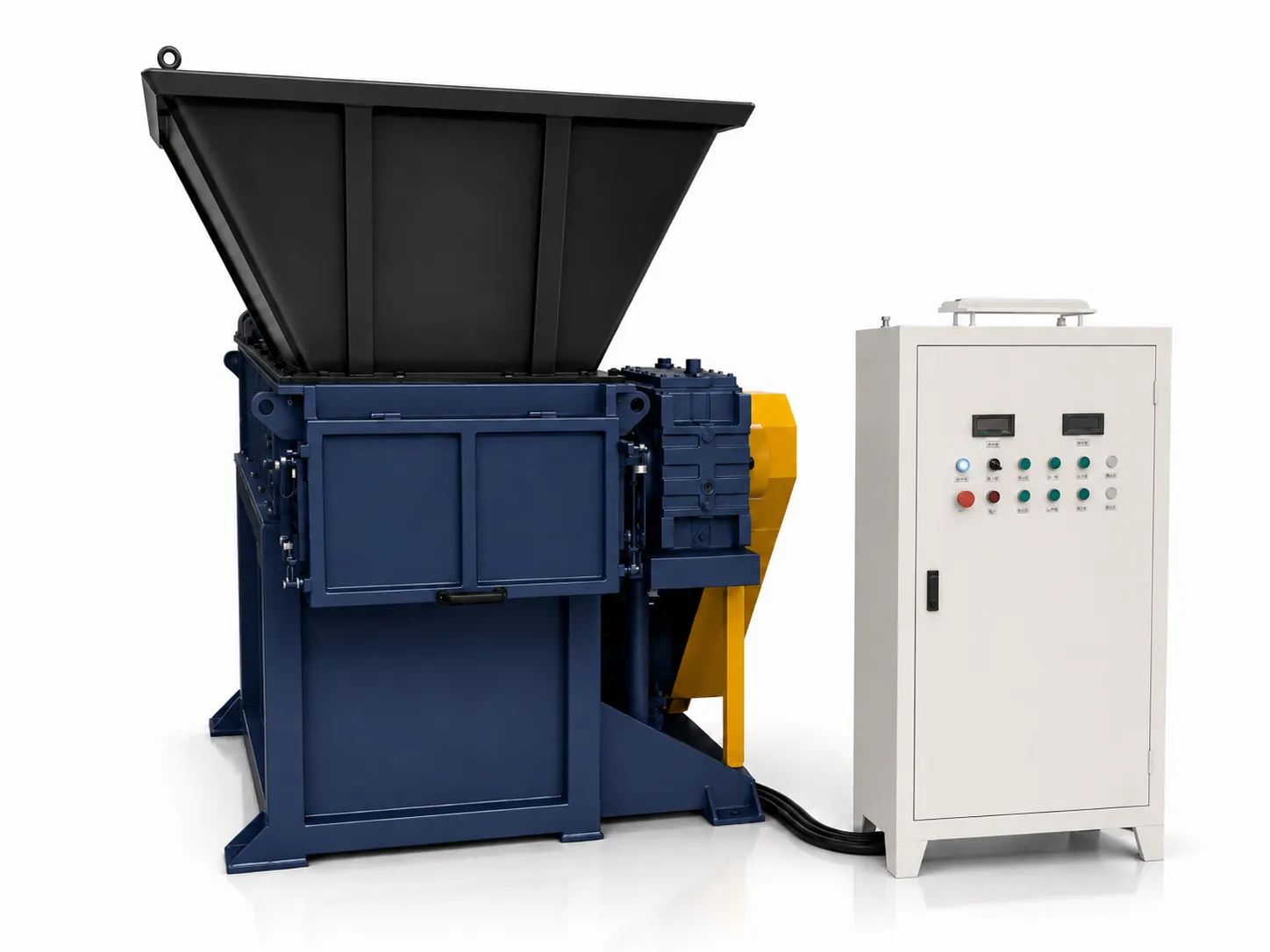
A dedicated plastic lump shredder for extruder head waste, startup purgings, dense plastic blocks, and heavy production scrap. The hydraulic ram, high-torque reducer, rotatable knives, and PLC overload protection help processors turn stubborn plastic lumps into reusable regrind with stable throughput and lower maintenance cost.
Why Plants Use a Dedicated Extruder Lump Shredder
Extruder head waste and plastic purgings are much denser than ordinary scrap. This machine is configured for impact-heavy feedstock that can shock a standard shredder or crusher.
Built for Dense Purgings, Head Waste, and Thick Plastic Lumps
Extruder head waste, startup purges, and dense lumps place high shock loads on the drivetrain. This single-shaft shredder uses a robust frame, solid shaft, and high-torque reducer to process these compact forms more reliably than light-duty machines.
Four-Edge Knife Design Reduces Blade Cost
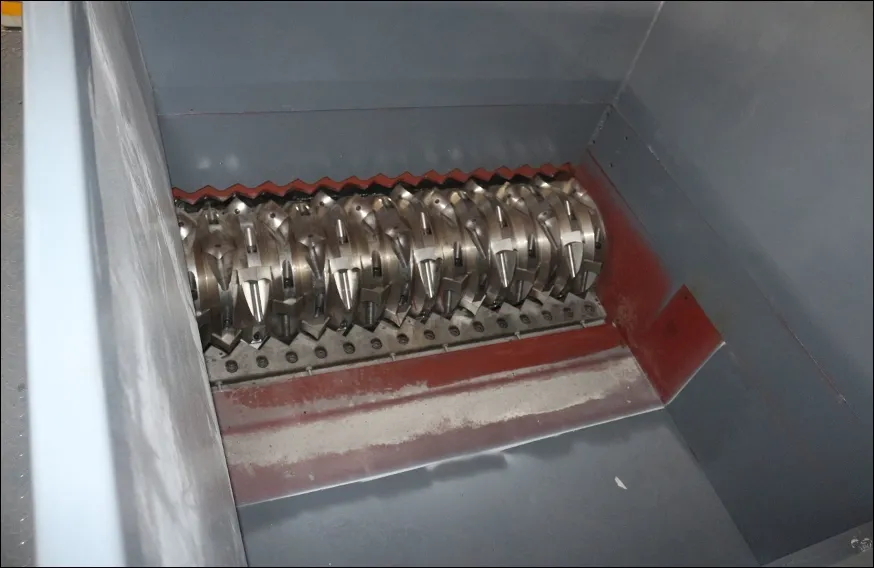
Rotatable moving knives allow operators to use a fresh cutting edge several times before replacement, reducing consumable cost and downtime.
PLC Overload Protection and Auto Reverse
The control system monitors load and automatically reverses the shaft if material bridges or overloads the chamber.
Controlled Output for Reuse, Regrind, or Further Size Reduction
Optional screens help define the final shred size so the material can move to a granulator, pelletizer, or in-house reuse process with less manual handling and more consistent feed behavior.
How the Extruder Lump Shredder Works
A four-stage flow designed for dense, impact-heavy plastic waste from extrusion and compounding operations.
Material Loading
Plastic lumps, purgings, die-head scrap, and extruder head waste are loaded into the hopper for controlled processing.
Hydraulic Ram Feeding
A hydraulic feed cart pushes the heavy plastic mass steadily into the cutting chamber to improve rotor contact and reduce bounce-back.
High-Torque Shearing
Alloy steel moving knives shear material against fixed knives while the reducer delivers stable torque for dense polymer waste.
Uniform Discharge
The material exits as reusable shred or screen-controlled chips ready for the next recycling step.
Typical Applications
Best suited for polymer processors and recyclers dealing with dense, hard-to-handle extrusion waste.
Extruder Head Waste
Handles large head waste blocks and die-head residues that are too dense for ordinary scrap handling.
Startup Purgings and Lumps
Processes purgings, startup lumps, and reject masses from PE, PP, PVC, ABS, and similar polymers.
Dense Production Scrap
Suitable for heavy offcuts, compact reject parts, and thick polymer waste that require strong bite and controlled feeding.
In-House Reprocessing Prep
Creates a manageable regrind feed for granulation, compounding, pelletizing, or direct internal reuse in manufacturing plants.
Extruder Lump Shredder vs. General Rigid Plastic Shredder
Dense extruder lumps need more focused drive protection and feeding stability than general rigid scrap in many plants.
| Selection Factor | Extruder Lump Shredder | General Rigid Plastic Shredder |
|---|---|---|
| Best For | Purgings, head waste, dense lumps, thick compact polymer scrap | Broader rigid plastic range such as pipes, crates, pallets, containers |
| Shock Load Handling | Better matched to high-density, impact-heavy feedstock | More general configuration across many rigid scrap types |
| Blade Economy | Rotatable knife edges help reduce consumable cost | Depends on model and broader application setup |
| Typical Plant Use | Extrusion and compounding waste recovery | Mixed rigid plastic recycling and general size reduction |
Swipe horizontally to view the full table.
Watch the Lump Shredder in Action
This YouTube video shows the shredder processing dense industrial plastic waste with smooth operation and consistent output.
Machine Gallery
Representative machine details and material examples for purgings and lump shredding projects.
Technical Specifications
Reference configuration for dense extrusion waste and compact plastic lumps. Actual output varies with polymer type, mass density, and selected screen size.
| Item | Parameter | Description |
|---|---|---|
| Model | RTM-SD2360 | Single-shaft shredder for extruder head waste and lumps |
| Output | 200 – 300 kg/h | Depends on polymer type and screen size |
| Shredding Chamber | 550 x 580 mm | Effective cutting chamber size |
| Cutter System | 30 Moving / 1 Fixed Blade | SKD11 alloy steel, 40 x 40 mm knives on a 230 mm shaft |
| Main Motor Power | 22 kW | Main drive motor |
| Hydraulic Power | 3 kW | Powers the feed ram |
| Reducer | H-Series | High-torque reducer for dense scrap |
| Output Speed | 81 rpm | Stable low-speed cutting |
| Hydraulic Pressure | Up to 21 MPa | Adjustable feeding pressure |
Swipe horizontally to view the full table.
Reliable Support Throughout the Equipment Lifecycle
From installation planning to routine maintenance, our service team helps keep your equipment operating safely, consistently, and efficiently.
1-Year Limited Warranty
Coverage includes manufacturing defects in major mechanical and electrical components for one year. Normal wear parts and damage caused by improper operation are handled separately.
Installation Guidance
We provide layout, foundation, utility, clearance, line-integration, and commissioning guidance to support a smooth installation and reliable startup.
Spare Parts Supply
Replacement wear parts, bearings, seals, sensors, electrical components, and other service items are available for scheduled maintenance and long-term operation.
Technical Assistance
Remote troubleshooting, operating recommendations, maintenance guidance, and optional on-site service are available when your project needs additional support.
Frequently Asked Questions
Key questions about blade maintenance, material range, overload protection, and typical use for purge and lump shredding.
The machine includes a one-year limited warranty on key components. Installation support, commissioning, and operator guidance can be provided according to project scope.
The moving knives have four usable cutting edges. When one edge becomes dull, the operator can rotate the knife to a fresh edge before final replacement, which helps reduce blade cost and downtime.
It is optimized for extruder head waste, startup purgings, dense plastic lumps, and similar high-mass polymer scrap. Common materials include PE, PP, PVC, ABS, and other rigid or semi-rigid production waste forms.
The control system monitors motor load during shredding. If overload is detected, the shaft automatically reverses to release the jam before resuming forward rotation.
Yes. With a suitable screen and rotor setup, the shredded output can be prepared for secondary granulation, pelletizing, or internal reprocessing depending on your workflow.
Reduce Extrusion Waste More Efficiently
Tell us your polymer type, the size and density of your purgings or lumps, your target throughput, and the downstream machine after shredding. We will recommend the right configuration for your plant.