

High-Recovery Eddy Current Separator for Fine Aluminum
Recover valuable fine aluminum and non-ferrous metals from PET flakes, glass cullet, incinerator bottom ash, e-waste, and mixed recycling streams. Engineered for high product purity, maximum metal yield, and dependable continuous sorting.
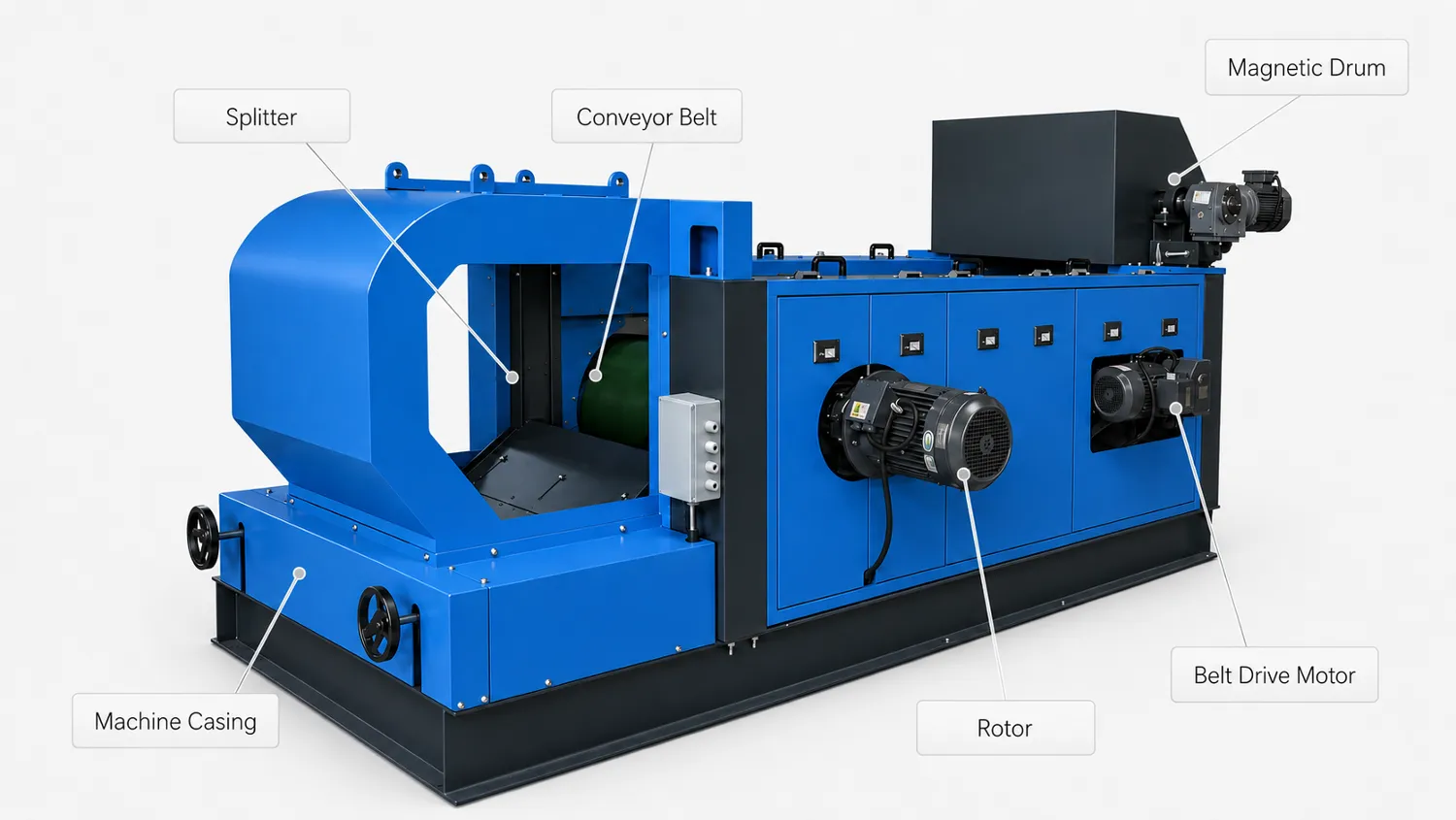
Fine Non-Ferrous Metal Separation in Action
See how the high-frequency rotor generates eddy currents that eject aluminum and other non-ferrous particles away from the main material stream.
Maximize Purity and Recovery Value
Fine aluminum is easy to lose in conventional sorting. This ECS design helps recycling plants capture more value while improving the purity of downstream plastic, glass, ash, and metal fractions.
Fine Particle Recovery
Optimized for small non-ferrous fragments, the separator can recover fine aluminum particles down to about 2 mm in suitable feed streams.
Higher Product Purity
Removing aluminum, brass, copper, and other non-ferrous contaminants helps improve the quality of PET flakes, glass cullet, ash products, and upgraded scrap.
High-Intensity Rotor
The concentric rare earth magnet rotor creates a strong and uniform field for reliable ejection of small conductive particles across the belt width.
Adjustable Separation Point
Rotor speed, belt speed, feeding condition, and splitter position can be tuned to match changing material mixes and recovery targets.
Industrial-Ready Design
Heavy-duty motors, wear-resistant components, and a practical cantilever frame help the system handle demanding recycling environments.
Better Return on Waste Streams
Recovering small aluminum fractions can turn material that was previously lost into a saleable metal stream and reduce contamination penalties.
How the Eddy Current Separator Works
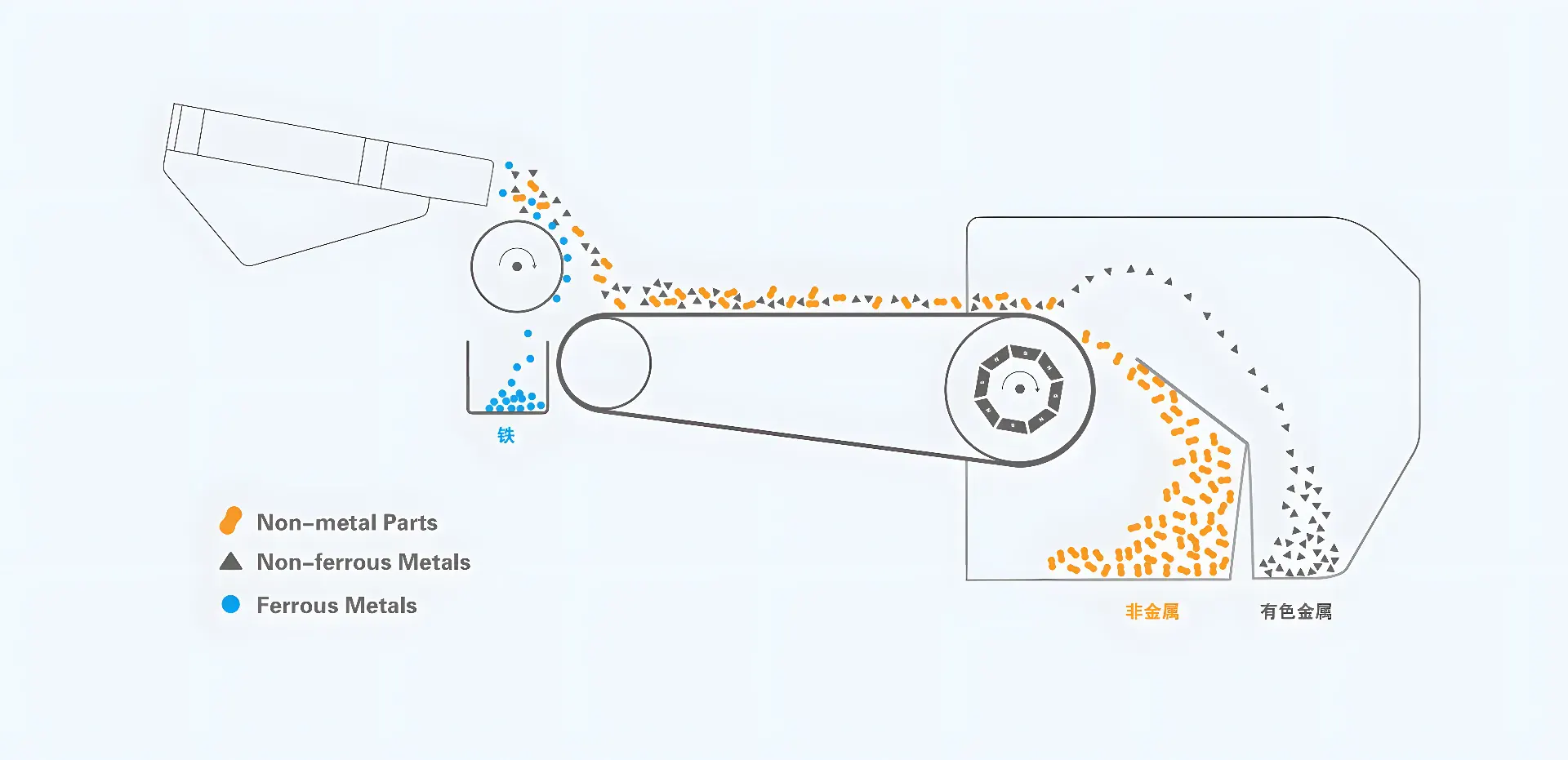
Material is spread into a thin layer, accelerated over a high-speed magnetic rotor, and separated by the different flight paths of non-ferrous and non-metallic particles. For the physics behind the rotor and belt system, see our guide to how an eddy current separator works.
Uniform Feeding
A stable single-layer feed improves exposure to the magnetic field and supports repeatable separation.
High-Speed Rotor
The magnetic rotor spins at high speed and induces eddy currents inside conductive non-ferrous particles.
Particle Ejection
Aluminum and other conductive metals are thrown forward while non-metallic material follows a shorter trajectory.
Splitter Collection
The adjustable splitter divides recovered metal from clean material according to purity and recovery requirements.
Where Fine Aluminum Recovery Delivers Value
The separator is suitable for plants that need to recover small non-ferrous metals or remove conductive contamination before downstream processing.
PET Plastic Flakes
Removes fine aluminum and non-ferrous contaminants to improve rPET flake purity before extrusion or food-grade upgrading.
Plastic purificationIncinerator Bottom Ash
Recovers valuable fine aluminum and other non-ferrous metals from processed ash fractions.
Metal recoveryGlass Recycling
Purifies crushed glass by removing aluminum caps, foil fragments, and other conductive contaminants.
Cullet cleaningZORBA Upgrading
Improves shredded non-ferrous scrap quality by separating aluminum-rich fractions from mixed metal streams.
Scrap upgradingE-Waste Processing
Helps recover fine conductive metals from shredded electronic scrap and circuit board processing residue.
WEEE separationFoundry Residues
Separates non-ferrous particles from casting sand and other foundry return streams.
Industrial residueEddy Current Separator Configuration
Representative machine views and principle diagrams for fine non-ferrous metal recovery applications.
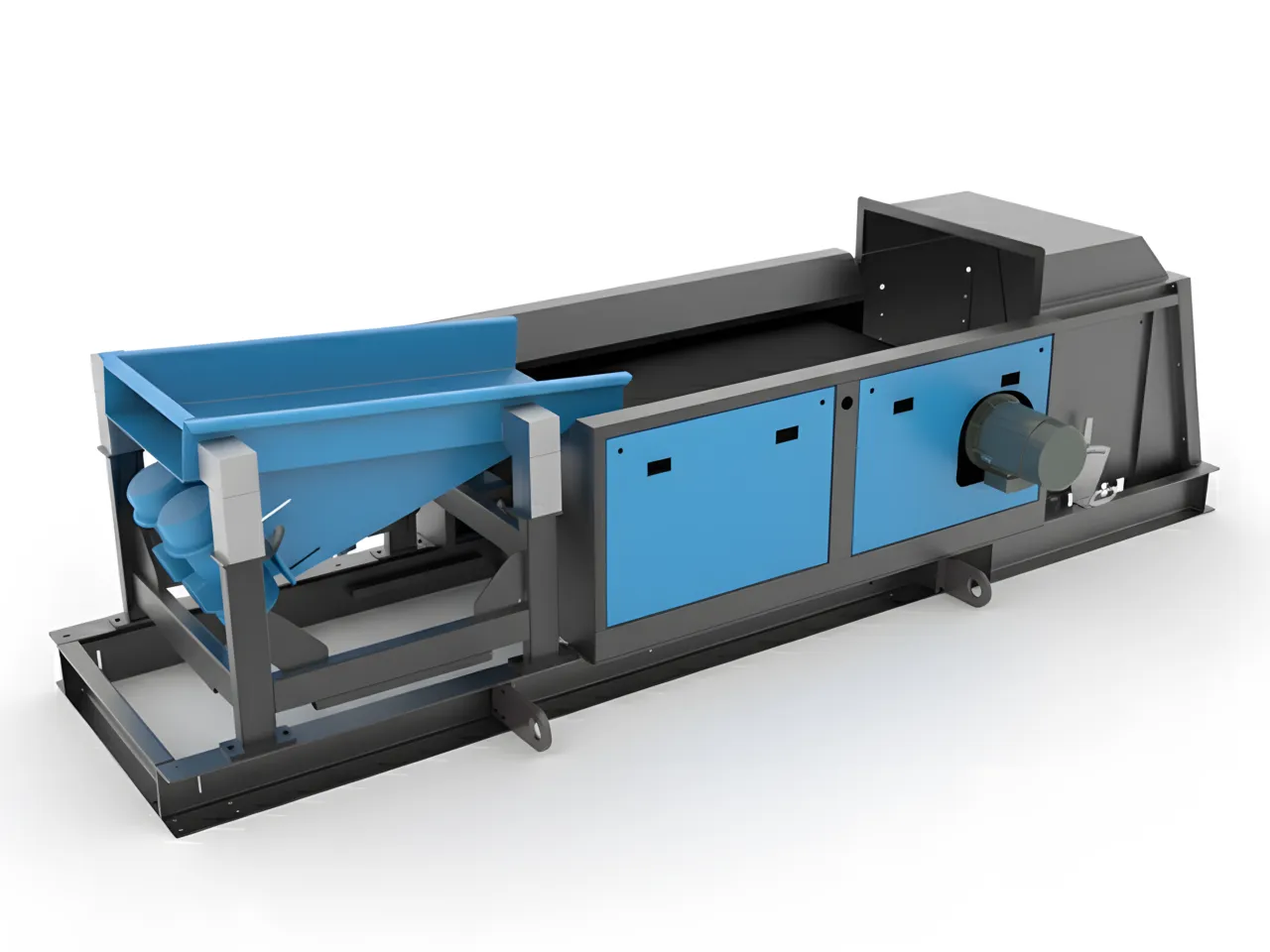
Built for Fine Fraction Separation
The machine combines strong rotor performance, stable feeding, practical adjustment, and service-friendly construction for continuous recycling operations.
High-Frequency Rotor
High-performance NdFeB rare earth magnets deliver strong surface magnetic intensity at rotor speeds up to 4000 RPM.
Uniform Vibratory Feeder
Optional vibratory feeding helps create an even single-layer material bed for consistent separation performance.
Adjustable Splitter Plate
The splitter position can be tuned by angle, height, and distance to balance purity and recovery rate.
Quick-Change Belt System
The cantilever frame design supports faster conveyor belt replacement and reduces maintenance downtime.
Eddy Current Separator Specifications
Reference specifications for common models. Final selection depends on feed size, material composition, target recovery, and available plant layout.
| Model | Dimensions L x W x H | Effective Belt Width | Rotor Speed | Belt Speed | Drive Power |
|---|---|---|---|---|---|
| 40A | 2080 x 1357 x 1100 mm | 330 mm | 0-3000 RPM | 0-2 m/s | 0.75 kW |
| 65A | 3300 x 1500 x 1200 mm | 520 mm | 0-4000 RPM | 0-2 m/s | 1.5 kW |
| 80A | 3300 x 1700 x 1200 mm | 670 mm | 0-4000 RPM | 0-2 m/s | 2.2 kW |
| 100A | 3300 x 1900 x 1200 mm | 840 mm | 0-4000 RPM | 0-2 m/s | 2.2 kW |
| 120A | 3300 x 2000 x 1200 mm | 1040 mm | 0-4000 RPM | 0-2 m/s | 2.2 kW |
| 140A | 3300 x 2130 x 1587 mm | 1200 mm | 0-4000 RPM | 0-2 m/s | 2.2 kW |
Swipe horizontally to view the full table on mobile.
Reliable Support Throughout the Equipment Lifecycle
From installation planning to routine maintenance, our service team helps keep your equipment operating safely, consistently, and efficiently.
1-Year Limited Warranty
Coverage includes manufacturing defects in major mechanical and electrical components for one year. Normal wear parts and damage caused by improper operation are handled separately.
Installation Guidance
We provide layout, foundation, utility, clearance, line-integration, and commissioning guidance to support a smooth installation and reliable startup.
Spare Parts Supply
Replacement wear parts, bearings, seals, sensors, electrical components, and other service items are available for scheduled maintenance and long-term operation.
Technical Assistance
Remote troubleshooting, operating recommendations, maintenance guidance, and optional on-site service are available when your project needs additional support.
High-Recovery Eddy Current Separator FAQs
Answers to key questions about fine aluminum recovery, rotor selection, particle size, and upstream magnetic protection.
Recover More Fine Aluminum from Your Recycling Stream
Send us your material details and throughput target. Our team will help match the rotor width, feeding method, splitter setup, and upstream magnetic protection to your application.
- Fine aluminum recovery consultation
- PET flake and glass purification support
- IBA, e-waste, and ZORBA applications
- Model selection and layout guidance