

Heavy-Duty Industrial Pipe Shredder
HDPE Pipe Shredder for Large-Diameter Plastic Pipe Recycling
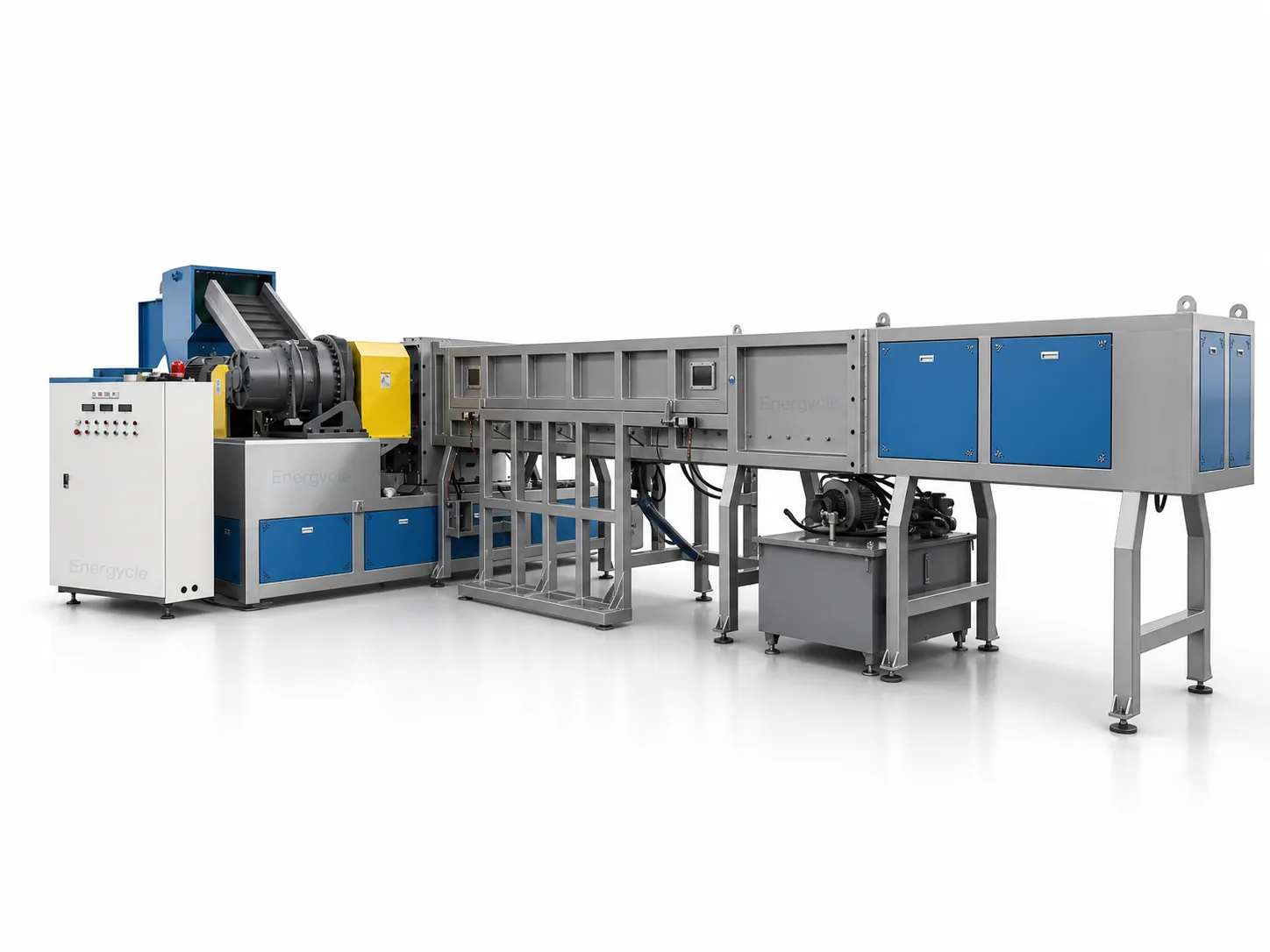
This heavy-duty HDPE pipe shredder is built for full-length, thick-wall HDPE, MDPE, PP, PVC, and PE100 pipes. A horizontal infeed chamber, independently driven solid shafts, and a hydraulically supported pusher reduce full-length pipes—up to 2,000 mm outside diameter and typically about 6 m long—into uniform chips for washing, granulating, and pelletizing. Full PLC automation and custom chamber/power packages match your diameter range and throughput.
Why Recycling Plants Choose a Horizontal HDPE Pipe Shredder
The horizontal HDPE shredder layout is built for safer loading, stable feeding, and higher throughput on long, thick-wall plastic pipes that are hard to cut by hand. Independent drives, a supported hydraulic pusher, and full PLC automation help plants process full-length pipe with less prep work and less downtime — and every configuration can be customized to your diameter range and capacity target.
Full-Length 6 m Pipe Loading Without Pre-Cutting
The extended horizontal chamber accepts full-length HDPE, MDPE, PP, and PVC pipes — including sleeved or nested pipe strings — directly by forklift or crane. Whole pipes up to about 6 m can go straight into the shredder, cutting out dangerous manual saw work, speeding loading, and keeping pipe alignment stable before shredding starts.
Cross-Mounted Independent Solid Shafts
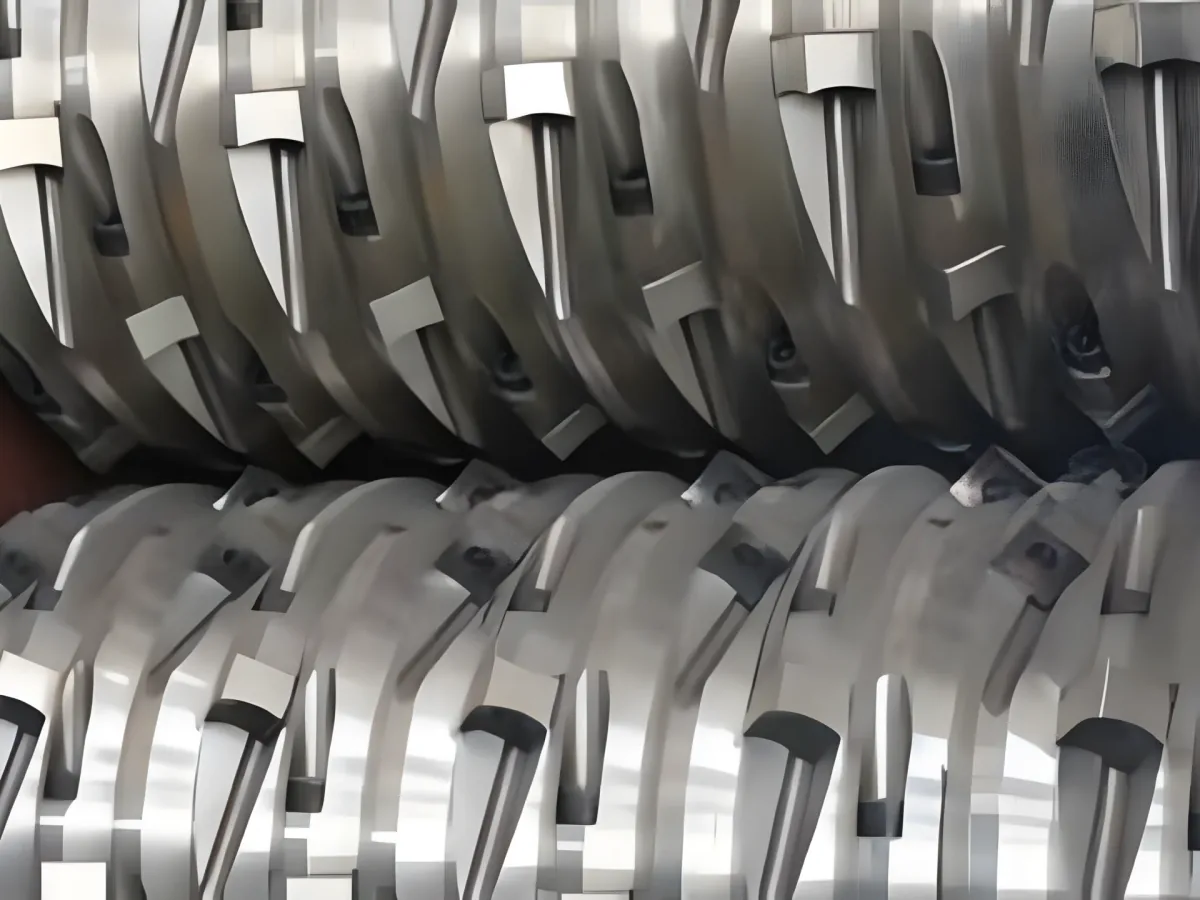
Independently driven solid shafts in a cross arrangement tear pipe from multiple directions for more complete size reduction. Separate drives cut unnecessary kinetic-energy loss versus a single shared power path, so thick-wall scrap is shredded more efficiently with less stalling.
Hydraulic Pusher with Independent Cylinder Support
The hydraulic pusher feeds pipe into the cutting zone at a controlled rate. Independent cylinder support keeps the ram from bending under side load, so force stays on-axis, cutters are protected, and output size stays more consistent on long, heavy pipe.
Large-Diameter Pipe Capability, Built to Your Spec
Chamber width, shaft setup, and power are matched to your pipe outside diameter, wall thickness, and material — from common municipal sizes through large-diameter pressure and drainage pipe. Custom configurations are available for pipe outside diameters up to 2,000 mm, subject to wall thickness, material, and throughput requirements.
Full PLC Automatic Control with Uniform Discharge
A full PLC program automates start/stop sequencing, feed coordination, overload detection, and automatic reverse to clear jams — reducing operator guesswork on continuous-duty lines. Screen-controlled discharge produces more uniform chips for conveying, washing, granulating, and pelletizing, while smart load management limits unnecessary blade wear and downtime.
How the Horizontal Pipe Shredding Process Works
A controlled four-step heavy-duty workflow turns full-length pipe scrap into uniform, downstream-ready chips.
Horizontal Loading
Full-length HDPE, PVC, or PP pipes—typically up to about 6 m—are placed into the horizontal infeed trough by forklift or crane with safer, more stable positioning than vertical loading.
Hydraulic Feeding
A hydraulic pusher with independent cylinder support advances the pipe into the cutting zone at a controlled rate, keeping force on-axis so thick-wall sections feed steadily without bending the ram.
Heavy-Duty Shredding
Cross-mounted, independently driven solid shafts and knives shear thick plastic pipe into manageable pieces while the PLC monitors torque, load, and automatic reverse under overload.
Uniform Chip Discharge
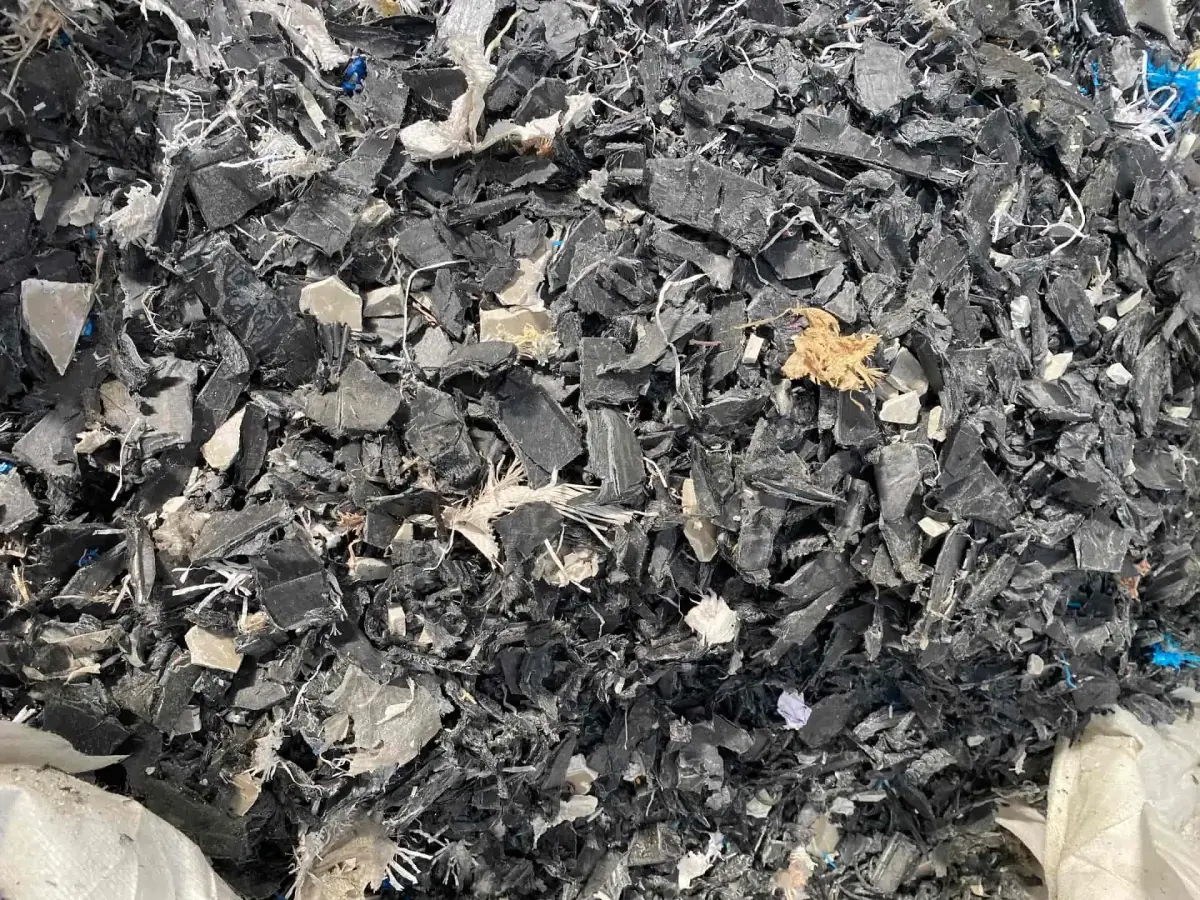
Material passes through a screen to deliver a more consistent chip size for conveying, washing, secondary crushing, or pelletizing.
Horizontal Loading
Full-length HDPE, PVC, or PP pipes—typically up to about 6 m—are placed into the horizontal infeed trough by forklift or crane with safer, more stable positioning than vertical loading.
Hydraulic Feeding
A hydraulic pusher with independent cylinder support advances the pipe into the cutting zone at a controlled rate, keeping force on-axis so thick-wall sections feed steadily without bending the ram.
Heavy-Duty Shredding
Cross-mounted, independently driven solid shafts and knives shear thick plastic pipe into manageable pieces while the PLC monitors torque, load, and automatic reverse under overload.
Uniform Chip Discharge
Material passes through a screen to deliver a more consistent chip size for conveying, washing, secondary crushing, or pelletizing.
Manual Pipe Cutting vs. Horizontal Pipe Shredder
For large diameter plastic pipes, automated shredding reduces risk, labor, and inconsistency while improving line efficiency.
| Factor | Manual Cutting | Horizontal HDPE Pipe Shredder |
|---|---|---|
| Loading Long Pipes | Frequent repositioning and pre-cutting | Full-length horizontal loading by forklift or crane (~6 m) |
| Operator Safety | Higher handling and cutting risk | Enclosed shredding with hydraulic feeding |
| Throughput | Slow and labor intensive | Higher continuous throughput (varies by model and pipe size) |
| Output Uniformity | Irregular chunks | Screen-controlled shred size |
| Line Integration | Hard to automate downstream flow | Easy connection to conveyor, washing, and granulating systems |
HDPE Pipe Shredder vs. HDPE Pipe Crusher: Which Do You Need?
Buyers often compare HDPE pipe shredders and HDPE pipe crushers when planning a plastic pipe recycling line. Both machines reduce pipe size, but they sit at different stages and produce different output sizes.
| Factor | HDPE Pipe Shredder (this page) | HDPE Pipe Crusher |
|---|---|---|
| Stage in Recycling Line | Primary size reduction (first stage) | Secondary size reduction (after shredding) |
| Input Size Capability | Full-length large-diameter pipe (configured to project; ~6 m typical) | Pre-shredded chips or shorter pipe sections |
| Output Size | 40–120 mm chips (screen-controlled) | 8–15 mm flakes ready for washing |
| Cutting Mechanism | Independently driven solid shafts + hydraulic pusher (heavy-duty horizontal) | High-speed rotor with screen-controlled granulation |
| When to Use | Step 1 of any plastic pipe recycling line | Step 2 — after shredder, before washing |
Most plastic pipe recycling lines need both. See our large diameter HDPE pipe crusher for the secondary stage. For the complete decision framework on mobile vs fixed pipe shredders, read our plastic pipe recycling: mobile vs fixed shredder selection guide. For the full recovery workflow and broader equipment context, see our plastic pipe recycling process guide and HDPE recycling equipment guide.
Typical Applications for the HDPE Pipe Shredder
This heavy-duty industrial pipe shredder fits recycling centers, pipe manufacturers, and waste processors handling bulky HDPE, PVC, PP, and PE100 pipe scrap—from water mains and gas distribution to drainage, electrical conduit, and extrusion start-up waste.
Municipal Water Pipe Scrap
Processes rejected or end-of-life HDPE and MDPE pipe from water transmission and drainage projects.
Gas Pipe and Pressure Pipe Waste
Handles tough, thick-wall pipe scrap that is difficult to cut efficiently with conventional equipment.
Pipe Production Start-Up Waste
Reclaims long purge lengths, off-spec sections, and oversized production scrap generated by extrusion plants.
PVC Pipe Shredding
Configured with hardened SKD-11 blades and dust extraction, the same heavy-duty machine shreds water-supply, drainage, and electrical-conduit PVC pipe without a separate primary cutter.
Complete Plastic Pipe Recycling Lines
Works as the front-end size reduction stage before washing, granulating, drying, and pelletizing systems. Pair with a mobile pipe shredder for distributed-source projects.
HDPE Pipe Shredder Video Demonstration
See how this heavy-duty horizontal machine loads full-length pipe, feeds with hydraulic push, and shreds thick-wall plastic pipe in real conditions.
Machine Gallery
Key views of the machine, cutting system, and shredded output for pipe recycling projects.
Technical Specifications
Reference models for this HDPE shredder and plastic pipe recycling machine product line. Custom configurations can accept pipe outside diameters up to 2,000 mm; the models below are reference starting points rather than the limit of the product line. Final configuration depends on pipe outside diameter, wall thickness, material type (HDPE / PVC / PP / PE100), target chip size, and required throughput.
| Model | Shaft Diameter | Capacity | Main Power | Chamber Size | Overall Dimensions |
|---|---|---|---|---|---|
| RTM-W600 | 350 x 2 mm | 800 kg/h | 30 + 37 kW | 6200 x 670 mm | 12500 x 2500 x 1800 mm |
| RTM-W800 | 450 x 2 mm | 1000 kg/h | 37 + 45 kW | 6200 x 870 mm | 12800 x 2900 x 2000 mm |
| RTM-W1000 | 550 x 2 mm | 1200 kg/h | 45 + 55 kW | 6200 x 1100 mm | 13100 x 3260 x 2150 mm |
| RTM-W1200 | 650 x 2 mm | 1500 kg/h | 55 + 75 kW | 6200 x 1300 mm | 13100 x 3460 x 2300 mm |
Note: Specifications above are for reference only. Capacity, power, chamber size, and other parameters vary by model and material, and can be customized to your pipe diameter, wall thickness, and throughput requirements. Contact us for a configuration matched to your project.
Recommended Downstream Equipment
A pipe shredder delivers the best ROI when integrated into a full recycling workflow built around washing, secondary size reduction, and pelletizing.
Large Diameter Pipe Crusher
Secondary size reduction for turning shredded pipe into smaller flakes suitable for washing or extrusion.
Rigid Plastic Washing Line
Washing and separation system for cleaning HDPE, PP, and PVC regrind after primary shredding.
Rigid PP HDPE Pelletizing Machine
Converts cleaned regrind into uniform recycled pellets for reuse in extrusion and molding applications.
What Customers Value Most
Feedback from recycling and pipe manufacturing operations that process difficult long-length plastic scrap.
The horizontal design solved our biggest problem: loading long HDPE pipe safely. We doubled daily throughput without adding labor.
Output size is much more consistent than manual cutting, so our washing and granulating line runs with fewer stoppages.
The PLC overload protection matters in real production. We process thick-wall pipe scrap every shift with far less downtime and blade damage.
Reliable Support Throughout the Equipment Lifecycle
From installation planning to routine maintenance, our service team helps keep your equipment operating safely, consistently, and efficiently.
1-Year Limited Warranty
Coverage includes manufacturing defects in major mechanical and electrical components for one year. Normal wear parts and damage caused by improper operation are handled separately.
Installation Guidance
We provide layout, foundation, utility, clearance, line-integration, and commissioning guidance to support a smooth installation and reliable startup.
Spare Parts Supply
Replacement wear parts, bearings, seals, sensors, electrical components, and other service items are available for scheduled maintenance and long-term operation.
Technical Assistance
Remote troubleshooting, operating recommendations, maintenance guidance, and optional on-site service are available when your project needs additional support.
Frequently Asked Questions
Common questions from buyers comparing large diameter pipe shredding solutions.
It is built primarily for HDPE and MDPE pipe, and can be configured for PP, PVC, PE100, and other rigid plastic pipes depending on diameter, wall thickness, contamination, and target throughput.
Final chip size depends on the screen opening and setup. Typical primary discharge is about 40–120 mm before secondary crushing or granulation on the washing/pelletizing line.
We size chamber width, shaft setup, and power from your pipe outer diameter range, wall thickness, material type, required throughput, and whether the shredder feeds a washing line, secondary crusher/granulator, or pelletizing line. Spec-table models are starting points—capacity differs by configuration and feedstock.
The horizontal chamber supports full-length pipe during loading (typically up to about 6 m), reduces dangerous manual pre-cutting, and lets the hydraulically supported pusher feed steadily into the independently driven cutting shafts.
An HDPE shredder is the primary size-reduction stage in an HDPE recycling line. This heavy-duty horizontal pipe shredder cuts long, thick-wall HDPE pipes (water mains, gas distribution, drainage) and bulky pipe scrap into roughly 40–120 mm chips for washing, granulating, and pelletizing. Independent solid shafts, a supported hydraulic pusher, and full PLC control make it more efficient on full-length pipe than a general-purpose shredder.
Yes—when configured with hardened SKD-11 or carbide-tipped blades and dust extraction, it shreds water-supply, drainage, and electrical-conduit PVC pipe. PVC typically needs lower shaft speeds (about 25–35% slower than HDPE) to limit fines, plus dust extraction for cutting dust and fumes. Throughput on PVC is often 25–35% lower than equivalent HDPE because of the slower speed.
An HDPE pipe shredder is the primary (first-stage) machine: it accepts full-length, thick-wall pipe—configured to your diameter range, typically up to about 6 m long—and produces roughly 40–120 mm chips. An HDPE pipe crusher (granulator) is the secondary stage: it takes pre-shredded chips down to about 8–15 mm flakes for washing or extrusion. Most plastic pipe recycling lines need both: shredder first, crusher second.
Pricing for an industrial HDPE pipe shredder varies considerably with maximum pipe diameter, wall thickness, material, required throughput, chamber length, shaft and blade configuration, motor package, controls, and downstream equipment. Installation and commissioning costs also depend on the project scope, including foundation work, electrical supply, conveyors, dust extraction, freight, travel, and local labor. Because these items differ by site and country, broad price ranges should be treated only as preliminary budgeting references—not as a quotation. Send your pipe specifications and required line scope for a project-specific proposal.
Yes. PE100 pressure pipes (gas distribution, water mains, industrial fluids) have thicker walls and higher tensile strength than standard HDPE. For larger PE100 diameters and heavy wall, we recommend a higher dual-motor package (for example 55 + 75 kW class or above) so load stays stable. Throughput on PE100 is typically 15–25% lower than standard HDPE at a similar diameter because of wall thickness.
Choose a fixed or mobile pipe shredder according to feedstock, pipe dimensions, site distribution, required throughput, utilities, transport conditions, and the downstream line. A fixed system generally suits a central plant with steady material flow, while a mobile pipe shredder may suit material generated across multiple sites. Final selection and expected economics are confirmed for the specific configuration, feedstock, and project. See our mobile vs fixed shredder selection guide for the complete decision framework.
Need a Pipe Shredder Matched to Your Material and Capacity?
Send your pipe diameter range, wall thickness, material type, and target throughput. We will recommend the right horizontal shredder configuration and downstream recycling layout.