

Standard Pellet Recovery for Plastic Regrind and Flakes
Single-Screw Pelletizer for Plastic Recycling
A single-screw plastic pelletizing machine for turning prepared plastic flakes, regrind, rigid scrap, and selected flexible materials into recycled pellets. The line combines controlled feeding, stable plasticization, melt filtration, pelletizing, cooling, and discharge to deliver a practical pellet recovery route for processors who do not need a more complex compounding system.
Why a Standard Single-Screw Pelletizer Still Fits Many Recycling Projects
Not every pelletizing job needs a compounding-grade twin-screw or heavy front-end compaction. When the feed is already reasonably prepared, a single-screw line is often the most practical and economical route.
Simple, Proven Pelletizing Workflow
The line focuses on the essentials: stable feeding, controlled melting, melt cleaning, pelletizing, and downstream cooling or drying without unnecessary process complexity.
Stable Heat Control
Controlled barrel temperature helps maintain more uniform melt quality and improves pellet consistency during continuous operation.
Integrated Melt Filtration
Screen changers remove residual contamination before pellet cutting, helping protect output quality and downstream processing performance.
Flexible Around Feed Condition and Pelletizing Method
The system can be configured as single-stage or double-stage, and matched with water-ring or strand pelletizing depending on the polymer and pellet requirement.
Useful for Both Internal Reuse and Pellet Resale
Once the feedstock is properly washed, dried, or prepared, the pellet output can support internal reuse, blending, or resale depending on the plant’s recycling model.
Lower Operational Complexity
For many standard recycling tasks, single-screw pelletizing is easier to run, maintain, and size than more specialized mixing or compounding systems.
Best Fit Materials and Applications
This machine is best suited to prepared feedstock that is already crushed, washed, dried, or otherwise stabilized before extrusion.
Rigid Plastic Flakes and Regrind
A practical fit for rigid PP, HDPE, and similar flakes that are already washed and ready for direct extrusion.
Prepared Film Scrap
Works on film-based feed when the material has already been densified or prepared enough for stable single-screw feeding.
Post-Industrial Production Waste
Handles clean internal factory scrap that needs a straightforward route back into pellet form.
General Recycling Pellet Production
A broad choice for recycling plants that need stable pellet output without moving into advanced compounding duties.
Water-Ring or Strand Cutting Projects
Can be paired with different pelletizing routes depending on polymer melt behavior, layout preference, and final pellet format.
Pellet Storage and Blending Feed
Produces a denser output form that is easier to store, batch, and feed into later molding or extrusion steps.
How the Single-Screw Pelletizing Process Works
The system converts prepared plastic scrap into pellets through a stable and familiar recycling workflow.
Feed the Prepared Material
Pre-crushed, washed, or otherwise prepared plastic enters the line through a controlled feeding section.
Melt and Homogenize
The screw conveys and plasticizes the material under controlled heat, creating a more uniform melt stream.
Filter the Melt
A screen changer removes remaining impurities before the melt reaches the pelletizing section.
Cut into Pellets
The melt is pelletized through a water-ring or strand cutting arrangement selected around the material and target pellet format.
Cool, Dry, and Discharge
Pellets are cooled and dried before discharge to a silo, bagging station, or downstream conveying system.
Single-Screw Pelletizer vs Other Pelletizing Routes
Choosing the right pelletizing route depends mostly on feed stability, required mixing intensity, and whether you need broader compounding functions.
| Decision Factor | Single-Screw Pelletizer | Twin-Screw Plastic Extruder | Cutter Compactor Line |
|---|---|---|---|
| Best Feed Condition | Prepared flakes, regrind, and stabilized scrap | Formulations needing stronger mixing, additives, or devolatilization | Fluffy low-bulk-density film and raffia that need aggressive front-end compaction |
| Process Complexity | Moderate and practical | Higher complexity for compounding work | Moderate with stronger front-end preparation |
| Mixing Intensity | Standard pelletizing duty | Stronger mixing and compounding capability | Focused more on feeding stability than recipe compounding |
| Typical Use Case | General pellet recovery from prepared scrap | Masterbatch, filled compounds, and more demanding formulations | Flexible film pelletizing where direct feeding is difficult |
| Economic Fit | Often the most practical choice for standard recycling projects | Best when added process capability clearly justifies it | Best when feed instability would otherwise limit throughput |
Swipe horizontally to view the full table.
Main Technical Parameters
These model ranges are typical references for standard single-screw pelletizing projects. Final output depends on polymer type, contamination, filtration demand, and pelletizing layout.
| Model | Screw Diameter | L/D | Driving Motor | Output |
|---|---|---|---|---|
| SJ-100 | 100 mm | 20 / 32 | 45 – 55 kW | 100 – 200 kg/h |
| SJ-120 | 120 mm | 20 / 32 | 55 – 75 kW | 100 – 200 kg/h |
| SJ-150 | 150 mm | 20 / 32 | 75 – 90 kW | 200 – 300 kg/h |
| SJ-180 | 180 mm | 20 / 32 | 90 – 132 kW | 200 – 400 kg/h |
| SJ-200 | 200 mm | 20 / 32 | 160 – 280 kW | 600 – 800 kg/h |
Swipe horizontally to view the full table.
Machine Gallery
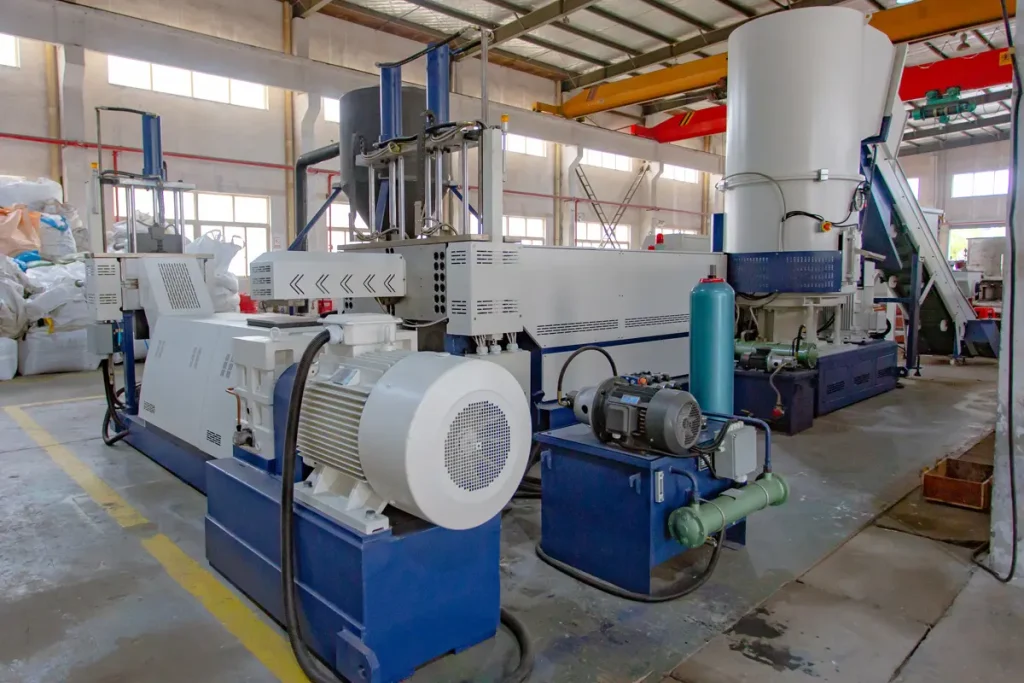
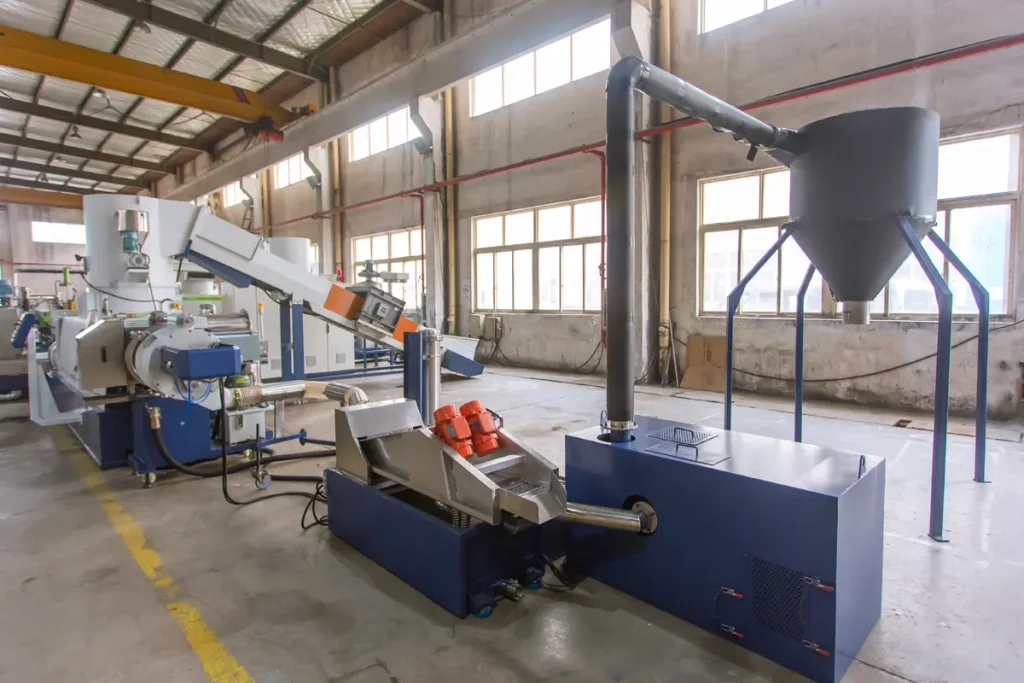
Reference views of the standard single-screw pelletizing machine layout and pelletizing section details.
Watch the Pelletizing Process
A quick view of standard single-screw pellet recovery from feed intake through pellet discharge.
Frequently Asked Questions
Questions buyers usually ask when comparing a standard single-screw pelletizer with other pelletizing routes.
Common applications include PP, PE, rigid flakes, prepared regrind, and selected film materials that have already been stabilized enough for direct extrusion.
Double-stage pelletizing is often useful when the feed is less stable, contamination is higher, or the project demands better melt consistency and cleaner pellet output.
That depends on polymer behavior, layout preference, throughput, and the pellet finish you want. We usually recommend the pelletizing method after reviewing the feed material and output target.
The line uses a screen changer to remove fine impurities. For more difficult feed, upstream washing, drying, and stronger filtration arrangements may be needed.
Please share the polymer type, feed condition, contamination level, moisture level, target kg/h, and whether the final pellets are for internal reuse or market sale.
Need a Practical Pelletizing Line for Prepared Scrap?
Tell us your material type, level of preparation, target output, and pellet quality requirement. We will recommend the suitable single-stage or double-stage single-screw configuration.