

Horizontal Balers for Waste Paper, Cardboard and Recyclables
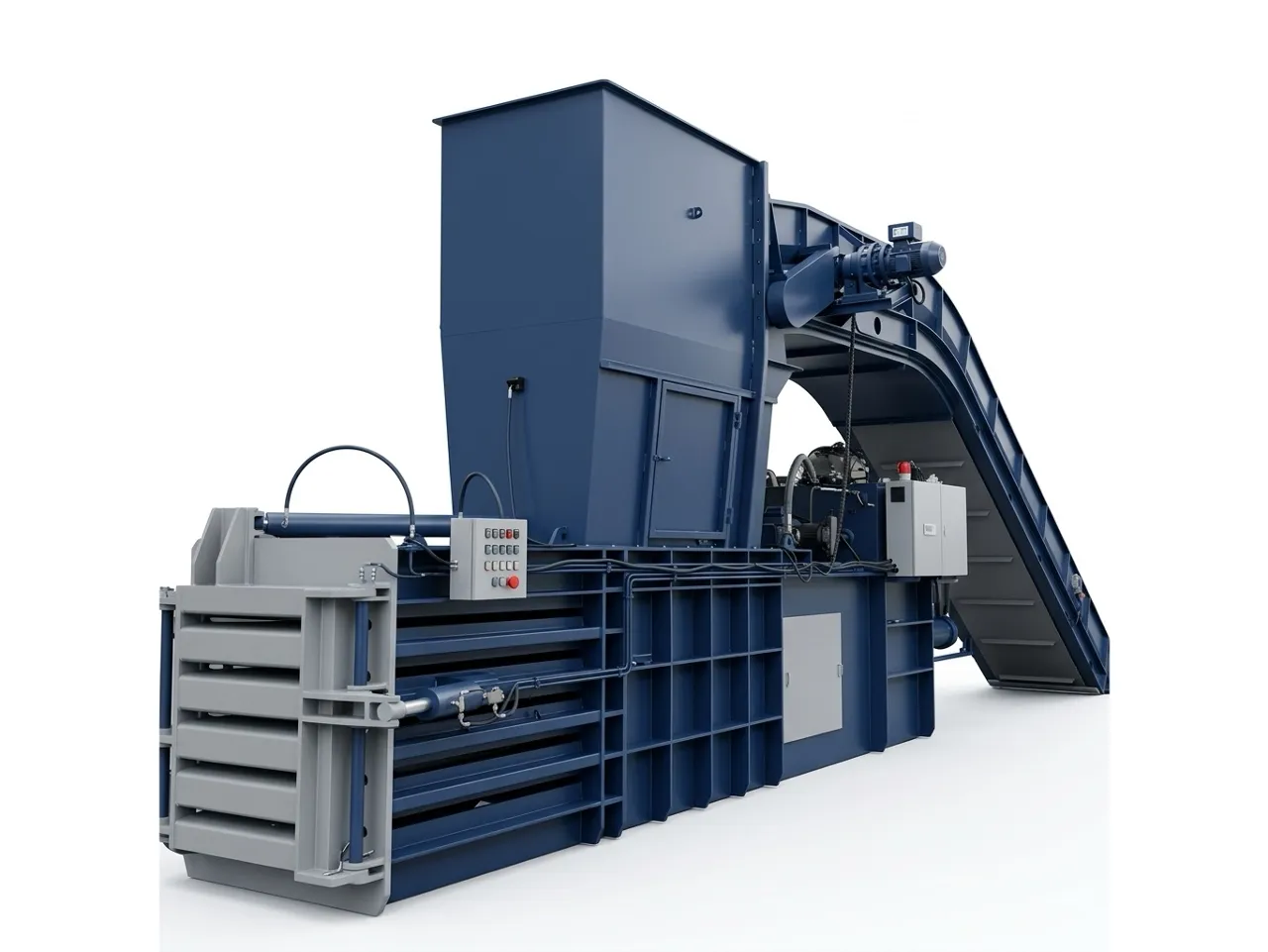
Semi-Automatic Horizontal Baler
Semi-automatic horizontal balers for waste paper, OCC, cardboard and selected plastic recycling applications. Compare seven WB and WS models with 30–100 ton pressing force, different chamber sizes and bale dimensions. Feeding, controls, tying and discharge arrangements are specified for your material and production needs; semi-automatic operation still requires operator involvement in tying and handling.

Choose a Horizontal Baler Around Your Material and Bale Requirements
Compare the WB and WS model specifications below, then confirm the feeding, tying and discharge configuration for your site. Throughput depends on the material and operating cycle, not pressing force alone.
Bale Discharge Matched to the Model
Open-gate discharge is available on the configurations shown. Confirm the gate arrangement, operating clearance and bale removal method for the selected model.
A Range of Chamber and Bale Sizes
The range covers compact 30–40 ton models and larger 60–100 ton machines. Match loose material volume, feed opening and finished bale dimensions to your operation.
Optional Scrap Collection Integration
For suitable paper trims and lightweight production scrap, an optional cyclone or collection system can feed the baler. Material suitability and integration are confirmed during selection.
Cutting Configuration for Paper Trims
A double-cutting configuration can assist with paper trims and cardboard offcuts. Confirm its availability and suitability for the selected model and feedstock.
Bales Sized for Storage and Transport
Select bale dimensions and tying arrangements around your handling equipment and buyer requirements. Bale density varies with the material, moisture and operating settings.
Controls and Hydraulic Configuration
Manual and PLC-based control configurations are selected to suit the model and work cycle. Confirm the controls, safety interlocks and operator tasks in the final proposal.
Typical Materials and Industries
Paper and cardboard are core applications. PET bottles and PP/PE film require a suitable model, tying arrangement and feed preparation; confirm the configuration for each material rather than assuming one setup handles every stream.
Carton and Cardboard Plants
Compacts carton trims, OCC offcuts, and corrugated waste into denser bales that are easier to store and ship.
Printing and Paper Factories
Suitable for newsprint, magazines, cut paper, and similar fiber waste that accumulates continuously during production.
PET Bottle Recycling
For bottle collection and recycling sites, subject to confirmation of bottle condition, feeding, bale density and tying requirements.
PP and PE Film Processing
Useful for film scraps, trims, and packaging waste when volume reduction and cleaner plant organization are priorities.
Industrial Waste Consolidation
For factories and recycling centers consolidating sorted recyclable streams. Keep different materials in separate bales when required by downstream buyers.
Intermediate Automation Upgrade
Often chosen as the step between manual vertical baling and fully automatic conveyor-fed horizontal systems.
How the Semi-Automatic Horizontal Baling Process Works
The machine compresses loose recyclable material into transport-ready bales with a simpler operating structure than a fully automatic baler.
Feed the Material
Load loose paper, cardboard or an approved recyclable stream into the feed opening. Manual, conveyor or cyclone feeding depends on the agreed configuration.
Compress Horizontally
The hydraulic ram compacts the material through repeated strokes. Controls and operator tasks depend on the selected model.
Reach the Bale Size
Build the bale to the required dimensions. The WB models list fixed reference bale dimensions; the WS models list a variable length L.
Tie the Bale
The operator completes manual or assisted tying as specified. Semi-automatic does not mean fully automatic wire tying.
Discharge and Handle
Release and remove the tied bale using the selected discharge arrangement. Keep gate access and handling clearance in the equipment layout.
Compare Semi-Automatic, Fully Automatic and Vertical Balers
Compare the operating method as well as hourly volume. A larger semi-automatic model can suit substantial throughput, provided the site can support feeding, tying and bale handling.
| Decision Factor | Semi-Automatic Horizontal Baler | Fully Automatic Horizontal Baler | Vertical PET Baler |
|---|---|---|---|
| Best Fit | Mid-scale operations with steady recyclable flow | Large continuous sites with high daily tonnage | Small to mid-scale sites with batch loading |
| Automation Level | Hydraulic compression with manual or assisted tying | Automatic tying with configured feeding and discharge | More manual handling and tying |
| Feeding Method | Direct feed or optional cyclone-assisted feed | Conveyor-fed continuous loading | Manual batch charging |
| Footprint and Complexity | Depends on model, infeed equipment and bale handling space | Highest footprint and system complexity | Most compact solution |
| When to Choose | When you need a step up from vertical baling without full automation | When full-scale throughput and labor reduction justify it | When volume remains moderate and space is limited |
Swipe horizontally to view the full table.
Technical Specifications
Compare seven semi-automatic horizontal baler models for waste paper, cardboard and approved recyclable streams. Values are reference specifications; confirm the final machine configuration and achievable output for your material.
WB Models — Reference Bale Dimensions
| Model | RTM300WB7070 | RTM400WB7280 | RTM600WB10080 | RTM1000WB11085 | RTM1000WB110110 |
|---|---|---|---|---|---|
| Pressure | 30 tons | 40 tons | 60 tons | 100 tons | 100 tons |
| Main Motor Power | 11 kW | 11 kW | 15 kW | 30 kW | 30 kW |
| Cycle Time | — | 19 s | 23 s | 36 s | 42 s |
| Oil Reservoir | — | 240 L | 380 L | 1460 L | 1600 L |
| Number of Belting | 3 lines | 4 lines | 4 lines | 4 lines | 5 lines |
| Feed Opening | 700 x 690 mm | 1000 x 700 mm | 1200 x 980 mm | 1400 x 1050 mm | 1800 x 1050 mm |
| Chamber Size | — | 2200 x 700 x 780 mm | 2400 x 980 x 780 mm | 3000 x 1050 x 830 mm | 3700 x 1050 x 1050 mm |
| Bale Size | 900 x 700 x 700 mm | 1000 x 720 x 800 mm | 1000 x 1000 x 800 mm | 1300 x 1100 x 850 mm | 1600 x 1100 x 1100 mm |
| Bale Density for OCC | 400 – 500 kg/m3 | 400 – 500 kg/m3 | — | — | — |
| Throughput | 0.5 – 1 ton/h | 0.5 – 1 ton/h | 1 – 2 tons/h | 1.5 – 3 tons/h | 2 – 6 tons/h |
| Machine Weight | 4 tons | 4 tons | 5.2 tons | 12 tons | 18 tons |
| Overall Dimension | 4200 x 1100 x 1900 mm | 5500 x 1100 x 2000 mm | 6100 x 1400 x 2000 mm | 7450 x 1600 x 2300 mm | 8200 x 1600 x 3500 mm |
Swipe horizontally to view the full table.
WS Models — Variable Bale Length
| Model | RTM400WS7280 | RTM1000WS110125 |
|---|---|---|
| Pressure | 40 tons | 100 tons |
| Main Motor Power | 11 kW | 55 kW |
| Number of Belting | 4 lines | 5 lines |
| Feed Opening | 1000 x 690 mm | 2080 x 1076 mm |
| Bale Size | L x 720 x 800 mm | L x 1100 x 1250 mm |
| Bale Density for OCC | 350 – 450 kg/m3 | 400 – 500 kg/m3 |
| Throughput | 0.5 – 1 ton/h | 5 – 8 tons/h |
| Machine Weight | 5 tons | 16.5 tons |
| Overall Dimension | 4800 x 1500 x 2000 mm | 9100 x 2500 x 4300 mm |
Swipe horizontally to view the full table.
L denotes variable bale length. A dash means that the value is not listed and must be confirmed. OCC density values apply to corrugated cardboard, not every material. Throughput depends on feed density, moisture, feeding consistency, tying time and bale handling. RTM400WB7280 is also listed as RTM-400WB7280; it is shown once here.
Baler Configurations
Reference equipment photos. The final gate, infeed and discharge arrangement depends on the selected model and configuration.
Watch the Baler in Action
A quick look at how the semi-automatic horizontal baler handles waste collection and bale formation in an industrial setting.
Frequently Asked Questions
Questions plants commonly ask when evaluating a semi-automatic horizontal baler.
Yes. Waste paper, OCC, carton offcuts and paper trims are core applications. Select the feed opening, chamber and bale dimensions around the size and volume of your material. PET bottles and PP/PE film require confirmation of the model and configuration.
The WB table lists reference bale dimensions for each model. The WS table uses L for variable bale length. The tables do not imply that gate design, controls or discharge arrangements are identical; confirm these details in the final proposal.
No. These machines require operator involvement in manual or assisted tying and bale handling. Manual or PLC-based controls can be specified by model, but the control system alone does not make tying fully automatic.
An optional cyclone or scrap collection system can be considered for suitable paper trims and lightweight scrap. Conveyor feeding may also be specified. Material characteristics, collection volume and plant layout must be checked before integration.
The equipment photos include an open-gate configuration. Gate design, bale release and handling clearance must be confirmed for the selected WB or WS model rather than assumed to be identical across the range.
The listed figures are reference values. Actual throughput depends on material bulk density, moisture, feeding consistency, tying time and handling. The listed OCC density ranges apply to corrugated cardboard and should not be used as guaranteed values for plastic film, bottles or other materials.
Share your material type and photos, hourly or daily volume, maximum feed size, required bale dimensions and density, shift pattern, power supply and available space. Also specify the feeding method, control preference and any collection equipment to be integrated.
Need the Right Horizontal Baler for Your Throughput?
Send us your material type, hourly output, bale requirement, and plant layout. We will help determine whether this semi-automatic horizontal baler or a fully automatic line is the better fit.