

Shear Cutting · High Capacity · Heavy-Duty Waste Reduction
Double (Twin) Shaft Shredder for Plastic, Metal & Tire Recycling
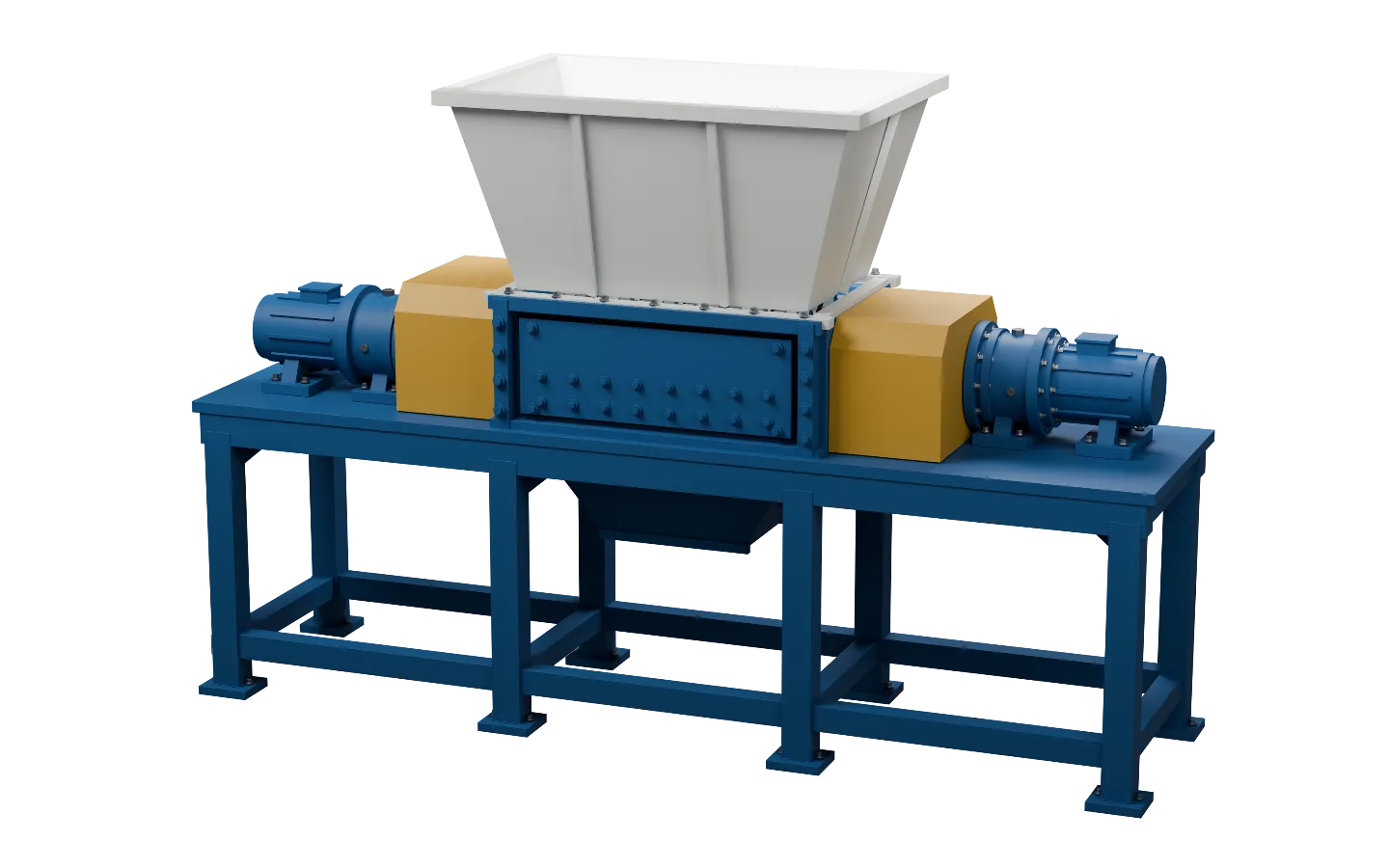
This double shaft shredder uses low-speed, high-torque shear cutting to process plastics, metal drums, tires, bulky waste, and other difficult industrial materials. It is designed for stable throughput, lower downtime, and flexible blade configurations for different waste streams.
Why Choose a Shear Type Double Shaft Shredder
Low-speed dual-shaft shearing is widely used where heavy, irregular, or mixed materials need strong tearing force and stable continuous reduction.
Low-Speed High-Torque Shear Cutting
The dual shafts rotate at low speed with strong torque, allowing the machine to tear, shear, and reduce bulky or dense materials with stable output and lower dust than high-speed cutting systems.
Smooth Speed Reduction
Belt and reducer transmission helps absorb shock loading and protect the drive system during difficult shredding operations.
Custom Knife Thickness
Blade thickness options from 25 mm to 100 mm allow the machine to match different feedstock hardness and target output requirements.
PLC Control with Reverse and Overload Protection
PLC-based control helps manage reverse rotation, overload conditions, and general fault diagnosis. This improves uptime, reduces risk of jamming, and supports safer operation in demanding industrial environments.
Single-Shaft vs. Double-Shaft: Which Fits Your Feedstock?
Comparing primary shear reduction with screen-controlled sizing to help match machine configuration with feedstock properties and downstream targets.
| Selection Factor | Double-Shaft Shredder (ERMDS) | Single-Shaft Shredder (Screen-Equipped) |
|---|---|---|
| Primary Feedstock Suitability | Best suited for bulky, hollow, or high-volume scrap (drums, tires, mixed plastics, large containers) needing primary coarse tearing. Material suitability depends on wall thickness and drive sizing. | Best suited for solid, thick-walled rigid plastics (purges, thick lumps, pipes) fed with a hydraulic pusher ram against the rotor. |
| Output Sizing Control | Primary size reduction into rough strips or shreds determined by cutter hook pattern and blade width; no discharge screen to prevent clogging on elastic or mixed feeds. | Defined particle size controlled by an interchangeable sizing screen (e.g., 20–80 mm) in a single pass. |
| Downstream Regrind Requirements | If downstream processes (granulation, washing, compounding) require fine, uniform regrind, integrate a secondary granulator rather than relying solely on thinner shredder blades. | Often discharges directly to downstream washing or conveying systems if the screen opening satisfies the process tolerance. |
| Feeding and Jam Protection | Dual counter-rotating shafts draw bulky scrap in continuously without an external pusher; PLC automatic reverse clears high-load jams. | Relies on a hydraulic ram to push scrap into the rotor; requires pre-sorting to prevent tramp metal or shock-loading jams. |
Swipe horizontally to view the full table.
How the Double Shaft Shredding Process Works
A heavy-duty shear reduction process built for continuous operation and mixed feedstock conditions.
Material Loading
Bulky plastics, drums, tires, wood, or mixed industrial waste are fed into the hopper.
Dual Shaft Shearing
The twin shafts pull material inward and cut it through opposing knife stacks with strong shear force.
Auto Reverse Protection
When overload or bridging occurs, the PLC commands reverse rotation to release material and restore flow.
Discharge for Next Stage
Reduced material exits for conveying, sorting, secondary crushing, or full recycling line integration.
Ideal Applications
This machine is designed for users who need one shredder to handle multiple heavy-duty waste categories.
Plastic and Metal Drums
Reduces large containers into manageable pieces for downstream sorting and recycling.
Tires and Automotive Parts
Handles tires, bumpers, rubber parts, and road barriers that require strong tearing action.
Wood and Bulky Waste
Processes mixed wood scrap and bulky industrial waste with continuous heavy-duty performance.
General Industrial Waste
Useful for mixed production scrap streams where a single material-specific shredder is not enough.
Video Demo
Watch the double shaft shredder reduce heavy mixed materials with low-speed, high-torque shear cutting.
Device Showcase
Machine details including blades, main frame, and drivetrain components.


Technical Parameters
Model selection depends on feedstock category, target throughput, and required knife thickness.
| Model | Motor Power | Spindle Diameter | Blade Thickness | Speed | Shredding Chamber | Reference Capacity | Weight |
|---|---|---|---|---|---|---|---|
| ERMDS800 | 22 x 2 kW | 460 mm | 25-100 mm | 20 rpm | 800 x 980 mm | 800-1200 kg/h | 6500 kg |
| ERMDS1000 | 30 x 2 kW | 460 mm | 25-100 mm | 20 rpm | 1000 x 980 mm | 1000-1500 kg/h | 7500 kg |
| ERMDS1200 | 45 x 2 kW | 520 mm | 25-100 mm | 18 rpm | 1200 x 1250 mm | 1200-2000 kg/h | 9200 kg |
| ERMDS1400 | 55 x 2 kW | 520 mm | 25-100 mm | 18 rpm | 1400 x 1250 mm | 2000-3000 kg/h | 11800 kg |
| ERMDS2000 | 75 x 2 kW | 520 mm | 25-100 mm | 18 rpm | 2000 x 1250 mm | 2500-4000 kg/h | 14700 kg |
Swipe horizontally to view the full table.
Capacity figures are reference ranges for model selection, not guaranteed outputs for every listed material. Throughput depends on feedstock composition, bulk density, dimensions, wall thickness, feeding method and cutter configuration. Confirm the proposed capacity against the actual feedstock and downstream process before specifying a machine.
Reliable Support Throughout the Equipment Lifecycle
From installation planning to routine maintenance, our service team helps keep your equipment operating safely, consistently, and efficiently.
1-Year Limited Warranty
Coverage includes manufacturing defects in major mechanical and electrical components for one year. Normal wear parts and damage caused by improper operation are handled separately.
Installation Guidance
We provide layout, foundation, utility, clearance, line-integration, and commissioning guidance to support a smooth installation and reliable startup.
Spare Parts Supply
Replacement wear parts, bearings, seals, sensors, electrical components, and other service items are available for scheduled maintenance and long-term operation.
Technical Assistance
Remote troubleshooting, operating recommendations, maintenance guidance, and optional on-site service are available when your project needs additional support.
Frequently Asked Questions
Common questions about blade configuration, maintenance, and long-term operation.
Yes. Blade thickness from 25 mm to 100 mm can be selected according to material hardness, shredding force requirements, and desired output size.
No. Blade thickness is one factor in the cutting pattern; it does not by itself specify every dimension of the discharged material. Feedstock shape, cutter geometry and machine configuration also matter. If your next process requires a defined maximum size, confirm the sizing method and any secondary reduction stage with the proposed configuration.
Routine maintenance includes blade inspection or sharpening, bearing and gearbox lubrication, belt tension checks, and regular cleaning of the shredding chamber.
The machine can include emergency stops, guards, overload protection, reverse rotation to clear jams, and PLC diagnostics for safer operation.
With proper maintenance and correct knife selection, the machine structure is designed for long-term industrial service, typically around 10 to 15 years.
Get a Custom Quote
Share your material type, target capacity, and output goals. We will recommend the right dual-shaft configuration and knife setup for your project.