

Wet Crusher · Bottle Granulator · Pre-Washing in One Machine
Wet Plastic Crusher & Bottle Granulator for Recycling
A wet plastic granulator combines size reduction, cooling, and initial rinsing. Water injection helps carry away loose contamination and control heat buildup as sorted plastic is cut, preparing the regrind for downstream washing, separation, and drying.
Wet Granulation for Contaminated Plastic Streams
Water is added directly to the cutting chamber to combine size reduction with cooling and an initial rinse. Match the machine and water circuit to the feedstock, contamination, and downstream washing process.
Integrated Pre-Washing During Crushing
Water helps carry away loose dirt and dust released during cutting. Label fragments, caps, and adhesive residues may still need dedicated downstream separation and washing.
Continuous Cooling
Cooling inside the chamber helps limit heat buildup so flakes are less likely to smear, soften, or degrade during granulation.
Cooling and Blade Care
Water helps control cutting temperature. Blade wear also depends on sand, metal contamination, blade material, clearance, and maintenance; water injection alone does not guarantee longer service life.
Regrind Quality Control
Flake-size distribution and fines depend on feedstock, rotor geometry, knife condition, screen opening, and feeding rate. Check the regrind against downstream washing and processing requirements using representative material.
Wet Line Integration
Integrates with washing lines for sorted PET bottles or HDPE and PP containers. Coordinate wet crushing with upstream contaminant removal and downstream washing, separation, and drying.
Custom Blade and Screen Setup
Match rotor geometry, blade grade, cutting clearance, and screen opening to the feedstock and required regrind. Confirm the selected configuration in the equipment specification.
Typical Applications for a Wet Plastic Granulator
This machine is most valuable when material needs both size reduction and wet cleaning before the next washing or drying stage.
Post-Consumer Bottles and Containers
Crushes sorted PET bottles or HDPE and PP containers within the approved feed dimensions. Plan each material stream around its downstream separation and washing requirements.
In-House Wet Scrap Recovery
Useful for converting molding, blow-molding, or trimming scrap into cleaner reusable flakes when contamination is present.
Washing Line Feedstock Preparation
Prepares screened regrind for sink-float tanks, friction washers, dewatering machines, and thermal dryers. Match the particle-size distribution to the next process stage.
Rigid and Flexible Plastic Recycling
Selected configurations can process sorted rigid plastics or PE/PP film. Film requires matched feeding, rotor, screen, and wet discharge arrangements; confirm suitability with representative material.
How the Wet Plastic Crusher Process Works
A continuous wet granulation workflow that combines cutting, washing, cooling, and discharge in one stage.
Feed Material with Water Injection
Plastic enters the cutting chamber while water is sprayed onto the feed and cutting area.
Crush and Granulate
The rotor and fixed knives cut the material while water helps control heat buildup. Blade grade and cutting geometry depend on the selected configuration.
Wash Away Loose Contamination
Water helps carry away dirt, paper, dust, and other light residue released during cutting.
Discharge Sized Regrind
Regrind passes through the selected screen and moves to downstream washing and separation, followed by dewatering and drying. Confirm the required particle-size distribution with a material trial.
Wet Plastic Granulator vs Standard Dry Granulator
A dry granulator can suit clean, dry production scrap. Consider wet granulation when the material needs washing and the line can handle wet discharge, water treatment, and subsequent drying.
| Selection Factor | Wet Plastic Granulator | Standard Dry Granulator | Separate Washing After Dry Crushing |
|---|---|---|---|
| Contaminated Material Handling | Suited to sorted contaminated feed entering a wet process | Better for cleaner feedstock | Cleaning begins in the downstream washing stage |
| Blade Cooling | Injected water helps control cutting temperature | Typically no water injection; cooling depends on design | Cooling depends on the selected dry granulator |
| Pre-Washing Effect | Initial rinsing during size reduction | No integrated washing | Requires a fully separate washing stage afterward |
| Best Use Case | Sorted bottles, containers, or suitable film in a wet line | Clean in-house scrap and pre-cleaned materials | Used when line layout already separates crushing and washing |
| Line Integration | Combines cutting and rinsing; requires a water circuit | Can operate without a washing stage for suitable clean scrap | Separate crushing, transfer, and washing equipment |
Swipe horizontally to view the full table.
Technical Specifications
Reference models for wet crushing and granulation of plastic waste. Throughput depends on material, bulk density, contamination, screen opening, and feeding conditions. Confirm blade grade and rotor configuration in the quotation and validate output with representative feedstock.
| Model | Rotor Diameter | Rotating Speed | Motor Power | Blade Material | Capacity (kg/h) |
|---|---|---|---|---|---|
| ERM-WPG-500 | 500 mm | 550 RPM | 45 kW | SKD11 / D2 | 500 – 800 |
| ERM-WPG-600 | 600 mm | 500 RPM | 55 kW | SKD11 / D2 | 800 – 1500 |
| ERM-WPG-700 | 700 mm | 428 RPM | 90 kW | SKD11 / D2 | 1500 – 2000 |
| ERM-WPG-800 | 800 mm | 370 RPM | 110 kW | SKD11 / D2 | 2000 – 2500 |
Swipe horizontally to view the full table.
Machine Gallery
Key wet granulator components and machine views used in plastic recycling lines.
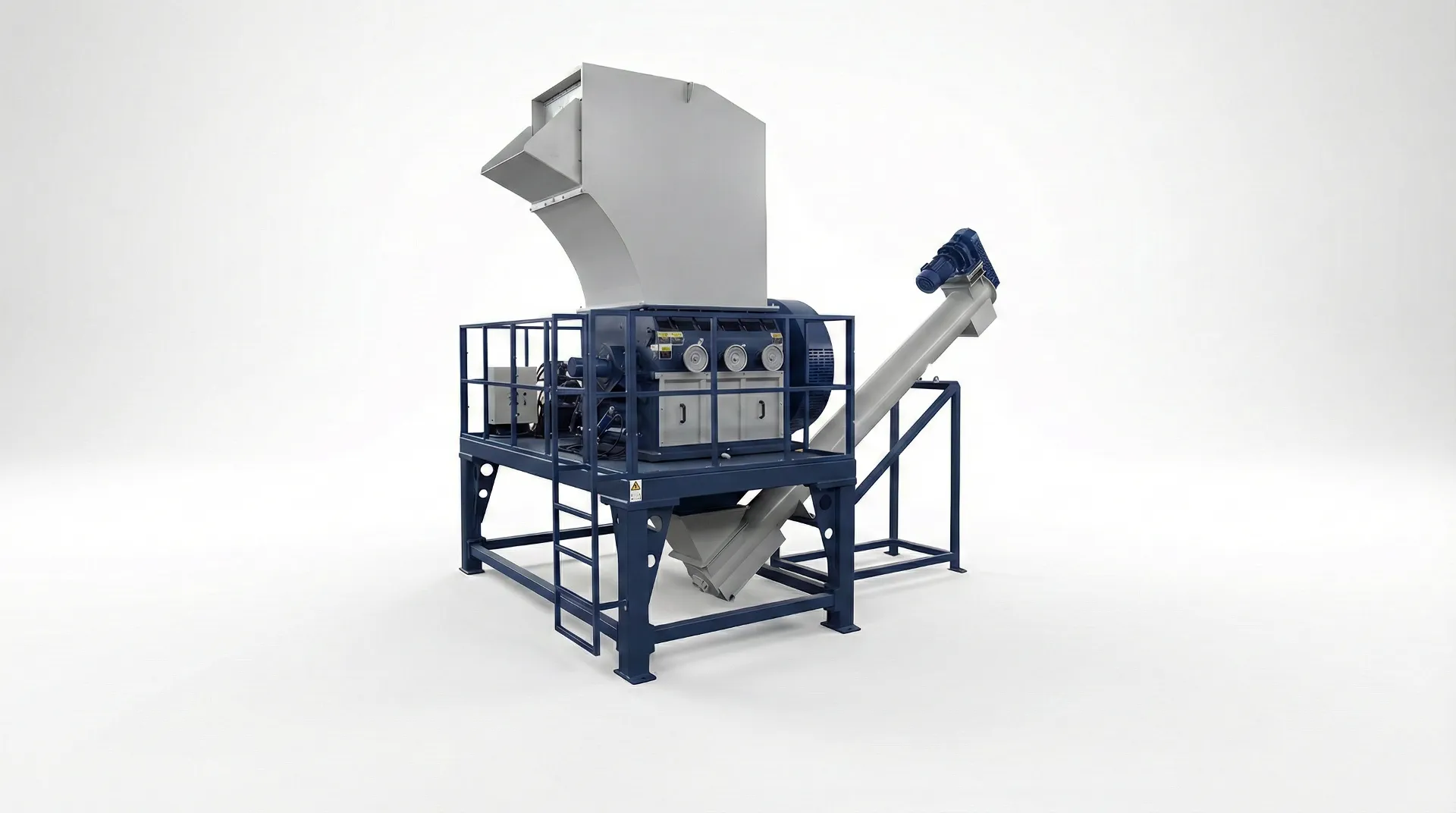
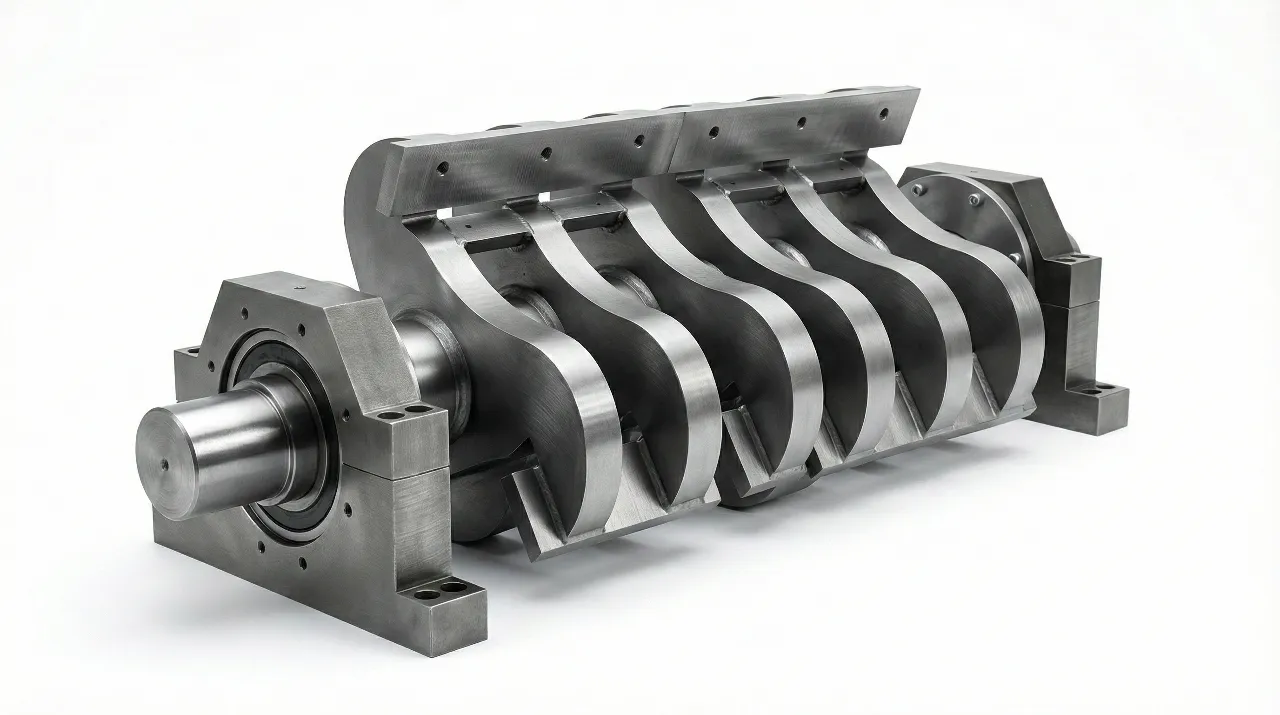
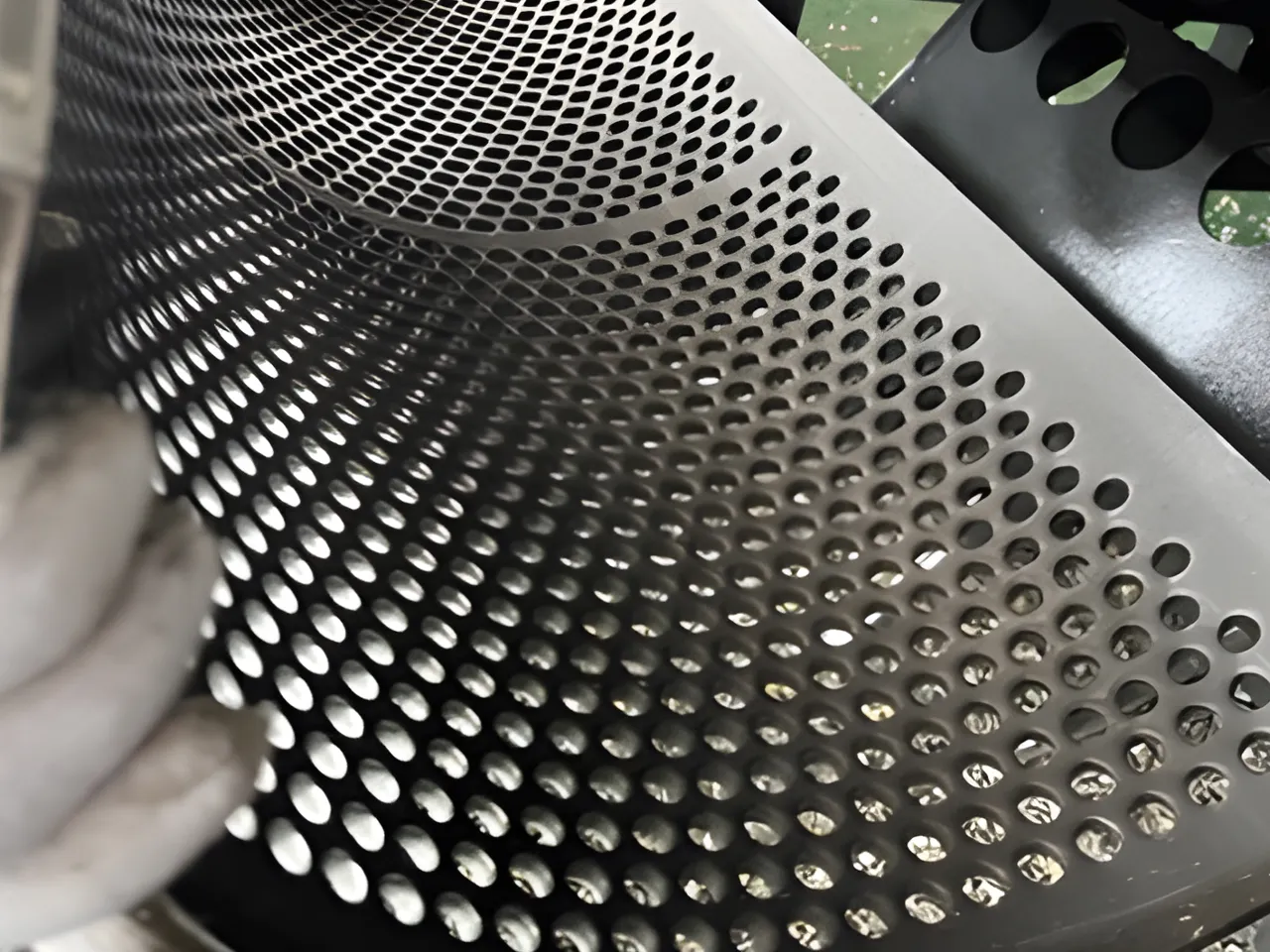
Plastic Bottle Crusher: PET & HDPE Bottle Recycling
Used as a plastic bottle crusher, the wet granulator reduces sorted PET or HDPE bottles to regrind while providing cooling and an initial rinse. Separate pre-washing, label removal, and downstream cleaning depend on the incoming contamination and required output quality.
PET Bottle Crushing
Processes sorted PET bottles within the approved feed dimensions. Screen selection and operating conditions determine the flake-size distribution. Released cap and label fragments still require downstream separation, while adhesives may require hot or friction washing.
HDPE Container Crushing
Processes sorted HDPE milk and detergent bottles after emptying and suitable pretreatment. Water rinsing does not neutralize chemical residues or establish food-contact suitability; assess the feedstock and complete recycling process.
Rotor and Screen Setup for Bottles
Where specified, V-cut geometry provides a shearing action on hollow bottles. Confirm rotor design, knife clearance, and screen opening for the selected model. Screen aperture alone does not guarantee flake dimensions or fines content.
Pre-Wash During Crushing
Specify injection flow, recirculating-water treatment, and fresh-water make-up separately. Required flow and cleaning performance depend on throughput, contamination, and the water circuit; verify them with representative feedstock.
Reliable Support Throughout the Equipment Lifecycle
From installation planning to routine maintenance, our service team helps keep your equipment operating safely, consistently, and efficiently.
1-Year Limited Warranty
Coverage includes manufacturing defects in major mechanical and electrical components for one year. Normal wear parts and damage caused by improper operation are handled separately.
Installation Guidance
We provide layout, foundation, utility, clearance, line-integration, and commissioning guidance to support a smooth installation and reliable startup.
Spare Parts Supply
Replacement wear parts, bearings, seals, sensors, electrical components, and other service items are available for scheduled maintenance and long-term operation.
Technical Assistance
Remote troubleshooting, operating recommendations, maintenance guidance, and optional on-site service are available when your project needs additional support.
Frequently Asked Questions
Common questions about wet crushing, blade configuration, water use, and line integration.
Water injection combines cutting with cooling and an initial rinse. It can help carry away loose contamination before downstream washing. Results depend on the material, contamination, knife condition, screen opening, and water circuit.
No. Wet granulation provides size reduction and initial rinsing. Depending on the feedstock and required output, a line may also need pretreatment, hot or friction washing, separation, rinsing, and drying. Wet crushing alone does not establish suitability for food-contact use.
The reference models list SKD11 / D2 blades. Confirm the blade grade, rotor geometry, cutting clearance, and screen opening for the selected model in the quotation. Validate flake-size distribution and fines with representative material.
Applications include sorted PET bottles, HDPE or PP containers, and suitable production scrap. PE/PP film requires matched feeding, rotor, screen, and discharge arrangements. Confirm each material stream, feed dimensions, contamination, and required output before choosing the configuration.
Confirm water injection flow, circulating flow, and fresh-water make-up separately. Requirements depend on throughput, contamination, discharge design, and water treatment. A recirculation loop needs appropriate solids removal and water-quality control; there is no single water-use figure for every model and material.
Configure a Wet Plastic Granulator for Your Recycling Line
Send us your material type, contamination level, target throughput, and downstream process. We will recommend the right wet crusher model, blade setup, and supporting equipment.